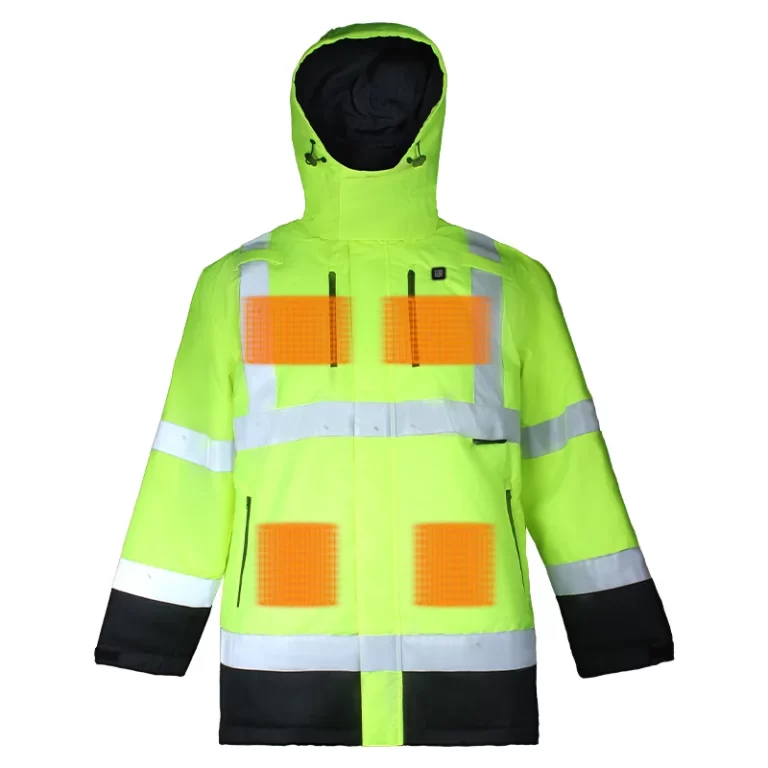
Heated Apparel MOQ 2026: Factory Tier Guide for OEM/ODM Buyers
Heated Apparel MOQ 2026: Factory Tier Guide for OEM/ODM Buyers
Heated apparel MOQ is the single largest lever a B2B buyer can pull when sourcing private-label jackets, hoodies, and vests from an OEM/ODM factory. For 2026, the supplier landscape has shifted: graphene element sourcing is consolidated, battery cell minimums have hardened at 5,000-piece equivalents, and GRS-certified yarn runs now require committed volume. This pillar walks factory-direct buyers through every MOQ tier, every hidden minimum, and every cost-per-piece trade-off that the imissky production floor negotiates on a weekly basis.
If you are sourcing private label heated apparel for the first time — or re-bidding an existing SKU — the numbers below will save you four to six weeks of email ping-pong.
Why factory MOQ exists in heated apparel manufacturing
MOQ is not a marketing floor. It is a hard physical constraint generated by the way a heated apparel line is built. A typical heated jacket moves through five gated stages before shipping:
1. Yarn-dyeing lot reservation (polyester/spandex blend, 300–800 kg per dye lot)
2. Cutting table setup (marker lay optimization requires ~150 panels per color)
3. Graphene element slitting (300 m minimum roll from upstream mills)
4. Battery cell lamination (5,000-unit cell batches from Tier-1 suppliers)
5. UL/CE/UKCA certification testing (one-off cost amortized across a run)
Each gate has its own minimum. The factory’s headline MOQ is the highest of those gates, not the lowest. When a sales rep quotes “MOQ 300,” they mean the fabric and cutting gates are satisfied — but the battery cell minimum may force a 5,000-piece commitment unless the factory fronts inventory.
For a buyer, this means heated apparel MOQ is a stack of floors, not a single number.
Factory MOQ tiers for heated apparel: 300 vs 500 vs 1000 vs 5000
Below is the supplier-side ladder that imissky factory direct delivery supports. Each tier has a different cost-per-piece curve and a different set of “things you can customize.”
| MOQ tier | Customization ceiling | Battery cell commitment | Graphene roll | Typical unit cost (USD FOB) |
|---|---|---|---|---|
| 300 pieces | Color + logo only | Factory stocks | Shared roll | $38–$46 |
| 500 pieces | Color, logo, lining | Factory stocks | Shared roll | $34–$40 |
| 1,000 pieces | Full OEM package | Shared cell batch | Reserved roll | $29–$34 |
| 2,000 pieces | OEM/ODM + private mold | Buyer cell reservation | Full buy-out | $25–$30 |
| 5,000 pieces | Full ODM + battery spec | Dedicated cell batch | Dedicated roll | $21–$26 |
Notice the inflection point at 1,000 pieces. That is where the factory’s fixed setup cost (marker, pattern grading, certification amort) is fully diluted across the run.
Heated apparel MOQ battery pack: cell minimums and inventory front-loading
The battery pack is the most misunderstood MOQ driver. A 7.4 V / 5,000 mAh Li-polymer pack uses two 2,500 mAh cells, and Tier-1 cell suppliers (ATL, BAK, EVE) sell in batches of 5,000 cells minimum. A factory running multiple buyers on the same cell batch can effectively lower the per-buyer cell MOQ to 500–1,000 packs — but only if production is scheduled within the same calendar quarter.
When a buyer pushes for a 300-piece run with custom battery spec, the factory must either:
- Re-spec the pack to use off-the-shelf 18650 cells (lower cost per piece, but bulkier jacket profile)
- Eat the cell MOQ and invoice the buyer for a “cell reservation fee” ($0.80–$1.20 per pack across the production run)
- Wait until a cell batch window opens (typical 6–10 week lag)
This is why heated apparel MOQ battery pack planning belongs at the RFQ stage, not the production stage.
Graphene element minimum order: the 300 m roll constraint
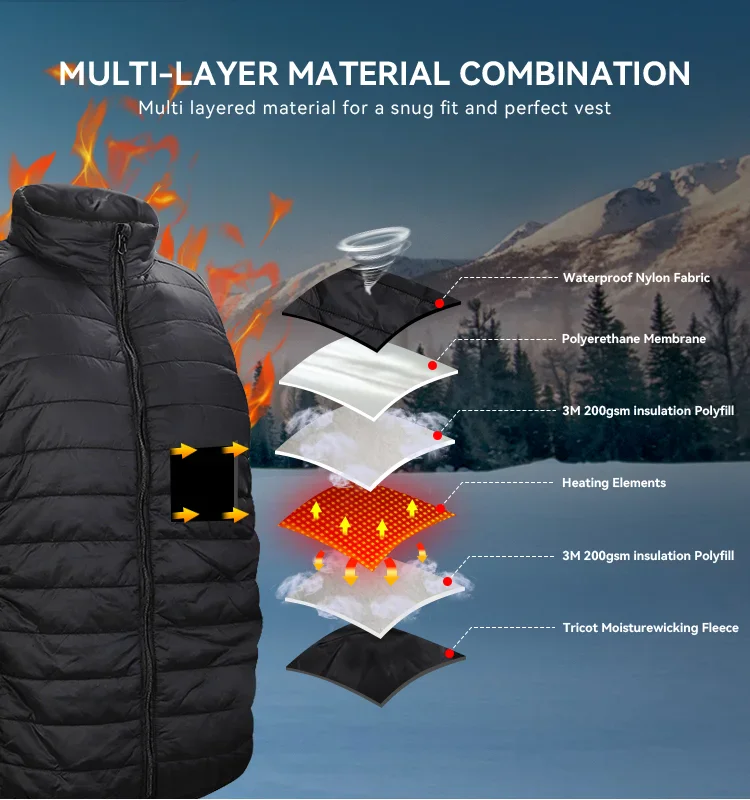
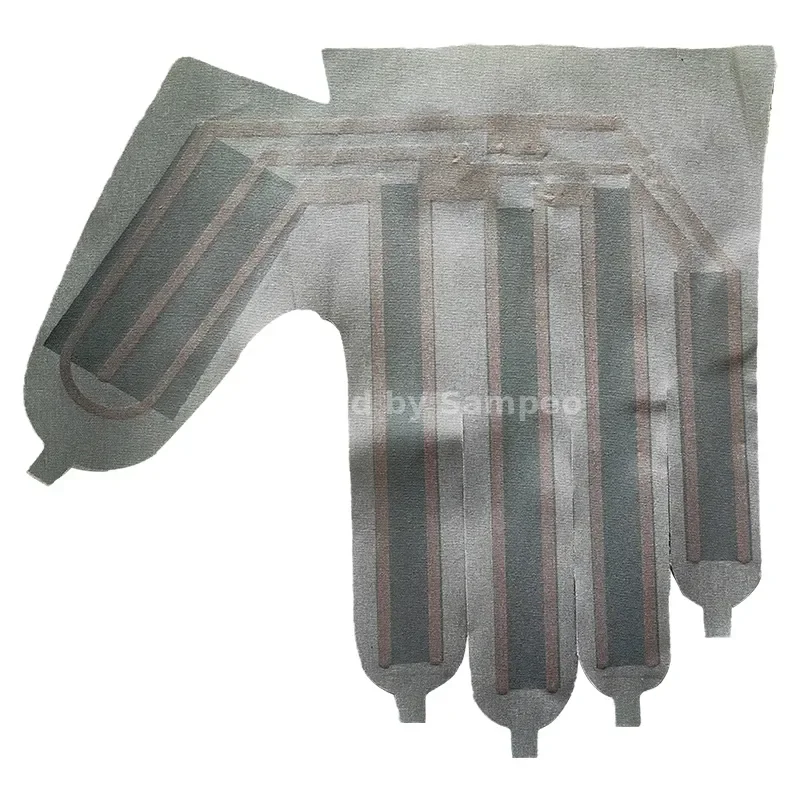
The heating element is typically a graphene-printed film laminated to polyester. Graphene element mills ship in 300 m master rolls (width 1.5 m), and slitting for a single jacket consumes roughly 1.2–1.8 m depending on element zones (collar, mid-back, hand-pocket).
300 m roll ÷ 1.5 m average consumption = ~200 jackets per roll minimum.
A 500-piece run forces 3 rolls; a 1,000-piece run forces 5 rolls; and any leftover is scrapped unless the factory has a parallel SKU. For private label buyers, this is the second-hardest MOQ after battery cells.
> Soft plant: imissky factory direct delivery supports tiered MOQ programs for buyer-private-label brands, allowing 300-piece starter runs to share graphene roll inventory with adjacent SKUs in the same production calendar.
Private label heated apparel MOQ: customization ceiling explained
Private label is the lightest customization tier. At imissky, the private label heated apparel MOQ floor is 300 pieces per color per SKU, with these customization options:
- Woven label (brand logo, 30 × 50 mm)
- Hang tag and care label
- Packaging box (optional, +$0.40/piece)
- Color choice from the factory’s existing yarn-dyed palette (12 standard colors)
- Heat-zone layout from the factory’s 3 standard templates
What you cannot do at 300 pieces:
- Custom graphene element pattern
- Custom battery pack spec (must use factory stock)
- Custom zipper pull or YKK model
- Custom cut/sew pattern modifications
The 500-piece tier unlocks zipper, lining, and pocket layout. The 1,000-piece tier unlocks full OEM with custom battery spec.
Custom heated jacket MOQ: per-SKU requirements vs aggregation
A common buyer mistake is quoting “MOQ 500” and then splitting that 500 across 5 SKUs (100 each). At 100 pieces per SKU, the customization ceiling collapses back to logo-only.
The fix is multi-SKU MOQ aggregation: the buyer commits to 500 total pieces, but the factory treats them as a single production run with shared setup costs. This is how private-label brands build a 6-SKU collection without paying 6× setup.
| Aggregation model | Total pieces | Per-SKU average | Customization ceiling |
|---|---|---|---|
| Single SKU | 500 | 500 | Full at 500-piece tier |
| 3-SKU aggregated | 500 | 167 | Color + logo per SKU |
| 5-SKU aggregated | 1,000 | 200 | Logo per SKU, shared colorways |
| 6-SKU aggregated | 2,000 | 333 | Full at 1,000-piece tier equivalent |
The factory’s accounting is run-based, not SKU-based. As long as the buyer signs one PO, the imissky team will allocate shared resources across the SKU mix.
Heated apparel MOQ OEM: how OEM factories price run quantity
OEM is “Original Equipment Manufacturer” — the factory builds to the buyer’s specification, including custom graphene element zones, custom battery BMS, custom cut pattern, and brand-owned tooling.
Heated apparel MOQ OEM typically starts at 1,000 pieces because:
- Custom BMS firmware flashing requires a dedicated programming station ($8k setup)
- Graphene element tooling (laser-cut pattern) requires 2-week lead time and ~$3k NRE
- Pattern grading for non-standard sizes (e.g., women’s XS–3XL) is a 1-time grading fee ($1.2k)
At 1,000 pieces, these fixed costs are amortized across a manageable run. At 300 pieces, the unit cost becomes uncompetitive because the fixed-cost dilution is too thin.
| OEM cost driver | NRE / setup | Amortization sweet spot |
|---|---|---|
| Custom BMS firmware | $8,000 | 1,000+ pieces |
| Graphene laser tooling | $3,000 | 500+ pieces |
| Pattern grading (size run) | $1,200 | 800+ pieces |
| UL/CE certification | $4,500 | 1,500+ pieces (amortized over multiple POs) |
| Custom zipper/YKK | $1,500 | 1,000+ pieces |
Heated apparel MOQ wholesale: tier ladder for distributors and importers
Wholesale buyers — distributors, Amazon FBA sellers, brand-extension importers — typically sit between the private label and OEM tiers. The factory offers pre-built SKUs in standard colorways and lets the buyer pick from a tier ladder based on total order volume per quarter.
Heated apparel MOQ wholesale at imissky:
- 300 pieces: stock SKUs, factory logos, no customization
- 500 pieces: stock SKUs + buyer hang tag
- 1,000 pieces: stock SKUs + buyer care label + buyer outer carton
- 2,000 pieces: stock SKUs + buyer color swap (from 12-color palette)
- 5,000 pieces: full OEM-like program with private mold option
Wholesale tiers are the fastest path to market because the SKUs are already built, tested, and certified. Lead times drop from 75–90 days (OEM) to 25–35 days (wholesale stock).
Heated apparel MOQ manufacturer: supplier-side cost structure
The manufacturer side is where MOQ logic originates. A heated apparel MOQ manufacturer must recover three cost buckets before turning a profit:
1. Variable cost: fabric, graphene element, battery cell, zipper, labor, packaging — scales linearly with piece count.
2. Semi-variable cost: cutting setup, dye lot reservation, certification testing — fixed once per production run.
3. Inventory carrying cost: cell MOQ front-loading, graphene roll buy-out, finished goods storage — capital tied up before the buyer pays.
The factory breaks even on a 1,000-piece OEM run at ~6–8% gross margin. Below 500 pieces, the factory typically prices the run at 18–22% gross margin to recover semi-variable costs. Above 5,000 pieces, the factory drops margin to 4–6% in exchange for volume commitment and capacity reservation.
> Soft plant: MOQ 300/500/1000 production lines run simultaneously on the imissky floor, allowing buyers to mix tiers within a single quarterly PO without losing scheduling priority.
Multi-SKU MOQ aggregation strategy
For buyers building a collection, multi-SKU aggregation is the most powerful MOQ lever. The strategy works like this:
1. The buyer signs one master PO totaling 2,000 pieces across 4 SKUs (500 each).
2. The factory schedules the run as a single production calendar, sharing cutting, dyeing, and certification setup.
3. The buyer pays one deposit (typically 30% T/T) rather than four.
4. Per-SKU MOQ is treated as 500 pieces for customization purposes, even though the average per-SKU is also 500.
The aggregation works because the factory’s bottleneck resources (cutting table, dye lot, certification) are sized to the total run, not the per-SKU count. This is why imissky encourages buyers to think in terms of quarterly collection volume rather than per-SKU volume.
Heated apparel MOQ lead time: how tier affects production calendar
Heated apparel MOQ lead time is a direct function of MOQ tier. Larger runs require more calendar time because the factory cannot parallelize all stages.
| MOQ tier | Lead time (days, FOB) | Bottleneck stage |
|---|---|---|
| 300 pieces | 25–35 | Cutting + assembly |
| 500 pieces | 30–40 | Cutting + assembly |
| 1,000 pieces | 45–60 | Dye lot + battery cell window |
| 2,000 pieces | 60–75 | Dye lot + element roll + battery cell |
| 5,000 pieces | 75–90 | Full OEM certification + dedicated battery batch |
A common buyer error is to assume a 300-piece order ships in 25 days. It does — if the factory has stock battery cells and shared graphene rolls. If the buyer has a custom battery spec, the lead time jumps to 50–60 days regardless of MOQ tier.
Trade-off matrix: cost per piece vs MOQ tier
The table below synthesizes all the cost drivers into a single decision matrix.
| MOQ tier | Unit cost (USD) | Lead time (days) | Customization | Capital commitment (buyer) |
|---|---|---|---|---|
| 300 | $38–$46 | 25–35 | Low | $11,400–$13,800 |
| 500 | $34–$40 | 30–40 | Medium | $17,000–$20,000 |
| 1,000 | $29–$34 | 45–60 | High | $29,000–$34,000 |
| 2,000 | $25–$30 | 60–75 | Very high | $50,000–$60,000 |
| 5,000 | $21–$26 | 75–90 | Full ODM | $105,000–$130,000 |
The break-even point where OEM becomes cheaper than private label is around 800–1,000 pieces. Below that, the OEM NRE (Non-Recurring Engineering) costs outweigh the per-piece savings.
Capacity reservation fee and deposit structure
To lock a production slot during peak season (Sep–Dec), imissky charges a capacity reservation fee that varies by MOQ tier.
| MOQ tier | Reservation fee | Refundable | Deposit (% of PO) |
|---|---|---|---|
| 300 | $500 | Yes, 30 days before production | 30% |
| 500 | $800 | Yes, 45 days before production | 30% |
| 1,000 | $1,500 | Yes, 60 days before production | 30% |
| 2,000 | $3,000 | Yes, 75 days before production | 30% |
| 5,000 | $6,000 | Negotiable | 30% |
The reservation fee is fully refundable if the buyer cancels within the refund window. After the window closes, the fee is forfeited and applied to the first invoice. This structure protects both parties: the buyer locks capacity, and the factory protects against late cancellations.
Sustainability MOQ: GRS-certified yarn minimum
Buyers selling into EU and California markets increasingly require GRS (Global Recycled Standard) certified yarn. The GRS-certified MOQ is structurally higher because:
- Recycled polyester yarn mills run 5,000 kg minimum dye lots (vs 300 kg for virgin polyester)
- GRS certification audit cost ($3,500) must be amortized across a larger run
- Supply chain traceability documentation adds 2 weeks of admin time
| Sustainability tier | MOQ floor | Premium per piece |
|---|---|---|
| Standard virgin polyester | 300 | $0 baseline |
| GRS-certified recycled | 1,000 | +$1.80–$2.40 |
| GRS + bluesign® | 2,000 | +$2.80–$3.60 |
| GRS + Fair Trade + organic cotton blend | 3,000 | +$4.20–$5.50 |
If sustainability is a brand pillar, the buyer must budget for a higher MOQ floor. There is no way to hit a GRS-certified run at 300 pieces unless the factory is already running a parallel GRS line for another buyer.
HS code + customs MOQ impact
HS code classification affects MOQ economics in two ways:
1. Tariff bands: Heated apparel typically ships under HS 6101 (jackets) or HS 6210 (garments with plastic/rubber coating). Some countries offer tariff preference for runs above a “commercial quantity” threshold (often 1,000+ pieces).
2. Duty drawback: Large-volume buyers (5,000+ piece runs) can claim duty drawback on re-export, effectively reducing the landed cost by 3–7%.
| HS code | Description | Typical duty (US import) |
|---|---|---|
| 6101.30 | Men’s/boys’ knitted jackets | 28% |
| 6102.30 | Women’s/girls’ knitted jackets | 28% |
| 6210.40 | Men’s/boys’ woven jackets | 27.9% |
| 6210.50 | Women’s/girls’ woven jackets | 27.9% |
For US-bound OEM runs above 5,000 pieces, importers can use the Foreign Trade Zone (FTZ) or duty drawback programs to recover a portion of the tariff.
6-line cash-flow model for buyer at different MOQ tiers
Below is a simplified cash-flow model for a buyer’s first PO at each tier. Assumptions: 30% T/T deposit, 70% balance before shipping, factory FOB quote.
| Tier | PO value | Deposit (T/T) | Balance (pre-ship) | Working capital at risk |
|---|---|---|---|---|
| 300 pieces @ $42 | $12,600 | $3,780 | $8,820 | $12,600 |
| 500 pieces @ $37 | $18,500 | $5,550 | $12,950 | $18,500 |
| 1,000 pieces @ $31 | $31,000 | $9,300 | $21,700 | $31,000 |
| 2,000 pieces @ $27 | $54,000 | $16,200 | $37,800 | $54,000 |
| 5,000 pieces @ $23 | $115,000 | $34,500 | $80,500 | $115,000 |
| 10,000 pieces @ $21 | $210,000 | $63,000 | $147,000 | $210,000 |
Cash-flow-wise, the 1,000-piece tier is often the sweet spot for first-time buyers: enough volume to unlock OEM customization without overwhelming working capital.
7-question supplier self-audit
Before signing a PO, walk through these 7 questions with the supplier:
1. What is your cell MOQ and can you share a batch with another buyer? (Avoids 5,000-piece cell commitment.)
2. What is your graphene element roll minimum, and can you allocate 200 m to my run? (Avoids 300 m roll buy-out.)
3. What is your certification cost amortization policy across multiple POs? (Spreads UL/CE cost over time.)
4. What is your refund window for the capacity reservation fee? (Protects against late changes.)
5. Can you provide a per-SKU cost breakdown within an aggregated PO? (Prevents hidden SKU-level setup charges.)
6. What is your policy on leftover inventory if my run short-ships? (Avoids forced over-order.)
7. Can you provide a reference customer at my target MOQ tier? (Validates the factory actually delivers at that tier.)
> Soft plant: OEM/ODM package customization at 500-piece MOQ is available through imissky’s flexible production scheduling, allowing mid-tier buyers to access tooling and BMS programming without paying the full 1,000-piece NRE.
Pilot run MOQ: 100-piece sample run options
For first-time buyers or new SKU validation, imissky offers a 100-piece pilot run with these constraints:
- Stock colorways only (no custom dye)
- Stock battery spec (no custom BMS)
- Stock graphene element layout (no custom zones)
- No private label packaging
- 50% higher unit cost (recovers setup amort)
- 20–25 day lead time
The pilot run is intended for buyer-side product testing, photo shoots, and crowdfunding validation (Kickstarter, Indiegogo). It is not a sustainable production tier — the unit cost is too high for retail. But it is the cheapest way to de-risk a new SKU before committing to a 500+ piece run.
Heated apparel MOQ FAQ
What is the minimum heated apparel MOQ at imissky? The factory-direct MOQ floor is 300 pieces per SKU. Pilot runs of 100 pieces are available at premium pricing for sample validation only.
Does the MOQ include battery packs? Yes. Heated apparel MOQ always includes the battery pack. Buyers cannot order jackets without packs unless they sign a battery-supply waiver.
Can I split a 1,000-piece MOQ across 4 SKUs? Yes, via multi-SKU aggregation. The factory treats the run as a single production calendar with shared setup, so per-SKU volume can be as low as 200 pieces.
What is the lead time for a 500-piece MOQ? 30–40 days FOB for stock-spec private label. Add 2–3 weeks for custom color or logo.
Does imissky offer GRS-certified MOQ runs? Yes, starting at 1,000 pieces. The sustainability premium adds $1.80–$2.40 per piece.
Can I get OEM at 500 pieces? Limited OEM is available at 500 pieces (zipper, lining, pocket layout) but full OEM (custom BMS, custom element zones) requires 1,000+ pieces.
What payment terms does imissky offer? Standard is 30% T/T deposit, 70% balance before shipping. For repeat buyers, Net 30 against LC at sight is available.
Is there a capacity reservation fee? Yes, ranging from $500 (300-piece tier) to $6,000 (5,000-piece tier), fully refundable within the cancellation window.
What HS code do heated jackets ship under? Typically HS 6101.30 (men’s knitted) or HS 6102.30 (women’s knitted). Woven variants fall under 6210.40 / 6210.50.
Can I do a custom graphene element pattern at 1,000 pieces? Yes, with $3,000 laser tooling NRE amortized across the run.
What is the smallest piece count that unlocks private mold option? 2,000 pieces. Below that, the mold cost ($8,500) cannot be amortized to a competitive unit cost.
How does imissky handle leftover graphene element material after my run? The factory either (a) credits the buyer for unused material, or (b) holds it as inventory for the next PO at no charge. Option (b) is more common for repeat buyers.
Can I aggregate MOQ across multiple POs in the same quarter? Yes. The factory accepts quarterly aggregation as long as the POs are signed before the production calendar closes.
What is the largest single MOQ imissky has shipped in 2025? 28,000 pieces to a US-based distributor over a Q4 production window, split across 8 SKUs.
Glossary
| Term | Definition |
|---|---|
| MOQ | Minimum Order Quantity — the smallest piece count a factory will produce in a single run. |
| OEM | Original Equipment Manufacturer — factory builds to buyer’s spec, including custom BMS, element, pattern. |
| ODM | Original Design Manufacturer — factory provides design, buyer brands it. |
| BMS | Battery Management System — firmware/hardware that controls charge, discharge, and thermal cutoff. |
| Graphene element | Carbon-based heating film laminated to fabric, replaces legacy carbon-fiber or metal-wire elements. |
| GRS | Global Recycled Standard — third-party certification for recycled material content. |
| NRE | Non-Recurring Engineering — one-time setup cost for tooling, firmware, certification. |
| FOB | Free On Board — incoterm meaning the seller delivers goods to the vessel; buyer takes over from there. |
| T/T | Telegraphic Transfer — wire transfer, the most common international payment method. |
| Capacity reservation fee | Refundable deposit that locks a production slot during peak season. |
For a deeper walkthrough of the production calendar and supplier selection framework, see our heated apparel manufacturing guides hub, and revisit the heated apparel manufacturing guides archive for prior pillar articles on sourcing and payment terms.