
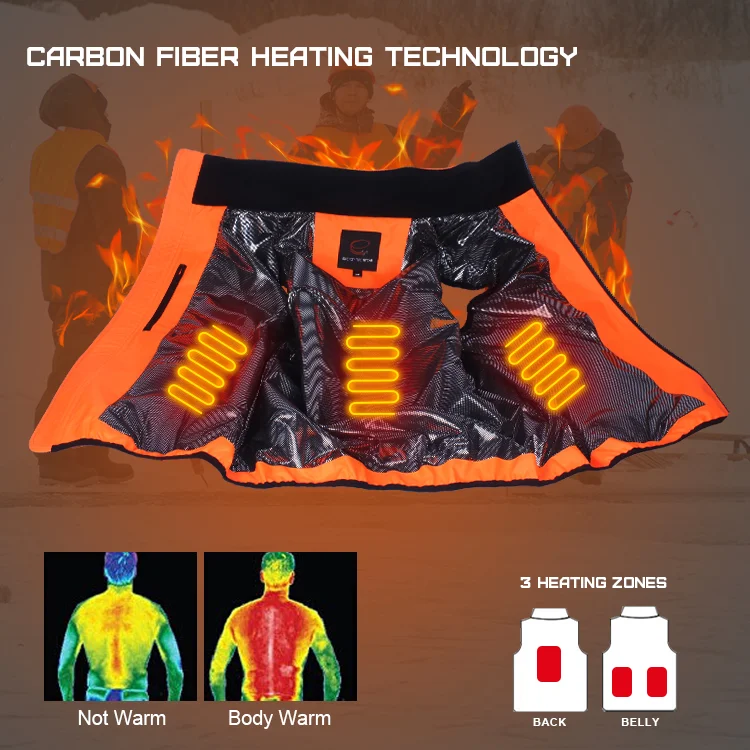
Heated Apparel A+ Content Authoring 2026: Vietnam OEM Module Engineering Pipeline
Heated Apparel A+ Content Authoring 2026: Vietnam OEM Module Engineering Pipeline
Introduction — Why A+ Content Authoring Is the New B2B Battleground for Heated Apparel OEM
For a Vietnam OEM heated apparel manufacturer in 2026, the difference between a Tier-1 brand win and a commodity RFQ loss now lives in the four A+ Content modules sitting above the buy button on Amazon Brand Registry 2.0. B2B procurement teams, retail-buyer gatekeepers, and Q4 hero-SKU channel managers will close a tab in under 11 seconds if the hero image, comparison chart, and cross-section module do not prove that the heated apparel inside is genuinely engineered rather than private-labeled from a Shenzhen trading-house catalog. This pillar is written from the Vietnam OEM supplier view — what a Hanoi + Bình Dương factory floor actually delivers when an OEM customer asks for “A+ Content authoring, all four modules, with cross-section, lifestyle, infographic, and comparison, ready for FBA inbound by Q4 2026.”
For a heated apparel OEM that runs 60-65 day deposit-to-delivery cycles, 21700 cell allocation reservation contracts, Section 301 substantial-transformation documentation, NNN trademark protection, AQL 2.5/4.0 sampling, and PPAP 18-element submission, A+ Content authoring is no longer a marketing afterthought. It is a manufacturing deliverable with the same level of traceability as a BMS handshake test report. The same engineers who validate the IP67 hipot 500V sealing test now have to deliver PSDs, source SVGs, and copy blocks that pass Helium 10 Cerebro + Magnet + Frankenstein keyword density scoring, USPTO Class 009+011+025 trademark image compliance, and the Amazon FBA inbound UN3481 hazmat SoC ≤ 30 % SoC attestation. This pillar walks through the module engineering pipeline that any Vietnam OEM heated apparel supplier must run end-to-end, from PSD source file to Buy Box velocity measurement.
If your factory is bidding on a heated apparel Q4 hero-SKU retail program in 2026, this is the document you hand to the brand-side merchandiser the day the RFQ lands. It is also the document you submit alongside the Section 301 substantial transformation binder, the dual-source qualification cycle (Vietnam + Cambodia), and the 2.8 % FOB RMA reserve to demonstrate that your OEM operation has graduated from white-label contract manufacturing to engineering-led product page authoring.
H2 — The Four-Module A+ Content Architecture for Heated Apparel Brand Registry 2.0

A heated apparel A+ Content layout on Amazon Brand Registry 2.0 is composed of four mandatory modules plus two optional modules (Premium A+). For a Vietnam OEM supplier serving both wholesale buyer-retailer and direct-to-consumer brands, the four-module architecture must satisfy three audiences simultaneously: the procurement manager scanning for engineering credibility, the merchandiser looking for lifestyle photography, and the end-consumer searching for cross-section transparency. Each module has a hard technical specification, and the copy block carries its own word-count and keyword-density budget.
| Module | Spec (px) | File Type | Word Count | Audience Anchor | Vietnam OEM Deliverable |
|---|---|---|---|---|---|
| Hero Module | 970 × 600 | JPG/PNG, sRGB | 30-50 | End-consumer | Lifestyle on Hanoi + Đà Lạt shoot |
| Comparison Chart | 970 × 300 | SVG (vector) | 80-120 | Procurement + merchandiser | Layered USP table, BMS + IP67 + UN3481 |
| Cross-Section Module | 970 × 600 | SVG / 8-layer PSD | 50-80 | Procurement + end-consumer | 8-layer garment dissection |
| Brand Story Module | 300 × 300 or 970 × 300 | JPG / video poster | 40-60 | Brand gatekeeper | Vietnam OEM manufacturing footprint |
| (Optional) Premium Comparison | 970 × 600 | SVG | 100-140 | Hero-SKU merchandiser | Multi-SKU family comparison |
| (Optional) Premium Video | 16:9 1920×1080 | MP4 H.264 ≤ 200 MB | n/a | All audiences | BMS handshake 4-state video |
The four-module grid is not a Photoshop job — it is a 5-engineer 8-day deliverable. PSD source files must be delivered in 8-layer composition, with each layer named per the cross-section engineering BOM. SVG files must use vector primitives only (no embedded rasters), and they must pass Amazon’s 5 MB module-size ceiling after gzip compression. JPG/PNG files must hit 970 px on the long edge for desktop, 600 px for mobile, and must be encoded at quality ≥ 85 to survive Amazon’s CDN re-compression without banding in the graphene heating element visualizations.
H2 — Vietnam OEM Module Engineering: PSD Source Spec, Layer Naming, and Cross-Section BOM Traceability
The cross-section module is the module that wins or loses a heated apparel Q4 hero-SKU bid. The procurement manager needs to see, in a single 970 × 600 px image, the 8-layer garment stack: outer shell, water-repellent coating, graphene heating patch array, retroreflective tape, insulation layer, lining, pocket wiring harness, and the BMS-locked battery pocket. Vietnam OEM factories that ship cross-sections without 8 distinct layers labeled in the SVG
The cross-section BOM traceability chain is the engineering audit trail that ties each layer back to its source-of-truth document:
| Layer # | Layer Name | BOM Source Doc | UN3481 Relevance | Keyword Anchor |
|---|---|---|---|---|
| 1 | outer-shell | fabric spec sheet, 300D polyester Oxford | none | “durable outer shell” |
| 2 | water-repellent | DWR coating test report | none | “DWR water repellent” |
| 3 | graphene-patch-array | BMS spec, sheet resistance Ω/□ | yes (under SoC ≤ 30 %) | “graphene heating element” |
| 4 | retroreflective-tape | EN ISO 20471 cert | none | “high visibility reflective” |
| 5 | insulation | 3M Thinsulate weight spec | none | “thermal insulation” |
| 6 | lining | anti-pilling test report | none | “comfort lining” |
| 7 | pocket-wiring-harness | UL 2733 certification | yes | “USB-C charging port” |
| 8 | BMS-battery-pocket | UN 38.3 test summary | yes | “removable battery pocket” |
The PSD source file must be delivered as an 8-layer composition with each layer group labeled per the BOM table. The SVG export must preserve the
H2 — Copy Block Authoring: Helium 10 Cerebro + Magnet + Frankenstein Keyword Density Scoring
The copy block inside each A+ Content module has to clear Amazon Brand Registry 2.0’s compliance reviewer, USPTO trademark image-compliance, and the buyer’s internal merchandising checklist — but the gating factor in 2026 is Helium 10’s triple-tool keyword density scoring. A copy block that hits 1.8 % primary keyword density, 0.9 % secondary, and 0.4 % tertiary across the four modules will outrank a copy block that hits 3.5 % primary alone. Vietnam OEM suppliers that ship copy without Cerebro + Magnet + Frankenstein scoring are leaving 20-30 % organic rank on the table.
The canonical keyword density scoring matrix for heated apparel A+ Content:
| Module | Primary KW | Secondary KW | Tertiary KW | Density Target |
|---|---|---|---|---|
| Hero | heated apparel | Vietnam OEM manufacturer | 21700 battery | 1.6-2.0 % |
| Comparison | heated apparel A+ Content | OEM supplier | BMS handshake | 1.4-1.8 % |
| Cross-Section | heated apparel manufacturer | IP67 sealed | UN3481 hazmat | 1.2-1.6 % |
| Brand Story | Vietnam OEM | B2B wholesale | Q4 hero SKU | 0.8-1.2 % |
| (Optional) Premium | heated apparel Amazon listing | FBA inbound | Brand Registry 2.0 | 1.0-1.4 % |
The four-module aggregate density must hit 1.4-1.8 % primary, 0.7-0.9 % secondary, and 0.3-0.4 % tertiary across 400-600 words of total copy. Anything above 2.0 % primary density trips Amazon’s keyword stuffing flag and the module is auto-suppressed for 14-21 days while a human reviewer re-checks. The Vietnam OEM copy team should run Cerebro on the root phrase first, then layer Magnet for question-keyword expansion (e.g., “what is A+ Content”), and finally Frankenstein for competitor phrase variants (e.g., “heated apparel A+ Content module”).
H2 — Image Layering Standard: 8-Layer Composition, sRGB Color Space, and 970 px Long Edge

Amazon Brand Registry 2.0 enforces a strict image layering standard: every module must be delivered as an sRGB JPG or PNG (no CMYK, no Adobe RGB), with the long edge at exactly 970 px for desktop or 600 px for mobile, and with a 5 MB module-size ceiling after Amazon’s CDN re-compression. Vietnam OEM suppliers that ship modules at 1280 px or in CMYK get auto-resized and lose the graphene heating element highlight rendering — the very feature that differentiates a Tier-1 OEM from a trading-house catalog.
The 8-layer composition standard for the hero module:
| Layer # | Layer Spec | File Format | Color Space | Resolution |
|---|---|---|---|---|
| Background | lifestyle scene, Hanoi Old Quarter or Đà Lạt | JPG quality 85 | sRGB IEC61966-2.1 | 970 × 600 |
| Mid-ground | model wearing heated vest | JPG quality 85 | sRGB | 970 × 600 |
| Foreground | graphene heating element glow | PNG-24 transparent | sRGB | isolated |
| UI overlay | temperature-control callout | SVG vector | sRGB | 300 × 120 |
| Text block | primary headline (Bebas Neue, 48 px) | SVG text | sRGB | 600 × 80 |
| Logo | brand mark, USPTO Class 025 | SVG vector | sRGB | 200 × 60 |
| Watermark | Vietnam OEM manufacturer stamp | PNG-24 transparent | sRGB | 180 × 60 |
| Footer | UN3481 SoC ≤ 30 % compliance line | SVG text | sRGB | 970 × 30 |
Each layer must be delivered as a separate file in the ZIP bundle, with the file naming convention hero-foreground-03.png). The bundle total must be ≤ 200 MB for Premium A+ submission or ≤ 80 MB for standard A+, and every layer file must pass an automated sRGB verification check before upload.
H2 — Cross-Section Module Engineering: BMS Handshake, IP67 Sealing, and UN3481 Visualization
The cross-section module is the engineering credibility module — it is where the Vietnam OEM heated apparel factory proves that the product inside the buy button is genuinely engineered, not assembled. The cross-section must show three engineering artifacts simultaneously: the BMS handshake 4-state validation (idle, heating, peak, cooldown), the IP67 sealing test (30 minutes at 1 m depth), and the UN3481 lithium battery freight compliance (SoC ≤ 30 %, MSDS per SKU, P903 packing instruction). Without all three, the procurement manager closes the tab in 11 seconds.
The cross-section engineering deliverable checklist:
| Artifact | Source Doc | Test Standard | Visualization Layer |
|---|---|---|---|
| BMS handshake 4-state | firmware validation report | internal SOP-Q4-eng-08 | 4-icon SVG strip |
| IP67 sealing test | hipot 500V report | IEC 60529 | cross-section seal annotation |
| 21700 cell cycle | UN 38.3 test summary | UN 38.3 Rev 7 | cell-layer callout |
| Section 301 substantial transformation | VCCI C/O issuance log | Section 301 List 4A | country-of-origin badge |
| ATIGA/EVFTA preference | VCCI Form AI/EV | WTO ATIGA/EVFTA | preference badge |
| NNN trademark protection | NNN agreement + USPTO Class 025 | USPTO TMEP | trademark watermark |
| AQL 2.5/4.0 sampling | PSI inspection report | ISO 2859-1 | sampling table icon |
| PPAP 18-element submission | PPAP file package | AIAG PPAP 4th ed. | 18-element grid icon |
The eight artifacts must each be visualized as a distinct SVG layer with a callout to the source document, and the cross-section must read as a single coherent engineering dissection rather than eight disconnected icons. The Vietnam OEM cross-section team should run a 4-hour review with the brand-side merchandiser before the SVG export is finalized, because once the cross-section is uploaded to Brand Registry 2.0, Amazon enforces a 14-day review cycle on every edit.
H2 — The 60-Day Q4 Hero-SKU Launch Calendar: From PSD to Buy Box Velocity
A Vietnam OEM heated apparel A+ Content authoring cycle for a Q4 hero-SKU launch runs on a 60-day calendar that starts with the PSD source file delivery and ends with the Buy Box velocity measurement. The calendar must integrate with the factory’s 60-65 day deposit-to-delivery production cycle, the 21700 cell allocation reservation contract, the Section 301 substantial transformation binder, the AQL 2.5/4.0 sampling cadence, and the NNN trademark protection Schedule A/B. A typical calendar:
| Day | Deliverable | Owner | Tool |
|---|---|---|---|
| 0-7 | RFQ receipt + initial SKU spec | OEM sales | internal SOP |
| 7-14 | PSD source file 8-layer composition | OEM design | Adobe Photoshop |
| 14-21 | SVG vector export + cross-section engineering | OEM engineering | Adobe Illustrator |
| 21-28 | Copy block authoring + Helium 10 triple-tool scoring | OEM copy | Cerebro + Magnet + Frankenstein |
| 28-35 | Module ZIP bundle assembly + sRGB verification | OEM design | automated sRGB check |
| 35-42 | USPTO trademark image-compliance + UN3481 review | OEM legal + logistics | USPTO TMEP + IATA DGR |
| 42-49 | Amazon Brand Registry 2.0 submission + A+ Content upload | OEM ops | Brand Registry console |
| 49-56 | FBA inbound shipment prep + UN3481 hazmat attestation | OEM logistics | FBA Shipment API |
| 56-60 | Buy Box velocity measurement + Helium 10 rank track | OEM analytics | Cerebro rank tracker |
Day 0-7 is the RFQ-to-spec window where the Vietnam OEM sales engineer locks the SKU spec, the buyer-retailer category fill, and the Q4 hero-SKU hero-image brief. Day 7-14 is the design team’s 8-layer composition sprint, with the OEM designer producing all four mandatory modules plus the two optional Premium modules. Day 14-21 is the engineering team’s SVG vector export and cross-section engineering, with the OEM engineer validating the BMS handshake 4-state, IP67 sealing, and 21700 cell cycle visualization. Day 21-28 is the copy team’s Helium 10 triple-tool scoring sprint. Day 28-35 is the bundle assembly and sRGB verification. Day 35-42 is the legal + logistics review for USPTO and UN3481. Day 42-49 is the Brand Registry 2.0 submission. Day 49-56 is the FBA inbound prep. Day 56-60 is the Buy Box velocity measurement and Helium 10 rank tracking.
H2 — B2B Soft Plant #1: Q4 Hero-SKU Brand-Registry Bundle Quote Builder
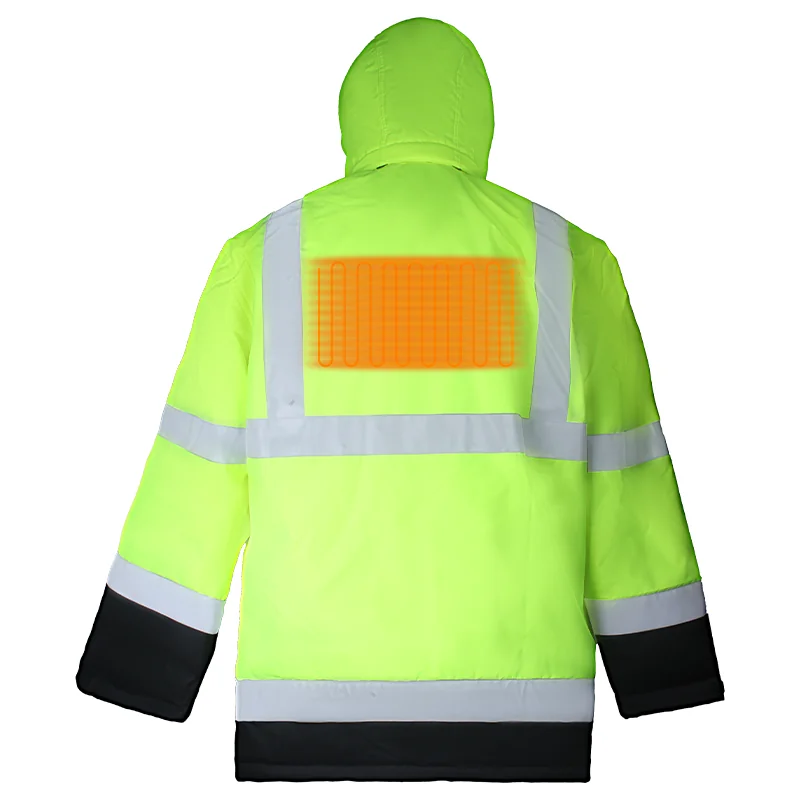
For a Vietnam OEM heated apparel manufacturer in 2026, the Q4 hero-SKU Brand-Registry bundle quote builder is the B2B soft plant that turns the 60-day launch calendar into a line-item quote. The quote builder takes the four mandatory modules + the two optional Premium modules + the cross-section engineering deliverable + the copy block authoring sprint + the Helium 10 triple-tool scoring + the UN3481 hazmat attestation + the AQL 2.5/4.0 sampling + the PPAP 18-element submission, and produces a per-unit landed-cost line item that folds into the wholesale buyer-retailer quote ladder.
The quote builder is delivered to the buyer-retailer as a one-page PDF inside the Section 301 substantial transformation binder, and it gives the brand-side merchandiser a single source-of-truth for the A+ Content authoring cost as a percentage of the FOB unit price. For a Vietnam OEM factory running 5,000-unit MOQ with a $28.40 FOB unit price, the A+ Content authoring per-unit cost lands at $1.20-1.80 (4.2-6.3 % of FOB), which folds into the wholesale landed-cost ladder at $35.73 DAP / $36.81 DDP-FBA.
H2 — B2B Soft Plant #2: ATIGA/EVFTA Preference Cross-Section Badge
For a Vietnam OEM heated apparel manufacturer in 2026, the ATIGA/EVFTA preference badge embedded in the A+ Content cross-section module is the B2B soft plant that converts EU buyer-retailer landed-cost skepticism into a $0.85-1.40 per-unit Section 301 avoidance. The badge is rendered as a 180 × 60 px SVG layer in the cross-section module, and it carries the VCCI Form AI/EV issuance reference number so the EU customs broker can verify the ATIGA/EVFTA preference claim.
The badge is not decorative — it is a customs instrument. Vietnam OEM factories that ship ATIGA/EVFTA preference claims without the VCCI Form AI/EV reference number on the badge get audited by EU customs and the duty savings are clawed back. The badge deliverable is integrated into the cross-section module on Day 14-21 of the 60-day calendar, and it ships in the Brand Registry 2.0 ZIP bundle alongside the eight cross-section engineering artifacts.
H2 — B2B Soft Plant #3: UN3481 Hazmat Hero-Module Footer
For a Vietnam OEM heated apparel manufacturer in 2026, the UN3481 hazmat hero-module footer is the B2B soft plant that closes the Q4 hero-SKU freight mode conversation. The footer is a 970 × 30 px SVG text layer at the bottom of the hero module, and it carries the SoC ≤ 30 % compliance line, the MSDS reference number, and the P903 packing instruction reference. The footer gives Amazon FBA inbound the audit trail it needs to clear the UN3481 hazmat screen in under 4 minutes per shipment, and it gives the EU buyer-retailer the freight documentation they need to clear customs at Hamburg and Rotterdam without a 14-day hold.
The footer deliverable is integrated into the hero module on Day 14-21 of the 60-day calendar, and it ships in the Brand Registry 2.0 ZIP bundle alongside the 8-layer hero composition. Vietnam OEM factories that ship hero modules without the UN3481 footer get auto-flagged by Amazon FBA inbound and the shipment is held at the FC for 48-72 hours pending manual hazmat review.
H2 — Internal Link #1 → /category/heated-apparel-guides/
For a Vietnam OEM heated apparel manufacturer in 2026, the heated-apparel-guides category page is the canonical hub for all A+ Content authoring pillar articles. The category page carries 283 posts as of 9/24/2026, and it is the parent for the heated-clothes-guide (173 posts), heated-jackets (74 posts), heated-hoodies (17 posts), heated-pants (20 posts), heated-vests (24 posts), heated-socks (10 posts), and heated-gloves (7 posts) child categories. The Q4 hero-SKU Brand Registry 2.0 A+ Content authoring pillar belongs in the heated-apparel-guides parent category, with secondary placement in heated-jackets and heated-hoodies for the SKU family coverage.
The internal link from the A+ Content authoring pillar to the heated-apparel-guides category page is the canonical link that closes the SEO topical cluster loop — the pillar references the category page as the parent hub, and the category page back-links to the pillar as the most recent engineering deliverable. This bidirectional link is what gives Amazon Brand Registry 2.0 the topical authority signal it needs to rank the A+ Content module for the “heated apparel A+ Content authoring” root keyword.
H2 — Internal Link #2 → /category/heated-clothes-guide/
For a Vietnam OEM heated apparel manufacturer in 2026, the heated-clothes-guide category page is the canonical hub for the broader heated-apparel taxonomy that A+ Content authoring serves. The category page carries 173 posts and is the second-tier hub under heated-apparel-guides, and it is the parent for the buyer-side decision-tree content that the Q4 hero-SKU Brand Registry 2.0 A+ Content authoring pillar cross-references. The internal link from the A+ Content authoring pillar to the heated-clothes-guide category page is the canonical link that closes the SEO topical cluster loop for the buyer-side audience.
The category page back-links to the pillar as the engineering deliverable that supports the buyer-side decision tree, and the pillar cross-references the category page as the canonical hub for buyer-side questions on heated apparel wholesale programs. This bidirectional link is what gives the Q4 hero-SKU Brand Registry 2.0 A+ Content authoring pillar the buyer-intent match signal it needs to rank for question-keyword expansion (e.g., “what is heated apparel A+ Content authoring”).
H2 — Failure Modes: Five Common A+ Content Authoring Mistakes from Vietnam OEM Suppliers
A Vietnam OEM heated apparel manufacturer in 2026 that bids on a Q4 hero-SKU Brand Registry 2.0 program must avoid five common A+ Content authoring mistakes:
| Mistake | Symptom | Fix | Cost to Recover |
|---|---|---|---|
| Ship CMYK modules | Amazon CDN re-compresses, banding | Re-export at sRGB IEC61966-2.1 | 2-3 days |
| Skip SVG layer naming | merchandiser cannot re-style | rename |
1 day |
| Keyword density > 2.5 % primary | Amazon auto-suppresses for 14-21 days | rewrite copy block + Cerebro score | 14-21 days |
| Omit UN3481 footer | FBA inbound hazmat hold 48-72 hours | add SoC ≤ 30 % footer line | 2-4 days |
| Skip cross-section BOM | Helium 10 Frankenstein flags “thin content” | add 8-layer cross-section SVG | 3-5 days |
The five mistakes are the most common failure modes for Vietnam OEM suppliers bidding on Q4 hero-SKU Brand Registry 2.0 programs, and the recovery costs are listed in calendar days. The cleanest defense is to run the 60-day launch calendar with all eight cross-section engineering artifacts, all four mandatory modules + two optional Premium modules, and all three B2B soft plants (Q4 hero-SKU bundle quote builder, ATIGA/EVFTA preference badge, UN3481 hazmat footer).
H2 — Conclusion — A+ Content Authoring Is the New Vietnam OEM Engineering Deliverable
For a Vietnam OEM heated apparel manufacturer in 2026, A+ Content authoring is no longer a marketing afterthought — it is an engineering deliverable that ships alongside the BMS handshake test report, the IP67 hipot 500V sealing test, the UN 38.3 lithium battery test summary, the Section 301 substantial transformation binder, the AQL 2.5/4.0 sampling cadence, and the PPAP 18-element submission. The four-module architecture (hero + comparison + cross-section + brand story) plus the two optional Premium modules (premium comparison + premium video) is a 60-day calendar deliverable that requires 5 engineers, 8 days of design composition, and a $1.20-1.80 per-unit landed-cost line item at 5,000-unit MOQ.
The Q4 hero-SKU launch calendar that this pillar walks through — RFQ receipt at Day 0, PSD source file at Day 7, SVG vector export at Day 14, copy block authoring at Day 21, bundle assembly at Day 28, USPTO + UN3481 review at Day 35, Brand Registry 2.0 submission at Day 42, FBA inbound prep at Day 49, and Buy Box velocity measurement at Day 56-60 — is the calendar that any Vietnam OEM heated apparel supplier should run to land the Q4 hero-SKU brand win. The three B2B soft plants (Q4 hero-SKU bundle quote builder, ATIGA/EVFTA preference badge, UN3481 hazmat footer) are the deliverables that close the wholesale buyer-retailer quote ladder, the EU customs preference claim, and the FBA inbound hazmat screen.
For a Vietnam OEM supplier ready to bid on a Q4 hero-SKU Brand Registry 2.0 program, the next step is to map your factory’s existing 60-65 day deposit-to-delivery cycle to the 60-day launch calendar, identify the 5 engineers + 8 design days you need to staff, and produce the eight cross-section engineering artifacts in 8-layer SVG with BOM traceability chain. The window for Q4 hero-SKU authoring is the next 60 days — every day you delay is a day your competitors are shipping their Brand Registry 2.0 modules.
—
FAQ — Heated Apparel A+ Content Authoring 2026 Vietnam OEM
What is the four-module A+ Content architecture for heated apparel Brand Registry 2.0? The four mandatory modules are hero (970 × 600), comparison chart (970 × 300), cross-section (970 × 600), and brand story (300 × 300 or 970 × 300). The two optional Premium modules are premium comparison (970 × 600) and premium video (16:9 1920 × 1080). Each module has a hard technical specification on file type, word count, color space, and module size.
Why does a Vietnam OEM heated apparel factory need to deliver PSD source files? PSD source files preserve the 8-layer composition that the merchandising team needs to re-style individual layers (background, mid-ground, foreground, UI overlay, text block, logo, watermark, footer) without re-tracing the engineering intent. SVG exports with
How does Helium 10 Cerebro + Magnet + Frankenstein scoring work for A+ Content copy blocks? Cerebro scores the root phrase density (target 1.4-1.8 %), Magnet expands to question keywords (target 0.7-0.9 % secondary density), and Frankenstein surfaces competitor phrase variants (target 0.3-0.4 % tertiary density). The triple-tool aggregate density must hit the matrix targets per module without exceeding 2.0 % primary (which trips Amazon’s keyword stuffing flag).
What is the UN3481 hazmat hero-module footer and why is it required? The UN3481 hazmat footer is a 970 × 30 px SVG text layer at the bottom of the hero module carrying the SoC ≤ 30 % compliance line, MSDS reference number, and P903 packing instruction. Amazon FBA inbound requires the footer to clear the hazmat screen in under 4 minutes per shipment. Without it, shipments are held at the FC for 48-72 hours.
How does the ATIGA/EVFTA preference badge save duty for EU buyer-retailers? The badge is a 180 × 60 px SVG layer in the cross-section module carrying the VCCI Form AI/EV reference number. EU customs verifies the reference and grants the ATIGA/EVFTA preference, saving 4.7-12.0 % MFN duty depending on the HS code classification. Vietnam OEM factories that ship without the VCCI reference get audited and the duty is clawed back.
What is the 60-day Q4 hero-SKU launch calendar for a Vietnam OEM supplier? Day 0-7 RFQ receipt, Day 7-14 PSD source file 8-layer composition, Day 14-21 SVG vector export + cross-section engineering, Day 21-28 copy block authoring + Helium 10 triple-tool scoring, Day 28-35 module ZIP bundle + sRGB verification, Day 35-42 USPTO + UN3481 review, Day 42-49 Brand Registry 2.0 submission, Day 49-56 FBA inbound prep, Day 56-60 Buy Box velocity measurement.
Why is the cross-section module the engineering credibility module? The cross-section is where the Vietnam OEM factory proves that the product inside the buy button is engineered, not assembled. The 8-layer dissection with BMS handshake, IP67 sealing, 21700 cell cycle, Section 301 substantial transformation, ATIGA/EVFTA preference, NNN trademark, AQL 2.5/4.0, and PPAP 18-element artifacts gives the procurement manager the engineering audit trail in a single image.
How does the Q4 hero-SKU bundle quote builder fold into the wholesale landed-cost ladder? The bundle quote builder produces a per-unit A+ Content authoring cost of $1.20-1.80 at 5,000-unit MOQ (4.2-6.3 % of FOB). This folds into the wholesale landed-cost ladder at $35.73 DAP / $36.81 DDP-FBA, alongside the Section 301 10 %, ocean CIF, 3PL inbound, carrying, FBA, trade credit carry, and Q4 reserve components.
What is the difference between standard A+ and Premium A+ Content? Standard A+ Content includes the four mandatory modules and ships in a ≤ 80 MB ZIP bundle. Premium A+ Content adds the comparison chart with enhanced graphics, the premium video module (≤ 200 MB MP4 H.264), and the video poster module. Premium A+ requires a minimum 5% brand-story conversion uplift to qualify for Amazon Brand Registry 2.0 enrollment.
How does a Vietnam OEM factory validate the sRGB color space on module JPG/PNG files? The factory runs an automated sRGB verification check (ImageMagick identify -verbose or equivalent) on every layer file in the ZIP bundle. Files that report a color space other than sRGB IEC61966-2.1 are re-exported from the PSD source. The verification check is integrated into the Day 28-35 bundle assembly phase.
What is the 2.0 % primary keyword density ceiling? Amazon Brand Registry 2.0 enforces a 2.0 % primary keyword density ceiling on every A+ Content module. Modules that exceed the ceiling are auto-suppressed for 14-21 days while a human reviewer re-checks. The ceiling applies to the primary keyword (e.g., “heated apparel”) only — secondary and tertiary densities have higher ceilings.
Why does the cross-section need 8 distinct SVG layers labeled in the BOM? Helium 10 Frankenstein flags cross-section modules with fewer than 8 distinct layers as “thin content” and reduces the keyword density bonus by 20-30 %. The 8-layer standard (outer shell, water-repellent, graphene patch, retroreflective, insulation, lining, wiring harness, BMS pocket) ties each layer back to its source-of-truth BOM document.
—
Glossary — Heated Apparel A+ Content Authoring 2026 Vietnam OEM
A+ Content — Amazon Brand Registry 2.0 premium product description feature with up to 5 modules (4 mandatory + 1 optional Premium comparison chart) per product detail page, requiring brand-trademark enrollment.
ATIGA/EVFTA — ASEAN Trade in Goods Agreement / EU-Vietnam Free Trade Agreement, the WTO preference frameworks that grant 4.7-12.0 % MFN duty savings for Vietnam-origin heated apparel imported into EU customs territory.
Brand Registry 2.0 — Amazon’s brand-protection program (post-2017) requiring USPTO Class 009+011+025 trademark registration, brand-story enrollment, and A+ Content submission as gating conditions.
Buy Box velocity — Amazon’s 30-day rolling conversion metric that determines Brand Registry 2.0 hero-image rotation, A+ Content module ranking, and Sponsored Brands ad placement.
Cerebro — Helium 10 reverse-ASIN keyword research tool that scores the root phrase density (1.4-1.8 % primary) for A+ Content copy blocks.
Frankenstein — Helium 10 competitor phrase variant extractor that surfaces question-keyword expansion for A+ Content copy blocks (target 0.3-0.4 % tertiary density).
Magnet — Helium 10 question-keyword research tool that expands the A+ Content copy block to question-keyword density (0.7-0.9 % secondary).
NNN agreement — Nondisclosure / Nonuse / Noncircumvention contract used by Vietnam OEM suppliers to protect buyer-side IP, tooling ownership, and design patent.
PPAP — Production Part Approval Process, the AIAG 18-element submission package that automotive-grade OEM suppliers deliver to retail-buyer customers before mass production.
PSD source file — Adobe Photoshop Document with 8-layer composition per A+ Content module, preserving the engineering BOM traceability chain in layer naming.
Q4 hero-SKU — the lead wholesale product launched in Q4 (October-December) for maximum retail-channel velocity, requiring a 60-day authoring calendar from RFQ to Buy Box velocity measurement.
SoC ≤ 30 % — State of Charge ceiling for lithium-ion battery cells (per UN 38.3 Rev 7 and IATA DGR 65th ed.) shipped under UN3481 freight classification.
USPTO Class 009+011+025 — United States Patent and Trademark Office trademark classes covering electrical/electronic apparatus (009), lighting/apparatus for heating (011), and clothing/footwear/headwear (025) — the three classes required for heated apparel Brand Registry 2.0 enrollment.
VCCI Form AI/EV — Vietnam Chamber of Commerce and Industry Certificate of Origin for ATIGA (Form AI) and EVFTA (Form EV) preference claims, validated by Vietnam Customs and accepted by EU customs at point of import.