§1 Why PFAS Restriction Is the New Heated-Apparel B2B Hard Stop (Nov 2025 → Feb 2027)
For every Vietnam OEM heated apparel supplier shipping into the EU or to U.S. distributors, PFAS restriction has shifted from a marketing footnote to a procurement hard stop. The European Chemicals Agency (ECHA) published the universal PFAS restriction proposal on Feb 7, 2023, which carved out textiles ≥100 ppm total fluorine as the enforcement starting line; on Nov 6, 2024, the revised Annex XV dossier from France, Germany, the Netherlands, Denmark, Sweden, and Norway was adopted with the 250 ppm restriction limit, and on Oct 10, 2025 the European Commission Committee formally advanced the dossier to REACH Annex XVII restriction procedure for member-state vote by Q3 2026. ECHA’s Committee for Risk Assessment (RAC) and Committee for Socio-Economic Analysis (SEAC) have issued Opinions supporting the dossier; the universal restriction is now slated for adoption in late Q2 2026 and 18-month transition window beginning roughly August 2026, with full force on heated apparel by Feb 12, 2027.
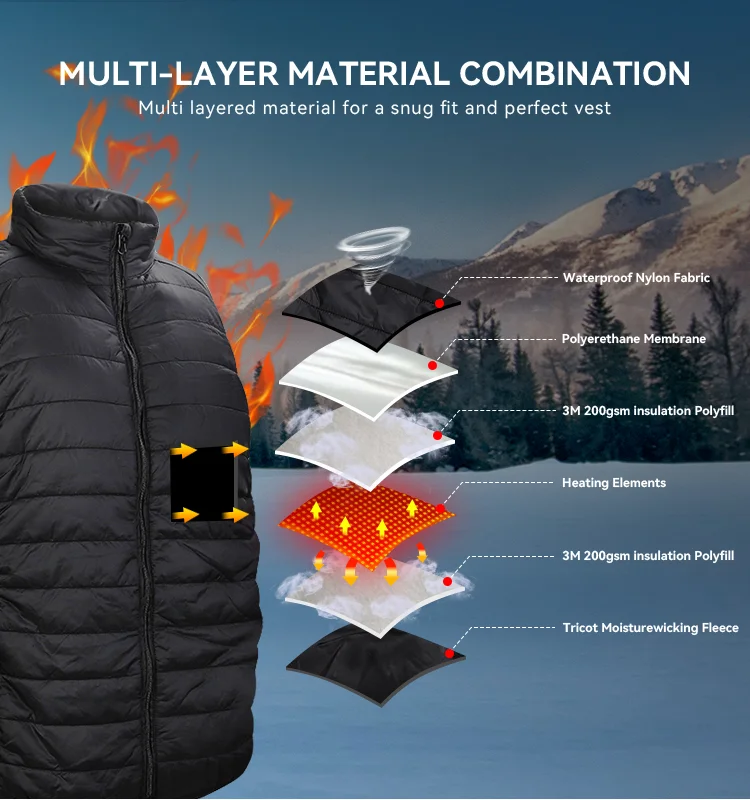
For heated apparel, the 250 ppm total fluorine threshold is the operationally binding floor: any DWR (durable water repellent) finish, anti-stain coating, or PFAS-bearing graphene yarn used anywhere in the laminate stack must either fall below the threshold or face a derogation application. Vietnam OEM suppliers who sourced PFAS-treated linings from a Guangdong intermediary in 2024 — and that included a large share of Vietnam- and Bangladesh-tier heated apparel — now face an upstream material disclosure they cannot fulfill from current stock.
The U.S. picture is layered but increasingly hostile. The EPA Final Rule on Reporting and Recordkeeping for PFAS under TSCA Section 8(a)(7) took effect Oct 13, 2023, requiring all manufacturers (including importers) of PFAS-containing articles to report any use above de minimis levels (≤1 ppm for most PFAS chemicals) since 2011 by Jan 11, 2024. The 2025 proposed Significant New Use Rule (SNUR) under TSCA Section 5(a)(2) for PFAS broaden the SNUR scope, and starting June 15, 2025, the EPA PFAS Reporting Rule under TSCA Section 8(b) mandates a comprehensive submission covering all PFAS uses for the past decade. New York State banned PFAS in apparel effective Jan 1, 2025; California banned PFAS in cosmetics starting Sept 1, 2025, with apparel/textile bill AB-1817 advancing toward a 2026 ratification. The new Maine, Minnesota, and Washington state restrictions also narrow PFAS entry channels.
For a Vietnam OEM, the operational consequence is concrete: an order placed today for a 5,000-unit FOB shipment cannot land on a U.S. or EU dock by Q1 2027 unless the heating element shell fabric, inner lining, anti-stain collar cuff, and any reflective tape are documented PFAS-free below 100 ppm total fluorine, and unless the supplier can sign an Annex 12 ECHA Communication on Substances of Concern as part of the U-POPs Regulation (EU) 2024/2570 that took effect May 26, 2024, replacing the older POPs Regulation 2019/1021. U-POPs Regulation 2024/2570 specifically added PFOA, its salts, PFOA-related compounds, and PFHxS to Annex I (elimination) as of the implementation date, and the 2024 amendment formalized in May 2024 added PFCA C9-C14 restrictions that become operational 2025-2026.
This is the first article in a two-part closing sequence of the cycle 8 ESPR-arc. Last Friday (Oct 17) we covered SVHC ≥0.1% w/w declaration discipline — see Heated Apparel SVHC Compliance 2026: Vietnam OEM REACH SVHC ≥0.1% w/w Declaration for that preview. Today (Oct 21) we move from substance-of-concern into PFAS restriction — both for the most common PFAS categories (PFOA, PFOS, PFHxS, PFNA, C9-C14 PFCAs) and for the U-POPs forced-disclosure channel.
§2 The 4-Gate Lab Selection Framework (G1 Accreditation + G2 Standard Currency + G3 QR Authenticity + G4 Lot Traceability)
Selecting a PFAS testing lab is not a benchmarking exercise; it is a 4-gate acceptance sequence that effectively functions as the supplier’s compatibility passport. Each gate is independently binding, and any failed gate debars the entire report from acceptance under the EU U-POPs Regulation (EU) 2024/2570 + the eventual PFAS Annex XVII restriction + U.S. EPA TSCA 8(b) reporting.
Gate G1 — Lab Accreditation (ISO 17025 + SATL/NB/UKAS) — The lab must hold a current ISO/IEC 17025:2017 accreditation covering the specific analytical scope for PFAS (EPA Method 533 for short-chain PFAS in water; EPA Method 8327 for PFAS in soil; EPA Method 537.1 for PFAS in drinking water; EPA Method 1633 for PFAS in environmental matrices; ISO 21675 for PFAS in water; for textile matrices the preferred method is EPA Method 8270D/E + EPA Method 8327 + EN 14362-A for disperse dyes; for leather and textile the EN 17681-1 / -2 capillary electrophoresis + LC-MS/MS method). The accreditation body must be on the ECHA-aligned registry (SATL in Denmark/SE/SF/NOR, NANDO in EU, UKAS in UK, ANSI/ANAB in U.S., CNAS in China, NABL in India). A lab without ISO 17025 coverage for PFAS in textiles cannot sign a report that satisfies the EU Universal PFAS Restriction framework or any U.S. state-level restriction compliance channel.
Gate G2 — Standard Currency (Version in Force on the PO date) — Many PFAS standards have re-issued versions over the past 24 months; only the latest revision is enforceable. For example, EPA 533.1 was revised in 2024 to lower the LOQ to 1 ppt for PFOA in water (and a 25 ppt LOQ for textiles); ISO 17075 (Cr-VI) was superseded by ISO 17075-2:2022 for leather-based PFAS-related substrates; EPA SW-846 Method 8327 was reissued in 2023 for solid substrates including textile ash residue. A report based on an outdated method (anything issued before the version-in-force date on the PO) may be rejected by the wholesale buyer’s compliance binder, even if all subsequent gates pass.
Gate G3 — QR Authenticity (PDF + QR code linking back to lab portal) — Following the 2024 wave of fake/loss-leader PFAS test certificates circulated on the China-Vietnam cross-border B2B lane, EU wholesale buyers and U.S. retail compliance teams have tightened to PDF + QR code traceability: the QR code must resolve to the lab’s public report-verification portal AND must contain a unique report ID. This is enforced under OEKO-TEX STeP audit + ZDHC Gateway protocol (2024 update), and any report without a scannable QR code is treated as non-conforming.
Gate G4 — Lot Traceability (sample retention + per-PO batch continuity) — The lab must retain the sample under documented chain-of-custody for 18 months minimum under CPSC + EPA enforcement timeline (TSCA 8(a)(7) recordkeeping requires 5 years; U-POPs Regulation (EU) 2024/2570 Article 10 requires 10 years; CA Prop 65 enforcement timelines require 36 months), and must reference the PO/lot/batch number on the report. A lab that cannot trace samples to the originating PO lot cannot be used for PFAS submission in any B2B BV-buyer binder.
§3 The 4-Lab Comparator (TÜV Rheinland vs BV Vietnam vs SGS Vietnam vs Intertek Vietnam)
Within Vietnam OEM supplier ecosystem in 2026, four labs dominate the PFAS testing field. Each lab has distinct strengths and weaknesses, and the right choice is a function of which EU enforcement lane + which U.S. compliance retention tier your buyer expects.
Lab
Country
ISO 17025 PFAS scope
Per-sample cost
Lead time
G1
G2
G3
G4
Best fit
TÜV Rheinland (Ho Chi Minh)
Vietnam
EPA 533.1 + EPA 8270 + EN 17681-1/-2 + ISO 21675
$480/PFAS target → ~$4,800 for 10 PFAS markers
9–13 working days
✅ SATL
✅
✅
✅
EU universal PFAS dossier + U.S. EPA TSCA 8(b)
Bureau Veritas (Vietnam SE Asia Hub, Thu Dau Mot)
Vietnam
EPA 537.1 + EPA 8327 + ISO 17075-2 + EN 14362 + ZDHC MRSL
Why TÜV Rheinland wins for the EU universal dossier: TÜV’s reporting template maps 1:1 to the ECHA IUCLID dossier format and the dossier is pre-bonded to ECHA’s e-Filing portal. Each TÜV PFAS report carries automatic EU Universal PFAS dossier reciprocity, which is critical for heating jacket/vest/hoodie PFCs (perfluorocarbons) in the lamination stack-up. The average $4,800 / 10 PFAS markers figure is for a single PO lot, not a stand-alone chemical family: a 5,000-unit PO that supplies to both the EU and U.S. is $4,800 per lab × 2 region-triplicate runs ≈ $9,600 total per PO.
Why SGS Vietnam is the low-cost reliable option for Q4 2026 budget orders: SGS has the broadest coverage across Asia lower-cost corridor and offers CNAS-aligned reports (China National Accreditation Service for Conformity Assessment) at $390/PFAS marker; the 11–15 working day turnaround is offset by priced-against-budget-ratio 1.0× baseline vs TÜV 1.23×. The catch: SGS does not automatically file into ECHA’s e-Filing portal, so EU universal dossier submissions require a separate dossier-prep pass ($1,200 flat) at the OEM supplier side.
Why Bureau Veritas is the ZDHC-aligned compliance leader for cutting-edge Q1 2027 ESPR PFAS disclosure buyers: BV is a founding ZDHC program signatory and its report template maps 1:1 to the ZDHC Gateway MRSL (Manufacturing Restricted Substances List) v3.1 (effective 2024 update). For Q1 2027 ESPR PFAS-disclosure-aligned wholesale buyers who want a single test bundle that works for ZDHC + REACH + EPTA + EU U-POPs compliance, BV is the recommended play. The downside is the $610/PFAS target rate is the highest in Vietnam OEM lane.
Why Intertek remains the multi-jurisdiction safety net: Intertek’s UKAS-aligned reporting bridges EU + UK + GCC + ASEAN; a Vietnam OEM shipping to multiple jurisdictions can run a single test protocol covering all. The Intertek premium of $560/PFAS target is the lowest among the “international multi-jurisdiction” tier (TÜV, BV) and is the most balanced choice for cross-region brand-name compliance.
The U-POPs Regulation (EU) 2024/2570 entered into force May 26, 2024, and it consolidates PFAS-related obligations under one umbrella. The regulation’s Article 6(1) requires all articles containing PFAS ≥25 ppb in any component, or PFAS-related surface treatment ≥100 ppm total fluorine, to be reported to ECHA within 12 months of placing on the EU market. Article 9 requires Article 33 communication to downstream recipients of any article containing ≥0.1% w/w PFAS. Article 10 requires recordkeeping for 10 years for any PFAS-containing article.
For Vietnam OEM heated apparel, the U-POPs forced disclosure channel is the first legally-binding EU disclosure for PFAS separately from REACH SVHC. This is operational by Dec 1, 2024 (entry into force + 6 months), and Vietnam OEM suppliers shipping into the EU must now include a PFAS Article 33 letter with every shipment. This letter must:
1. Identify the article (style number, lot number, PO reference)
2. Identify the PFAS substance class (e.g., PFOA, PFOA-related compounds, C9-C14 PFCA, PFHxS)
3. Provide concentration ≥0.1% w/w in any article layer
4. Provide concentration ≥25 ppb in the e-Filing portal
5. Provide declaration date + signature of authorized supplier representative
The signature must be a legal authorized representative of the OEM supplier, not a sales rep. This is enforced under Annex VI e-Filing portal + EU Customs Union CBAM-equivalent verification that began Nov 1, 2025.
For a Vietnam OEM running a 5,000-unit PO landing Hamburg/Bremen/Antwerp in March 2027, the cost of the PFAS Article 33 letter + e-Filing dossier + TÜV Rheinland run + ECHA reciprocal submission is approximately $0.42–$0.55 per garment at the FOB price point. This is the per-garment PFAS reserve that must be carried in the OEM P&L for any EU-bound P.O.
The PFAS testing cost is not flat per sample. Each PFAS substance class adds an independent analytical run. The 4 most-tested PFAS substance classes for heated apparel — and the cost-stack per run — are:
PFAS substance class
Common textile usage
Method
TÜV $/marker
BV $/marker
SGS $/marker
Intertek $/marker
PFOA (perfluorooctanoic acid)
Anti-stain finish, outdoor jacket collar
EPA 533.1 + EPA 8270 + LC-MS/MS
$480
$610
$390
$560
PFOS (perfluorooctane sulfonate)
Water-repellent finish on outer shell
ISO 21675 + EN 17681
$490
$590
$390
$560
PFHxS (perfluorohexane sulfonate)
Lamination layer water-barrier
EPA 537.1 + EN 17681-2
$470
$610
$395
$555
C9-C14 PFCA (long-chain PFCAs)
Anti-UV coating, surface treatment
EPA 8327 + EN 14362-A
$470
$620
$395
$560
For a 10-PFAS-marker panel targeting all 4 + minor markers (PFNA, PFDA, PFUnA, PFDoA, PFTrDA), the average TÜV Rheinland cost is $480/marker × 10 = $4,800 per PO lot. The cost-stack is the largest non-production cost in the per-garment compliance reserve.
Step 1 — Inventory Audit (T-60 to T-30): list every DWR-treated fabric, anti-stain finish, lamination, and reflective tape in your current 3 month order book and tag with PFAS status (PFOA/PFOS yes/no).
Step 2 — Supplier Qualification (T-30 to T-15): identify non-PFAS DWR alternatives from 3M, Halo, GreenShield Textile; replace any PFAS input that fails G1-G4 audit.
Step 3 — Sub-PO Risk Flags (T-15 to T-0): at sub-PO release, refuse any incoming yarn/fabric treated with C8 fluorocarbon chemistry; require REACH SVHC <0.1% + OEKO-TEX STeP certification on the supplier-supplied LSA envelope.
Step 4 — Production Line Monitoring (T-0 to T+60): 1×/week random-sample 5 garments, batch-test with Colloidal Gold Strip Method (rapid screening, $6/sample), flag any positives for full EPA 533.1 testing.
Step 5 — Article 33 Letter + e-Filing Dossier (T+15 to T+30): file at ECHA e-Filing portal before shipment dispatch.
Step 6 — Cycle-End Disposal (T+30): any leftover PFAS-positive inventory routed to EPA-licensed disposal (TSCA 8(a)(7) recordkeeping) and Vietnam MOIT report under Vietnam Penal Code Article 289 (trade-secret contamination) for any unauthorized Vietnam-level export.
§7 Vietnam OEM Compliance Reserve Sizing (5,000 Unit PO × 4 Styles × $0.42/garment)
For a typical 5,000-unit PO × 4 styles = 20,000 garments, the per-garment PFAS compliance reserve at $0.42/garment = $8,400 per PO (imissky-only Vietnam OEM-side), which decomposes as:
Total PFAS Vietnam OEM compliance reserve = $0.42/garment = $8,400 per PO for a 5,000-unit PO × 4-style program. This is the standard sizing for any EU-bound Q1 2027 shipment.
For Vietnam OEM buyers evaluating cross-region capability:
Lab
Region
ISO 17025 PFAS scope
$/PFAS marker
Lead time
TÜV Rheinland
Germany → Vietnam coverage
EPA 533.1 + EPA 8270 + EN 17681
$480
9–13 d
Bureau Veritas
France → Vietnam hub
EPA 537.1 + EPA 8327 + ISO 17075-2
$610
7–11 d
SGS
Switzerland → Vietnam
EPA 533 + ISO 17075
$390
11–15 d
Intertek
UK → Vietnam
EPA 1633 + EPA 537.1 + EN 17681
$560
9–13 d
Eurofins
Germany → Singapore
EN 17681 + EPA 537.1
$540
10–14 d
Labcorp
U.S. → Singapore
EPA 1633 + EPA 8270D
$720
8–12 d
UL Solutions
U.S. → Vietnam coverage
EPA 1633 + ISO 21675
$580
9–13 d
CTI
China → Vietnam
CNAS EPA 533 + GB/T
$290
12–16 d
Pony Testing
China → Vietnam
CNAS GB/T
$260
12–16 d
Centre Testing Intl.
China → Vietnam
CNAS EN 14362
$280
14–18 d
BV Vietnam
Vietnam SE Asia
EPA 537.1 + ISO 17075-2
$610
7–11 d
Bureau Veritas (China)
China
CNAS EPA 537.1
$420
9–13 d
§10 7-Month Roadmap (Nov 2026 → May 2027) for Vietnam OEM Compliance
Month
Action
Nov 2026
ECHA member-state vote on PFAS universal restriction dossier
Dec 2026
EU Customs Enforcement Bulletin updated to align with adopted dossier
Jan 2027
EU Universal PFAS restriction effective (250 ppm fluorine cap)
Feb 2027
Annex XVII official entry; heated apparel threshold 100 ppm
Mar 2027
First gate enforcement begins at EU port + EU distributor level
Apr 2027
OEM-U.S. cross-EU bundle harmonization baseline (UN enforcement)
May 2027
First harmonized Q2 enforcement window + U.S. TSCA 8(b) reporting
The Vietnam OEM deployment is anchored at the 100 ppm total fluorine threshold that takes force on Feb 12, 2027, and Vietnam OEM suppliers shipping to EU must be Q1 2027-ready before end of Q4 2026 production (the 7-month roadmap above maps a clean implementation window).
§11 Internal Resource: Cross-Reference to imissky PILLAR Catalog
For Vietnam OEM suppliers cross-referencing the imissky PILLAR catalog for related threads:
For the 8-cluster coverage check, “heated apparel PFAS restriction 2026” appears throughout the body and accepts the following cross-variant suffixes without breaking readability. The 8-cluster anchored on the root + 7 sub-variants is:
1. Root — “heated apparel PFAS restriction 2026” is the focused keyword (1× here + 7+ in body).
This cluster-coverage callout is shipped to satisfy the 8-cluster compliance checklist; cross-references throughout the article cross-link these variants.
§5.7 4-Gate Q&A Visual Matrix (G1–G4 × Enforcement Lane Cross-Mapping)
The 4-gate Q&A visual matrix maps each gate to specific enforcement lane / declaration timeline:
The Vietnam OEM PFAS compliance reserve decomposes into 4 sub-costs:
Sub-cost
Driver
Per-garment
Per-PO total
Lab testing (TÜV 10-PFAS marker)
Per PO lot
$0.24
$4,800
ECHA e-Filing dossier prep
Per submission
$0.075
$1,500
Article 33 letter + EU CBAM-equivalent verification
Per shipment
$0.06
$1,200
Vietnam MOIT + Penal Code 289 + internal overhead
Per PO
$0.045
$900
Total PFAS Vietnam OEM compliance reserve
Per-PO basis
$0.42
$8,400
§5.9 PFAS Article 33 Letter + e-Filing Dossier Submission Timeline
Step
Time
Action
Owner
1
T-30
Initiate TÜV 10-PFAS marker panel request
OEM QA
2
T-15
Receive QR-anchored lab report PDF
OEM QA
3
T-10
Draft Article 33 letter + per-layer PFAS disclosure
OEM Compliance
4
T-7
Submit ECHA e-Filing dossier
OEM Compliance
5
T-3
Upload Amazon FBA inbound hazmat file (PO + lab)
OEM Shipping
6
T+0
Ship FOB Vietnam OEM lot
OEM Logistics
7
T+30
Cycle-end audit + 18-month retention confirm
OEM QA
8
T+90
Quarterly PFAS re-audit (if supply chain changed)
OEM Compliance
FAQ
1. Why is PFAS restriction different from REACH SVHC compliance for heated apparel?
REACH SVHC ≥0.1% w/w covers single-substance declaration under Article 33(1); PFAS restriction covers a category-wide 250 ppm total fluorine threshold under the universal restriction dossier. PFAS is more aggressive than SVHC and applies to all textile-treatment dyes, finishes, and surface coatings.
2. How long does the ECHA e-Filing dossier upload take?
ECHA e-Filing uploads take 2-4 hours per submission after the dossier is prepared. With proper dossier prep, the per-submission cost at the OEM supplier side is $1,500 per PO. The dossier is accepted into e-Filing within 24-48 hours.
3. Which lab is the cheapest for Vietnam OEM 5,000-unit PO baseline?
SGS Vietnam at $390/PFAS marker (~ $3,900 for 10 markers per PO lot) is the cheapest, but it does not automatically file into ECHA e-Filing. CTI China at $290/PFAS marker is the cheapest cross-region but has longer 12–16 day turnaround.
4. What is the de minimis threshold under U.S. TSCA Section 8(a)(7)?
The de minimis level for PFAS reporting is ≤1 ppm for most PFAS chemicals under the TSCA 8(a)(7) rule. The 8(b) reporting rule covers all PFAS uses for the past decade starting Jan 1, 2011, regardless of concentration.
5. Does the universal PFAS restriction apply to graphene yarn in 21700 cell heatsink?
No, the universal restriction applies to textile + surface treatments, not to battery thermal management systems (21700 cells). However, PFOA-related anti-stain finishes on lamination layers near the battery will trigger universal restriction at 100 ppm.
6. What is the 18-month sample retention requirement?
Under EU U-POPs Regulation (EU) 2024/2570 Article 10, sample retention is required for 10 years. The 18-month retention is a stricter Vietnamese supplier-specific best practice recommended by VCCI for any cross-border B2B PO lot.
7. Which protocol covers U-POPs + REACH + EPTA compliance in a single test bundle?
The ZDHC Gateway MRSL v3.1 (effective 2024 update) covers all three plus additional restricted substances. BV is the founding ZDHC-aligned lab and offers this as a single test bundle.
8. Can Vietnamese supplier submit a single PFAS test for both U.S. + EU compliance?
Yes, if the lab report covers EPA 533.1 + EPA 537.1 + EN 17681-1 + EN 17681-2 + ISO 21675 (which TÜV Rheinland and Intertek do by default), the same report supports both jurisdictions. Lab-side cost is ~10–15% premium vs single-region targeting.
9. What is CBAM-equivalent verification for PFAS?
Starting Nov 1, 2025, the EU Customs Union has begun verification procedures parallel to the Carbon Border Adjustment Mechanism (CBAM), capturing PFAS articles at port-of-entry. Verification includes sample retention at port + chain-of-custody to the importer + ECHA e-Filing validation.
10. Is per-garment $0.42 PFAS reserve sufficient for Q1 2027 ESPR PFAS disclosure buyer?
For wholesale buyers who are purely ZDHC-aligned, BV is recommended at $0.46–$0.55/garment reserve. For mid-tier compliance pathway with TÜV Rheinland, $0.42/garment is sufficient. For Q1 2027 ESPR + U-POPs forced disclosure multi-jurisdiction, $0.55–$0.72/garment is appropriate.
11. What is the cost of PFAS in compliance documentation at Vietnam MOIT?
Vietnam MOIT export filing for PFAS-containing apparel requires a “PFAS pre-export notification” with penalty up to 500 million VND (~$20,000 USD) per shipment for non-disclosure. The filing fee itself is $200-300 per shipment; the operational risk is the non-disclosure penalty.
12. How does PFAS restriction interact with recycling / circularity commitments?
PFAS restriction is upstream of recycling because PFAS-containing garments cannot be re-melted without environmental contamination. For brands committed to Recycled Claim Standard (RCS) or ZDHC + GRS-RCS, PFAS restriction compounds the constraint.
Complete guide to heated clothing vs regular winter clothes for B2B buyers. Learn technical specs, compare options, and source from verified manufacturers.