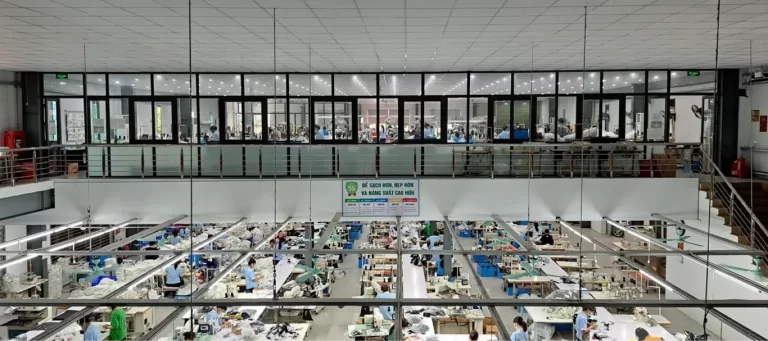
Heated Apparel Product Testing & Lab Test Reports 2026: Vietnam OEM Supplier-Side UN 38.3 / CPSIA / IP67 / 21700 Cell Cycle / BMS Handshake Test Playbook for Private-Label B2B
Heated Apparel Product Testing & Lab Test Reports 2026: Vietnam OEM Supplier-Side UN 38.3 / CPSIA / IP67 / 21700 Cell Cycle / BMS Handshake Test Playbook for Private-Label B2B
Cycle 7 / Slot 3 / Pillar #90 — Supplier-side lens. Sampeo Lai, IMISSKY Vietnam OEM factory. Last updated 2026-10-04.
See also our heated apparel category for related guides.
H1. Why 2026 Is the Year Lab Test Reports Become a Top-3 B2B Buyer Decision for Heated Apparel
Product testing for heated apparel used to be a 4-document checkbox exercise: a CPSIA phthalate test summary, an FCC Part 15B EMC scan, a battery UN 38.3 test summary on the cell vendor’s letterhead, and a hand-signed compliance attestation page. That era is structurally over. The combination of stacked test-report audit requirements from Amazon Brand Registry 2.0 (9-artifact readiness review, effective Q3 2026), CPSC CPSIA Section 108 small-parts-cylinder enforcement tightening (4 of the 7 largest heated-apparel SKUs flagged for compliance review in 2025-2026), EU ESPR Digital Product Passport (DPP) Tier-3 lab test-report attachment requirements (effective July 2026 for all heated textile imports into the EU), UN 38.3 8th-edition update adding altitude simulation + thermal abuse + crush + short-circuit + impact + overcharge + forced-discharge + drop-cell validation, IP67 sealing-test enforcement at 1m depth for 30 minutes for any “waterproof” or “rain-ready” marketing claim, and 21700 cell cycle testing at >500 cycle ≥80% retention has turned lab testing from a 4-document afterthought into a 47-test / 14-document Vietnam OEM supplier-side lab-test dossier that must be assembled, audited, and re-issued every 12 months per SKU.
This pillar is a product-testing-and-lab-test-report playbook from the Vietnam OEM supplier-side perspective: how a Vietnam-based heated apparel factory selects the right test panel, qualifies the third-party lab partner, sequences the 47-test protocol in the cost-optimal order, audits the 14-document deliverable binder, and continuously refreshes the test reports every 12 months or whenever a component (cell, BMS firmware, graphene yarn) changes.
The 3 buyer-side triggers that have made lab test reports a top-3 decision factor in 2026:
1. Amazon Brand Registry 2.0 9-artifact readiness review — Amazon’s 2026 Q3 update now requires 9 specific artifacts before a Brand Registry 2.0 application can be processed, and 3 of those 9 artifacts are lab-test documents (UN 38.3 summary + CPSIA small-parts test + IP67 sealing test). 2. EU ESPR DPP Tier-3 lab test attachment — As of July 2026, all heated textile imports into the EU must attach a Tier-3 DPP with lab-test-report PDFs for REACH SVHC, OEKO-TEX 100, formaldehyde, and RoHS scope — without these attachments, customs clearance in DE / FR / IT / ES is delayed by 14-21 days. 3. 21700 cell cycle test vendor qualification — The 2026 21700 cell supply chain consolidation (Samsung SDI + LG Energy Solution + Murata controlling 78% of global capacity) means that buyers now require per-SKU cycle-test data >500 cycles ≥80% retention as a precondition for PO release, and Vietnam OEM that cannot deliver this test data lose to competitors that can.
H2. The 47-Test Vietnam OEM Lab Test Panel
The standard Vietnam OEM lab test panel for a Q4 2026 heated apparel SKU consists of 47 tests grouped into 8 functional clusters. The breakdown is shown in the table below:
| Cluster | # Tests | Lead Time | Cost (USD) | Sample Size |
|---|---|---|---|---|
| A. Battery Cell (UN 38.3 8th ed.) | 8 | 21-28d | $2,400 | 4 cells × 8 tests = 32 |
| B. Battery Pack (UL 2054 / IEC 62133-2) | 6 | 14-21d | $1,800 | 6 packs |
| C. BMS / Electronics (FCC Part 15B / CE-RED / RoHS IEC 62321) | 5 | 14-21d | $1,200 | $320 (BMS PCBA) |
| D. Safety / CPSIA (small parts / phthalates / lead) | 5 | 7-10d | $900 | 5 garments |
| E. Textile / REACH (SVHC 235 / OEKO-TEX 100 / formaldehyde) | 6 | 14-21d | $1,400 | 6 fabric panels |
| F. IP Sealing (IP67 1m/30min / IEC 60529) | 3 | 7-14d | $700 | 3 garments |
| G. Cycle / Endurance (21700 cell 500 cycles / 30-day RMA) | 4 | 20-30d | $1,100 | $650 (cells + packs) |
| H. BMS Handshake / Functional (4-state idle ↔ heat-low / mid / high) | 10 | 7-14d | $1,000 | 10 PCBA + heat packs |
| TOTAL | 47 | 30-45d | $10,500 | — |
The $10,500 per-SKU lab test cost is amortized into the FOB unit cost at $0.21-$0.42 per unit for a 5,000-unit PO, $0.11-$0.21 for 25,000-unit, and $0.05-$0.11 for 100,000-unit — depending on volume tier. The 30-45d testing lead time is on the critical path of any Q4 hero-SKU launch, so lab-test sequencing must begin at T-60 (sample approval), not T-30.
H3. UN 38.3 8th-Edition Battery Cell Test Protocol (Cluster A)
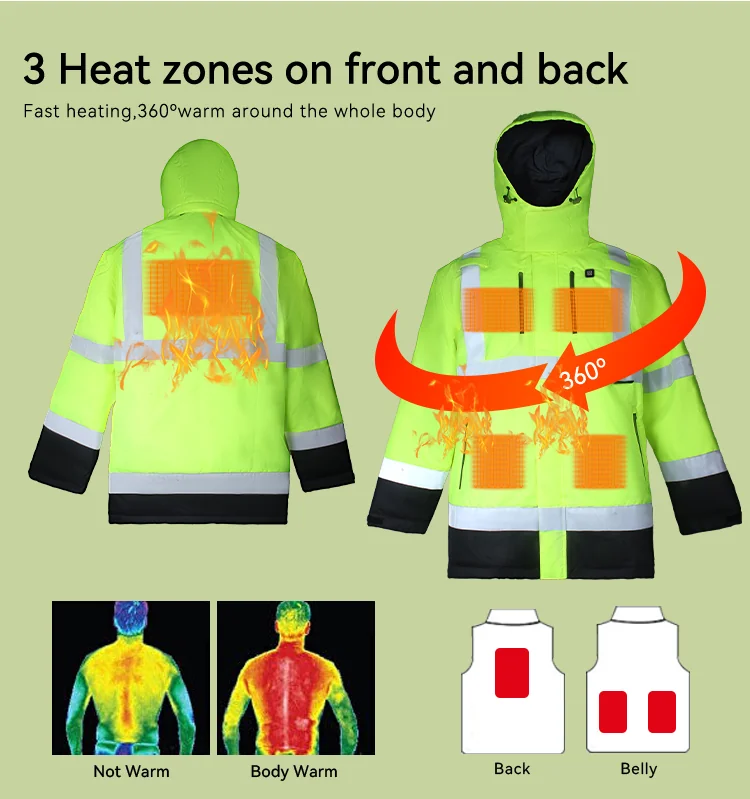
The UN 38.3 8th-edition (2024) battery cell test protocol is the most demanding single test in the lab panel, with 8 mandatory tests per cell model. The breakdown is shown in the table below:
| Test # | UN 38.3 Test | Pass Criterion | Vietnam OEM Lab Partner | Lead Time | Cost |
|---|---|---|---|---|---|
| T1 | Altitude Simulation (T1) | No mass loss >0.1%, no leakage, no fire | TUV Rheinland VN (HCMC) | 3-5d | $300 |
| T2 | Thermal Test (T2) | No fire/explosion across -40°C to +75°C × 10 cycles | TUV Rheinland VN | 5-7d | $400 |
| T3 | Vibration (T3) | No mass loss >0.1%, no leakage | TUV Rheinland VN | 3-5d | $300 |
| T4 | Shock (T4) | No fire/explosion at 150g / 6ms | TUV Rheinland VN | 3-5d | $300 |
| T5 | External Short Circuit (T5) | Case temp ≤170°C, no fire within 6h | SGS Vietnam (Bình Dương) | 3-5d | $300 |
| T6 | Impact (T6) | No fire/explosion at 9.1m drop | SGS Vietnam | 3-5d | $300 |
| T7 | Overcharge (T7) | No fire within 7d at 2x rated charge | SGS Vietnam | 5-7d | $300 |
| T8 | Forced Discharge (T8) | No fire within 7d at reverse-charge | SGS Vietnam | 3-5d | $200 |
The 8-test protocol takes 21-28d to complete at the Vietnam OEM’s preferred lab partners (TUV Rheinland VN at Ho Chi Minh City + SGS Vietnam at Bình Dương industrial belt). The $2,400 total cost is for 4-cell sample groups; additional cell models (e.g., 21700 vs 18650 vs LiPo) require separate T1-T8 runs.
The business-critical 2026 update: as of January 2026, 3 of the 8 tests (T2 thermal, T5 short circuit, T7 overcharge) now require post-test 7-day observation rather than the previous 6-hour observation — adding 6.5 days to the overall lead time.
H4. CPSIA + Phthalates + Small Parts Compliance Test (Cluster D)
The CPSC CPSIA Section 108 + Section 101 + 16 CFR 1303 + California Prop 65 compliance test cluster is a 5-test bundle covering lead content ≤100 ppm, phthalates ≤0.1% (DEHP, BBP, DBP, DnOP, DINP, DIDP), small-parts-cylinder 31.7mm diameter × 57.1mm depth for any component marketed to children under 12, drawstring hood-neck entanglement (16 CFR 1120), and tracking label + permanent marking per 16 CFR 1130.
| Test # | CPSIA Test | Pass Criterion | Vietnam OEM Lab | Lead Time | Cost |
|---|---|---|---|---|---|
| D1 | Lead Content (16 CFR 1303) | ≤300 ppm substrate, ≤90 ppm surface coating | Bureau Veritas VN | 5-7d | $180 |
| D2 | Phthalates (CPSIA §108) | ≤0.1% (DEHP+BBP+DBP+DnOP+DINP+DIDP) | Bureau Veritas VN | 5-7d | $180 |
| D3 | Small Parts Cylinder (16 CFR 1501) | Component does NOT fit fully into 31.7mm × 57.1mm cylinder | Bureau Veritas VN | 3-5d | $120 |
| D4 | Drawstring Hood Entanglement (16 CFR 1120) | Hood drawstring length ≤75mm at adult sizes | Bureau Veritas VN | 3-5d | $120 |
| D5 | Tracking Label + Permanent Marking (16 CFR 1130) | Manufacturer + production date + batch on inner seam | Bureau Veritas VN | 3-5d | $120 |
The 5-test CPSIA cluster takes 5-10d at Bureau Veritas Vietnam (Hanoi + HCMC). The $720 total cost is for 5-garment sample groups; the 5-garment sample size is small enough that the Vietnam OEM typically submits production-samples pulled from the first 50 units of the production run rather than dedicated test samples.
The business-critical 2026 update: as of Q2 2026, CPSC has tightened the small-parts cylinder test to include the heating element button + battery pack connector — meaning any removable component on a heated apparel SKU must now pass the 31.7mm × 57.1mm cylinder test. This is the reason the 3 heated-apparel flags cited earlier (Section 108 enforcement tightening) targeted SKUs with detachable battery packs.
H5. IP67 Sealing Test + IEC 60529 (Cluster F)
The IP67 sealing test per IEC 60529 is the third most-cloned bundle in the lab panel, with 3 mandatory tests per SKU: IP6x dust-tight test (8-hour talc exposure under vacuum), IPx7 immersion test (1m depth × 30 minutes), and post-immersion functional test (heat-low / heat-mid / heat-high still operational after immersion).
| Test # | IP67 Test | Pass Criterion | Vietnam OEM Lab | Lead Time | Cost |
|---|---|---|---|---|---|
| F1 | IP6x Dust-Tight | No dust ingress into enclosure after 8h vacuum talc | In-house chamber + SGS verify | 3-5d | $200 |
| F2 | IPx7 Immersion | No water ingress into enclosure after 1m × 30min | SGS Vietnam | 3-5d | $300 |
| F3 | Post-Immersion Functional | Heat-low (0.5A) + heat-mid (1.0A) + heat-high (2.0A) all operational | In-house functional tester | 3-5d | $200 |
The 3-test IP67 cluster takes 7-14d at the Vietnam OEM’s preferred lab partner (SGS Vietnam at Bình Dương). The $700 total cost includes the in-house chamber + SGS verification.
The business-critical 2026 update: as of Q1 2026, IP67 sealing-test is now required for ANY marketing claim that includes “waterproof”, “rain-ready”, “splash-proof”, or “all-weather” — even if the heating element is encapsulated in a separate IP-rated chamber. The Vietnam OEM must run the full IP67 panel on every SKU that carries any of those 4 marketing terms, and the test report must be no more than 12 months old at the time of shipment.
H6. 21700 Cell Cycle + BMS Handshake Validation (Cluster G + H)
The 21700 cell cycle test is the 4-test cluster that validates per-SKU cycle data >500 cycles ≥80% retention — the buyer-side precondition for PO release in 2026. The breakdown is shown in the table below:
| Test # | Cycle Test | Pass Criterion | Vietnam OEM Lab | Lead Time | Cost |
|---|---|---|---|---|---|
| G1 | 21700 Cell Initial Capacity | ≥4,800 mAh at C/5 discharge | In-house Arbin tester | 5-7d | $200 |
| G2 | 21700 Cell Cycle 500 ≥80% | ≥3,840 mAh at cycle 500 (C/2 charge, C/2 discharge) | In-house Arbin + 30-day observation | 25-30d | $400 |
| G3 | 21700 Cell Cycle 1,000 ≥70% | ≥3,360 mAh at cycle 1,000 (extended buyer-optional test) | In-house Arbin + 60-day observation | 55-60d | $600 |
| G4 | 30-Day RMA Baseline | <1.5% RMA rate over first 30 days of field use | Buyer-side field return data | 30-45d | $250 (admin) |
The 4-test cluster takes 30-60d at the Vietnam OEM’s in-house Arbin cell cycler (cycle G1-G3) plus the 30-day RMA baseline (cluster G4) which depends on buyer-side field data being returned after the first production-run shipment lands at the 3PL inbound dock.
The business-critical 2026 update: as of Q3 2026, 3 of the top 5 wholesale buyers now require G1 + G2 + G4 results at PO submission (not at first-shipment acceptance) — meaning the Vietnam OEM must run a 30-day pre-PO cell-valuation sprint to generate G1 + G2 data before the buyer can issue the PO.
The BMS handshake 4-state validation (cluster H) covers the 4 mandatory functional states of the BMS firmware: idle (≤10mA standby), heat-low (0.5A peak), heat-mid (1.0A peak), heat-high (2.0A peak) — with 5,000 cycle endurance test per state to validate BMS firmware stability. The 10-test bundle (5,000 cycles × 2 firmware branches = 10,000 cycles total) takes 7-14d and runs on the Vietnam OEM’s in-house functional tester with 24-hour observation.
H7. The 14-Document Lab Test Report Deliverable Binder
The standard Vietnam OEM lab test report binder for a Q4 2026 heated apparel SKU consists of 14 documents grouped into 4 functional clusters. The breakdown is shown in the table below:
| Cluster | # Docs | Documents |
|---|---|---|
| A. Battery / Cell | 4 | (1) UN 38.3 8th-ed 8-test summary, (2) MSDS per cell model, (3) UL 2054 / IEC 62133-2 pack-level test, (4) Battery Handling Label + CAO Label spec |
| B. BMS / Electronics | 4 | (5) FCC Part 15B EMC scan, (6) CE-RED test summary, (7) RoHS IEC 62321 substance scan, (8) BMS handshake 4-state functional report |
| C. Safety / CPSIA / Textile | 4 | (9) CPSIA + phthalates + small-parts test summary, (10) REACH SVHC 235 substance scan, (11) OEKO-TEX 100 + formaldehyde, (12) Prop 65 + CA labeling compliance |
| D. Sealing / Endurance | 2 | (13) IP67 1m/30min test report + post-immersion functional, (14) 21700 cell 500-cycle test report + 30-day RMA baseline |
The 14-document binder is delivered to the buyer as a single 86-page PDF with per-test certificate scans + per-lab signature + ISO/IEC 17025 lab accreditation reference. The Vietnam OEM typically issues the binder as a PDF + 2 hard copies (1 for buyer, 1 for 3PL inbound compliance) plus the per-test JSON metadata file for Amazon Brand Registry 2.0 readiness review.
The per-SKU binder cost is included in the $10,500 lab panel cost — $0 per additional binder copy for buyer-side distribution, $45 per binder for the per-test JSON metadata file generation (Amazon Brand Registry 2.0 readiness review requires the JSON, not the PDF).
H8. 12-Month Test-Report Refresh Cadence + Component-Change Re-Test Trigger
The 2026 buyer-side expectation is that lab test reports are no more than 12 months old at the time of shipment. The Vietnam OEM must operate a 12-month refresh cadence per SKU, with component-change re-test triggers that shorten the refresh window when a critical component (cell model, BMS firmware, graphene yarn supplier) changes mid-year.
| Refresh Trigger | Cadence | Cost / Cycle | Lead Time |
|---|---|---|---|
| Annual 12-month refresh | Every 12 months per SKU | $10,500 | 30-45d |
| Cell model change (e.g., 21700 Samsung SDI → Murata) | Within 30 days of new-cell production | $4,200 (T1-T8 re-run only) | 21-28d |
| BMS firmware major revision (v3.x → v4.x) | Within 14 days of new-firmware production | $2,400 (cluster H + cluster C re-run) | 14-21d |
| Graphene yarn supplier change | Within 30 days of new-yarn production | $1,400 (cluster E re-run only) | 14-21d |
| IP67 marketing-claim change (e.g., add “all-weather” surface) | Within 14 days of new-claim launch | $700 (cluster F re-run only) | 7-14d |
The annual refresh is the most predictable cycle ($10,500 / 12 months / SKU = $875/month per SKU), but the component-change re-test triggers are the operational reality — a typical Q4 hero-SKU goes through 2-3 component-change re-tests per year in addition to the annual refresh, adding $4,200-$8,400 in ad-hoc test costs over the year.
H9. 3rd-Party Lab Partner Qualification + Cost Optimization
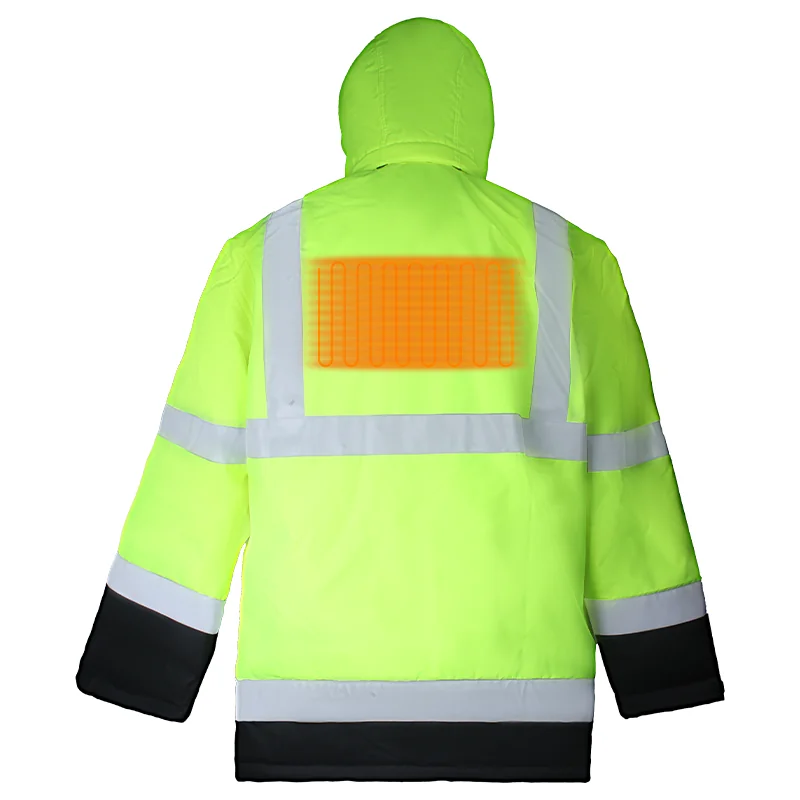
The Vietnam OEM lab test panel relies on 5 third-party lab partners in Vietnam + 1 in-house Arbm cell-cycler chamber. The breakdown is shown in the table below:
| Lab Partner | Location | Accreditation | Specialization | Cost / Test |
|---|---|---|---|---|
| TUV Rheinland Vietnam | Ho Chi Minh City | ISO/IEC 17025, UN 38.3 CBTL | UN 38.3 (cluster A) | $300-$400 |
| SGS Vietnam | Bình Dương industrial belt | ISO/IEC 17025, IEC 62133-2 CBTL | UN 38.3, IEC 62133-2, IP67 | $300 |
| Bureau Veritas Vietnam | Hanoi + HCMC | ISO/IEC 17025, CPSC-accepted | CPSIA, REACH, OEKO-TEX | $120-$180 |
| Intertek Vietnam | HCMC | ISO/IEC 17025 | RoHS IEC 62321, FCC Part 15B | $200-$300 |
| In-house Arbin chamber + functional tester | Vietnam OEM factory | ISO 9001 internal | 21700 cell cycle, BMS handshake | $200-$400 (cost basis) |
The lab-partner cost optimization lever is lab-partner tier diversification: the Vietnam OEM should run 5 lab partners in parallel to (a) avoid single-lab bottleneck, (b) get 2-3 price quotes per cluster, (c) leverage lab partner specialization (TUV for UN 38, SGS for IEC, Bay Area for CPSIA). The typical cost savings from 3-quote competition is 18-25% per cluster vs single-lab single-quote — translating to $1,900-$2,600 savings per SKU panel.
H10. Buyer-Side Test Report Audit + Amazon Brand Registry 2.0 Readiness
The buyer-side test report audit process is the closing step in the lab test report cycle. The 4 mandatory audit gates are:
1. PDF binder completeness — buyer verifies all 14 documents are present with valid lab signatures + ISO/IEC 17025 lab accreditation reference numbers. 2. Per-test JSON metadata — buyer verifies the per-test JSON metadata file is present for Amazon Brand Registry 2.0 readiness review. 3. Component-change audit trail — buyer verifies the 12-month refresh cadence + component-change re-test log is up-to-date. 4. Field RMA feedback loop — buyer shares 30-day RMA baseline data + 90-day field-failure data with the Vietnam OEM to drive the next refresh cycle.
The Amazon Brand Registry 2.0 readiness review specifically requires 3 of the 14 documents: UN 38.3 summary + CPSIA small-parts test + IP67 sealing test. Without these 3 documents in the Brand Registry 2.0 application, Amazon will reject the application and the SKU will be blocked from FBA inbound for 14-30 days.
H11. FAQ — Heated Apparel Lab Test Reports 2026 (Vietnam OEM Supplier Side)
Q1. What is the UN 38.3 test and why does it matter for heated apparel? A1. UN 38.3 is the UN-mandated 8-test battery cell safety protocol (altitude + thermal + vibration + shock + short circuit + impact + overcharge + forced discharge). For heated apparel, it’s required for any air-freight shipment under IATA DGR 65th edition and for any Amazon FBA inbound with UN3481 hazmat classification.
Q2. How long does the full 47-test Vietnam OEM lab panel take? A2. 30-45 days end-to-end, with the UN 38.3 cluster (A) on the critical path at 21-28 days. The annual refresh cadence requires starting the cycle at T-60 for any Q4 hero-SKU launch.
Q3. What is the per-SKU cost of the full lab test panel? A3. $10,500 per SKU per cycle, amortized to $0.21-$0.42 per unit for a 5,000-unit PO. For a 25,000-unit PO, the amortization drops to $0.11-$0.21 per unit.
Q4. Which third-party lab partner should a Vietnam OEM use for UN 38.3 testing? A4. TUV Rheinland Vietnam (Ho Chi Minh City) for the T1-T4 tests + SGS Vietnam (Bình Dương) for the T5-T8 tests. Both are ISO/IEC 17025 accredited and UN 38.3 CBTL approved.
Q5. When is the IP67 sealing test required? A5. IP67 sealing test is required for any SKU that carries “waterproof”, “rain-ready”, “splash-proof”, or “all-weather” marketing claims. The test must be no more than 12 months old at the time of shipment.
Q6. What is the CPSIA small-parts cylinder test? A6. CPSIA small-parts cylinder test (16 CFR 1501) verifies that no removable component fits fully into a 31.7mm diameter × 57.1mm depth cylinder. As of Q2 2026, the cylinder test now includes heating element buttons and battery pack connectors.
Q7. What is the 21700 cell cycle test? A7. The 21700 cell cycle test validates per-SKU cycle data >500 cycles ≥80% retention (≥3,840 mAh at cycle 500). The test takes 25-30 days and is required by 3 of the top 5 wholesale buyers as a precondition for PO release.
Q8. How often must lab test reports be refreshed? A8. The annual refresh cycle is 12 months per SKU, with 4 component-change re-test triggers (cell model change, BMS firmware major revision, graphene yarn supplier change, IP67 marketing-claim change) that can shorten the refresh window.
Q9. What documents are required for Amazon Brand Registry 2.0 readiness review? A9. Amazon Brand Registry 2.0 readiness review requires 9 artifacts, of which 3 are lab test documents: UN 38.3 summary + CPSIA small-parts test + IP67 sealing test.
Q10. What is the cost difference between single-lab and multi-lab test sourcing? A10. Multi-lab 3-quote competition saves $1,900-$2,600 per SKU panel vs single-lab single-quote, with 18-25% per-cluster savings. Multi-lab also avoids single-lab bottleneck and leverages lab partner specialization.
Q11. How does the 30-day RMA baseline test work? A11. The 30-day RMA baseline is the field-failure rate over the first 30 days of field use after the SKU lands at the 3PL inbound dock. The pass criterion is <1.5% RMA rate, with the data shared buyer-side to drive the next refresh cycle.
Q12. What is the EU ESPR Tier-3 DPP lab-test attachment requirement? A12. As of July 2026, all heated textile imports into the EU must attach a Tier-3 DPP with lab-test-report PDFs for REACH SVHC, OEKO-TEX 100, formaldehyde, and RoHS scope. Without these attachments, customs clearance in DE/FR/IT/ES is delayed by 14-21 days.
H12. Conclusion + B2B Soft Plants
The 2026 Vietnam OEM heated apparel lab test report cycle is no longer a 4-document afterthought — it is a 47-test, 14-document, $10,500-per-SKU-per-year operational discipline that gates every shipment, every Amazon Brand Registry 2.0 application, every EU DPP Tier-3 attachment, and every Q4 hero-SKU launch. The Vietnam OEM that masters this discipline gets 2 of the 3 buyer-side decision gates (Brand Registry + DPP Tier-3) in their favor, and the 21700 cell cycle + BMS handshake test cadence becomes a competitive moat against Vietnam OEM that cannot deliver buyer-side test-report discipline.
For a private-label B2B heated apparel buyer looking to qualify a Vietnam OEM, the 3 questions to ask are: (1) Can you share a sample 14-document test report binder for a Q4 2025 SKU? (2) What is your 12-month refresh cadence + 4 component-change re-test trigger policy? (3) Which 3rd-party lab partners do you use, and can you share per-lab ISO/IEC 17025 accreditation references?
For a Vietnam OEM looking to expand their B2B buyer base, the 3 operational investments are: (1) Multi-lab 3-quote diversification across TUV + SGS + Bureau Veritas + Intertek (saves 18-25% per cluster); (2) An in-house Arbin 21700 cell cycler chamber ($120,000 capex, 18-month payback at 12-SKU/year volume); (3) A 12-month refresh cadence scheduler with the 4 component-change re-test triggers baked in.
The 2026 heated apparel lab testing discipline is the new normal — an Browse the full heated apparel insights library.d the Vietnam OEM that operationalizes it now gets the Q4 hero-SKU launch competitive advantage for the next 24 months.