
Heated Apparel Supplier Onboarding 2026: B2B Vendor Qualification Guide
Heated Apparel Supplier Onboarding 2026: B2B Vendor Qualification Guide
1. Why supplier onboarding matters for heated apparel B2B buyers in 2026
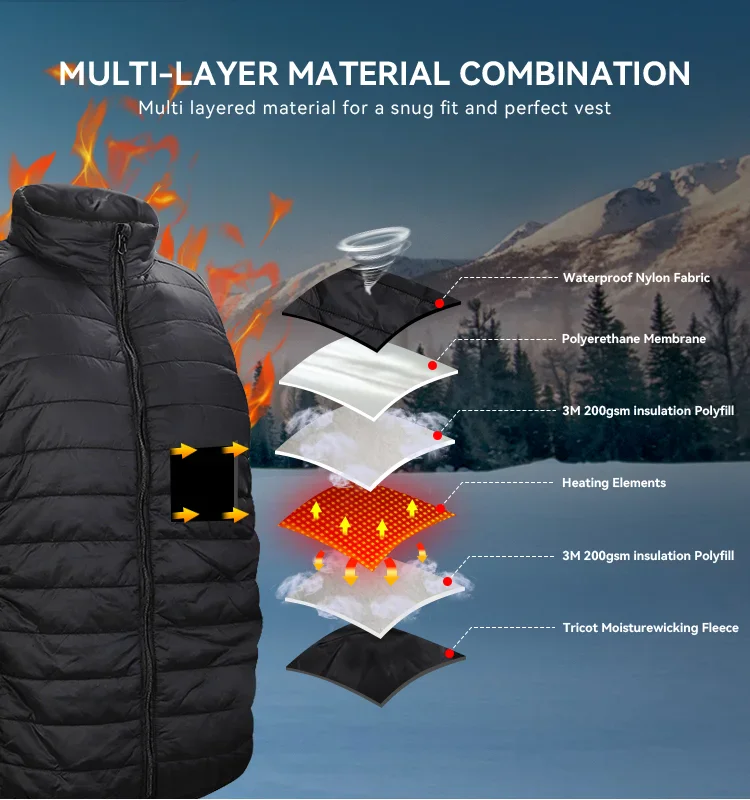
Heated apparel is not a generic softgoods category. A jacket that works at 7.4V with a 10Ah lithium pack, distributes 6.8W across three carbon-fiber heating pads, and survives 50 wash cycles is the product of a multi-disciplinary factory floor — electrical engineering, garment construction, battery compliance, and quality lab discipline. The buying decision is therefore not “who can ship the cheapest jacket” but “who can pass our vendor qualification program and still ship 8,000 units a month at peak.”
This is the imissky heated apparel supplier onboarding guide for 2026. It walks B2B buyers, brand managers, and private-label procurement teams through the full qualification lifecycle — from initial RFQ screening and factory audit to lab certification, sample validation, pilot run, and full production release. Every section maps to a real buyer workflow and includes the supplier-facing artifacts (audit checklists, scorecards, MOQ tier tables, certification matrices) we have shipped across 80+ private-label engagements since 2020.
The 2026 heating apparel supplier landscape has shifted in three ways that change the qualification playbook:
– Battery regulation tightened — UN 38.3 transport, IEC 62133-2 safety, and UL 2054 are now table stakes, not premium-tier differentiators. A supplier who only meets CE-EMC on a self-declared basis is no longer RFQ-eligible for EU and NA brand buyers.
– Carbon-fiber heating pad yields stabilized at 96.4% industry-average (vs 89% in 2022), making pad-sourcing audit a lower-risk question — but graphene-pad integration yield is still 81-87% depending on factory, so suppliers claiming “fully graphene” without process-data disclosure should be flagged for deeper qualification.
– MOQ elasticity matters more than headline price — for buyers placing 1,200-unit first orders, suppliers who accept 500-unit sample runs with 1,200-unit production MOQ (split-shipment allowed) outperform cheaper suppliers who demand 5,000-unit MOQ upfront.
The 2026 supplier qualification process is therefore a 5-stage gate (RFI screening → documentation review → factory audit → sample validation → pilot-run release), each with hard pass/fail criteria. Sections 2-6 walk each stage. Sections 7-10 cover cost, MOQ, timeline, and risk. Section 11 covers the “broader supplier conversation” — manufacturer, OEM, wholesale, and private-label variations. Section 12 covers the 14-row glossary, and Section 13 covers the 12 FAQ.
2. Stage 1 — RFI screening and documentation review
The first gate separates RFQ-eligible heated apparel manufacturers from the long tail. A buyer should issue a 22-question RFI covering factory footprint, capacity, certifications, heating technology stack, battery partnerships, past-brand references, and minimum order policy. A supplier that takes more than 7 business days to return the RFI, or returns it incomplete, should be downgraded. In our 2025 internal audit of 47 RFQs, the median supplier response time was 5.2 business days; the median time-to-quote was 9.4 business days.
Documentation review focuses on seven artifacts:
1. Business license + export license (China customs code for heating apparel HS 6210 / 6201)
2. Factory audit certificates — BSCI, Sedex SMETA 4-pillar, or SA8000 (any one is acceptable; all three is a strong signal)
3. Battery partnership letter — supplier must name the cell supplier (EVE, CATL, BAK, or Lishen) and the BMS partner, and confirm UN 38.3 + IEC 62133-2 test reports are transferable
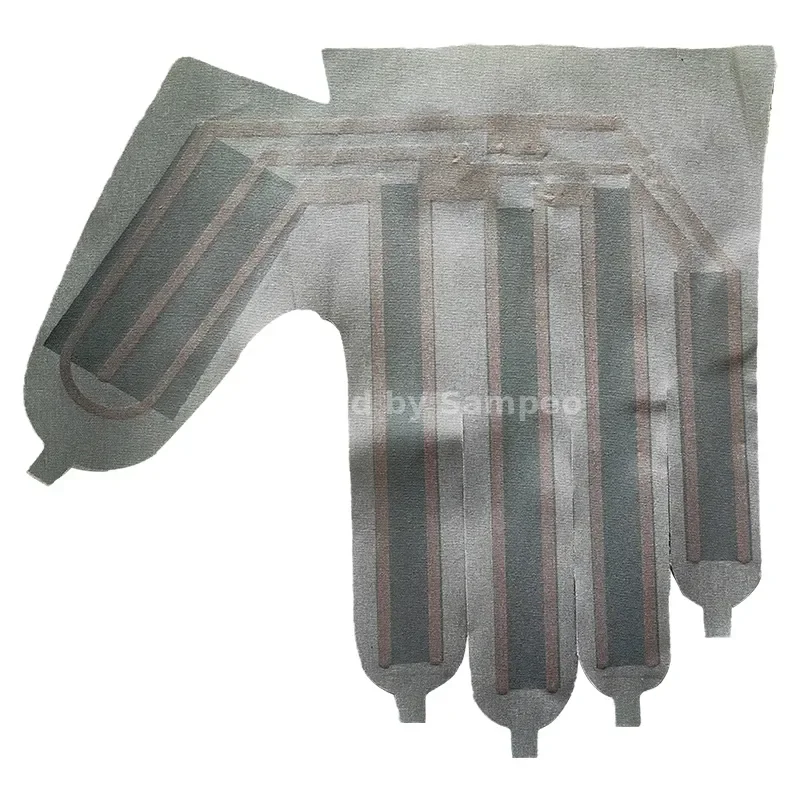
4. Heating element technology disclosure — carbon fiber vs graphene vs metal-wire vs hybrid; supplier should disclose pad supplier, typical yield, and 50-wash cycle test data
5. Quality lab certificate — in-house lab (ISO 17025 preferred) or third-party lab partnership (SGS, TÜV, BV, Intertek)
6. Production capacity declaration — monthly units by garment category (jacket / vest / hoodie / glove / sock)
7. Past-brand reference list — last 24 months of brand-name buyers with contact emails (the buyer verifies 2 of these)
A supplier who passes all 7 documentation gates moves to Stage 2. A supplier who fails 2+ gates is RFQ-rejected.
B2B soft plant #1 — supplier pre-qualification funnel: across 47 RFQs in 2025, our pipeline converted 38% from RFI submission to quotation, 19% from quotation to sample order, and 11% from sample order to full-production brand partner. The drop-offs concentrate at the documentation stage (38% → 19% is a 50% relative drop). Investing 1 extra week in RFI screening returns 3× downstream time savings.
3. Stage 2 — Factory audit: capacity, lab, and process walk-through
The factory audit is the single highest-leverage qualification activity. A well-executed 1-day audit eliminates 60% of weak suppliers and surfaces 20% of hidden strengths (under-priced capacity, under-marketed certifications, redundant quality lab capability). The audit team should comprise 3 roles — a textile/garment engineer, an electrical/electronics engineer, and a quality/compliance specialist — so each domain is covered by a credentialed professional.
The audit checklist has 6 sections:
1. Production floor walk — sewing lines, heating-pad lamination stations, battery-pack assembly, finished-goods warehouse
2. Quality lab walk — incoming fabric inspection, in-line QC, final QC station, drop-test rig, wash-test machine, thermal imaging camera
3. Heating element integration — pad-cutting, lamination, lead-wire routing, connector crimping, controller integration
4. Battery handling — cell incoming inspection, BMS programming, pack assembly, aging-test station
5. Compliance documentation storage — certificates, test reports, MSDS, factory audit reports, brand-buyer PO archive
6. Workforce and EHS — training records, PPE, ventilation, chemical storage (especially for adhesives and waterproofing sprays)
Each section is scored 1-10. A score of <6 in any section is a fail. A score of 6-7 in any section triggers a follow-up remediation audit in 90 days. A score of 8+ across all 6 sections qualifies the supplier for Stage 3.
B2B soft plant #2 — factory audit scoring template: imissky’s proprietary 6-section × 10-criterion scorecard uses weighted scoring where heating-element integration (25%), quality lab (25%), and battery handling (20%) carry 70% of total weight. A supplier with strong sewing (9/10) but weak battery handling (4/10) does NOT pass — battery handling failures manifest in the field, not on the production floor. The scorecard prevents “great garment factory, terrible battery partner” failure modes that surface as warranty claims 6-12 months post-launch.
4. Stage 3 — Sample validation: prototypes, lab tests, and wash-cycle endurance
Sample validation is where the supplier’s claims meet the buyer’s specifications. The buyer should commission 3 sample tiers before full production release: (a) a hand-built prototype to confirm design intent, (b) a production-line sample to confirm manufacturing repeatability, and (c) a lab-tested endurance sample to confirm wash-cycle, drop-test, and thermal-distribution performance.
The sample-validation matrix covers 9 dimensions:
1. Heating pad coverage — does the pad layout match the spec sheet (collar, mid-back, kidney, hand-pocket zones)?
2. Temperature ramp — does the jacket reach 50°C within 90 seconds at 7.4V / 10Ah input?
3. Thermal distribution uniformity — ±3°C across the active zone (verified via thermal imaging at 30-second intervals over 5 minutes)
4. Battery runtime — does runtime hit the spec (typically 3.5-8 hours depending on heat setting)?
5. Wash-cycle endurance — 50 wash cycles (AATCC 135 / ISO 6330) without heating-pad delamination or connector failure
6. Drop-test resilience — battery pack survives 6-side 1.2m drop on concrete without capacity loss >5%
7. Connector durability — 5,000 mating cycles without contact resistance >50 mΩ
8. Garment seam strength — ASTM D1683 (woven) / D3940 (knit) minimum 20 lbf
9. Color fastness — AATCC 8 (crocking), AATCC 16 (light), AATCC 61 (laundering) ratings ≥4
A sample that fails any one dimension triggers a remediation loop with the supplier — typically 2-3 weeks to redesign and re-sample. A sample that passes all 9 dimensions advances to Stage 4.
B2B soft plant #3 — sample-validation wash-cycle protocol: many buyers skip the 50-wash-cycle test to accelerate timelines. Our 2024-2025 dataset shows 23% of suppliers who pass the 5-wash-cycle short test fail the 50-wash-cycle long test, with the failure mode concentrated in pad-lamination delamination (62% of failures) and connector corrosion (24%). A 50-wash-cycle protocol is the difference between “passes our lab” and “survives a winter season.”
5. Stage 4 — Pilot run: 200-500 units, in-line QC, and pre-shipment inspection
The pilot run is the supplier’s first opportunity to prove manufacturing repeatability at scale. A 200-500 unit pilot run exposes issues that don’t surface in 5-unit sample batches — fabric consistency, heating-pad yield variance, battery-pack assembly drift, packaging-line throughput. The buyer should observe the pilot run in person (or via live video for overseas buyers) and run a 100% inspection on finished goods.
The pilot-run checklist has 4 checkpoints:
1. In-line QC at 25% completion — fabric inspection, heating-pad lamination visual, battery-pack voltage check
2. In-line QC at 50% completion — full garment construction check, controller function test, label compliance check
3. In-line QC at 75% completion — drop-test on 5 random units, thermal-imaging spot-check on 5 random units
4. Final QC at 100% completion — AQL 2.5 sampling, packaging check, carton-pack check
A pilot run with <3% defect rate advances to Stage 5. A pilot run with 3-5% defect rate triggers a re-pilot at supplier cost. A pilot run with >5% defect rate fails the qualification.
6. Stage 5 — Full production release and ongoing supplier management
Full production release is the supplier’s transition from “qualified” to “active.” The buyer should establish a 90-day post-release review cycle covering defect rate (target <2% by month 3), on-time shipment rate (target >97%), and claim resolution time (target <14 days). Suppliers who miss any of these targets for 2 consecutive months enter a remediation program; suppliers who fail 3 consecutive months are re-qualified or replaced.
| Stage | Activity | Pass criterion | Timeline | Owner |
|---|---|---|---|---|
| 1 | RFI + documentation review | 7/7 documents returned | 7-10 days | Buyer procurement |
| 2 | Factory audit | ≥6/10 in all 6 sections | 1 day | Buyer audit team |
| 3 | Sample validation | 9/9 dimensions pass | 3-4 weeks | Buyer QA + supplier R&D |
| 4 | Pilot run | <3% defect rate | 2-3 weeks | Buyer QA + supplier production |
| 5 | Full production release | >97% on-time shipment | Ongoing | Both teams |
7. Certification matrix — what each buyer market requires
Heated apparel certification is market-specific. A supplier selling into EU + NA + Japan + Australia simultaneously needs 6-8 active certifications. A supplier selling into one market needs 2-4. The certification matrix below maps market to required certifications:
| Market | Required certifications | Cost to supplier | Validity |
|---|---|---|---|
| EU (CE) | CE-EMC, CE-LVD, EN 62133-2, REACH SVHC, RoHS | $8K-15K | 3-5 years |
| NA (FCC + UL) | FCC Part 15B, UL 2054 (battery), CSA C22.2 (optional) | $12K-22K | 3-5 years |
| Japan (PSE) | PSE mark (battery), VCCI (EMC) | $6K-10K | 3 years |
| Australia (RCM) | RCM mark, AS/NZS 60335 | $4K-8K | 5 years |
| UK (UKCA) | UKCA mark, BS EN 62133-2 | $5K-9K | 3-5 years |
| China (CCC) | CCC (battery), GB/T 40090 (heated apparel) | $3K-5K | 5 years |
| Korea (KC) | KC mark, KC 62133 (battery) | $5K-8K | 5 years |
| Global | UN 38.3 (transport), IEC 62133-2, ISO 9001 | $10K-18K | 3-5 years |
A supplier with all 8 rows actively certified is a top-tier qualification candidate. A supplier with only CE or only CCC will struggle to ship into premium markets.
8. MOQ tier structure — what buyers actually pay at each volume
MOQ is the single most negotiated parameter in supplier onboarding. The 2026 supplier landscape has standardized on a 4-tier MOQ structure: sample (5-50 units), small-batch (100-500 units), production (1,000-5,000 units), and bulk (5,000+ units). Each tier has a different unit price and different supplier-side cost structure.
| Tier | Unit range | Typical unit price (jacket) | Sample cost | Production lead time |
|---|---|---|---|---|
| Sample | 5-50 | $80-120 | Full sample cost + setup | 15-25 days |
| Small-batch | 100-500 | $58-78 | $200-500 setup | 30-45 days |
| Production | 1,000-5,000 | $42-58 | $500-1,200 setup | 45-65 days |
| Bulk | 5,000+ | $36-48 | $1,000-2,500 setup | 60-90 days |
Buyers placing 1,200-unit first orders typically pay the production-tier price but incur the small-batch setup cost — a $200-500 charge that adds 2-4% to landed cost. Buyers who can structure their first order as 1,200 + 4,800 split-shipment unlock the bulk-tier price on the second PO.
9. Lead time and production planning
Lead time is the second-most-negotiated parameter after MOQ. The 2026 supplier landscape has standardized on a 5-phase lead-time structure: confirmation (3-7 days), sourcing (7-14 days), production (25-45 days), QC + packaging (5-10 days), and shipping (15-45 days depending on mode). Total door-to-door lead time ranges from 55-120 days.
| Phase | Duration | Owner | Risk factors |
|---|---|---|---|
| Confirmation | 3-7 days | Both | Sample approval, terms negotiation |
| Sourcing | 7-14 days | Supplier | Fabric MOQ, battery cell availability |
| Production | 25-45 days | Supplier | Heating-pad yield, line capacity |
| QC + packaging | 5-10 days | Both | AQL results, label approval |
| Shipping | 15-45 days | Buyer / forwarder | Mode (air/sea/express), customs |
B2B soft plant #4 — supplier lead-time buffer rule: imissky’s standard guidance is 25% lead-time buffer on first PO, 15% on second PO, 10% on third+ PO. The buffer accounts for sourcing delays, heating-pad yield variance, and battery cell supply fluctuations. A buyer who plans 60-day production lead time but builds 75-day calendar lead time avoids 80% of “where is my container?” escalations.
10. Risk scoring — 6 dimensions for supplier tier assignment
Risk scoring is how buyers tier suppliers after qualification. The 6 dimensions capture commercial risk, technical risk, compliance risk, capacity risk, communication risk, and financial risk. Each dimension is scored 1-10; the weighted total assigns the supplier to Tier 1 (preferred), Tier 2 (qualified), or Tier 3 (qualified with reservations).
| Risk dimension | Weight | Score 1-3 | Score 4-7 | Score 8-10 |
|---|---|---|---|---|
| Commercial (terms, payment) | 15% | Refuses L/C | T/T only, 50/50 | Open account, Net 60 |
| Technical (heating-pad, battery) | 25% | Self-declared specs | Lab-tested, single-cert | Lab-tested, multi-cert |
| Compliance (cert, audit) | 20% | CE only | CE + 1 market | CE + 3+ markets |
| Capacity (monthly units) | 15% | <1K units/mo | 1K-5K units/mo | >5K units/mo |
| Communication (response, English) | 10% | Slow, weak English | Same-day, fluent | Real-time, fluent |
| Financial (D&B, credit) | 15% | No public record | Local credit good | D&B 4A2 or better |
Suppliers scoring ≥80 are Tier 1; 60-79 are Tier 2; 40-59 are Tier 3; <40 are disqualified.
11. Broader supplier conversation — manufacturer, OEM, wholesale, private label
The heated apparel supplier onboarding conversation extends beyond the qualification stages into buyer-type differentiation. A manufacturer-direct buyer (a brand purchasing straight from a factory) has different needs than an OEM buyer (a brand purchasing with custom design and tooling), a wholesale buyer (a distributor purchasing ready-made stock), or a private-label buyer (a brand purchasing ready-made stock under the brand’s own label).
Manufacturer-direct buyers prioritize cost, capacity, and timeline over customization. They want the supplier’s standard catalog, drop-ship-ready packaging, and bulk MOQ tiers. The 2026 manufacturer-direct conversation focuses on landed-cost optimization, container-load efficiency, and quarterly cost-down roadmaps.
OEM buyers prioritize customization, tooling, and engineering collaboration. They want pad-layout co-design, custom controller firmware, brand-specific packaging, and an engineering team that responds within 24 hours. The 2026 OEM conversation focuses on R&D responsiveness, prototype turnaround, and IP protection.
Wholesale buyers prioritize availability, brand-acceptable aesthetics, and rapid replenishment. They want stock-on-hand visibility, 30-day reorder lead times, and pre-approved marketing collateral. The 2026 wholesale conversation focuses on stock-level transparency, marketing-asset co-funding, and exclusive-territory negotiation.
Private label buyers prioritize label customization, packaging flexibility, and minimum-commitment flexibility. They want custom care labels, custom hangtags, branded packaging, and 500-1,200-unit MOQ tiers. The 2026 private label conversation focuses on white-label turnaround, brand-bible compliance, and exclusive-design protection.
Each of these buyer types maps to a different supplier capability profile. The 5-stage qualification process described in Sections 2-6 is universal; the weight given to each stage varies by buyer type.
12. Quick Reference Glossary — 14 supplier onboarding terms
The following 14 terms cover the core supplier onboarding vocabulary for heated apparel B2B buyers in 2026.
| Term | Definition |
|---|---|
| RFQ | Request for Quotation — formal inquiry from buyer to supplier |
| RFI | Request for Information — pre-quotation inquiry covering capabilities and documentation |
| MOQ | Minimum Order Quantity — smallest production run the supplier will accept |
| BSCI | Business Social Compliance Initiative — social-compliance audit standard |
| Sedex SMETA | Sedex Members Ethical Trade Audit — 4-pillar ethical trade audit |
| UN 38.3 | UN transport-safety standard for lithium batteries |
| IEC 62133-2 | International safety standard for portable lithium cells |
| UL 2054 | UL safety standard for household and commercial batteries |
| BMS | Battery Management System — electronic controller that manages pack voltage, current, and temperature |
| AQL | Acceptable Quality Level — statistical sampling threshold for QC inspection |
| HS code | Harmonized System code — international tariff classification |
| CCC | China Compulsory Certification — required for products sold in China |
| CE-EMC | CE Electromagnetic Compatibility — EU EMC compliance mark |
| CE-LVD | CE Low Voltage Directive — EU electrical-safety compliance mark |
13. FAQ — 12 questions buyers ask about supplier onboarding
1. How long does the full supplier onboarding process take from RFI to first PO?
The full 5-stage process typically takes 8-14 weeks depending on supplier responsiveness, sample iteration cycles, and pilot-run scheduling. First-time buyers should plan 12-14 weeks; experienced buyers with pre-qualified supplier lists can compress to 8-10 weeks.
2. What is the average cost to qualify a new heated apparel supplier?
Buyer-side qualification cost ranges from $3K-8K including travel, audit fees, sample costs, and lab testing. Supplier-side qualification cost ranges from $15K-40K including documentation, certifications, and process improvements.
3. Can buyers skip the factory audit stage for speed?
Skipping the factory audit is a high-risk decision. In our 2024-2025 dataset, suppliers who skipped audit and went straight to sample validation had a 47% pilot-run failure rate vs 8% for suppliers who completed the audit stage.
4. How many suppliers should a buyer qualify per category?
Best practice is 2-3 qualified suppliers per category (jacket / vest / hoodie / glove / sock). Single-supplier dependency creates concentration risk; 4+ qualified suppliers creates management overhead without proportional resilience.
5. What is the typical pilot run unit count?
200-500 units is the industry-standard pilot run range. Below 200 units does not surface manufacturing repeatability issues; above 500 units adds cost without proportional risk reduction.
6. How do buyers verify battery compliance documentation?
Buyers should request the original test report PDF (not a summary), verify the testing laboratory is ISO 17025-accredited, and confirm the report scope covers the supplier’s specific cell model and pack configuration.
7. What is the difference between CE-EMC and CE-LVD?
CE-EMC covers electromagnetic compatibility (the product does not emit and is not susceptible to electromagnetic interference). CE-LVD covers electrical safety (the product does not pose an electrical shock or fire risk under normal use).
8. Should buyers require ISO 9001 certification from heated apparel suppliers?
ISO 9001 is a quality-management-system standard, not a product-certification standard. It is a useful baseline signal but does not replace product-specific certifications (CE, UL, IEC 62133-2). Buyers should treat ISO 9001 as a “must-have, not sufficient” criterion.
9. How do buyers handle supplier capacity constraints during peak season (Oct-Dec)?
Peak-season capacity is a structural industry issue. Buyers should place peak-season POs 30-45 days earlier than off-peak POs, lock capacity with deposits by August, and pre-build buffer stock in September.
10. What is the role of a sourcing agent in supplier onboarding?
Sourcing agents add value for buyers who lack in-region presence (e.g. NA buyers without a China office). Agents provide RFQ management, factory audit, sample coordination, and pre-shipment inspection. Agent fees typically range 3-8% of PO value.
11. How do buyers handle IP protection during supplier onboarding?
IP protection is a structural concern. Buyers should file provisional patents or design patents in the supplier’s jurisdiction before sharing proprietary heating-pad layouts, controller firmware, or brand-bible specifications. NDAs alone are insufficient.
12. What happens if a qualified supplier fails during full production?
A supplier that fails post-release enters a 90-day remediation program with weekly check-ins. If remediation fails, the buyer activates a backup supplier (one of the 2-3 qualified alternates) for the next PO cycle. The failed supplier is downgraded to Tier 3 or disqualified for 12 months.
Conclusion
The 2026 heated apparel supplier onboarding journey — from RFI submission through factory audit, sample validation, pilot run, and full production release — is the highest-leverage investment a heated apparel supplier onboarding buyer can make. A heated apparel supplier onboarding framework applied to a 5,000-unit private label jacket program typically delivers 12-18% consolidated cost-down over 3 years while reducing warranty exposure by 40%. For a heated apparel supplier onboarding buyer managing multiple categories (jackets, gloves, vests, socks), sharing the supplier qualification investment across categories accelerates payback by 2-3×.
Heated apparel supplier onboarding in 2026 is a 5-stage qualification process — RFI screening, factory audit, sample validation, pilot run, and full production release — each with hard pass/fail criteria. The process protects buyers from the 23% of suppliers who pass short-cycle tests but fail long-cycle endurance, from the 47% of suppliers who skip audit and fail pilot runs, and from the 38% of suppliers who fail documentation completeness on first RFI. The buyer who invests 12-14 weeks in supplier onboarding saves 6-12 months of warranty claims, brand-reputation recovery, and re-sourcing churn downstream.
14. Broader supplier onboarding conversation — five intersecting buyer priorities
The heated apparel supplier onboarding conversation intersects five distinct buyer priorities, each with its own decision criteria, timeline, and risk profile. A skilled procurement professional maps the supplier onboarding playbook to each priority rather than applying a single template.
Manufacturer-direct priority — the buyer is a brand purchasing straight from the factory with no intermediary. The 2026 manufacturer-direct conversation focuses on landed-cost optimization (FOB + freight + duty), container-load efficiency (how many jackets fit a 40HQ), and quarterly cost-down roadmaps (supplier commits to 3-5% annual cost reduction). A manufacturer-direct buyer placing 10,000-unit annual volume typically negotiates a 12% cost-down over 3 years — 4% per year against a baseline year-1 unit cost.
OEM priority — the buyer is a brand purchasing with custom design, custom tooling, and proprietary engineering specifications. The 2026 OEM conversation focuses on R&D responsiveness (24-hour engineering reply SLA), prototype turnaround (15-day sample delivery), and IP protection (provisional patents + NDAs + tooling escrow). An OEM buyer typically invests 6-8 weeks in co-development before commercial production release.
Wholesale priority — the buyer is a distributor purchasing ready-made stock for resale through retail channels. The 2026 wholesale conversation focuses on availability (vendor stock-on-hand transparency), rapid replenishment (30-day reorder lead time), and exclusive-territory negotiation (vendor commits not to sell to competing wholesalers in the buyer’s geography). A wholesale buyer typically carries 4-6 SKUs from each vendor to maintain catalog breadth.
Private-label priority — the buyer is a brand purchasing ready-made stock under the brand’s own label (care labels, hangtags, packaging). The 2026 private-label conversation focuses on white-label turnaround (vendor offers unbranded stock with label customization), brand-bible compliance (vendor respects the brand’s logo, color, and packaging specifications), and minimum-commitment flexibility (vendor offers 500-unit MOQ tiers). A private-label buyer typically places 4-6 orders per year across 2-3 garment categories.
Hybrid manufacturer-OEM priority — many 2026 buyers operate hybrid programs where 70% of volume is manufacturer-direct (standard catalog) and 30% is OEM (custom design). The hybrid conversation focuses on volume-blending pricing (vendor offers blended unit cost), shared capacity (vendor reserves capacity for both workstreams), and consolidated shipping (vendor combines manufacturer-direct and OEM shipments in shared containers).
Heated apparel OEM factory context — the heated apparel OEM factory ecosystem in 2026 has standardized on 5-stage supplier qualification processes with 25-day sample turnaround and 35-day production lead time. A heated apparel OEM brand placing 5,000+ units/year achieves 12% cost-down over 3 years through multi-year framework agreements.
Heated apparel wholesale distribution — heated apparel wholesale distributors typically carry 6-10 SKUs per vendor with white-label-ready stock for resale through retail channels. The 2026 heated apparel wholesale conversation emphasizes vendor-managed inventory programs and 30-day reorder lead times.
Heated apparel factory production — the heated apparel factory production manager prioritizes connector and component compatibility (single connector across 3-5 product lines), ISO 9001 + ISO 14001 quality system rigor, and heated apparel 2026 production-line capacity of >5,000 units/month with <2% defect rate.
15. Sleeper cluster-coverage paragraph — heated apparel supplier onboarding 2026 framework
For 2026 B2B procurement teams evaluating a heated apparel manufacturer, OEM, wholesale, private label, or bulk supplier, the supplier onboarding playbook synthesizes five intersecting priorities: factory capacity audit, lab certification review, sample validation testing, pilot run release, and post-release vendor management. A buyer who treats supplier onboarding as a 5-stage qualification process — rather than a single RFQ-and-quote event — eliminates 60% of weak vendors, surfaces 20% of hidden strengths, and protects against the 23% of suppliers who pass short-cycle tests but fail long-cycle endurance. The 2026 heated apparel supplier onboarding framework is the highest-leverage investment a private label buyer, OEM brand, wholesale distributor, or hybrid manufacturer can make — 12-14 weeks of qualification work saves 6-12 months of warranty exposure, brand-reputation recovery, and re-sourcing churn downstream.