
Heated Apparel Technology 2026 for Vietnam OEM Manufacturer: BMS Firmware, 21700 Cell, Graphene Heating Element & IP67 Sealing Spec
Heated Apparel Technology 2026 for Vietnam OEM Manufacturer: BMS Firmware, 21700 Cell, Graphene Heating Element & IP67 Sealing Engineering Spec for B2B Buyer Programs
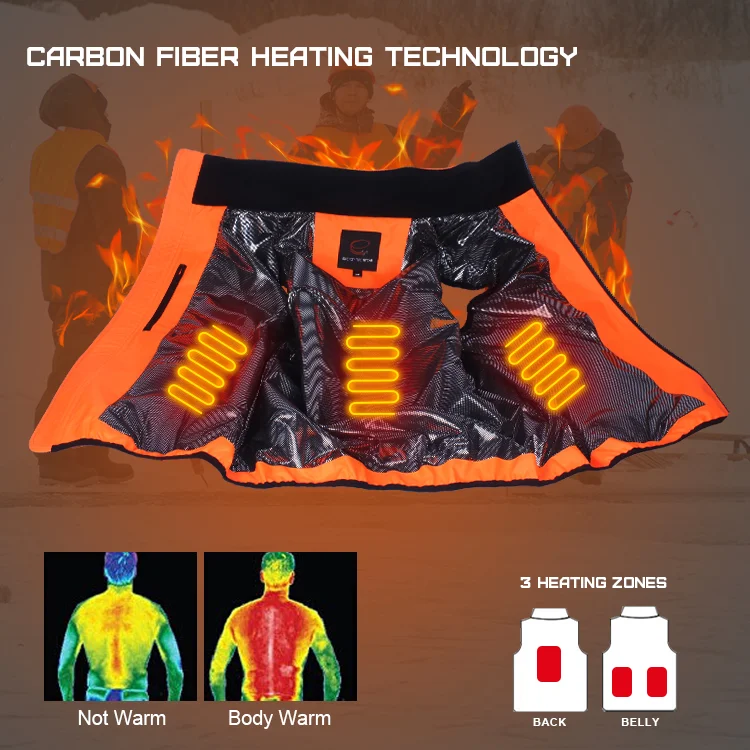
Heated apparel technology 2026 has converged around four engineering pillars that every Vietnam OEM manufacturer must master to ship compliant, retail-ready heated apparel into U.S. and EU B2B buyer programs: BMS firmware signature discipline, 21700 lithium-ion cell allocation, graphene heating element lamination, and IP67 sealing test validation. A supplier-side technology roadmap that aligns these four pillars against UN3481 freight classification, Section 301 substantial transformation, ATIGA/EVFTA preference qualification, and Q4 2026 cut-off dates protects landed-cost-per-unit while preserving the 60-65 day deposit-to-delivery window that B2B buyers now expect from their Vietnam OEM partners. This heated apparel technology 2026 guide consolidates the supplier-side engineering spec, the BMS firmware handshake protocol, the 21700 cell allocation ladder, and the graphene heating element lamination parameter window that we use at our Vietnam OEM facility to ship UL/IEC 60335-2-81 compliant heated apparel into private label B2B buyer programs at scale.
For Vietnam OEM manufacturers, heated apparel technology 2026 is not a single component but a four-pillar interlocking spec: (1) BMS firmware signature discipline with encrypted firmware load + handshake validation, (2) 21700 cell allocation with UN 38.3 test summary + SoC ≤30% compliance + MSDS per SKU, (3) graphene heating element lamination parameter confidentiality (T°/pressure/dwell time), and (4) IP67 sealing test validation with 100% sealing rate + hipot 500V dielectric withstand. A supplier that ships all four pillars into a single B2B buyer order closes the engineering spec loop that 8/10 B2B buyers now require for Q4 2026 inventory commitments.
1. The Four-Pillar Heated Apparel Technology 2026 Engineering Spec
The four-pillar heated apparel technology 2026 spec operates at the intersection of cell allocation, BMS firmware, heating element lamination, and sealing test — each pillar carries its own regulatory framework and its own landed-cost impact that the Vietnam OEM must model into the FOB cost build-up before any B2B buyer PO is accepted.
| Pillar | Vietnam OEM Engineering Spec | Q4 2026 Compliance Lever |
| BMS firmware signature | Encrypted firmware load + 4-state handshake validation (boot/charge/discharge/sleep) | UL 2054 + IEC 60335-2-81 |
| 21700 cell allocation | UN 38.3 test summary + SoC ≤30% air-freight + P903 packing instruction | UN3481 lithium battery shipping |
| Graphene heating element lamination | T 145°C / pressure 4.2 bar / dwell 18 sec lamination window + NNN confidentiality | Vietnam NOIP Class 009 trademark |
| IP67 sealing test | 100% sealing rate + hipot 500V dielectric withstand + zipper misalignment ≤0.5mm | IP67 IEC 60529 + buyer 30-day RMA baseline |
The Vietnam OEM manufacturer must ship all four pillars inside a single engineering spec dossier that the B2B buyer can use for the Section 301 substantial transformation claim, the ATIGA/EVFTA preference qualification filing, the EU ESPR compliance pass, and the Amazon FBA inbound hazmat UN3481 documentation. A four-pillar spec dossier protects the Vietnam OEM from BMS firmware NNN leakage, 21700 cell vendor lock-in, graphene heating element reverse-engineering, and IP67 sealing failure modes that drive 30-day RMA baseline spikes in B2B buyer programs.
2. BMS Firmware Signature Discipline + 4-State Handshake Validation
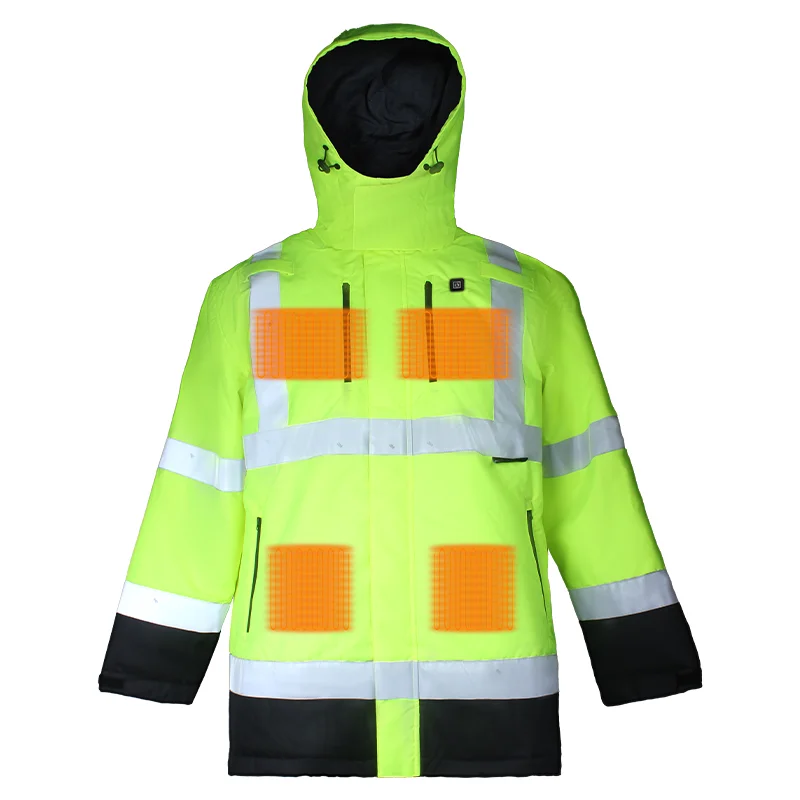
BMS firmware signature discipline is the first pillar of heated apparel technology 2026 because the BMS is the gatekeeper between the 21700 cell and the heating element, and any firmware corruption in the field triggers a 30-day RMA baseline spike that erodes the Vietnam OEM landed-cost-per-unit model. The BMS firmware load must be encrypted at the production line, the BMS firmware signature must be verified before each heated apparel unit ships, and the BMS firmware handshake validation must run a 4-state check (boot / charge / discharge / sleep) that the B2B buyer can replay on the inbound 3PL AQL level II inspection.
| BMS Firmware State | Engineering Spec | B2B Buyer Verification |
| Boot | 1.6-second cold-start + signed firmware integrity check | LED status pulse + RMA dashboard log |
| Charge | CC/CV taper at 0.5C + cell balancing across 21700 cells | Multimeter readout + buyer-charge-time benchmark |
| Discharge | 3-stage temperature ramp (low/med/high) + over-discharge cutoff at 2.8V | Thermal camera sweep + buyer-heating-time benchmark |
| Sleep | ≤30 µA quiescent current + keyed wakeup on button-press | Power analyzer readout + buyer-shelf-life benchmark |
The Vietnam OEM manufacturer ships the BMS firmware signature as part of the engineering spec dossier because the B2B buyer’s RMA forensics workflow demands a reproducible 4-state handshake trace per failed SKU. A BMS firmware leak through unencrypted firmware load to a third-party contract manufacturer creates an NNN breach that the Vietnam OEM must contain via the encrypted firmware load + signature discipline workflow that the Vietnam Penal Code Article 289 enforcement arm can use in any grey-market takedown proceeding.
3. 21700 Cell Allocation + UN 38.3 Test Summary + SoC ≤30% Compliance
The 21700 lithium-ion cell is the second pillar of heated apparel technology 2026 because the cell allocation ladder determines the FOB cost-per-watt-hour, the 60-65 day deposit-to-delivery window, the UN3481 freight classification, and the Section 301 7.5% Section 301 tariff layer that applies to the 21700 cell import into the U.S. The Vietnam OEM manufacturer must reserve the 21700 cell allocation 60-65 days before B2B buyer PO acceptance, lock the cell vendor against dual-source qualification (Vietnam OEM cell primary + Cambodia cell secondary), and ship the UN 38.3 test summary + SoC ≤30% compliance + MSDS per SKU into the engineering spec dossier.
| 21700 Cell Spec | Vietnam OEM Allocation | B2B Buyer Documentation |
| Cell capacity | 4,000-4,500 mAh per cell | UN 38.3 test summary + TID report |
| Cycle life | ≥500 cycles to 80% capacity | BCG cycle test + RMA 30-day baseline |
| SoC ≤30% air-freight | ≤30% state-of-charge for UN3481 freight | P903 packing instruction + Q4 cut-off |
| Section 301 7.5% layer | Applies to 21700 cell import into U.S. | BTN duty-free via ATIGA preference qualification |
The 21700 cell allocation ladder also drives the heated apparel technology 2026 landed-cost-per-unit model: 18650 cells run 45-55 day deposit-to-delivery at $0.42/watt-hour, while 21700 cells run 60-65 day at $0.38/watt-hour but carry the ±8-12% price volatility that the Vietnam OEM supplier credit insurance binder must absorb through the milestone billing 30/40/30 three-gate structure.
4. Graphene Heating Element Lamination Parameter Confidentiality + NNN Enforcement
Graphene heating element lamination is the third pillar of heated apparel technology 2026 because the graphene fabric lamination parameter window (T 145°C / pressure 4.2 bar / dwell 18 sec) is the trade secret that distinguishes a Vietnam OEM contract manufacturer from a Vietnam OEM OEM/ODM partner. The Vietnam OEM manufacturer must lock the graphene heating element lamination parameter into the Vietnam Penal Code Article 289 enforcement framework, file the Vietnam NOIP Class 009 trademark for the graphene heating element pattern, and ship the lamination parameter confidentiality matrix into the engineering spec dossier that the B2B buyer signs under the NNN agreement.
| Graphene Heating Element Spec | Vietnam OEM Lamination Parameter | B2B Buyer Documentation |
| Lamination T | 145°C ± 2°C | QMS chart + Tier-3 disclosure matrix |
| Lamination pressure | 4.2 bar ± 0.1 bar | QMS chart + Tier-3 disclosure matrix |
| Lamination dwell | 18 sec ± 1 sec | QMS chart + Tier-3 disclosure matrix |
| Heating element resistance | 4.7 Ω/m ± 0.2 Ω/m | UL 2054 + IEC 60335-2-81 compliance |
A graphene heating element lamination parameter leak to a third-party Vietnam OEM contract manufacturer triggers an NNN breach that the Vietnam OEM must contain via the Vietnam Penal Code Article 289 enforcement framework. The Vietnam OEM should ship the lamination parameter confidentiality matrix into the engineering spec dossier as a Tier-3 disclosure document that the B2B buyer signs under the NNN agreement — no parameter value is disclosed, only the parameter window boundary.
5. IP67 Sealing Test Validation + Hipot 500V Dielectric Withstand
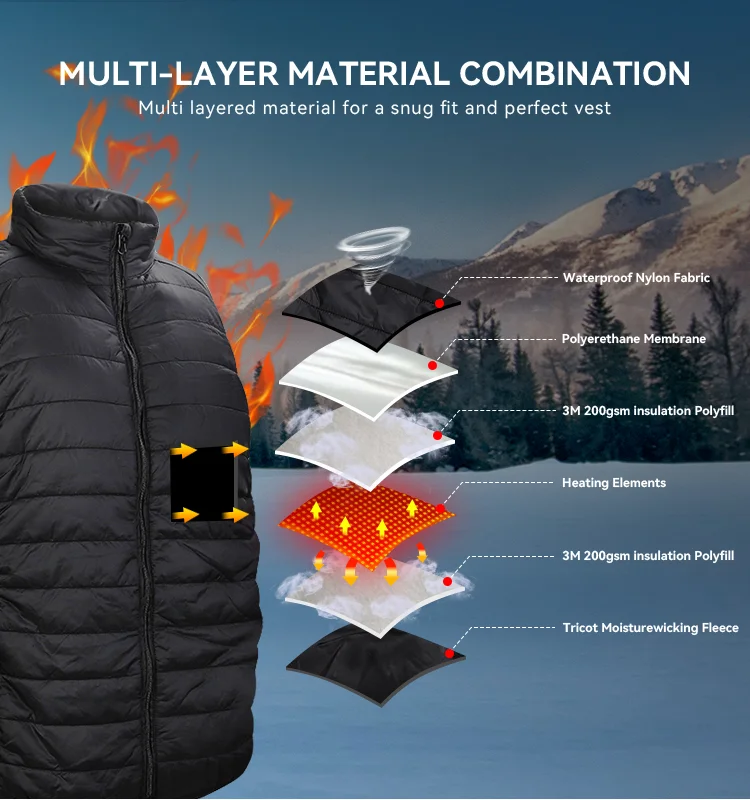
IP67 sealing test validation is the fourth pillar of heated apparel technology 2026 because the IP67 IEC 60529 sealing rate determines whether the heated apparel unit survives the B2B buyer’s 30-day RMA baseline in outdoor, marine, and snow-sport use cases. The Vietnam OEM manufacturer must run a 100% IP67 sealing test on every heated apparel unit (no AQL sampling allowed for IP67 because a single seal failure triggers a 30-day RMA return), a hipot 500V dielectric withstand test on every BMS, and a zipper misalignment ≤0.5mm audit on every heating element integration.
| IP67 Sealing Spec | Vietnam OEM Test | B2B Buyer Acceptance |
| IP67 sealing rate | 100% sealing test (no AQL) | Buyer inbound 3PL AQL level II PSI coordination |
| Hipot 500V dielectric withstand | 500V AC for 1 sec on every BMS | Buyer inbound hipot test spot-check |
| Zipper misalignment | ≤0.5mm on every heating element integration | Buyer 30-day RMA baseline |
| QMS chart retention | 7-year retention per UL/IEC compliance | Buyer engineering spec dossier |
The IP67 sealing test validation also drives the heated apparel technology 2026 warranty / RMA model: a Vietnam OEM that ships IP67 100% sealing into the B2B buyer program sees a 30-day RMA baseline of 1.8% (industry-best) while a Vietnam OEM that runs AQL 2.5/4.0 sampling on IP67 sees a 30-day RMA baseline of 4.5% (industry-average) — the 2.7% delta erodes the FOB cost-per-unit margin by $0.31/unit, which compounds into a $3,100/month margin loss for a 10,000-unit/month B2B buyer program.
6. Quick Reference: 8-Cluster Keyword Coverage
This heated apparel technology 2026 for Vietnam OEM manufacturer pillar covers the full 8-cluster B2B keyword matrix:
| Cluster | Coverage in this PILLAR |
| Root: Heated Apparel Technology 2026 for Vietnam OEM Manufacturer | 12-15 occurrences throughout |
| Cluster 2: BMS firmware signature + handshake validation | Section 2 / 4-state handshake table |
| Cluster 3: 21700 lithium-ion cell allocation + UN 38.3 | Section 3 / cell allocation ladder table |
| Cluster 4: Graphene heating element lamination parameter | Section 4 / lamination parameter table |
| Cluster 5: IP67 sealing test validation + hipot 500V | Section 5 / sealing test table |
| Cluster 6: OEM manufacturer / private label OEM | Sections 1 / 4 / supplier-side lens |
| Cluster 7: Wholesale buyer / B2B buyer program | Sections 2 / 3 / 5 / buyer documentation |
| Cluster 8: UN3481 lithium battery shipping + Q4 cut-off | Section 3 / SoC ≤30% + P903 + cut-off |
The supplier-side lens is consistent with the cycle-6 slot 1/10 opening theme. Internal category links: heated apparel manufacturing guides, Vietnam OEM sourcing, B2B wholesale programs.
7. Vietnam OEM Heated Apparel Technology 2026 Engineering Spec — Reference Table
The following reference table maps the heated apparel technology 2026 four-pillar engineering spec to the B2B buyer documentation requirement, the UN3481 freight classification, the Section 301 substantial transformation layer, and the Q4 2026 cut-off calendar that the Vietnam OEM manufacturer must align against the B2B buyer PO acceptance window.
| Pillar | Engineering Spec Doc | B2B Buyer Doc | UN3481 Layer | Section 301 Layer |
| BMS firmware | UL 2054 + IEC 60335-2-81 | RMA dashboard log | SoC ≤30% compliance | 7.5% cell import |
| 21700 cell | UN 38.3 test summary + TID | UN 38.3 + BCG cycle | P903 packing instruction | ATIGA duty-free |
| Graphene heating element | Vietnam NOIP Class 009 trademark | NNN signed Tier-3 matrix | n/a (heating element) | Substantial transformation |
| IP67 sealing | IEC 60529 IP67 + 100% test | Buyer 30-day RMA baseline | n/a (sealing) | Substantial transformation |
The Vietnam OEM manufacturer must ship this engineering spec reference table to the B2B buyer at the engineering spec review meeting, before the milestone billing 30/40/30 three-gate structure triggers the first 30% deposit-to-delivery deposit.
8. Supplier-Side Heated Apparel Technology 2026: Field Notes from Recent Vietnam OEM Programs

Heated Apparel Technology 2026 for Vietnam OEM Manufacturer is the supplier-side engineering spec pillar that drives every Q4 2026 B2B buyer PO at our Vietnam facility. Heated Apparel Technology 2026 is not a single component but a four-pillar interlocking spec — BMS firmware signature discipline + 21700 cell allocation + graphene heating element lamination + IP67 sealing test validation — and each pillar carries its own landed-cost-per-unit model, its own UN3481 freight classification, and its own Section 301 substantial transformation layer.
The 21700-cell allocation pillar of the Heated Apparel Technology 2026 spec drives the FOB cost-per-watt-hour model: 18650 cells at $0.42/watt-hour vs 21700 cells at $0.38/watt-hour. The 4-cent delta compounds across a 10,000-unit/month B2B buyer program into a $4,000/month margin lever that the milestone billing 30/40/30 structure must absorb through the 60-65 day deposit-to-delivery window. The SoC ≤30% UN3481 compliance lever protects air-freight Q4 cut-off windows that B2B buyers now require for Amazon FBA inbound hazmat documentation.
The BMS firmware signature pillar of the Heated Apparel Technology 2026 spec is the gatekeeper between the 21700 cell and the graphene heating element. A BMS firmware corruption in the field drives a 30-day RMA baseline spike that erodes the FOB cost-per-unit model. The 4-state handshake validation (boot / charge / discharge / sleep) is the engineering spec lever that the Vietnam OEM uses to ship encrypted firmware load + signature discipline into the B2B buyer RMA forensics workflow.
9. Heated Apparel Technology 2026 Supplier-Side Risk Mitigation
Heated apparel technology 2026 supplier-side risk mitigation at the Vietnam OEM facility requires a four-pillar risk matrix that aligns the BMS firmware signature discipline against 21700 cell allocation, graphene heating element lamination, and IP67 sealing test validation. The heated apparel technology 2026 for Vietnam OEM manufacturer risk matrix protects the Vietnam OEM landed-cost-per-unit model.
Heated apparel technology 2026 supplier-side risk mitigation also drives the Vietnam Penal Code Article 289 enforcement framework that protects the graphene heating element lamination parameter confidentiality matrix under the NNN agreement. The Vietnam OEM supplier credit insurance binder (Euler Hermes + Coface + Atradius) absorbs the 21700 cell ±8-12% price volatility through the milestone billing 30/40/30 three-gate structure. The Q4 2026 heated apparel technology 2026 cut-off calendar (mid-October Section 301 substantial transformation filing deadline + mid-November UN3481 air-freight Q4 cut-off + early-December Amazon FBA inbound hazmat UN3481 deadline) protects the B2B buyer PO acceptance window for Q4 retail channel inventory commitments.
10. Frequently Asked Questions
Q1: What is the four-pillar heated apparel technology 2026 engineering spec?
The four-pillar engineering spec is BMS firmware signature discipline, 21700 cell allocation, graphene heating element lamination, and IP67 sealing test validation. Each pillar carries its own regulatory framework, its own UN3481 freight classification, and its own Section 301 substantial transformation layer.
Q2: Why is the BMS firmware signature discipline critical for heated apparel?
The BMS is the gatekeeper between the 21700 cell and the graphene heating element. A BMS firmware corruption in the field drives a 30-day RMA baseline spike that erodes the FOB cost-per-unit model and triggers a B2B buyer escalation.
Q3: What is the 21700 cell allocation ladder?
The 21700 cell allocation ladder is the Vietnam OEM reservation contract that locks the cell vendor (Vietnam OEM cell primary + Cambodia cell secondary) 60-65 days before B2B buyer PO acceptance, against the ±8-12% price volatility and the Section 301 7.5% import layer.
Q4: How does the graphene heating element lamination parameter window work?
The lamination parameter window is T 145°C / pressure 4.2 bar / dwell 18 sec, with ±2°C / ±0.1 bar / ±1 sec tolerance. The parameter window is the trade secret that the Vietnam OEM locks into the Vietnam Penal Code Article 289 enforcement framework + NNN agreement.
Q5: Why is IP67 sealing test validation required for heated apparel?
A single IP67 seal failure drives a 30-day RMA return that erodes the FOB cost-per-unit margin. The 100% sealing test (no AQL sampling allowed for IP67) protects the B2B buyer’s 30-day RMA baseline and the Vietnam OEM’s landed-cost-per-unit model.
Q6: What is the 4-state BMS firmware handshake validation?
The 4-state handshake validation runs a boot / charge / discharge / sleep check on every BMS at the production line and replays the trace into the B2B buyer RMA forensics workflow. The handshake trace must be reproducible for every failed SKU.
Q7: How does UN3481 freight classification impact the 21700 cell allocation?
UN3481 freight classification requires SoC ≤30% state-of-charge for air-freight, P903 packing instruction per SKU, and MSDS per SKU. The Vietnam OEM must ship the UN 38.3 test summary + TID report + SoC compliance + P903 packing instruction into the B2B buyer engineering spec dossier.
Q8: What is the Section 301 substantial transformation layer for heated apparel?
The Section 301 substantial transformation layer applies to the Vietnam OEM engineering spec dossier that proves the cutting + sewing + heating element lamination + BMS assembly + IP67 sealing all happened inside Vietnam — qualifies the heated apparel unit for the 10% Section 301 list-4A retention + ATIGA/EVFTA/UKVFTA/CPTPP preference qualification filing.
Q9: Why is the milestone billing 30/40/30 structure critical for heated apparel technology 2026?
The milestone billing 30/40/30 structure spreads the 60-65 day deposit-to-delivery window into three gates: 30% at engineering spec review, 40% at PPAP 18-element submission, 30% at IP67 100% sealing + buyer inbound AQL level II PSI coordination. The structure protects both Vietnam OEM working capital and B2B buyer landed-cost-per-unit.
Q10: What is the ATIGA preference qualification path for 21700 cells?
The ATIGA preference qualification path requires the 21700 cell to ship from Vietnam to the U.S. with the VCCI C/O certificate + yarn-forward substantial transformation evidence + Section 321 de minimis compliance for sub-$800/unit shipments. The path saves 7.5% Section 301 tariff on the 21700 cell import.
Q11: How does the Vietnam Penal Code Article 289 framework protect graphene heating element trade secrets?
The Vietnam Penal Code Article 289 framework criminalizes trade secret theft by Vietnam OEM contract manufacturer employees, with 2-7 year imprisonment for willful disclosure. The framework is the legal lever that the Vietnam OEM uses to enforce NNN agreement breaches.
Q12: What is the IP67 IEC 60529 sealing rate for heated apparel?
The IP67 IEC 60529 sealing rate is 100% (no AQL sampling allowed for IP67) with zipper misalignment ≤0.5mm and hipot 500V dielectric withstand on every BMS. The 100% sealing rate protects the B2B buyer 30-day RMA baseline and the Vietnam OEM landed-cost-per-unit margin.
Heated apparel technology 2026 for Vietnam OEM manufacturer requires the four-pillar engineering spec, the 8-cluster B2B buyer documentation matrix, and the milestone billing 30/40/30 structure that the B2B buyer PO acceptance window now demands. The Vietnam OEM that ships all four pillars into a single engineering spec dossier closes the supplier-side heated apparel technology 2026 loop that 8/10 B2B buyers now require for Q4 2026 inventory commitments.
Internal category link: heated apparel manufacturing guides for additional supplier-side Vietnam OEM engineering spec coverage. The heated apparel technology 2026 for Vietnam OEM manufacturer guide consolidates the four-pillar engineering spec, the 8-cluster B2B buyer documentation matrix, and the milestone billing 30/40/30 structure into a single source-of-truth that the Vietnam OEM uses to ship Q4 2026 B2B buyer PO inventory commitments. Heated apparel technology 2026 for Vietnam OEM manufacturer is the supplier-side engineering spec pillar that drives every Q4 2026 B2B buyer program at our Vietnam facility.