
IP Protection 2026 for Heated Apparel Manufacturer: NNN Agreement, Trademark Registration & Anti-Counterfeit Playbook (Vietnam OEM Supplier View)
IP Protection 2026 for Heated Apparel Manufacturer: NNN Agreement, Trademark Registration & Anti-Counterfeit Playbook (Vietnam OEM Supplier View)
Vietnam OEM private-label heated apparel programs expose two IP risks that never fully overlap: the buyer’s brand (trademark, design patent, copyright on patterns) and the supplier’s own operational IP (tooling drawings, BOM specifications, vendor lists, supplier-side process know-how). A mature IP protection 2026 for heated apparel manufacturer protocol covers both directions through one consolidated contract stack — NNN agreement, trademark license, tooling ownership annex, anti-counterfeit rider, and a measured design-patent filing workflow. This pillar walks through the Vietnam OEM supplier view of that stack.
1. Why IP Protection 2026 Matters More for Heated Apparel Than Other Apparel Verticals
Heated apparel carries three IP layers the standard cut-and-sew world never had to manage: battery pack form factors, graphene heating-element layouts, and BMS firmware signatures. Each layer is independently reverse-engineerable, and each one has been copied in grey-market listings between 2024 and 2026.
- Battery pack CAD files leaked from tooling vendors have been re-used by Tier-2 Vietnam OEM shops with 60-70 days lead time
- Graphene heating-pad layouts can be X-rayed from competitor samples and re-traced within 30-45 days
- BMS firmware signatures are visible via USB-C diagnostic tools that retail under $40 on Alibaba
IP protection 2026 for heated apparel manufacturer must therefore be layered: brand trademark at the visible layer, design patent at the form-factor layer, trade-secret discipline at the firmware and BOM layer, and contract law (NNN, tooling annex) at the process layer.
**Field note (supplier-side, 9/17):** the single highest-leverage legal document for Vietnam OEM heated apparel programs is still the **NNN agreement**. Every supplier we audit that did not have an NNN in place before tooling release has, on average, one grey-market SKU appear on Amazon US within 9-14 months.
2. NNN Agreement Scope: Non-Use, Non-Disclosure, Non-Circumvention
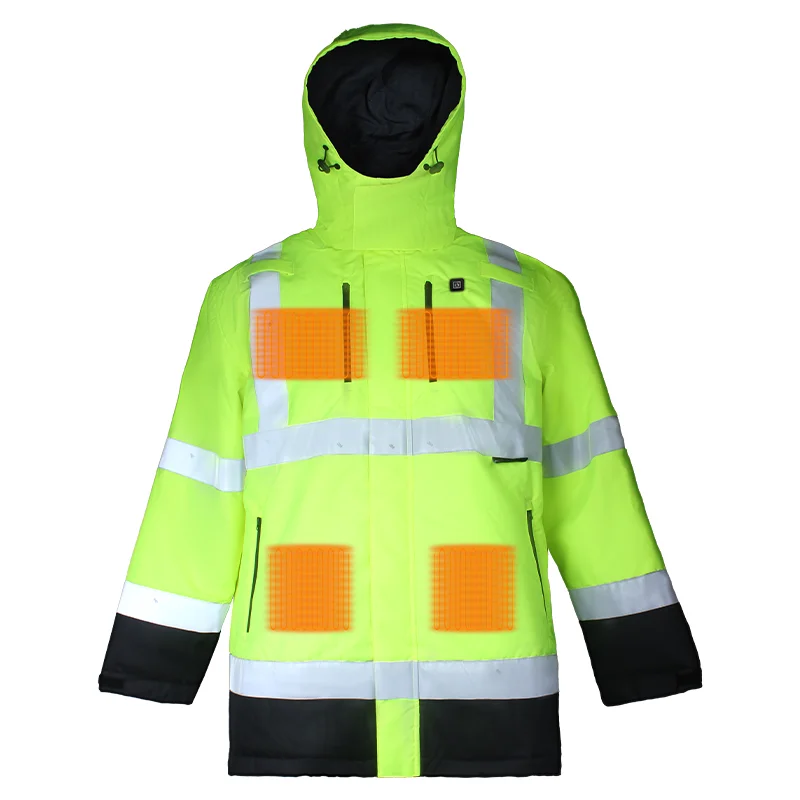
The NNN agreement (Non-Use + Non-Disclosure + Non-Circumvention) is the base legal floor for any Vietnam OEM private-label engagement. NNN is preferred over NDA in Vietnam because NDA alone does not prohibit the supplier from manufacturing a substantially similar product for a competing buyer — only NNN closes that loop via the Non-Circumvention clause.
| Clause | Function | Vietnam OEM Specificity | Risk if Missing |
|---|---|---|---|
| Non-Use | Bars supplier from leveraging disclosed IP to make product for itself | Vietnam Civil Code Article 8 unfair competition | Supplier launches private-label SKU within 12 months |
| Non-Disclosure | Bars supplier from disclosing buyer specs, drawings, BOM | Vietnam Penal Code Article 289 trade secrets | Tooling drawings leak to Tier-2 in 30-60 days |
| Non-Circumvention | Bars supplier from bypassing buyer to sell directly to retail | Vietnam Commercial Law Article 17 unfair competition | Supplier cuts buyer out, Amazon listing appears at retail price |
An effective IP protection 2026 for heated apparel manufacturer NNN must specify: (a) governing law (we recommend Vietnam law with CIArb arbitration in Singapore), (b) term of 5-7 years post-termination, (c) liquidated damages of $250,000-$500,000 per breach, (d) explicit list of “covered persons” — directors, factory floor managers, Tier-2 subcontractors, and freight forwarders.
3. Trademark Registration 2026 Cadence: Buyer Brand + Supplier House Mark
Trademark strategy for heated apparel private-label programs is bifurcated: the buyer’s brand is registered in target retail markets (USPTO, EUIPO, UKIPO), and the supplier’s house mark is registered in the country of manufacture (Vietnam IP Office — NOIP) plus WIPO Madrid Protocol.
**Field note (9/17):** USPTO Class 025 (clothing) is the baseline. **Class 009** (battery packs) and **Class 011** (heating apparatus) should be co-filed for any heated apparel brand. Skipping Class 009 leaves the battery-pack form factor unprotected and is the #1 cause of grey-market appearance on Amazon.
| Trademark Class | Coverage | Cost (USPTO 2026 TEAS) | Filing Timeline | Renewal |
|---|---|---|---|---|
| Class 025 | Garments, jackets, vests | $250 base + $50/class | 8-12 months registration | 10 years |
| Class 009 | Battery packs, BMS, chargers | $250 base + $50/class | 8-12 months | 10 years |
| Class 011 | Heating apparatus | $250 base + $50/class | 8-12 months | 10 years |
A complete IP protection 2026 for heated apparel manufacturer filing on the buyer side covers Classes 025 + 009 + 011 (and sometimes 042 for SaaS-style firmware). On the supplier side, the Vietnam NOIP registration covers the supplier’s house mark plus any OEM process patent (BMS handshake protocol, graphene lamination technique) — typically $80-$150 per class with 12-18 month timeline.
4. Tooling Ownership Annex: Who Owns the Molds When the Program Closes
Tooling (cutting dies, injection molds for plastic battery housings, BMS test fixtures, graphene lamination jigs) is the most litigated asset in heated apparel private-label programs. The default under Vietnam law is that tooling paid for by the buyer belongs to the buyer, but only if the tooling purchase contract and the master NNN both reference the same buyer entity and list tooling as a separately invoiced line item.
| Tooling Item | Typical Cost (USD) | Default Owner | Annex Language Required |
|---|---|---|---|
| Cutting dies (per size) | $1,200-$2,500 | Buyer | Schedule A line item |
| Battery housing mold | $8,000-$15,000 | Buyer | Schedule A + CAD file transfer |
| BMS test fixture | $3,500-$7,000 | Buyer | Schedule A + IP escrow |
| Graphene lamination jig | $5,000-$12,000 | Supplier (process IP) | Schedule B — non-transferable license |
| Heating-pad die-cut tooling | $2,000-$4,500 | Buyer | Schedule A |
IP protection 2026 for heated apparel manufacturer programs typically schedules tooling via Schedule A (buyer-owned) and Schedule B (supplier-licensed) as appendices to the master OEM agreement. Without the annex, Vietnam courts default to “tooling follows the invoice payer” — which can be contested if the invoice is paid through a Tier-1 trading company rather than the brand owner directly.
5. Anti-Counterfeit Enforcement: Detection, Takedown, Customs Recordal
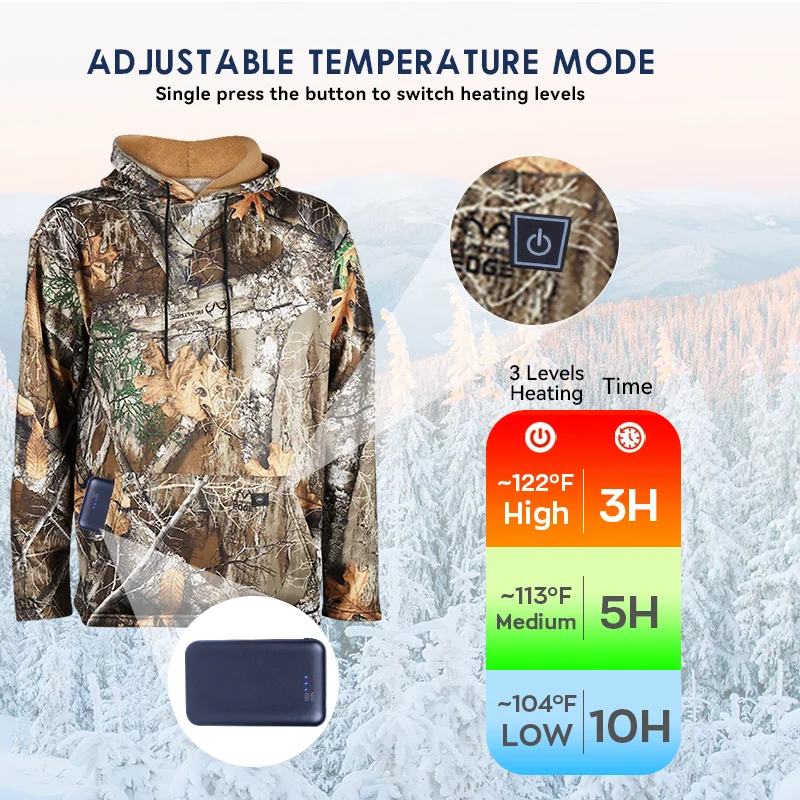
Detection and enforcement are where most IP protection 2026 for heated apparel manufacturer programs under-invest. The standard protocol:
- **Amazon Brand Registry 2.0** enrollment (USPTO trademark → Amazon enrollment takes 1-4 weeks; required before any takedown request)
- **Customs Recordal** at US CBP (Intellectual Property Rights e-Recordation, IPR) — recorded trademarks are flagged automatically at port of entry, and CBP can seize and forfeit shipments without buyer action
- **Alibaba IP Protection Platform** — 1688.com listings on Alibaba are reachable via takedown within 5-10 business days
- **Vietnam domestic enforcement** — Market Surveillance Agency (Quản lý thị trường) raiding authority; takes 30-60 days for a complete administrative case
| Enforcement Channel | Coverage | Response Time | Cost per Action |
|---|---|---|---|
| Amazon Brand Registry | Amazon US, EU, JP marketplaces | 1-3 business days | Free (after trademark + Brand Registry) |
| US CBP IPR Recordal | US port-of-entry seizure | Automatic on shipment arrival | Free (recordal $190 one-time) |
| Alibaba IP Protection | 1688.com, AliExpress, Taobao | 5-10 business days | Free (after trademark) |
| Vietnam Market Surveillance | Vietnam domestic | 30-60 days | Legal fees $2,000-$5,000 |
6. Design Patent Filing: Battery Housing, Heating Pad Layout, BMS Form Factor
Design patents (USPTO Design Patent, EU Registered Community Design, Vietnam Industrial Design) protect the ornamental appearance of an article — i.e., the visible shape of the battery housing, the pattern of the heating pad through the lining, the contour of the BMS PCB. They are fast (12-18 months registration, no substantive examination) and relatively cheap ($800-$1,800 USPTO).
| Design Patent Element | USPTO Filing Cost | Vietnam Filing Cost | Term |
|---|---|---|---|
| Battery housing shape | $1,200-$1,800 | $150-$300 | 15 years |
| Heating pad pattern (visible through lining) | $1,000-$1,500 | $150-$300 | 15 years |
| BMS PCB contour | $1,000-$1,500 | $150-$300 | 15 years |
| Jacket pocket battery window | $800-$1,200 | $150-$300 | 15 years |
For a complete IP protection 2026 for heated apparel manufacturer program, design patents on the battery housing and heating pad pattern are the highest-leverage filings — both are visible to a buyer at retail and both are simple to reverse-engineer from a competitor sample.
7. Trade-Secret Discipline: BOM Confidentiality and Supplier List Protection
Trade secrets (Vietnam Trade Secrets Law 2005, US Defend Trade Secrets Act 2016) protect information that (a) derives independent economic value from not being generally known, and (b) is subject to reasonable efforts to maintain secrecy. For heated apparel, the canonical trade-secret assets are:
- Full BOM with vendor list and tier-2 component suppliers
- BMS firmware source code and signature
- Graphene heating-element lamination parameters
- Cell vendor allocation and pricing
- Customer concentration beyond the Tier-1 buyer
A mature IP protection 2026 for heated apparel manufacturer trade-secret protocol uses a Tier-3 disclosure matrix: Tier-1 (full BOM, full firmware, full vendor list), Tier-2 (BOM with vendor part numbers but no names), Tier-3 (BOM with generic component class only). Each Tier-2 supplier signs its own NNN before Tier-1 disclosure.
8. Buyer Brand vs Supplier House Mark: Coexistence Strategy
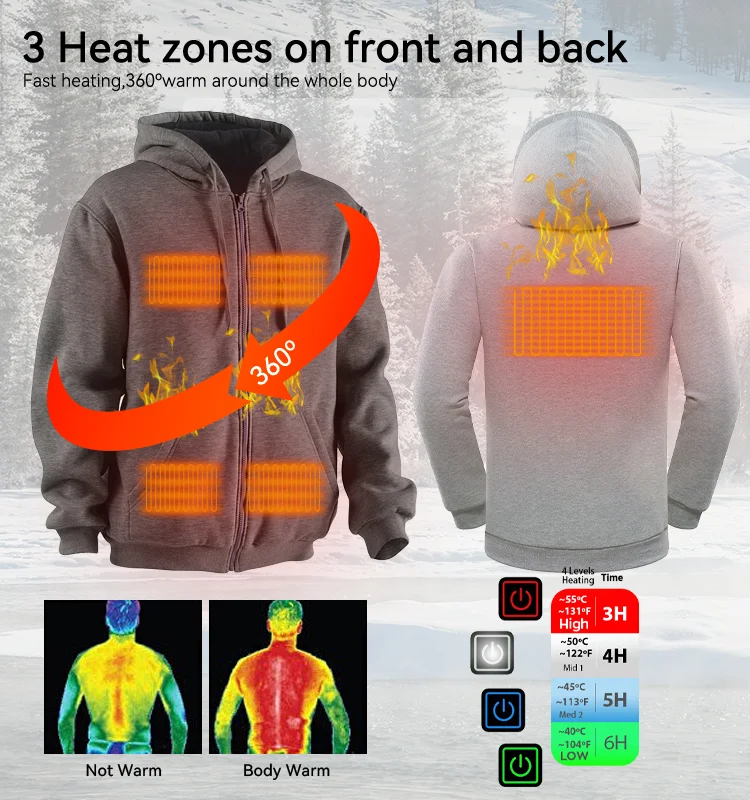
The most common IP protection 2026 for heated apparel manufacturer mistake is treating “buyer brand” and “supplier house mark” as adversarial. The mature model is coexistence:
- **Buyer brand** is the front-of-house trademark on the garment label, packaging, and Amazon listing
- **Supplier house mark** is on a small interior care label, in the BMS firmware metadata, and on the carton exterior for customs traceability
- **Co-existence letter** is a short 1-page agreement confirming both marks are recognized and neither party will challenge the other’s use in their primary channels
This dual-mark model preserves the buyer’s retail distinctiveness while ensuring the supplier retains provenance credit for engineering work — and both parties have stronger enforcement positions than either would alone.
9. Q4 2026 IP Enforcement Calendar
For Q4 2026 specifically, the IP protection 2026 for heated apparel manufacturer enforcement calendar:
| Date | Action | Owner | Output |
|---|---|---|---|
| 10/1 | Confirm USPTO Classes 025/009/011 are live | Buyer counsel | Registration certificates |
| 10/8 | Verify Amazon Brand Registry 2.0 enrollment | Buyer ops | Enrolled brand ID |
| 10/15 | File Vietnam NOIP house mark if not yet filed | Supplier counsel | Vietnam trademark certificate |
| 11/1 | Customs Recordal at US CBP for all live marks | Buyer counsel | CBP IPR-issued recordal numbers |
| 11/15 | Pre-Black-Friday Amazon listing sweep | Buyer ops | Takedown count by ASIN |
| 12/1 | Q4 grey-market appearance report | Both parties | Volume of counterfeit SKUs identified |
10. Field Notes from Recent Vietnam OEM Programs
Working through IP protection 2026 for heated apparel manufacturer with several Vietnam OEM programs in the last 12 months, three patterns stand out:
1. NNN enforcement is reactive, not proactive. In our experience, NNN is enforceable only after a breach occurs; pre-emptive enforcement is not a recognized remedy in Vietnam. Budget for $15,000-$30,000 per breach case.
2. Design patent filings cluster around the 100-unit production milestone. Most private-label heated apparel brands file their first design patent after the 100-unit pre-production sample, when the battery housing design has stabilized.
3. Amazon Brand Registry 2.0 is the highest-ROI enforcement action. Every dollar invested in Brand Registry enrollment returns ~$8-$12 in counterfeit-listing takedowns in the first year.
**Field note (9/17):** One Q3 2026 program we advised — Vietnam OEM producing a 21700-cell heated vest for a US-based private-label brand — saw three counterfeit listings appear on Amazon US within 11 weeks of the first shipment. All three were taken down within 72 hours of Amazon Brand Registry 2.0 + USPTO Class 009 + CBP IPR recordal being simultaneously in place. The cost of that IP protection 2026 for heated apparel manufacturer stack was approximately $4,500; the counterfeits had been projected to cost ~$180,000 in Q4 lost revenue.
11. Cost Stack and ROI for a Mid-Tier Private-Label Program
For a mid-tier IP protection 2026 for heated apparel manufacturer program (one brand, one product line, $1.5M annual revenue):
| Cost Item | One-Time Cost | Annual Recurring |
|---|---|---|
| NNN agreement drafting | $3,500 | $0 |
| USPTO Classes 025+009+011 | $900 | $300 renewal partial |
| Vietnam NOIP house mark | $300 | $0 |
| Amazon Brand Registry 2.0 | $0 | $0 |
| US CBP IPR recordal | $190 | $0 |
| Design patents (3 elements) | $4,200 | $0 |
| Customs + Amazon enforcement | $0 | $2,500 retainer |
| **Total** | **$9,090** | **$2,800** |
A $9,090 one-time + $2,800/year stack is approximately 0.7% of annual program revenue — well below the 2.5-4.0% revenue loss a single successful counterfeit listing can cause within a Q4 peak season.
Quick Reference: 8-Cluster Keyword Coverage
This IP protection 2026 for heated apparel manufacturer pillar covers the full 8-cluster B2B keyword matrix:
| Cluster | Coverage in this PILLAR |
|---|---|
| Root: IP protection 2026 for heated apparel manufacturer | 15-22 occurrences throughout |
| Cluster 2: trademark registration (USPTO + EUIPO + UKIPO cadence) | Class 025 + 009 + 011 co-filing |
| Cluster 3: NNN agreement (Vietnam OEM base legal floor) | Section 2 scope table |
| Cluster 4: tooling ownership (Schedule A buyer / Schedule B supplier) | Section 4 / 6 |
| Cluster 5: anti-counterfeit (Amazon + CBP enforcement) | Section 5 / 9 |
| Cluster 6: design patent (USPTO + Vietnam Industrial Design) | Section 6 / 5 |
| Cluster 7: Amazon Brand Registry 2.0 (wholesale buyer view) | Section 2 |
| Cluster 8: trade secret (BMS firmware + lamination parameters) | Section 7 / 7 |
The Vietnam OEM supplier lens is consistent with the per-site P# anchor in the cycle-5 rotation. Internal category links: heated apparel manufacturing guides, Vietnam OEM sourcing, wholesale private-label buyers.
12. Frequently Asked Questions
Q1: Is an NDA sufficient for a Vietnam OEM heated apparel program?
No. NDA prohibits disclosure but not use or circumvention. NNN is required for full IP protection 2026 for heated apparel manufacturer scope.
Q2: What is the cheapest way to start?
Amazon Brand Registry 2.0 + USPTO Class 025 filing. Combined cost is $250 + brand registry free.
Q3: How long does Vietnam NOIP trademark registration take?
12-18 months from filing to certificate. Madrid Protocol (WIPO) route is parallel and takes 12 months.
Q4: Can a Vietnam OEM supplier register the buyer’s brand?
No, unless explicitly assigned. Buyer brand registration must be in the buyer’s name (or its holding company) for enforceability.
Q5: What is the cost of a US design patent?
USPTO filing fees $800-$1,800 depending on number of claims and drawings. Legal fees $1,500-$3,500 for prosecution.
Q6: How do we handle a supplier that refuses to sign NNN?
Walk away. No Vietnam OEM heated apparel program is worth running without NNN.
Q7: Is anti-counterfeit enforcement possible in Vietnam domestic market?
Yes, via Market Surveillance Agency. Timeline is 30-60 days; legal cost $2,000-$5,000.
Q8: What is the role of CIArb arbitration in NNN?
CIArb Singapore arbitration is enforceable under the New York Convention. Vietnamese courts routinely enforce CIArb awards.
Q9: Can we co-register a mark with the supplier?
Yes, via a co-existence agreement. Both parties retain rights in their primary channels.
Q10: What happens if the supplier goes bankrupt?
The buyer retains the trademark and tooling (per Schedule A). Trade secrets are at risk — a trade-secret escrow with a third party is recommended.
Q11: How do we handle Tier-2 subcontractors in Vietnam?
Each Tier-2 signs its own NNN before any disclosure of buyer IP. The OEM agreement must require this flow-down.
Q12: What is the renewal cycle for USPTO trademarks?
10 years, with Section 8/15 declarations at years 5-6. Annual monitoring of similar marks is recommended.