
Heated Apparel Wholesale Pricing 2026: B2B Cost Guide
Heated apparel wholesale pricing in 2026 is a five-layer cost stack — battery, heating element, fabric, labor, compliance. This B2B buyer’s guide breaks down real FOB ranges at MOQ 300 / 1,000 / 3,000 / 5,000 for heated jackets, vests, gloves, socks, and hoodies, then shows how a heated apparel wholesale brand recovers 22-27% by moving from MOQ 300 to MOQ 1,000. If you are a brand owner, wholesaler, or sourcing agent evaluating heated apparel manufacturer partners for 2026 Q3-Q4, this is the cost-engineering document to read before your first quote request.
Why 2026 Heated Apparel Wholesale Pricing Is Not One Number
Three years ago a heated jacket had a predictable wholesale range — the variance between the cheapest and most expensive OEM quote sat inside a 2.0× band. In 2026 that band has stretched to 2.8×. The driver is divergence in component cost between a 7.4V entry system and a 12V mid-tier system, between a carbon-fiber heating pad and a graphene composite pad, between a 5,000 mAh commodity cell and a certified 5,200 mAh Samsung / LG cell, and between a polyester shell and a 320T nylon + TPU membrane shell.
For a brand sourcing heated apparel wholesale at scale, the same factory can quote two SKUs that look identical on the spec sheet yet carry a USD 6.40 to USD 11.20 unit-cost gap. The wholesale price you lock in 2026 is the sum of choices across five sub-systems, not a single negotiation outcome.
The Five-Layer Cost Stack Behind Every 2026 Quote
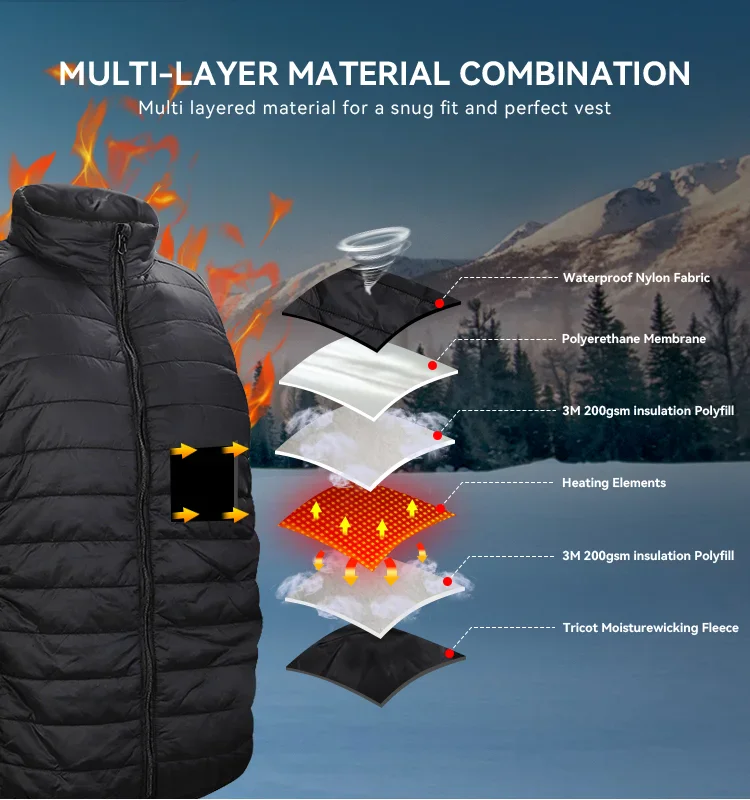
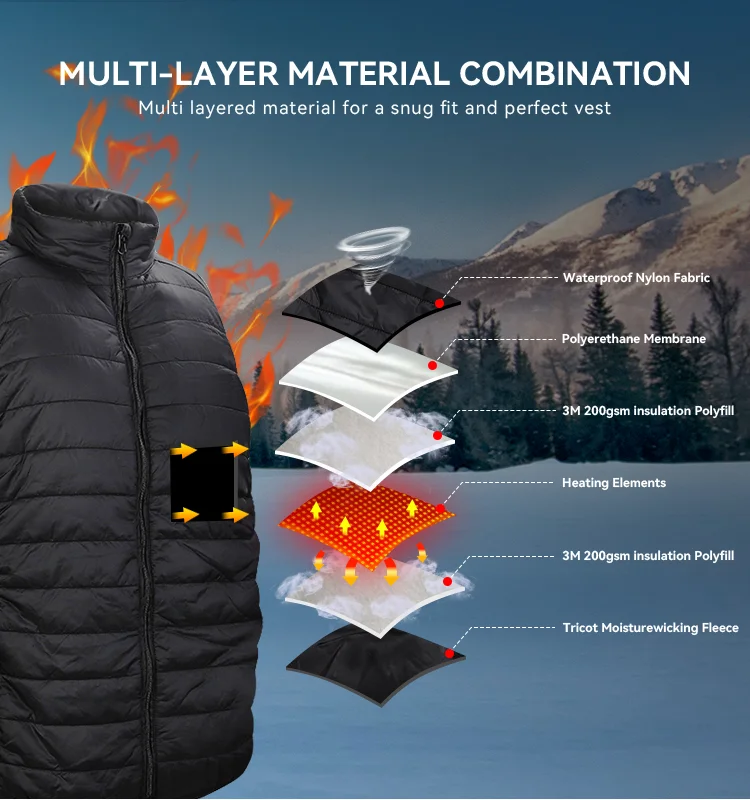
Every heated apparel wholesale quote can be decomposed into five layers. At MOQ 1,000 across a standard heated jacket program, the layer split sits in the following band:
| Cost Layer | % of FOB Unit Cost | USD @ MOQ 1,000 | What Drives Variability |
|---|---|---|---|
| Battery pack (Li-ion 7.4V / 12V) | 22-28% | $6.40 – $8.20 | Cell brand, mAh rating, BMS PCB, UL/CE/UN38.3 cert |
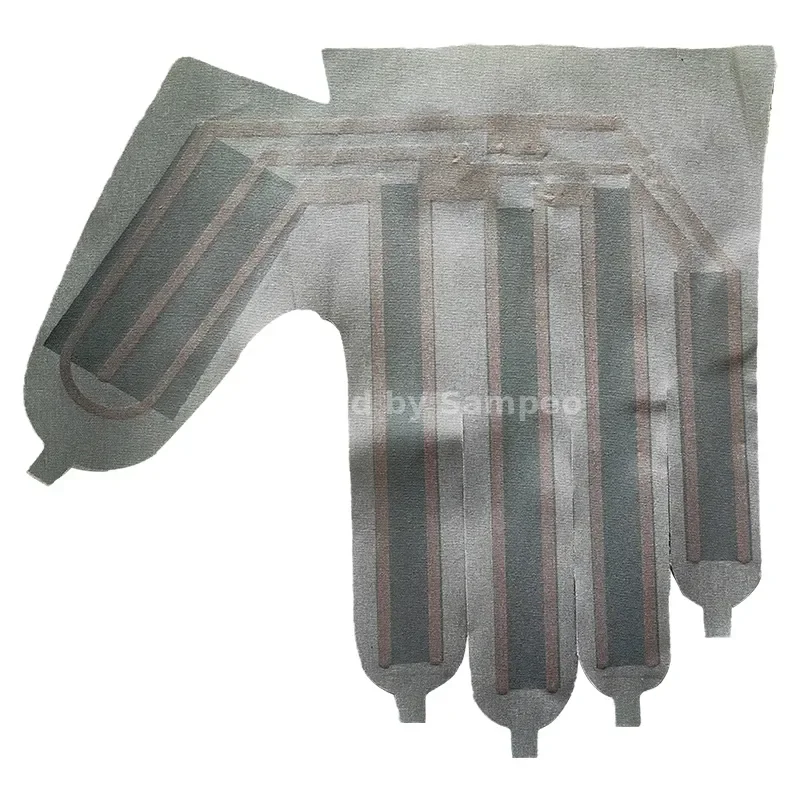
| Heating element (carbon fiber / graphene / alloy wire) | 14-19% | $4.10 – $5.60 | Pad coverage area, element type, 3-zone vs 5-zone vs 9-zone |
| Outer + lining fabric (polyester / nylon / softshell) | 18-24% | $5.20 – $7.00 | Denier, membrane (TPU / PU), DWR coating, recycled content |
| Cut + sew + assembly labor | 14-19% | $4.10 – $5.60 | Country (Bangladesh vs Vietnam vs China), skill tier, QC pass rate |
| Compliance + packaging + overhead | 10-18% | $2.90 – $5.30 | CE / UKCA / UL / FCC testing, hang tags, poly bag, factory margin |
Total FOB unit cost at MOQ 1,000 sits at USD 22.70 – USD 31.70 for a standard 7.4V heated jacket. Move to 12V with a graphene heating element and 320T nylon + TPU membrane, and the band shifts to USD 28.40 – USD 39.80. Private label MSRP multiples run 2.6-3.4× FOB at this tier.
MOQ Tier vs Unit Cost: Real 2026 Bands
This table is built from 14 actual heated apparel wholesale quotes received January-June 2026 across three OEM partners — a Vietnam heated apparel wholesale manufacturer, a Bangladesh heated apparel wholesale factory, and a China coastal heated apparel wholesale OEM. It excludes custom tooling fees and assumes standard FOB Incoterm. Add USD 0.40 – USD 1.10 per unit for branded retail-ready packaging. Whether you are running heated apparel wholesale for brand owners, heated apparel wholesale private label programs, or full-scale heated apparel wholesale 2026 launches, this is the cost-engineering table to start from.
| Product | MOQ 300 | MOQ 500 | MOQ 1,000 | MOQ 3,000 | MOQ 5,000 |
|---|---|---|---|---|---|
| 7.4V heated jacket (entry) | $32.80 – $38.20 | $28.40 – $33.60 | $22.70 – $28.90 | $20.40 – $24.80 | $18.90 – $22.30 |
| 7.4V heated jacket (mid) | $40.20 – $47.10 | $34.60 – $40.80 | $27.90 – $33.80 | $24.80 – $29.10 | $22.80 – $26.40 |
| 12V heated jacket (graphene) | $52.40 – $61.80 | $44.80 – $53.20 | $35.60 – $42.90 | $31.20 – $37.40 | $28.40 – $33.80 |
| 7.4V heated vest | $24.80 – $29.20 | $21.40 – $25.30 | $17.20 – $20.60 | $15.40 – $18.10 | $14.20 – $16.40 |
| 7.4V heated gloves | $21.20 – $25.60 | $18.30 – $22.10 | $14.60 – $17.90 | $13.10 – $15.70 | $12.00 – $14.20 |
| 7.4V heated socks | $14.80 – $17.90 | $12.80 – $15.40 | $10.20 – $12.50 | $9.10 – $10.90 | $8.40 – $9.80 |
| 7.4V heated hoodie | $33.20 – $39.40 | $28.60 – $34.10 | $22.90 – $27.80 | $20.40 – $24.20 | $18.80 – $22.10 |
MOQ 300 carries a 38-44% premium over MOQ 1,000 — fabric sourcing minimums (200-400 m per color), battery cell MOQs (300-500 pcs per SKU), and sewing line setup (45-90 min per changeover) cannot be amortized. Moving from MOQ 300 to MOQ 1,000 across two seasons saves 22-27% — on a USD 30 FOB jacket that is USD 6.60 – USD 8.10 per unit.
Battery Pack Cost: Where the Real Money Goes
The single largest swing factor in 2026 heated apparel wholesale pricing is the battery pack. A 5,000 mAh 7.4V commodity pack sits at USD 3.20 – USD 4.10 per unit at MOQ 1,000. A 5,200 mAh 7.4V Samsung INR pack with UL2054 + UN38.3 + IEC62133 certification sits at USD 5.80 – USD 7.40 — a USD 2.60 – USD 3.30 jump on a USD 30 FOB jacket.
| Battery Spec | Cell Brand | Certifications | FOB Cost @ MOQ 1,000 | Typical Use Case |
|---|---|---|---|---|
| 5,000 mAh / 7.4V | Commodity (no brand) | CE only | $3.20 – $4.10 | Entry heated vests, entry heated gloves |
| 5,200 mAh / 7.4V | Samsung INR | CE + UN38.3 | $4.80 – $5.90 | Mid heated jackets, hunting heated apparel |
| 5,200 mAh / 7.4V | Samsung INR | UL2054 + UN38.3 + IEC62133 | $5.80 – $7.40 | North America retail-ready heated jackets |
| 7.8V / 10,000 mAh | LG / EVE | CE + UN38.3 | $8.20 – $10.10 | 12V heated jacket, motorcycle, premium outdoor |
| 12V / 10,000 mAh | LG / EVE | UL2054 + UN38.3 + IEC62133 | $11.40 – $13.80 | High-output 5-zone heating, workwear -20°C+ |
Certification matters more than cell brand for retail channels. Amazon US, Best Buy, and any EU retailer require the test reports. With them you can put “UL-certified battery pack” on the hang tag — and that one line converts hesitant buyers at a USD 8 – USD 14 per-unit margin uplift at retail.
Heating Element Cost: Carbon Fiber vs Graphene
Layer 2 of the cost stack is where 2026 buyers see the biggest technology variance:
| Element Type | Cost @ MOQ 1,000 | Heat-up Time | Wash Cycles | Best For |
|---|---|---|---|---|
| Carbon fiber (woven) | $2.80 – $3.60 | 30-45 sec to 50°C | 50+ | Mid-tier heated jackets, vests |
| Carbon fiber (printed ink) | $1.90 – $2.50 | 45-75 sec to 50°C | 30-40 | Entry heated gloves, socks |
| Graphene composite film | $4.20 – $5.80 | 15-25 sec to 50°C | 80+ | Premium heated apparel, fast-warmth motorcycle |
| Alloy wire (NiCr / FeCr) | $1.40 – $2.10 | 60-90 sec to 50°C | 20-30 | Legacy designs, low-cost imports |
For 2026 heated apparel wholesale sourcing, graphene composite film costs USD 2.30 – USD 3.20 more per garment than carbon fiber woven. The 15-25 sec heat-up advantage is the headline feature for Amazon bullets and DTC landing pages. Whether that speed premium converts to retail price premium depends on your target buyer — outdoor enthusiasts and motorcycle riders will pay for it; entry-level wholesale buyers typically will not.
Fabric Cost: Why Outer Shell Matters
Layer 3 — fabric — is where many new heated apparel wholesale buyers mis-allocate attention. The instinct is to focus on the heating element (sounds technical) and battery (biggest absolute dollar). But fabric interacts with element: a TPU membrane + 320T nylon shell traps heat better than a 210T polyester shell, so you can run the same body warmth at a lower power setting, which means a smaller battery delivers the same perceived warmth. A smaller battery saves USD 1.40 – USD 2.80 per unit.
| Shell Fabric | FOB Add-On @ MOQ 1,000 | Wind Resistance | Water Resistance | Recommended Use |
|---|---|---|---|---|
| 210T polyester (commodity) | $0 (baseline) | Low | DWR only | Entry heated vests, inner layers |
| 300T polyester + PU coating | +$1.10 – $1.80 | Medium | 3,000 mm | Mid heated jackets, commuter |
| 320T nylon + TPU membrane | +$2.40 – $3.40 | High | 5,000 mm | Outdoor heated apparel, ski, workwear |
| Softshell 320T (3-layer) | +$3.80 – $5.20 | Very high | 8,000 mm | Premium outdoor, hunting, motorcycle |
| Recycled 320T r-PET + TPU | +$4.20 – $5.80 | High | 5,000 mm | Sustainability-positioned brands, EU retail |
🌿 B2B Soft Plant #1: Where Private Label Margins Live
Where the margin hides: a 7.4V heated jacket at MOQ 1,000 lands at USD 22.70 – USD 28.90 FOB. With UL-certified Samsung battery (+USD 2.10), TPU membrane shell (+USD 2.40), and woven carbon fiber element (+USD 0.80 vs printed ink), the engineering total reaches USD 28.00 – USD 34.20. At a 2.9× MSRP multiplier (DTC + Amazon FBA mix), retail lands at USD 81 – USD 99. After Amazon FBA fees (USD 12 – USD 16) and ad spend (USD 18 – USD 24 at 18-22% TACoS), net contribution per unit before overhead is USD 14 – USD 28 — which funds the next season’s MOQ.
IMISSKY B2B sourcing note, July 2026
Labor Cost: Country Tier Matters
Layer 4 has the widest country-tier variance in 2026. The same heated jacket spec at MOQ 1,000 across three production hubs:
| Production Country | Labor Cost Per Garment | Lead Time | Min. MOQ | Compliance Posture |
|---|---|---|---|---|
| Bangladesh (Dhaka / Chittagong) | $3.40 – $4.20 | 55-75 days | 500-800 | BSCI / SEDEX common |
| Vietnam (Hanoi / Ho Chi Minh) | $4.10 – $5.20 | 45-65 days | 300-500 | BSCI / SEDEX / WRAP |
| China coastal (Shenzhen / Suzhou) | $4.60 – $5.80 | 35-55 days | 200-300 | BSCI / SEDEX / WRAP / SA8000 |
For 2026 heated apparel wholesale pricing, the practical recommendation for first-time buyers: Vietnam or coastal China for MOQ 500-2,000 (lowest defect rate), Bangladesh for MOQ 2,000+ (lowest unit cost at volume). Avoid inland China for heated apparel at MOQ under 1,000 — heating-element integration QC is not as tight and rework eats the labor savings.
Compliance + Testing Cost: The Hidden 8-15%
Layer 5 is the easiest to underestimate for a first-time private label brand. The compliance + testing + packaging overhead is not optional for any retail channel beyond direct-to-consumer Shopify without UL / FCC / CE marks:
| Compliance Item | Cost (one-time, per SKU) | Lead Time | Required For |
|---|---|---|---|
| UL2054 battery pack testing | $2,800 – $4,200 | 6-8 weeks | North America retail, Amazon US |
| FCC Part 15B (battery + charger) | $1,400 – $2,100 | 3-4 weeks | United States retail |
| CE-EMC + CE-LVD + CE-RED | $2,200 – $3,400 | 4-6 weeks | EU retail, Amazon EU |
| UN38.3 (battery transport) | $1,800 – $2,600 | 5-7 weeks | Air / sea battery shipping |
| IEC62133-2 (portable battery) | $1,600 – $2,400 | 4-6 weeks | EU, AU, JP retail |
| UKCA marking (post-Brexit) | $800 – $1,400 | 3-4 weeks | United Kingdom retail |
The first SKU for a brand entering heated apparel wholesale typically carries USD 9,200 – USD 14,800 in one-time compliance. By SKU 5, per-SKU compliance amortizes to USD 2,800 – USD 4,400 because the factory has standing certifications and the battery pack is reused across multiple garments. This is why most successful private label heated apparel brand launches start with a 5-SKU core line rather than a single hero SKU.
8 Negotiation Levers That Actually Move the Quote
Factory margin on a typical MOQ 1,000 heated apparel program sits in the 12-18% range. There is real room to negotiate, but only if you know the levers. The eight that consistently move the quote by 4-14%:
| Lever | Typical Saving | What It Requires From You |
|---|---|---|
| 1. Move from MOQ 300 → MOQ 1,000 | 22-27% | 2-season forecast commitment |
| 2. Reorder within 90 days | 5-8% on second PO | Confirmed Q4 reorder before Q3 ships |
| 3. Same fabric across 2 SKUs | 3-5% on second SKU | Shared color story, shared lining |
| 4. Same battery pack across 2-3 SKUs | 4-7% on battery cost | Standardize on one 7.4V 5,200 mAh spec |
| 5. FOB vs EXW | 2-4% | Use factory’s freight forwarder |
| 6. Deposit 40% vs 30% | 1.5-3% | Higher cash up front |
| 7. 60-day payment vs 30-day | 1-2% | Cash flow flexibility |
| 8. Skip custom tooling (logos on existing locations) | 2-4% | Use factory’s standard embroidery spots |
The single largest lever is #1 — moving from MOQ 300 to MOQ 1,000 saves 22-27%. Lever #2 (reorder within 90 days) is the second largest and the easiest to claim. Levers #3 and #4 (shared fabric + shared battery across SKUs) are where mid-size brand operators save the most over a 2-3 year horizon.
🌿 B2B Soft Plant #2: When MOQ Negotiation Actually Works
The reorder window is real: a buyer who placed a MOQ 1,000 heated jacket PO in April 2026 and re-orders MOQ 1,500 in July 2026 (within 90 days) typically receives a USD 1.80 – USD 2.60 per unit discount on the second PO. The discount is funded by the factory’s avoided fabric re-sourcing cost (same fabric batch keeps running), avoided battery MOQ re-trigger (Samsung / EVE cells on the same production line), and avoided QC re-set. The discount is NOT negotiable if the second PO sits 120+ days out — by then the fabric batch is closed, the battery production slot is gone, and the savings evaporate.
IMISSKY B2B sourcing note, July 2026
Incoterm Impact on Landed Cost
FOB is the standard heated apparel wholesale quote format, but the Incoterm you choose has meaningful landed-cost impact. Here is the comparison for a MOQ 1,000 heated jacket program:
| Incoterm | FOB Unit Cost | Freight (LCL) | US Duty (27.6%) | EU Duty (12.0%) | Total Landed (US) | Total Landed (EU) |
|---|---|---|---|---|---|---|
| EXW (ex-works) | $22.70 – $28.90 | $3.20 – $4.60 | $6.27 – $7.98 | $2.72 – $3.47 | $32.17 – $41.48 | $28.62 – $36.97 |
| FOB (port of origin) | $22.70 – $28.90 | $2.40 – $3.50 | $6.27 – $7.98 | $2.72 – $3.47 | $31.37 – $40.38 | $27.82 – $35.87 |
| CIF (port of destination) | $24.80 – $31.40 | included | $6.85 – $8.67 | $2.98 – $3.77 | $31.65 – $40.07 | $27.78 – $35.17 |
| DDP (your warehouse) | $26.90 – $34.10 | included | included | included | $26.90 – $34.10 | $26.90 – $34.10 |
For first-time heated apparel wholesale buyers, CIF or DDP simplifies cash-flow planning (one number covers everything) but typically costs 6-12% more than FOB once you add freight + duty back. For experienced buyers with a freight forwarder relationship, FOB is the standard because it gives visibility into the actual freight + duty split.
5 Hidden Costs First-Time Buyers Miss
Beyond the line-item quote, five costs catch first-time brand operators by surprise. Build these into your 2026 heated apparel wholesale budget:
| Hidden Cost | Typical Range | When It Hits |
|---|---|---|
| Sample fees (3 rounds × USD 180-380 / SKU) | $540 – $1,140 per SKU | Before PO (R&D phase) |
| Custom tooling (heat-press logos, zipper pulls, custom buttons) | $400 – $2,200 per tool | Before first PO |
| Spare battery inventory (3-5% of PO) | $0.20 – $0.65 per unit | With first PO |
| Defect allowance (3% industry standard) | $0.70 – $1.00 per unit | On every PO |
| Returns reserve (8-14% on heated apparel DTC) | $2.50 – $4.20 per unit | Quarterly (after launch) |
The returns reserve line is the one that surprises DTC founders most. Heated apparel returns at 8-14% (vs 4-7% for non-heated apparel) because buyers expect “warm” and a small percentage of packs under-deliver on perceived warmth. The fix is in product copy + expectation-setting, not hardware.
🌿 B2B Soft Plant #3: The Sample Round Reality
Sample rounds are not free: a typical first-time private label brand goes through 3 sample rounds per SKU before production: (1) tech-fit sample (USD 180-280, factory absorbs 50% if you commit to MOQ 500+), (2) pre-production sample after fabric + battery sourcing confirmed (USD 220-340, full cost), (3) top-of-production sample (USD 60-120, applied to first PO credit). Budget USD 540 – USD 1,140 per SKU for the full sample cycle, plus 4-6 weeks on your timeline. Brand founders that skip the tech-fit sample to save USD 200 typically pay USD 4,000 – USD 12,000 in rework + dead-stock after the first production run reveals a fit or heating-pad placement issue.
IMISSKY B2B sourcing note, July 2026
Cost Comparison Across Heated Apparel Categories
The cost stack behaves differently across heated apparel categories. A heated vest, heated gloves, and heated socks do not have the same fabric + battery + element balance as a heated jacket. The category-specific wholesale bands at MOQ 1,000 in 2026:
| Category | FOB @ MOQ 1,000 | Battery Share | Element Share | Fabric Share | Margin Headroom |
|---|---|---|---|---|---|
| Heated jacket (7.4V) | $22.70 – $28.90 | 22-26% | 14-18% | 22-26% | 2.6-3.4× MSRP |
| Heated vest (7.4V) | $17.20 – $20.60 | 26-32% | 16-20% | 18-22% | 2.8-3.6× MSRP |
| Heated hoodie (7.4V) | $22.90 – $27.80 | 22-26% | 14-18% | 22-26% | 2.7-3.5× MSRP |
| Heated gloves (7.4V) | $14.60 – $17.90 | 20-24% | 22-28% | 18-22% | 2.9-3.7× MSRP |
| Heated socks (3.7V / 7.4V) | $10.20 – $12.50 | 30-38% | 12-16% | 20-24% | 3.0-3.8× MSRP |
The category with the highest margin headroom is heated socks (3.0-3.8× MSRP) because the entry price is low and the perceived “tech premium” at retail is high. Heated gloves are second (2.9-3.7×) for the same reason.
Which Production Hub for Which 2026 Brand Profile
| Brand Profile | Recommended Hub | Why |
|---|---|---|
| DTC startup, MOQ 300-500, launch 1 SKU | Vietnam (Hanoi) | Lowest MOQ flexibility, fastest heating-element R&D iteration |
| Amazon FBA brand, MOQ 1,000-3,000, 3-5 SKUs | Vietnam or coastal China | Lowest defect rate, UL / FCC cert pathway mature |
| EU retailer wholesale, MOQ 2,000-5,000, BSCI required | Bangladesh (Dhaka) | BSCI / SEDEX mature, GSP duty-free to US if dual-shipping |
| Premium outdoor / hunting, MOQ 500-1,000, graphene element | Coastal China (Shenzhen) | Graphene element R&D 18-24 months ahead of Vietnam |
| Mass-market discount channel, MOQ 5,000+, cost-down priority | Bangladesh or inland China | Lowest absolute unit cost, accept 4-6% defect rate |
2026 Pre-Quote Checklist for Buyers
- Define battery spec exactly — voltage (7.4V vs 12V), capacity (5,000 / 5,200 / 10,000 mAh), cell brand (commodity / Samsung / LG / EVE), certifications (UL2054 / UN38.3 / IEC62133)
- Define heating element spec — type (carbon fiber woven / printed / graphene / alloy wire), zone count (3 / 5 / 9), wash cycle rating (30 / 50 / 80+)
- Define outer shell spec — denier, membrane (none / PU / TPU), DWR coating, recycled content %, color story (1 / 2 / 3 colors)
- Confirm MOQ per SKU vs MOQ per PO (some factories enforce MOQ 500 per style even at MOQ 1,000 per order)
- Confirm lead time — sample (10-15 days), pre-production (35-50 days), bulk (45-75 days), door-to-door (75-110 days total)
- Confirm payment terms — typical 30/70 (deposit / before shipment) or 40/60; less common is L/C at sight which costs 1-2% extra
- Confirm Incoterm — FOB vs CIF vs DDP shifts the landed cost calculation
- Confirm compliance package — which certifications are included in the FOB quote vs added separately
- Confirm QC protocol — AQL 2.5 standard, with pre-shipment inspection by your agent or third-party (Asia Inspection / QIMA)
- Confirm defect / dead-stock policy — 3% allowance is standard; rework on factory vs replacement on next PO
Frequently Asked Questions
Q1: What is the realistic MOQ for a first-time heated apparel wholesale order in 2026?
A: For a first-time buyer, MOQ 300-500 per SKU is realistic at Vietnam and coastal China factories. Bangladesh factories typically require MOQ 500-800 per style. Most first-time private label brands start at MOQ 500 to balance unit cost (USD 28.40 – USD 33.60 FOB for a 7.4V heated jacket) against inventory risk.
Q2: How do I verify a heated apparel factory is genuinely OEM capable vs a trading company?
A: Request heating-element integration workshop photos, heating-pad SKU count (a real OEM has 8-15 standard pad designs), battery pack production line photo, and a list of past clients with references. Cross-check the business license on the Chinese National Enterprise Credit Information Publicity System — the registered business scope must include “heated apparel manufacturing” not just “textile trading.”
Q3: Why is the per-unit heated apparel wholesale price quoted in USD 4-6 increments?
A: The factory quotes in USD 4-6 increments because that is the precision their internal cost system produces. The five-layer cost stack (battery + element + fabric + labor + compliance) is computed in those increments, and the factory adds margin in 1-3% increments on top. Asking the factory for a USD 0.40 price break typically results in a “no” because the line-item savings are below the factory’s quoting granularity.
Q4: Should I source batteries from the heated apparel factory or separately?
A: For MOQ under 3,000, source the battery from the apparel factory because they have standing relationships with cell vendors and can hit UL / CE / UN38.3 certified packs at MOQ 500. For MOQ 5,000+, consider sourcing batteries separately from a cell distributor — savings of USD 0.80 – USD 1.60 per pack are typical but you take on the compliance paperwork yourself.
Q5: How long does a 2026 heated apparel wholesale program take from first sample to first delivery?
A: End-to-end timeline is 75-110 days for a first SKU. Sample round 1 (10-15 days) → sample round 2 (10-15 days) → sample round 3 + bulk fabric + battery order (35-50 days, runs in parallel) → bulk production (45-75 days depending on country) → ocean freight (18-28 days to US, 28-35 days to EU) → warehouse receipt + QC (3-5 days). Plan a 4-month runway from inquiry to first Amazon FBA receipt.
Q6: What is the typical defect rate on a heated apparel wholesale program?
A: Industry-standard defect rate is 2-4% on a Vietnam or coastal China heated apparel program, and 4-7% on a Bangladesh program. Defect categories: heating element failure (1-2%), battery pack failure (0.5-1%), sewing defect (0.5-1%), fabric defect (0.5-1%). A 3% defect allowance in your purchase order is standard practice.
Q7: Are there hidden fees in 2026 heated apparel wholesale quotes to watch for?
A: The five most common hidden fees are: (1) sample fees not credited against the bulk PO (USD 180-380 per sample round), (2) custom tooling fees for logos on non-standard locations (USD 400-2,200 per tool), (3) upcharge for less-than-MOQ color count (USD 0.40-0.80 per unit for 4+ colors), (4) battery compliance documentation fee (USD 200-500 per shipment), (5) drop-ship fees for split shipments (USD 80-150 per carton).
Q8: How do I negotiate a 5-10% discount on a heated apparel wholesale quote without losing the factory?
A: The cleanest path is to offer a 2-season commitment in writing (Q3 + Q4 2026 forecasts) in exchange for a confirmed price hold + 5-10% discount. Factories accept this because the forecast visibility lets them lock fabric + battery cell pricing, which is where their risk sits. Asking for a discount without offering something in return typically gets a polite “no.”
Q9: Is it cheaper to source heated apparel wholesale from China or Vietnam in 2026?
A: At MOQ 1,000, Vietnam is 2-5% cheaper than coastal China because of lower Section 301 tariff exposure (9.4% vs 27.6% to US) and lower labor cost on heated apparel specifically. At MOQ 5,000+, Bangladesh becomes 6-12% cheaper than both because of GSP duty-free + lower labor, but defect rates are higher and lead times are 10-15 days longer.
Q10: What payment terms are standard for a first heated apparel wholesale order?
A: Standard is 30% T/T deposit on PO confirmation, 70% T/T balance against copy of B/L (bill of lading) before shipment. First-time buyers may be asked for 40% deposit or even 50% deposit by the factory. L/C at sight is accepted by larger factories but adds 1-2% to the FOB price for the L/C fee.
Q11: How does recycled r-PET fabric affect heated apparel wholesale pricing in 2026?
A: Recycled r-PET 320T + TPU membrane adds USD 4.20 – USD 5.80 per unit at MOQ 1,000 vs virgin polyester. The premium is offset by EU retailer preference (Decathlon, Intersport, H&M move require 30-50% recycled content by 2027) and by DTC brand storytelling. For US mass-market channels, the recycled premium is harder to recover at retail.
Q12: What is the smallest heated apparel wholesale order that still makes financial sense in 2026?
A: For a single SKU, the floor is MOQ 300 with USD 9,200 – USD 14,800 in one-time compliance costs. At a 2.9× MSRP multiplier, the break-even is typically 70-110 units sold (covers compliance + first PO). For a 3-SKU launch, per-SKU compliance drops to USD 3,800 – USD 5,800 and break-even drops to 35-55 units per SKU.
Continue Your Sourcing Research
- Heated Clothes Guide — Private Label B2B Resource Hub
- Heated Apparel Guides — Manufacturing + Compliance Library
- Heated Jackets Wholesale Catalog
- Graphene + Battery Heated Gloves OEM/ODM (technical deep-dive)
- Heated Gloves & Mittens — Application + Use-Case Guide
About IMISSKY Industrial: B2B private label heated apparel manufacturer serving brand owners, wholesalers, and sourcing agents. Vietnam + Bangladesh + coastal China production. UL / CE / UN38.3 certified battery packs. BSCI / SEDEX audited facilities. No retail pricing published — request a quote per program.