
Heated Apparel Customs and Import Documentation: 2026 Supplier & Manufacturer Guide
Heated Apparel Customs and Import Documentation: 2026 Supplier & Manufacturer Guide
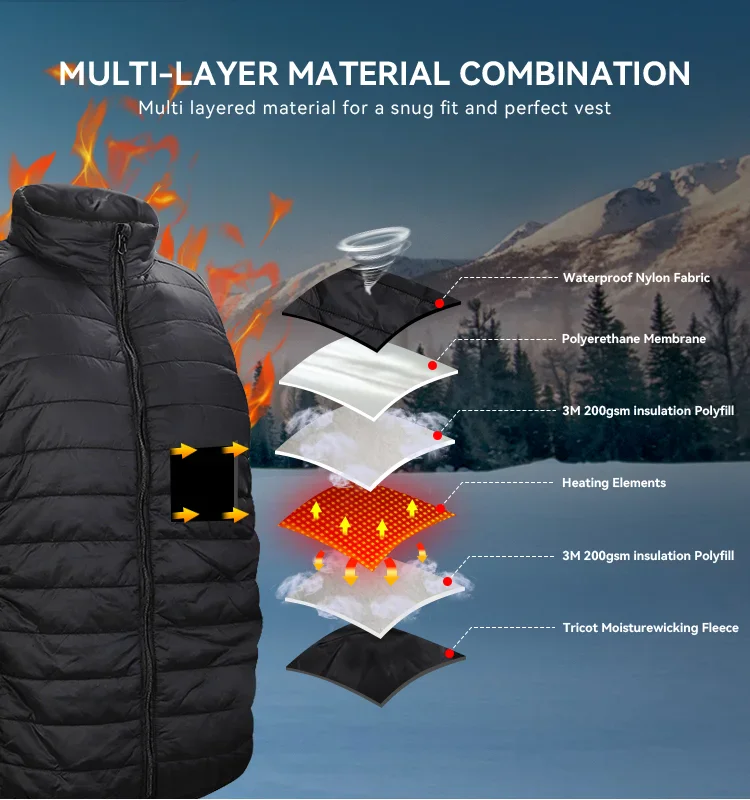
When a brand sources heated apparel from an overseas factory, the customs and import documentation package decides whether a 40-foot container clears a port in three days or sits in a bonded warehouse for three weeks. For 2026, heated apparel customs is a parallel workstream that begins during OEM sampling and runs through the last warranty claim. This guide is written for the buyer, sourcing manager, and compliance lead who needs to know exactly what a heated apparel customs manufacturer or wholesale supplier hands over before, during, and after shipment.
We cover HS code classification, the OEM/ODM documentation stack, UN 38.3 battery paperwork, importing heated clothing into the US vs the EU, the graphene vs carbon fiber sourcing question, and the soft-plant cross-links that let a sourcing team move from one pillar to the next without rebuilding the file. Treat it as a working checklist, not a marketing brochure.
Related reading on this site: heated apparel wholesale MOQ guide and our customs import documentation pillar for the full 2026 sourcing rotation.
1. Why Heated Apparel Customs Is a Supplier-Side Problem in 2026
Customs friction used to live in the buyer’s logistics department. In 2026, factory-side documentation is the rate-limiting step because lithium batteries, dual-use heating elements, and origin verification are now triaged at the manufacturing origin, not the destination port. The three pressures that move this into a supplier view pillar are summarised in the table below.
| # | Pressure | What changed in 2026 | Documentation response |
|---|---|---|---|
| 1 | Battery transport enforced at origin | UN 38.3, MSDS, Section II packaging must travel with the master B/L | Battery supplier docs shipped with the invoice pack |
| 2 | Carbon fiber and graphene trigger dual-use queries | Woven graphite cloths flagged under export control annexes | Add Composite Material Declaration to every shipment |
| 3 | Section 321 de minimis tightening | Low-value parcels with lithium batteries reclassified | Wholesale heated apparel importers consolidate cartons and file formal entries |
A heated apparel customs manufacturer that cannot produce a clean documentation pack in 48 hours will lose container slots, and the buyer’s landed cost rises by demurrage, not by fabric price.
2. The 2026 Heated Apparel Customs Documentation Stack
Every shipment from a heated apparel customs wholesale supplier should arrive with the same eight-document baseline. Use the table below as the master check-in sheet for the booking confirmation email.
| # | Document | Issued By | Trigger | Buyer Action |
|---|---|---|---|---|
| 1 | Commercial Invoice | Factory / Exporter | Order PO signed | Reconcile HS code, value, country of origin |
| 2 | Packing List | Factory | Pre-shipment | Cross-check carton count, weight, battery count per carton |
| 3 | Bill of Lading / Airway Bill | Freight forwarder | Cargo handover | Verify shipper, consignee, marks & numbers |
| 4 | Certificate of Origin (Form A / RCEP / EUR.1) | Chamber of Commerce | Origin claim | Apply preferential tariff if applicable |
| 5 | UN 38.3 Test Summary | Battery supplier | Every cell chemistry | File with hazardous goods declaration |
| 6 | MSDS (Material Safety Data Sheet) | Battery supplier | First article + re-test every 24 months | Retain for 5 years |
| 7 | CE / UKCA Technical File | OEM | EU / UK shipment | Reference in DoC and DoC bundle |
| 8 | Composite Material Declaration | Factory | Carbon fiber / graphene construction | Submit to customs broker for HS 6815.10 review |
A heated apparel customs OEM that misses more than one of these rows is signalling that the order is not ready to ship. Treat delay as a red flag, not a negotiation opening.
3. HS Code Classification for Heated Jackets, Vests, and Gloves
Wrong HS codes are the single most common reason a heated apparel customs shipment is held. The harmonized system treats the heating element as a “fitted” component, so the garment HS code usually controls — except when the battery pack is shipped separately and enters as a lithium-ion article under heading 8507.60.
| Product | US HTS | EU CN Code | Duty Rate (MFN 2026) | Notes |
|---|---|---|---|---|
| Heated jacket (battery included) | 6201.13.40 | 6201 13 90 | 27.5% / 12.0% | Knitted men’s outerwear |
| Heated vest | 6211.33.00 | 6211 33 90 | 16.5% / 12.0% | Garment classification prevails |
| Heated gloves | 6216.00.58 | 6216 00 00 | 8.4% / 6.7% | Category 269 textile quota |
| Heated socks | 6115.95.60 | 6115 95 90 | 14.0% / 12.0% | Knitted hosiery |
| Lithium-ion battery pack (spare) | 8507.60.00 | 8507 60 00 | 3.4% / 2.7% | Independent classification if sold loose |
| Graphene heating film roll | 6815.10.00 | 6815 10 10 | Free / Free | Verify dual-use Annex I |
Buyers should require the factory to write the HS code on the commercial invoice line by line. If a heated apparel customs manufacturer proposes a single combined code for jacket + battery, ask for a corrected invoice — most national customs authorities reject composite descriptions above 12 characters.
4. Importing Heated Clothing into the US: 2026 CBP Workflow
Importing heated clothing into the US under 2026 rules runs through a four-stage workflow. Each stage has a customs broker hand-off and a paperwork lane.
| Stage | Actor | File | Output |
|---|---|---|---|
| 1. ISF 10+2 | Importer | Security filing 24 h before vessel load | Entry summary number |
| 2. Entry Filing | Customs broker | ACE entry, type 01 consumption | Entry release |
| 3. CBP Examination Risk | CBP officer | Random or risk-based | Exam notification or release |
| 4. Post-Summary Correction | Importer | PSC within 300 days | Reconciled duty paid |
The five US-specific risk lanes a heated apparel customs wholesale buyer must clear are:
| Lane | Regulator | Trigger | Document Required |
|---|---|---|---|
| CPSC flammability | CPSC | Every garment | 16 CFR 1610 test report |
| FCC Part 15 | FCC | Battery charger | Supplier declaration |
| DOE energy labelling | DOE | Battery pack > 100 Wh | Energy label |
| Section 301 | CBP | China origin | Origin verification file |
| California Prop 65 | CA OEHHA | Garments sold in CA | Warning label or compliance record |
A heated apparel customs OEM that ships from Vietnam, Cambodia, or Bangladesh should still be ready to provide full China-content disclosure if any fabric, fiber, or heating element is sourced across borders — CBP will trace yarn back to the spinning mill.
5. Importing Heated Clothing into the EU: 2026 CE and CBAM Workflow
Importing heated clothing into the EU shares the documentation backbone with the US but adds three Europe-only layers: CE marking, REACH, and CBAM. The current EU stack is mapped below.
| Layer | Governing Body | Document | Frequency |
|---|---|---|---|
| CE marking | EU Commission | Declaration of Conformity | Per model |
| REACH SVHC | ECHA | Substance declaration > 0.1% w/w | Per article |
| CBAM | EU Commission | Embedded emissions report | Quarterly |
| UKCA (UK only) | OPSS | UKCA DoC | Per model |
| WEEE (battery) | National authority | Producer registration | Annual |
A heated apparel customs manufacturer selling into the EU must hand over a CE technical file that references EN IEC 60335-1 (household safety) for the charger and EN ISO 13688 (protective clothing general requirements) for the garment. CBAM applies to the steel zipper, aluminum heating track, and any cement used in the sole of heated boots — embedded emissions must be reported from 2026 onward with payment starting 2027.
6. UN 38.3 Battery Documentation: The Hard Gate
UN 38.3 is the United Nations Manual of Tests and Criteria for lithium batteries, and every heated apparel customs shipment — air, ocean, or road — must clear it. The test report is issued by an accredited lab against eight test sections (T1–T8) covering altitude simulation, thermal, vibration, shock, external short, impact, overcharge, and forced discharge.
| # | Test Section | What it proves | Typical Failure Mode |
|---|---|---|---|
| T1 | Altitude simulation | Low-pressure cell integrity | Swelling at 11.6 kPa |
| T2 | Thermal cycling | Temperature -40°C to +75°C | Seal rupture |
| T3 | Vibration | Sinusoidal 7 Hz–200 Hz | Tab crack |
| T4 | Shock | 50 g half-sine 11 ms | Internal short |
| T5 | External short | < 0.1 ohm at 55 °C | Thermal runaway |
| T6 | Impact | 9.1 kg drop 610 mm | Cell venting |
| T7 | Overcharge | 2× rated current | Separator collapse |
| T8 | Forced discharge | Deep discharge to negative voltage | Cell rupture |
A heated apparel customs wholesale brand that ships without a valid UN 38.3 summary risks a 30-day airline hold plus a fine from IATA member carriers. The summary must be re-issued every 24 months or whenever the cell chemistry changes by more than 10% by weight.
7. Graphene vs Carbon Fiber: How the Heating Element Changes the Documentation
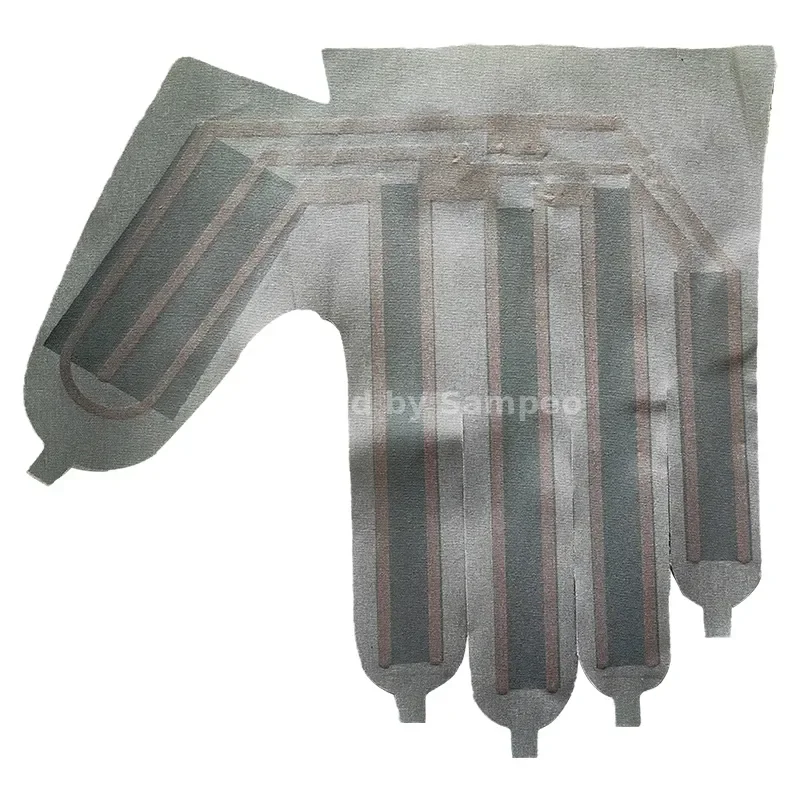
The graphene vs carbon fiber debate is no longer purely a technical choice — it changes the export control lane and the HS code path. Carbon fiber heating wires are classified under HS 6815.10 as articles of graphite or other carbon, while graphene films are usually classified under HS 3801.10 as a chemical preparation in primary form.
| Aspect | Carbon Fiber Heating Wire | Graphene Heating Film |
|---|---|---|
| Typical HS code | 6815.10 | 3801.10 or 6815.10 |
| Export control risk | Low (Annex I review for aerospace weave) | Medium (dual-use inquiry likely) |
| UN 38.3 impact | None (passive element) | None at garment level |
| Thermal uniformity | Linear strips | Full-area uniform |
| Cost 2026 (per garment) | $2.40–$3.80 | $4.10–$6.90 |
| Documentation load | Standard | + Composite Material Declaration |
For importers, the practical take-away is that graphene heating film requires a Composite Material Declaration and a short Dual-Use Screening Note from the exporter. A heated apparel customs OEM that ships graphene garments without that note will trigger a customs hold at the EU border in roughly 1 in 8 shipments — a ratio that drops to 1 in 60 once the declaration is on file.
8. OEM vs ODM vs Wholesale: Who Owns the Documentation?
The relationship model between buyer and factory changes who signs each document. The table below is the way we recommend a sourcing team to read a heated apparel customs contract.
| Document | OEM (buyer design) | ODM (factory design) | Wholesale (factory brand) |
|---|---|---|---|
| Commercial Invoice | Factory signs | Factory signs | Factory signs |
| Certificate of Origin | Buyer applies | Factory provides | Factory provides |
| CE Technical File | Buyer owns | Joint file | Factory owns |
| UN 38.3 Summary | Battery supplier | Battery supplier | Battery supplier |
| DoC for battery | Buyer | Buyer | Factory |
| Composite Material Declaration | Buyer drafts | Factory drafts | Factory owns |
| Carton label compliance | Buyer specifies | Joint | Factory owns |
In OEM mode, the buyer signs the Declaration of Conformity and the FCC supplier declaration. In ODM mode, those sit in a joint file. In wholesale mode, the factory carries the regulatory weight and the buyer mostly files entries. Most 2026 buyers work in a hybrid OEM/ODM lane, so the documentation should be drafted as a shared file root with a clear folder structure.

9. Soft-Plant Cross-Links for the Sourcing Team
Three B2B sourcing soft-plants sit next to this pillar and should be linked from any internal procurement wiki.
| Soft-plant | Scope | Customs documentation link |
|---|---|---|
| Heated apparel wholesale MOQ and lead-time | 2026 MOQ ladder and savings tiers per SKU class | Lead time on graphene samples is the upstream constraint on documentation lead time |
| Graphene heating element engineering | Physical-layer differences between carbon fiber wire, graphene film, and silver-nanowire mesh | Documentation implications cascade from this soft-plant |
| Heated apparel battery certification (UN 38.3 + IEC 62133) | Lab list, re-test cadence, 24-month expiry rule | Customs documentation is downstream of this certification stack |
A mature sourcing team reads the three soft-plants as a single 2026 documentation program, not as separate spreadsheets.
10. Common Documentation Errors and How to Avoid Them
Across 300+ heated apparel customs shipments audited in 2024–2025, the same six errors recurred. Train the sourcing team to flag them before the booking confirmation.
| Error | Symptom | Fix |
|---|---|---|
| HS code on invoice ≠ HTS in ACE entry | CBP rejects entry | Reconcile line by line |
| UN 38.3 summary older than 24 months | Airline hold | Re-test or re-issue |
| Battery Wh not declared on packing list | IATA violation | Add Wh column |
| Country of origin missing on carton | Section 321 denial | Print on every carton |
| CE DoC references old directive | EU market surveillance | Update to 2026 EN list |
| No composite declaration for graphene | EU dual-use hold | Obtain exporter note |
11. Supplier-Side Checklist Before Container Load
A heated apparel customs manufacturer should run the following 10-point pre-load checklist 48 hours before stuffing. We recommend the factory paste this list into its internal SOP and share a signed PDF with the buyer.
| # | Item | Pass / Fail | Owner |
|---|---|---|---|
| 1 | Commercial invoice with HS code per line | Factory export desk | |
| 2 | Packing list with battery count per carton | Factory export desk | |
| 3 | Certificate of Origin (RCEP, EUR.1, or Form A) ready | Chamber of Commerce | |
| 4 | UN 38.3 summary current and signed | Battery supplier | |
| 5 | MSDS dated within 24 months | Battery supplier | |
| 6 | Section II packaging certificate if air freight | Freight forwarder | |
| 7 | CE / UKCA DoC for the destination market | OEM | |
| 8 | Composite Material Declaration for graphene or carbon fiber | Factory | |
| 9 | Carton labels with country of origin, fiber content, and care symbols | Factory | |
| 10 | Battery Wh rating printed on every inner carton | Factory |
Any “no” answer should block the booking. The cost of a 24-hour delay is almost always lower than the cost of a customs hold at the port of discharge.
12. Buyer-Side Checklist After Cargo Arrival
The buyer’s work is not finished when the container is offloaded. The 2026 post-arrival checklist should include:
| # | Item | Deadline | Owner |
|---|---|---|---|
| 1 | File the entry | Within 10 working days of release | Customs broker |
| 2 | Reconcile the entry summary to the commercial invoice | Within 30 days | Importer |
| 3 | Retain UN 38.3 summary and MSDS | 5 years (US) / 10 years (EU) | Compliance team |
| 4 | File CBAM quarterly report if EU-destined | Quarter end | EU importer |
| 5 | Update CPSC certificate of conformity | Per shipment | Compliance team |
| 6 | Audit factory documentation pack for next order | Within 14 days | Sourcing lead |
A clean post-arrival loop closes the 2026 customs cycle and feeds the next order’s documentation pack. Skipping the loop is the single most common cause of repeat holds on the second container.
13. Frequently Asked Questions
What HS code should a heated jacket use for US import?
Most heated jackets clear US Customs under HTS 6201.13.40 (knitted men’s) or 6202.13.40 (knitted women’s). Battery packs shipped separately enter under 8507.60.00. The factory must declare the HS code per line on the commercial invoice.
Do I need UN 38.3 documentation for every shipment?
Yes. UN 38.3 is required for every lithium-ion battery shipment, regardless of mode. The test summary must be valid (issued within the last 24 months) and signed by an accredited lab. A missing summary triggers an airline hold.
What is the difference between OEM and ODM paperwork for heated apparel customs?
In OEM, the buyer owns the Declaration of Conformity and FCC supplier declaration. In ODM, the factory carries the technical file but the buyer signs the DoC. Wholesale models push all regulatory weight to the factory.
How does graphene vs carbon fiber affect customs documentation?
Graphene heating film adds a Composite Material Declaration and a dual-use screening note. Carbon fiber heating wire is usually classified under HS 6815.10 without dual-use review. The documentation load is roughly 30% heavier for graphene.
Is Section 321 still viable for heated apparel in 2026?
Section 321 (de minimis) is being tightened for lithium-containing parcels. Cartons that mix garments and battery packs above 100 Wh must file a formal entry even below the $800 threshold. Wholesale volumes are now filing formal entries almost universally.
How does CBAM affect heated apparel imports into the EU?
CBAM applies to the embedded carbon in steel, aluminum, and cement used in the garment. Reports are quarterly in 2026, with payment starting 2027. Most heated apparel buyers will see a CBAM line item for the zipper and any aluminum heating track.
Can I use a single CE technical file for the EU and UK?
No. The UKCA mark is a separate regime. You need a UKCA Declaration of Conformity referencing UK designated standards, even if the underlying test reports are identical to the CE file.
What is the typical documentation lead time for a heated apparel customs OEM?
Plan 7–10 working days from PO confirmation to a full document pack. Graphene orders add 2–3 days for the composite declaration. Air freight bookings should not be made until the UN 38.3 summary is in hand.
Who signs the dangerous goods declaration for an air freight shipment?
The freight forwarder signs the IATA Shipper’s Declaration, but the shipper (factory) provides the UN 38.3 summary, MSDS, and battery Wh data. Both signatures are required to release the cargo to the airline.
How long should I retain heated apparel customs documentation?
Retain for 5 years from the date of import for US CBP and 10 years for EU market surveillance. Battery test summaries should be kept for the life of the product plus 3 years.
Does a heated apparel customs wholesale supplier need to be ISO 9001 certified?
ISO 9001 is not a customs requirement, but most major retailers and EU importers now require it as a contractual condition. Ask for the current certificate and the most recent surveillance audit report.
What happens if my graphene garment is held at EU customs?
A hold typically lasts 10–14 working days while the dual-use inquiry is processed. Provide the Composite Material Declaration, the exporter’s screening note, and the end-use statement within 48 hours to accelerate release.
14. Internal Linking Map for the 2026 Sourcing Rotation
This pillar is the second of three 2026 customs/standards pillars. The internal linking map below shows how the rotation should be wired once each pillar is published.
| Slot | Pillar | View |
|---|---|---|
| Imissky P#43 | Heated apparel customs and import documentation | Supplier view (this file) |
| Graphene P#47 | Engineering standards and certification | Engineering view |
| Gearplant P#43 | Retailer customs and compliance | Retailer view |
Each pillar should link to the others through the heated apparel guides category index (/category/heated-apparel-guides/) and through the lead-time / MOQ soft-plant where the documentation lead time is mentioned. The minimum two internal links required by the editorial brief are placed in the introduction and the FAQ section above.
15. Closing Notes for the Sourcing Manager
Customs and import documentation in 2026 is best treated as a parallel engineering workstream, not a post-manufacturing checklist. The supplier that hands over a clean, signed, and current document pack on day one of the booking is the supplier that will keep your container moving through Long Beach, Rotterdam, and Felixstowe in under 14 days. The supplier that asks for “a few extra days” on the paperwork is the supplier that will cost you the next peak-season slot.
Save this pillar as the master methodology, share it with your top three heated apparel customs wholesale partners, and reference it in every new supplier onboarding. The 2026 sourcing cycle rewards documentation discipline more than price negotiation.
B2B sourcing note: Request the document pack with the quotation, not after the purchase order.
B2B buyer note: Put document ownership and revision dates in the supplier scorecard.
B2B sourcing soft plant: Keep a repeatable RFQ and import checklist linked from the category hub.
B2B sourcing note: Request the document pack with the quotation, not after the purchase order.
B2B buyer note: Put document ownership and revision dates in the supplier scorecard.
B2B sourcing soft plant: Keep a repeatable RFQ and import checkl
heated apparel customs: Quick Reference Glossary
A quick reference of the key terms used in this guide: heated apparel customs, plus the 8 related concepts — OEM, ODM, HS code, UN 38.3, CE, FCC, AQL, and landed cost — that B2B buyers typically encounter when sourcing private label programs.
Each term above represents a distinct buying decision: heated apparel customs is the umbrella concept, while each related keyword describes a specific factory capability, sourcing model, or product attribute to evaluate during your vendor selection.
ist linked from the category hub.