
Heated Apparel Lead Time 2026: Supplier Planning Guide for B2B Buyers
Heated Apparel Lead Time 2026: Supplier Planning Guide for B2B Buyers
Heated apparel programs sit at the intersection of soft goods and electronics, which makes the planning calendar far more layered than a standard jacket run. In 2026, brands, sourcing teams, and private-label importers are realizing that the schedule is no longer dominated by fabric lead alone — battery suppliers, heating-element converters, and certification labs all sit on the critical path. This guide is written for the buyer side: the merchandiser, sourcing manager, or founder who needs to align internal milestones with what an OEM partner can actually deliver.
It distills how a realistic calendar is built across supplier qualification, sampling, pilot, bulk, QC, and inbound logistics. Use it with our broader heated apparel sourcing framework to plan a 2026 drop with confidence.
Why Planning Discipline Is a 2026 Priority for B2B Buyers
Programs have compressed at the front and stretched at the back. Garment-side speed has improved, but certification queues, battery air-freight buffers, and last-mile consolidation are now the gating items. The calendar is no longer a single number but a stack of sub-timelines B2B teams must orchestrate.
For wholesale and OEM buyers, the consequence is simple: every extra week of drift costs promotional windows, and every missed safety audit costs retail compliance. A 2026-ready plan starts by separating the garment cycle from the electronics cycle, and by writing down who owns each lane before any PO is signed.
What the Calendar Actually Means in OEM and Wholesale
The phrase covers four parallel clocks: fabric and trim sourcing, garment cut-and-sew, heating-element and battery assembly, and regulatory documentation. When sourcing managers ask a factory for the calendar, they usually mean the longest of these — the critical path. Treating the question as a single number is the most common mistake new buyers make.
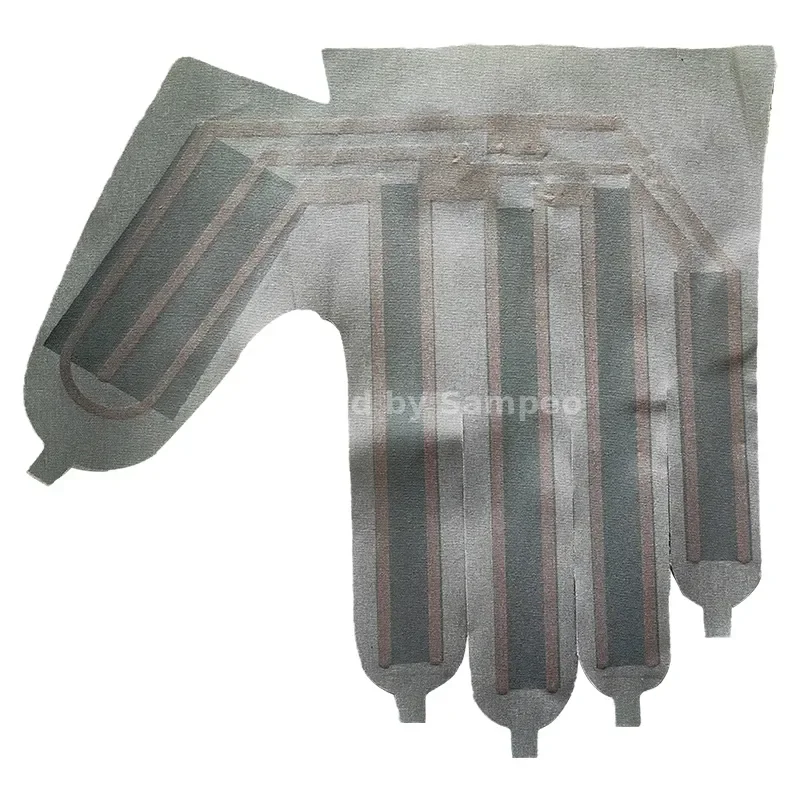
– Fabric and trim: 15–30 days for stocked shells, 45–75 days for custom weaves or bonded laminates – Cut-and-sew: 7–14 days for sampling, 25–45 days for bulk at normal capacity – Heating element plus battery: 20–40 days for stocked modules, 50–90 days for a custom pack – Documentation (UN 38.3, CE-RED, FCC, CPSIA, REACH): 15–45 days depending on test queue and region
A mature OEM program aligns all four lanes before issuing a PO, rather than treating electronics as an afterthought or a “solved later” problem.
The 2026 Roadmap at a Glance
The table below is a working roadmap, not a contractual promise. Expect one to two weeks of drift per quarter, and plan buffers accordingly.
| Stage | Owner | Typical Duration | Key Deliverable |
|---|---|---|---|
| Supplier qualification | Buyer + factory | 7–14 days | Capability matrix, audit notes |
| Sampling and heat validation | Factory-led | 7–14 days | Fit, wash, thermal samples |
| Pilot run | Joint | 10–18 days | Pre-bulk lot, first-article QC |
| Bulk production | Factory-led | 30–60 days | Finished goods with inline QC |
| QC and pre-shipment | Buyer-led or 3rd party | 3–7 days | AQL report, gold samples |
| Logistics and inbound | Buyer + freight | 7–35 days | DC-ready cartons, docs |
Use this roadmap as a baseline and overlay your own SKU count, fabric choice, and region before locking launch dates with retail.
Where Calendar Days Go: A Weighted View
The same program looks different depending on which lane dominates. The breakdown below shows how days typically distribute for a 2026 OEM run at 1,000 units.
| Lane | Days | Share of Total | Buyer Influence |
|---|---|---|---|
| Fabric and trim | 25–45 | ~30% | Medium |
| Garment production | 30–45 | ~30% | Low |
| Battery and electronics | 25–50 | ~25% | Medium |
| Compliance and docs | 15–30 | ~10% | Low |
| Inbound logistics | 7–25 | ~5% | High |
Reading across the rows makes one truth obvious: buyer leverage lives in fabric decisions and freight choices, not sewing speed. Most slippage comes from lanes where the buyer has direct input but acts last.
Stage 1: Supplier Qualification and Capability Audit
Before any tech pack is sent, a manufacturer needs vetting on four fronts: cut-and-sew capacity, heating-element integration, battery sourcing depth, and testing infrastructure. A short RFP on UL lab partnerships, past runs, and cell sourcing tells you in 10 days whether the factory can run a 2026 program.
For wholesale programs running multiple SKUs, ask for an indicative capacity map by quarter. A factory that is “warm” in Q1 and “cold” in Q4 will drag your wholesale calendar regardless of how good its samples look on day one. Buyers who skip this step usually discover the constraint mid-bulk, when leverage is lowest.
B2B sourcing note: A useful supplier qualification pack combines a self-audit form, an on-site video walk-through, and two recent heated-apparel references — not just price sheets, certifications, and glossy brochures.
Stage 2: Sampling and Heat Validation (7–14 Days Typical)
Sampling is where most supplier conversations gain or lose a week. A factory that builds a counter-sample in 7 days with verified temperature curves, wash-test results, and connector drawings outperforms one that ships a 21-day prototype. The difference shows up later as compressed rework or extended firefighting.
For OEM and ODM programs, ask the factory to send three sample variants: a fit-and-finish sample, a thermal-performance sample, and a wash-durability sample. This typically adds 2–4 days versus a single prototype, but compresses later cycles because rework is caught early — well before bulk fabric is committed.
| Sample Type | Purpose | Typical Add-On Days |
|---|---|---|
| Fit and finish | Pattern, stitch, trims, hand feel | 0 |
| Thermal performance | Heat spread, run time on each setting | +2 |
| Wash durability | 5–10 wash cycles, visual plus thermal | +3 |
| Connector and battery | Plug cycles, drop test, polarity check | +2 |
B2B sourcing note: Treat the sample pack as a paid decision tool, not free R&D. Skipping sample variants to save 5 days almost always costs 2–3 weeks of calendar downstream.
Stage 3: Pilot Run and Pre-Bulk Lockdown
The pilot run is the bridge between sampling and bulk. For most 2026 programs, a pilot of 50–150 units is enough to lock the bill of materials, confirm battery batch quality, and train the assembly line. Treat the pilot as a paid rehearsal, not a discounted sample — the goal is to expose the BOM, not to ship retail goods.
A pilot that slips beyond 18 days usually signals a BOM freeze problem, not a sewing problem. Use it to validate the BOM, heating-element supplier, and battery lot are aligned before bulk. A short pilot that flags one issue is far cheaper than a 2,000-unit bulk run.

Stage 4: Bulk Production, Inline QC, and Final Audit
Bulk is where factory discipline is tested. Inline QC at the cut, sew, element-bonding, and battery-pack stages prevents a 30-day bulk run from turning into a 60-day rework exercise. Plan two inline audits and one pre-shipment audit as the default for 2026 OEM runs; high-risk or first-time programs should add a 100% function test on heating elements before packing.
Expect 30–60 days for bulk depending on order size, battery availability, and seasonal labor load. Q3 and Q4 runs typically add 5–10 days due to factory congestion, and Chinese New Year windows can extend that further if not pre-booked.
B2B sourcing note: A reasonable factory will share its inline QC plan, defect classification, and re-inspection policy in writing — not just in a chat message. If the factory cannot produce a written QC SOP, the QC story is not real.
Stage 5: Logistics, Documentation, and Inbound Planning
Inbound logistics is the silent driver. Battery shipments face IATA, IMDG, and 49 CFR rules; misclassified freight can sit at a forwarder for 7–14 days while paperwork is rebuilt. For 2026 plans, decide air vs. sea at the PO stage so production timing aligns with carrier cut-offs.
| Region | Typical Documentation Pack | Risk to Watch |
|---|---|---|
| North America | FCC, CPSIA, UN 38.3, MSDS | Battery classification errors |
| EU | CE-RED, REACH, EN 60335 | Test queue backlogs in summer |
| Japan | PSE, METI registration | Local importer requirement |
| Australia | RCM, UN 38.3 | Dual certification overlap |
A freight partner who pre-clears customs while bulk is still sewing can shave 3–7 days off the inbound and absorb the variability that buyers often forget to plan for.
Supplier-Controlled vs Buyer-Controlled Activities
Separating ownership is the biggest unlock for 2026 planning. The table below maps who owns each activity and what the buyer should ask for.
| Activity | Supplier-Controlled | Buyer-Controlled |
|---|---|---|
| Fabric and trim sourcing | Mainly | Final approval |
| Pattern and marker making | Mainly | Fit sign-off |
| BOM freeze and costing | Joint | Final decision |
| Battery sourcing | Mainly | Cell chemistry approval |
| Inline QC | Mainly | Audit presence |
| Pre-shipment audit | Joint | Selection of auditor |
| Compliance documentation | Mainly | Test report review |
| Freight booking | — | Buyer-led |
| Forecast and MOQ | — | Buyer-led |
When buyer-controlled activities lag — approvals, deposits, forecasts — the supplier-controlled schedule absorbs the slip. Front-load those decisions in the first two weeks.
Broader Heated Apparel Lead Time Conversation
Beyond the stages above, every 2026 buyer is wrestling with five cross-cutting topics that don’t live inside a single stage but can each add or remove weeks. They deserve a seat at the planning table rather than arriving as surprises.
MOQ and forecast. Most OEM factories run 300–500 units per SKU at the entry tier and 1,000+ for custom battery packs. Forecasts that fluctuate more than 25% between drops force the factory to renegotiate fabric or battery slots, which quietly adds 7–14 days. A rolling 6-month forecast, even a directional one, compresses this risk.
OEM and ODM scope. A pure OEM program runs faster on the second drop because patterns and BOMs are already locked. An ODM program trades that speed for design leverage. For wholesale and private-label buyers, agreeing scope in writing before sampling keeps the supplier from drifting into unpriced changes mid-bulk.
Fabric and electronics iteration. New shells, new heating films, or new battery cells each reset the timeline. A buyer who swaps the softshell mid-sampling effectively resets the entire wholesale clock — even if the factory doesn’t say so. Treat every change request as a calendar line item, not just a costing line.
Compliance depth. A 2026 program targeting both EU and North America should plan for overlapping test queues. Sequencing CPSIA first, then CE-RED, compresses total calendar time versus running them in parallel. REACH and EN 60335 can run alongside once the core electrical tests are booked.
Logistics resilience. Sea freight is reliable for 2026 bulk runs but compresses the safety buffer. A dual-mode plan — sea for bulk, air for samples and pilot — protects the front of the calendar. Buyers who ignore this usually pay in a Q4 launch delay.
For related buyer-side frameworks, our heated apparel sourcing checklist is a useful companion to this guide.
Cluster Search Intent Map
B2B buyers search for related terms in distinct ways. The map below aligns the eight phrases most often used in 2026 with the planning section that addresses them. It also doubles as a checklist when reviewing whether your internal plan actually answers what your team is searching for.
| Phrase | Primary Intent | Best-Fit Section |
|---|---|---|
| heated apparel lead time | End-to-end calendar | The 2026 Roadmap at a Glance |
| heated apparel lead time manufacturer | Vetting factories | Stage 1: Supplier Qualification |
| heated apparel lead time OEM | Private-label builds | Stage 2: Sampling and Heat Validation |
| heated apparel lead time wholesale | Multi-SKU distribution | Stage 3: Pilot Run and Pre-Bulk |
| heated apparel lead time factory | Floor-level scheduling | Stage 4: Bulk Production and QC |
| heated apparel lead time supplier | Risk and backup sourcing | Supplier-Controlled vs Buyer-Controlled |
| heated apparel lead time 2026 | Current-year benchmarks | Broader Conversation |
| heated apparel lead time B2B | Cross-party orchestration | Frequently Asked Questions |
Build Type vs Calendar Sensitivity
Not every program absorbs slippage the same way. The table below contrasts a typical day-count for three common build profiles in 2026, so you can sanity-check the calendar a factory quotes against the program you actually plan to run.
| Build Profile | Fabric Risk | Battery Risk | Calendar Floor | Calendar Stretch |
|---|---|---|---|---|
| Stocked shell + off-shelf module | Low | Low | 75 days | 110 days |
| Custom shell + off-shelf module | Medium | Low | 100 days | 145 days |
| Custom shell + custom battery pack | High | High | 140 days | 210 days |
Use these bands as a filter: if a quoted heated apparel lead time falls below the floor for your build profile, ask which inputs the factory is assuming before trusting the number.
Frequently Asked Questions on Heated Apparel Lead Time
What is a realistic heated apparel lead time in 2026? From PO to inbound, 90–140 days is a defensible band for a wholesale program at 500–2,000 units. Shorter is possible with fully stocked components; longer is common for fully custom builds with new shells and new battery packs.
How long does sampling take? 7–14 days for a standard counter-sample, plus 2–4 days per validation variant. A manufacturer running three variants in parallel typically ships the full sample pack in 12–18 days.
What is the biggest driver of slippage? Buyer-controlled approvals and battery cell availability. Together they account for the majority of late-season slippage in B2B programs, more than sewing capacity or fabric delays.
Can a small brand get OEM-style lead times? Yes, with stocked shells, off-the-shelf heating modules, and a clear forecast. An OEM factory will accept smaller MOQs if the brand offsets them with confirmed future orders and prompt deposits.
Is air freight worth it for heated apparel? For samples, pilot runs, and Q4 retail launches, yes. For bulk, sea freight is the standard; expect 25–35 days port-to-door in 2026 with reliable carriers, longer if routed through congested hubs.
How do I compare two factories fairly? Run the same BOM and the same compliance pack through both, and compare total calendar time from PO to inbound — not just quoted bulk days. Factory performance only shows up at the critical path, not in the cheapest quote.
What documents do I need before shipping? Bill of lading, commercial invoice, packing list, MSDS, UN 38.3 summary, region-specific test reports, and battery handling instructions. The exact list varies by lane and by destination country.
How do I protect against battery-related delays? Approve two battery sources during qualification and lock the second source as a backup. This single move de-risks a 2026 plan more than any contract clause or penalty.
What is a good QC cadence? Inline at four stages (cut, sew, element-bonding, battery-pack), plus pre-shipment. For high-risk runs, add a 100% function test on heating elements before packing. This cadence has become standard for any B2B program in 2026.
How does 2026 affect heated apparel timelines? Shipping reliability has improved versus the pandemic years, but certification queues and battery cell competition have tightened. Most buyers report a flat or slightly longer calendar versus 2024 — making planning discipline more valuable than ever for any 2026 program.
Should I use a sourcing agent? Only if the agent owns a clear slice of the calendar. A sourcing agent who simply forwards messages adds latency to supplier programs; one who audits, negotiates, and tracks KPI is a multiplier.
How do I evaluate a supplier’s responsiveness? Measure first-response time during the first 14 days of qualification. A manufacturer who replies in under 24 hours during qualification will rarely go silent mid-bulk — responsiveness in week one is a strong proxy for behavior in week twelve.
Quick Reference Glossary
– Heated apparel lead time — End-to-end calendar from PO to inbound-ready goods, measured in days across fabric, garment, electronics, and documentation lanes. – Critical path — The longest sub-timeline in a multi-stream program; it sets the total lead time. – Pilot run — A small production batch (typically 50–150 units) used to validate a bulk program before full release. – Heating element — Carbon fiber, metallic wire, or printed film that converts electrical energy to heat. – Battery pack — Li-ion assembly with BMS, connectors, and protective housing; subject to UN 38.3 transport testing. – UN 38.3 — United Nations transport test standard for lithium batteries, required for air and sea freight. – CE-RED — EU Radio Equipment Directive; required for heated apparel with active electronics sold in the EU. – CPSIA — U.S. Consumer Product Safety Improvement Act; covers component safety for heated apparel sold to consumers. – MOQ — Minimum order quantity; the smallest batch a factory will accept per SKU. – Inline QC — Quality checks performed during production, not just at the end of the line. – Pre-shipment audit — Final inspection before goods leave the factory, typically AQL 2.5 sampling. – ODM — Original Design Manufacturer; factory owns design leverage. – OEM — Original Equipment Manufacturer; buyer owns design and specification. – AQL — Acceptable Quality Level; statistical sampling plan used in pre-shipment audits.