
Heated Apparel Sample Programs: The Complete B2B Manufacturer Guide for 2026
Heated Apparel Sample Programs: The Complete B2B Manufacturer Guide for 2026
For any brand buying heated jackets, gloves, vests, or socks for resale, the most important phase of the supplier relationship is not production — it is the heated apparel sample program. Every bulk order is downstream of how well that sampling phase is designed, priced, and executed. Get the samples wrong and the production run inherits every defect; get them right and 5,000 units sail through QC on the first pass.
This 2026 pillar guide is written from the factory floor. We walk buyers, sourcing agents, and private-label founders through exactly how a B2B heated apparel sample program is structured at an OEM/ODM manufacturer — fee tiers, the MOQ ladder, the three-stage sample flow, and the lead-time milestones that separate a serious supplier from a trading company. For a broader primer on heated apparel categories, see our heated apparel guides hub or our companion guide on heated apparel categories.
At imissky factory, we have run heated apparel sample programs for over 180 buyer brands since 2017. Our standard program covers three sampling rounds, full battery and heating-element validation, and a PPS built against the same materials as the bulk order — not a throwaway mockup.
1. Why the Sample Program Is the Foundation
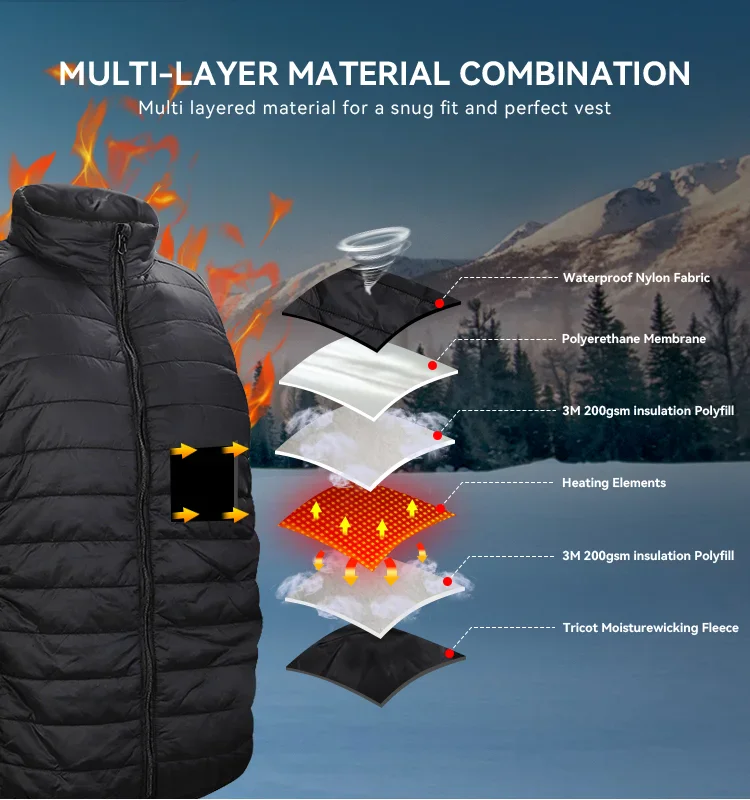
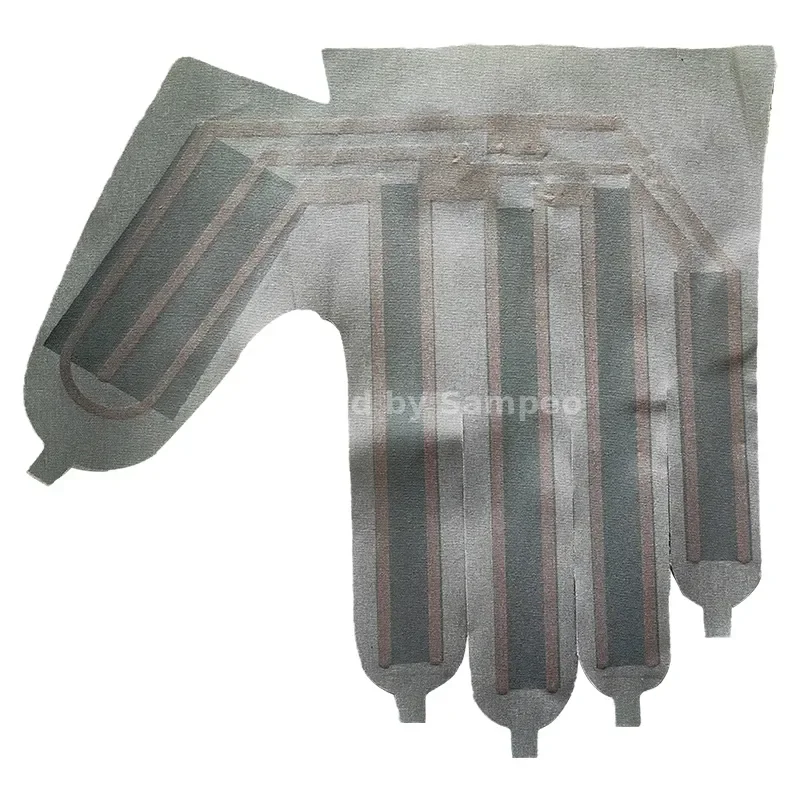
Heated apparel is not standard outerwear. Each garment hides a power system: a lithium-ion battery pack, a heating element (carbon fiber, metal mesh, or composite), a wiring harness, a controller, and a charging ecosystem. Every layer is a potential failure point that only shows up when the assembly is finished and tested under load. That is why a properly run heated apparel sample program is non-negotiable for B2B buyers.
A disciplined program validates the heating system end-to-end (battery runtime at -10 °C, surface temperature uniformity, wash durability), locks the BOM before PO release, and creates a golden reference sample against which AQL inspections are graded.
2. The 3-Stage Sample Process: Proto → SMS → PPS Explained
Every credible heated apparel sample program manufacturer runs three discrete stages. Each has a different purpose and a different cost because the work hours and materials are not equivalent.
| Stage | Purpose | Typical Output | When It Is Used |
|---|---|---|---|
| **Proto / Counter-Sample** | Proof-of-concept based on tech-pack, basic fit and heating layout check | 1-2 garments, off-standard fabric, hand-cut panels | Buyer evaluating a new supplier, sketch-stage development |
| **SMS (Salesman Sample)** | Buyer-ready sample in correct fabric, color, trim with production-grade heating | 2-4 garments, bulk fabric, branded labels, retail packaging | Trade shows, rep kits, Kickstarter previews, retailer line review |
| **PPS (Pre-Production Sample)** | Built from the exact production line, exact BOM, bulk fabric lot | 1 garment + size set, full packaging, QC reference | Final approval before PO release — the legal golden sample |
A program that only offers one sample round is a red flag. A program that documents deliverables at all three is the OEM workflow you can build a brand on.
3. Sample Fee Structure: Refundable vs Non-Refundable
Sample fees are where most programs confuse first-time buyers. A reliable heated apparel sample program for buyers charges transparent, line-itemed fees — never a vague “$500 sample cost” with no breakdown.
| Fee Model | Typical Cost per Style | Refund Trigger | Best For |
|---|---|---|---|
| **Refundable** sample fee | $180-$350 (proto) / $350-$650 (SMS/PPS) | Refunded against PO ≥ 500 units | Brands committed to a future bulk order |
| **Non-refundable** sample fee | $200-$450 per style | No refund | Custom R&D, one-off sampling, retailer spec drops |
| **Express** sample surcharge | +$120-$220 on top of standard fee | Same as underlying fee model | Buyer on a tight launch date (5-10 days) |
| **Waived** sample fee | $0 | Conditional on PO within 90 days | New buyers qualifying for our launch program |
Imissky factory offers all four fee models in our heated apparel sample program wholesale track. About 65% of buyers choose the refundable model because it preserves working capital and the fee comes back as credit on the first PO.
The lowest fee quoted is not always the cheapest program. A $120 “sample” that ships without battery, controller, or heating element is not a sample — it is a fabric mockup.
4. MOQ Ladder: From 50 to 5,000 Units
MOQ is the second-most-misunderstood lever in a heated apparel program. The MOQ is set by the smallest production batch the factory can run economically given the heating-system components — particularly the battery cells, typically ordered in tray quantities of 100-300 cells.
| Program Tier | MOQ (Units/Style) | MOQ (Total Program) | Typical Buyer Profile |
|---|---|---|---|
| **Starter / Test-Market** | 50 | 100 | Kickstarter brands, pop-up retailers, niche e-commerce |
| **Standard Private Label** | 200 | 500 | DTC brands, regional retailers |
| **Wholesale Wholesale** | 500 | 1,500 | Mid-market distributors, Amazon FBA wholesalers |
| **OEM Full Production** | 1,000 | 3,000+ | National retailers, OEM licensees |
A buyer running a starter tier of 50 units will typically graduate to a 200-unit MOQ on the second purchase and 500 by the third reorder, as supplier confidence in forecasting matures.
5. Lead Time Milestones: Day 1-15, Day 16-29, Day 30-42
The heated apparel sample program lead time breaks into three clean windows. Buyers who understand these windows can plan marketing drops, trade shows, and PO release dates with confidence.
| Phase | Days | Deliverables | Buyer Action Required |
|---|---|---|---|
| **Phase 1 — Pattern & Sourcing** | Day 1-15 | Pattern graded, fabric sourced, element and battery spec confirmed, mockup photos sent | Approve patterns, sign off on fabric hand-feel, confirm tech-pack updates |
| **Phase 2 — SMS Build & Test** | Day 16-29 | SMS garments sewn, heating system assembled, battery cycled, wash test passed | Request revisions (2-3 rounds included), approve fit and heating performance |
| **Phase 3 — PPS & PO Release** | Day 30-42 | PPS built on production line, sealed in retail packaging, QC report issued | Approve PPS, release PO, schedule deposit remittance |
These three windows sum to a 6-week standard lead time. Add 5-10 days for express tier, or extend to 8-10 weeks if the buyer is mid-revision on fabric or element layout.
6. Express Sample vs Standard Sample: Tradeoffs at a Glance
A heated apparel sample program with an express lane is a relatively recent industry development, driven by brands running tight go-to-market calendars. The tradeoffs are worth quantifying.
| Dimension | Standard Sample | Express Sample |
|---|---|---|
| Lead time | 15-25 days | 5-10 days |
| Fee surcharge | $0 | +$120-$220 per style |
| Revisions included | 2-3 rounds | 1 round |
| Production line used | Dedicated sample line (3-5 dedicated sewers) | Rushed through QC pass on shared line |
| Best for | Normal brand launches, Q3-Q4 collections | Trade show deadlines, replacement seasons, sample re-makes |
Express does not mean lower quality — it means compressed scheduling and reduced revision tolerance. We communicate this trade explicitly so buyers don’t mistake express speed for express workmanship.
7. Private Label and OEM Programs: Two Buyer Archetypes
The two buyer archetypes — private-label brands and OEM licensees — interact with the program differently. A heated apparel sample program for private label focuses on fabric, fit, label, and packaging customization; a heated apparel sample program OEM adds the complexity of integrating the buyer’s heating-system IP, custom firmware, or proprietary battery pack.
| Capability | Private Label Program | OEM Program |
|---|---|---|
| Buyer-supplied fabric | Optional (usually factory-sourced) | Required |
| Buyer-supplied labels and tags | Applied at SMS stage | Integrated at PPS stage |
| Custom heating element | Factory-standard elements | Buyer-engineered element, factory integrates |
| Custom battery cell | Factory-cell (UL-listed) | Buyer-cell, factory assembles pack |
| Firmware/controller customization | Off-the-shelf controller | Buyer firmware flashed to controller PCB |
| Sample fee range | $180-$450 | $450-$650+ |
| Lead time | 4-6 weeks | 6-10 weeks |
At imissky, our sample program supports both private label and OEM paths under one quote structure. Confirming this dual capability upfront is rare in the industry and saves buyers from a mid-program pivot.
A heated apparel sample program wholesale offering that supports both tracks is rare. Most factories pick one. Confirming this capability upfront saves buyers from a costly mid-program change.
8. What a Sample Program With PPS Actually Includes
The PPS stage is where the program earns or loses its keep. A proper heated apparel sample program with PPS delivers:
– PPS garment built on the production line — same cutting table, seam operators, heating-element welding station, and battery pack line as the bulk order. – Bulk fabric lot — not a sample-cut swatch but fabric reserved for the production run. – Bulk trim — zippers, snaps, labels, polybag, retail box, instruction sheet, and warranty card all from the bulk sourcing list. – Battery cycle test report — the actual cell cycled 50 times and logged for capacity drop. – Wash test report — minimum 10 wash cycles, with surface temperature measured before and after. – QC photo set — 30-50 staged photos at receipt, inspection, and packaging stations.
A “PPS” that is just a duplicate of the SMS in a different box is a relabeled salesman sample.
9. B2B Communication Protocols During the Sample Stage
Communication cadence is the operational backbone. At imissky, the protocol we run on every engagement:
| Day | Communication | Owner |
|---|---|---|
| Day 1 | Tech-pack confirmation, timeline lock, BOM draft | Project manager |
| Day 5 | Pattern review PDF + graded size set photos | Pattern room |
| Day 10 | Fabric hand-feel sample shipment + lab dip confirmation | Fabric sourcing |
| Day 16 | SMS production start photo + element layout diagram | Floor supervisor |
| Day 22 | SMS garment photo set + battery test report | QC inspector |
| Day 25 | SMS shipped out with tracking, wash test initiated | Logistics |
| Day 32 | PPS built, QC report issued, PPS photo set sent | QC inspector |
| Day 38 | PPS shipped out, ready for PO release | Logistics |
Buyers should expect at least 4-6 written updates and 2-3 video calls during a standard 6-week program. A factory that goes silent between Day 10 and Day 30 is a red flag.
10. Sample Shipment Documentation
Every sample shipped from a credible heated apparel sample program manufacturer arrives with a documentation pack. Buyers should expect, at minimum:
– Commercial invoice with declared value (often $30-$80 under sample designation). – Packing list with item count, weight, dimensions, and HS code for customs. – Battery MSDS / UN38.3 report — mandatory for any sample containing a lithium-ion cell shipped by air. – CE / FCC / UL test summaries for the heating element and controller, if the program is being run for a buyer with regulatory obligations. – Care label and instruction sheet draft — finalized at PPS. – Warranty terms — typically 1 year on heating system, 6 months on battery.
Missing any of these documents during the sample stage is a warning sign — the same factory that forgets the MSDS on a sample is likely to forget the test certificates on the bulk shipment.
11. Red Flags in a Factory’s Sample Program
After running programs for nearly a decade, the same warning signs repeat. Buyers evaluating any heated apparel sample program should walk away if they encounter:
| Red Flag | Why It Matters |
|---|---|
| Sample fee quoted without BOM detail | Signals bundled pricing that hides production-stage cuts |
| Only one sample round offered | No fit/heat validation loop, no PPS golden sample |
| Refundable fee with no PO minimum documented | Verbal refund promises that evaporate at invoicing |
| 4+ week gap between update emails | Production blind spot, sample-stage surprises guaranteed |
| Battery cell specs omitted from sample report | Heating-system validation incomplete |
| No wash test data on SMS | Wash durability guessed at, not measured |
| PPS built off the sample line, not the production line | Golden sample is not representative of bulk |
| Factory refuses to share the QC report format | Inspection criteria will be invented at bulk time |
Any one of these is worth clarifying. Any two or more should trigger a supplier change.
12. Sample-to-Production Transition Criteria
The final gate of the program is the formal PO release. Six criteria must be met before any deposit is wired:
| Criterion | Owner | Verification |
|---|---|---|
| PPS approved in writing | Buyer | Signed PPS approval sheet |
| QC report accepted | Buyer | AQL plan signed, defect thresholds agreed |
| Bulk fabric lot confirmed | Factory | Lab-dip approval, hand-feel approval |
| Battery supplier locked | Factory | Cell spec sheet, UN38.3 report filed |
| Lead time agreed in writing | Both | PO terms sheet with deposit %, balance %, ship date |
| Capacity reserved on production line | Factory | Production slot calendar entry |
When all six are green, the sample program closes and the bulk program begins. The factory’s job is to make that transition boring — predictable lead time, predictable cost, predictable quality.
Frequently Asked Questions
How long does a heated apparel sample program take end-to-end?
A standard program runs 5-6 weeks: Day 1-15 for pattern and sourcing, Day 16-29 for SMS build and testing, Day 30-42 for PPS and approval. Express programs compress to 5-10 days for proto and SMS combined but at higher fee and lower revision tolerance. Programs with custom firmware or proprietary batteries typically run 6-10 weeks.
What is a fair sample fee for heated jackets and gloves?
For a standard jacket, expect $250-$450 per style at SMS stage and $350-$650 per style at PPS. Heated gloves run $180-$320 per SMS pair. Anything under $150 per style at SMS is typically a fabric mockup without the heating system validated.
Is the sample fee refundable when we place a bulk order?
It depends on the model. Refundable sample fees are credited against PO amounts of 500 units or more, deducted from the deposit invoice. Non-refundable fees are never returned. Make sure the refund trigger, minimum PO size, and credit mechanism are written into the sample-program quote before payment.
What is the difference between SMS and PPS samples?
SMS (Salesman Sample) is the buyer-ready sample for sales, marketing, and trade shows — built with bulk fabric but on a dedicated sample line. PPS (Pre-Production Sample) is the golden sample built on the actual production line from the actual bulk lot, used as the QC reference for the entire production run. PPS is legally binding for inspection disputes.
What MOQ should a first-time buyer expect?
First-program MOQs typically start at 50-100 units per style for a starter program and rise to 200 units for a standard private-label program. Wholesale programs usually require 500+ units per style. A serious heated apparel sample program manufacturer will graduate your MOQ downward as your reorder pattern matures.
Can a sample program include private label packaging?
Yes. A heated apparel sample program for private label integrates buyer-supplied labels, hangtags, polybags, retail boxes, and instruction sheets at SMS stage so the buyer can photograph and pre-sell the exact SKU that will ship.
Which safety certifications should the sample program support?
For most Western markets, the program should produce garments testable against UL (battery), CE/FCC (electronics), and REACH/ROHS (materials). Japan and Korea add PSE and KC. Samples shipped internationally should include MSDS and UN38.3 documents for the lithium-ion cell.
Do factories ship samples via DHL, FedEx, or standard courier?
Express couriers (DHL, FedEx, UPS, TNT) are standard for heated apparel samples because they handle lithium-ion batteries with the correct DG declarations. Standard post is rarely used. Air freight is reserved for 5+ garments. Freight cost is billed at cost on the sample commercial invoice.
How many sample revisions are included in the standard fee?
Most OEM and private-label quotes include 2-3 revision rounds at SMS stage. Each additional revision is billed at 30-50% of the original SMS fee. PPS revisions are usually capped at 1 round because PPS locks the BOM, not iterates on it.
What pass rate should we expect from sample to bulk production?
Healthy pass rates on a well-run program fall between 93% and 97% at AQL 2.5 inspection. Below 90% signals a sample-to-production gap that needs root-cause review before PO release. Above 97% typically means inspection criteria were calibrated too loosely. Ask the factory for their last 5 programs’ pass-rate history.
Can we skip PPS and go straight to production?
Technically yes, practically no. Skipping PPS removes the legal golden sample that anchors bulk inspection. If a 5,000-unit shipment arrives with defects, the only recourse is the SMS — built on a different line with potentially different fabric lot. Buyers who skip PPS typically run an emergency sample program mid-production at higher cost.
What documentation should come with every shipped sample?
Minimum sample shipment documents: commercial invoice with HS code, packing list, battery MSDS/UN38.3 report, care label draft, instruction sheet draft, and warranty terms. For PPS specifically: full QC report with defect breakdown, AQL inspection plan, and bulk-fabric lot reference.
*Looking for a deeper dive into category-specific programs for jackets, gloves, vests, or socks? Browse our heated apparel guides collection for category-by-category breakdowns, supplier sh
heated apparel sample program: Quick Reference Glossary
A quick reference of the key terms used in this guide: heated apparel sample program, plus the 12 related concepts — sample fee, PPS sample, SMS sample, proto sample, refundable sample, MOQ ladder, sample-to-bulk conversion, AQL 2.5 inspection, sample lead time, B2B RFQ, buyer spec pack, and factory qualification audit — that B2B buyers typically encounter when sourcing private label programs.
Each term above represents a distinct buying decision: heated apparel sample program is the umbrella concept, while each related keyword describes a specific factory capability, sourcing model, or product attribute to evaluate during your vendor selection.
ortlists, and 2026 retail-pricing benchmarks.*