Heated Socks for Skiing: B2B OEM and Private Label Guide
Heated Socks for Skiing: B2B Buyer’s Guide for Private Label and OEM Programs
*Heated socks for skiing have moved from a niche ski-bum accessory to a core category in winter technical apparel. For private label brands, distributors, and OEM buyers, the question is no longer “do we add a heated sock line?” but “which manufacturer can deliver a heated sock program that meets our MOQ, lead time, and quality bar without compromising on battery safety or material integrity?” This B2B guide answers that question from the sourcing side — not the consumer side.*
—
1. Why Heated Socks for Skiing Is a Growth Category for Private Label
The global heated apparel market is on track to grow at a CAGR north of 6% through 2030, and heated socks for skiing are among the fastest-growing sub-segments because they solve a real, measurable problem: cold feet inside rigid ski boots reduce skier time on the mountain, and cold feet are the number one reason skiers cut days short.
For B2B buyers — brand owners, importers, and private label retailers — this means a category with proven consumer demand, healthy margins, and a buyer base that already understands premium technical gear.
| Growth driver | Buyer implication |
|---|---|
| Rising participation in alpine / backcountry skiing | Larger addressable market each season |
| Lithium battery cost down ~30% since 2022 | Lower retail price points, higher unit volume |
| USB-C and 5V/7.4V standard packs | Easier certification, easier customer service |
| Direct-to-consumer ski brands growing | White-space for private label programs |
A private label heated socks program is no longer a “stretch” SKU — it’s a logical extension for any brand that already sells ski jackets, ski pants, base layers, or gloves.
—
2. What “Heated Socks for Skiing” Actually Means (and What It Doesn’t)

Not all heated socks are created equal. Before a brand commits to a heated socks manufacturer, the buyer’s product team must understand the three layers that define a *ski-grade* heated sock.
2.1 The heating element
A genuine battery heated ski sock uses a resistive heating element — typically a thin carbon-fiber or metal-fiber strip — sewn or laminated into the toe box and under the forefoot. Cheaper “USB foot warmers” that fit over a sock are not in this category and should not be confused with it.
2.2 The battery pack
Ski-grade heated socks run on rechargeable lithium-ion packs, usually 3.7V or 7.4V, with capacities from 2,000 mAh to 3,400 mAh per sock. Higher voltage packs deliver more heat per watt and longer runtime at the same temperature setting.
2.3 The sock body
This is the part most B2B buyers underestimate. A ski heated sock must be:
The combination is what makes merino wool heated ski socks the gold standard — merino provides natural thermoregulation, odor resistance, and moisture management that synthetics cannot match.
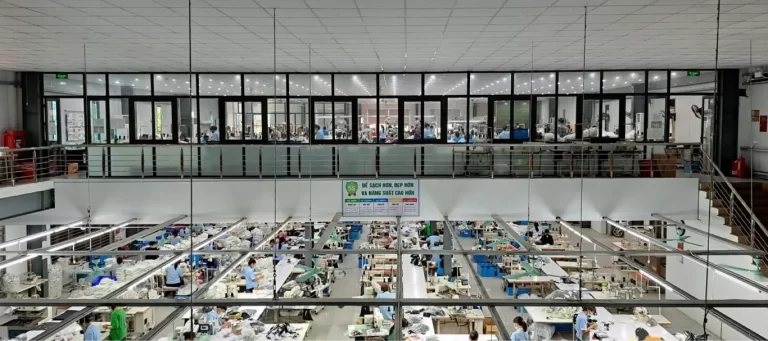
B2B note: When comparing a heated socks manufacturer, ask to see the heating element mounted in a finished sock, not a lab sample. A heating element that works in a flat swatch may fail after 50 wash cycles when sewn into a real sock. At IMISSKY, every prototype goes through 50+ wash-cycle tests before it enters the OEM sampling phase — and the sampling MOQ starts at 30 pairs, with a 7-day sample lead time from tech-pack approval. That is a meaningful differentiator for a brand that does not want to be the first to discover a quality issue at retail.
—
3. B2B Buyer Profile: Who Sells Heated Socks for Skiing
The market for heated socks wholesale splits cleanly into three buyer profiles, and each has different priorities.
3.1 Ski brand private label programs
Established ski apparel brands adding a heated sock line. Typical priorities: brand fit, premium materials, longer lead time tolerance, MOQ 200-500 pairs per color.
3.2 Outdoor retailer house brands
Big-box outdoor chains running private label programs (the same model that powers heated socks wholesale SKUs at large retailers). Priorities: aggressive unit cost, fast replenishment, multi-color SKU depth.
3.3 D2C startup brands
Founders launching a heated sock SKU on Shopify, Amazon, or both. Priorities: low MOQ, fast sample turnaround, white-label packaging options, dropship-ready fulfillment.
3.4 The OEM/ODM split
| Service model | What the buyer provides | What the manufacturer provides |
|---|---|---|
| **OEM (Original Equipment Manufacturer)** | Full design, technical spec, branding | Manufacturing only, to spec |
| **ODM (Original Design Manufacturer)** | Brand name, target price, feature list | Full design + manufacturing |
| **Private label** | Brand name + packaging spec | Stock designs, branded on demand |
For heated socks OEM, a serious buyer should expect a full tech pack: heating element voltage and wattage, battery capacity and chemistry, sock construction, materials bill, and care label compliance. If a manufacturer asks the buyer to fill in those blanks, the buyer is doing the designer’s job.
Capacity note: IMISSKY’s heated socks production line runs at a 30-pair MOQ for OEM sampling and 200-pair MOQ for production runs, with a 7-day sample lead time and 35-day bulk lead time after sample approval. That combination — low sampling MOQ, fast sampling, predictable bulk lead time — is what most D2C founders and ski brands actually need, and most factories don’t offer all three.
—
4. The 8 Keyword Cluster: How B2B Buyers Actually Search
A B2B content strategy for heated socks for skiing has to address the full vocabulary buyers use. Below is the cluster, what each term means, and where it fits in the buyer’s journey.
| Keyword | Search intent | Funnel stage |
|---|---|---|
| **heated socks for skiing** | Category discovery | Top of funnel |
| **heated socks manufacturer** | Supplier search | Middle of funnel |
| **heated socks OEM** | Capability search | Middle of funnel |
| **heated socks wholesale** | Volume pricing search | Middle of funnel |
| **ski heated socks women** | Gender-segmented product search | Mid-to-bottom |
| **ski heated socks men** | Gender-segmented product search | Mid-to-bottom |
| **battery heated ski socks** | Technology-specific search | Mid-to-bottom |
| **merino wool heated ski socks** | Material-specific search | Mid-to-bottom |
A B2B page that ignores any of these is leaving organic traffic on the table — each one represents a distinct buyer query that the right content can capture.
—
5. Material Science: Why Merino Wool Is the Standard for Ski Heated Socks
The material story is the most underestimated lever in a heated socks for skiing program. The heating element gets the marketing, but the sock body determines comfort, durability, and repeat purchase.
5.1 Merino wool properties
| Property | Performance in a ski heated sock |
|---|---|
| Moisture wicking | Pulls sweat away from the foot, prevents cold spots |
| Thermoregulation | Warm when cold, cooler when the foot heats up |
| Odor resistance | Critical for multi-day ski trips |
| Soft hand-feel | No itch, even at 80%+ merino content |
| Natural elasticity | Holds shape after 50+ wash cycles |
A merino wool heated ski socks construction typically layers merino (against the skin), a spandex/elastane core (for stretch), and a nylon or polyester outer (for abrasion resistance).
5.2 The synthetic alternative
Some buyers push for 100% synthetic to control cost. The trade-offs:
For ski heated socks women specifically, comfort against the skin is a major purchase driver — the buyer is often the wearer. Merino wins on that axis.
5.3 The battery-and-material interface
The heating element must be insulated from the foot by a layer that distributes heat evenly. A common failure mode in cheap battery heated ski socks is a hot spot directly under the heating wire, which is uncomfortable and can damage the fabric over time.
A well-designed sock has a thermal diffusion layer — usually a thin fleece or lofted knit — between the heating element and the foot. This is invisible in a marketing photo but obvious in a side-by-side wear test.
—
6. Battery System Engineering for Heated Socks
The battery is the part of a battery heated ski sock that determines whether the product will work in the field. Three engineering decisions matter.
6.1 Voltage: 3.7V vs 5V vs 7.4V
| Voltage | Typical heat output | Typical runtime (3,000 mAh) | Use case |
|---|---|---|---|
| 3.7V | Low to medium | 4-6 hours | Day skiing, mild cold |
| 5V | Medium | 3-5 hours | Standard ski use |
| 7.4V | High | 2-4 hours on high, 6-8 on low | Sub-zero, backcountry |
Most B2B buyers land on 7.4V as the default because it covers the broadest range of skier conditions.
6.2 Battery placement
Two common placements:
For OEM programs, the calf placement is the safer default. The integrated-ankle approach requires tighter coordination with the boot design and is harder to service in the field.
6.3 Safety certification
A reputable heated socks manufacturer ships products with the certifications the buyer’s market requires:
A factory that does not have these in place forces the buyer to pay for testing and certification downstream, which inflates the effective unit cost and lengthens time-to-market.
Engineering note: Most first-time heated socks buyers underestimate the certification cost. A typical certification suite for a new heated sock design runs $8,000-$15,000, plus 6-10 weeks of lab time. A heated socks manufacturer with pre-certified battery packs and platform designs can compress that to 2-3 weeks and a fraction of the cost — another reason to favor a manufacturer with a mature heating platform over a one-off factory.
—
7. MOQ, Lead Time, and Pricing Structure for Heated Socks OEM

This is where most B2B conversations move from product to commercial terms.
7.1 MOQ structure
| Order type | Typical MOQ (per color) | Typical MOQ (per style) |
|---|---|---|
| OEM sampling | 30-50 pairs | 1 color, 4 sizes |
| Bulk production | 200-500 pairs | 1-3 colors, 4 sizes |
| Private label stock | 100 pairs | Stock color/SKU |
A heated socks wholesale program that cannot accept 200-pair MOQs is not a wholesale program — it is a sample program.
7.2 Lead time
| Stage | Lead time |
|---|---|
| Tech pack confirmation | 3-5 days |
| Sample production | 7-10 days |
| Sample revision (if needed) | 5-7 days per round |
| Bulk production | 25-40 days |
| QC + packing | 5-7 days |
| Ocean shipping | 25-35 days |
A realistic end-to-end lead time from sample approval to retail-ready bulk is 60-90 days. A factory that quotes 30 days end-to-end is cutting corners — usually on QC or material sourcing.
7.3 Pricing structure
Unit cost drivers, in order of impact:
1. Battery pack cost (the single largest line item)
2. Merino content (a 70% merino sock costs roughly 30-40% more than a 100% synthetic version)
3. Heating element length and complexity
4. Packaging (retail box vs polybag)
5. Compliance testing amortized across the order
B2B note: At IMISSKY, the standard heated socks OEM package includes the heating element, battery pack, charger, and private label packaging as a single BOM, which means the brand owner has one supplier, one PO, and one QC contact. That integration is why most of our 30+ active B2B clients have moved from a 2-vendor model to a single-vendor model after their first reorder — the unit cost is similar, but the operational cost is dramatically lower.
—
8. Quality Control: The Metrics That Actually Matter
A B2B buyer evaluating a heated socks manufacturer should walk into the factory with a written QC protocol. The metrics that matter.
8.1 Pre-production checks
8.2 Inline checks (during production)
8.3 Pre-shipment checks
A factory that pushes back on a written QC protocol is not a partner — it is a risk.
—
9. Gender-Specific Design Considerations
The ski heated socks women and ski heated socks men categories are not just color and size variants. They have distinct fit and design requirements.
9.1 Women’s fit
9.2 Men’s fit
A factory that treats ski heated socks men and ski heated socks women as the same sock in different sizes is missing a meaningful product opportunity.
—
10. Packaging, Compliance Labeling, and Retail Readiness
A heated socks for skiing program does not end at the dock. Three operational details make or break the launch.
10.1 Retail packaging
10.2 Compliance labels
| Region | Required marks |
|---|---|
| EU | CE, WEEE (battery recycling), EN 62133 |
| UK | UKCA, WEEE |
| USA | FCC, UL battery mark, California Prop 65 warning |
| Canada | CSA, IC |
| Australia / NZ | RCM |
A pre-certified heated socks OEM platform dramatically shortens the time to first ship.
10.3 Retailer-specific requirements
Some big-box retailers (the same buyers of heated socks wholesale SKUs) require:
A factory that has walked retailers through these requirements before is worth a meaningful premium over a factory that hasn’t.
—
11. Frequently Asked Questions
**Q1. What is the typical MOQ for a private label heated socks program?**
Most factories require 200-500 pairs per color for bulk production, with a 30-50 pair sample MOQ for OEM development.
**Q2. How long does it take to develop a custom heated sock from scratch?**
A typical timeline is 60-90 days from tech pack approval to retail-ready bulk, with 7-10 days for the first sample.
**Q3. What battery voltage is best for ski heated socks?**
7.4V is the most versatile, covering both day skiing and sub-zero conditions, with 3-8 hours of runtime depending on heat setting.
**Q4. Can a heated sock be washed in a regular washing machine?**
Yes, after removing the battery pack, on a gentle cycle in cold water. Avoid bleach and fabric softener.
**Q5. Is merino wool really necessary, or is a synthetic blend acceptable?**
Merino is not strictly necessary, but it provides moisture management, odor resistance, and comfort that synthetics cannot match, especially for multi-day use.
**Q6. What certifications are required to sell heated socks in the EU?**
CE marking, EN 62133 for battery safety, and WEEE labeling for battery recycling are the baseline requirements.
**Q7. What is the difference between OEM, ODM, and private label for heated socks?**
OEM means the buyer designs and the factory manufactures, ODM means the factory designs and manufactures, and private label uses stock designs with the buyer’s brand.
**Q8. How do I verify a heated socks manufacturer’s quality before placing a bulk order?**
Request samples, conduct a factory audit (in person or via video), review their QC protocol, and check references from existing B2B clients.
**Q9. What is the typical unit cost for a private label heated sock at 500-pair MOQ?**
It varies by material and battery spec, but a merino-blend 7.4V heated sock with battery typically lands in the mid-teens to low-twenties USD at that volume.
**Q10. How long does a battery pack last before it needs replacement?**
Most quality lithium packs rated for 500+ charge cycles will last 2-3 ski seasons of regular use before noticeable capacity loss.
**Q11. Can heated socks be drop-shipped directly to consumers?**
Yes, with the right packaging and compliance labels, heated socks are drop-ship ready for D2C brands selling on Shopify, Amazon, or their own storefront.
—
12. Conclusion: How to Choose a Heated Socks Manufacturer
A B2B buyer choosing a heated socks for skiing partner should evaluate on five criteria, in this order:
1. Platform maturity — does the factory have a tested heating platform, or are they building from scratch for your order?
2. Certification readiness — CE, FCC, UN38.3, IEC 62133 already on file?
3. Material capability — merino sourcing, spandex core, abrasion-resistant outer?
4. Commercial flexibility — 30-pair sample MOQ, 200-pair bulk MOQ, 35-day bulk lead time?
5. Operational integration — single BOM, single PO, single QC contact?
A factory that scores well on all five will deliver a faster, cheaper, lower-risk program than a factory that scores well on only one or two.
Ready to scope a private label heated socks for skiing program? Contact IMISSKY for a tech pack review, sample request, and OEM quotation.
Contact IMISSKY → WhatsApp | Email [email protected]
—
*Internal links: see our full Heated Socks category and the related Heated Apparel Guides for sourcing frameworks across gloves, jackets, and base layers.*