
Heated Hoodie for Streetwear: 2026 B2B Guide to Private Label, MOQ & OEM Manufacturing
Heated Hoodie for Streetwear: The 2026 B2B Private Label Manufacturing Guide
As a streetwear brand owner, fashion buyer, or urban apparel sourcing manager, the heated hoodie for streetwear has emerged as the most disruptive category in the cold-weather fashion segment since 2024. As a private label manufacturer running B2B programs with brands across North America, Europe, and Japan, you’ve seen the spike in RFQs from streetwear labels who want to add tech-apparel SKUs without building a hard-shell outerwear line. The question every private label buyer asks: Where can I find a reliable streetwear heated hoodie OEM factory that delivers low-MOQ trial orders, supports fashion-driven colorways and oversized fits, and ships a 7.4V battery heated hoodie for streetwear with proper wash durability, premium cotton-fleece shell sourcing, and full private label customization?
This guide covers the three engineering decisions that separate a credible streetwear heated hoodie from a generic heated sweatshirt, the certification roadmap for EU + US markets, the streetwear-specific fit and color customization flow, and the cost structure to expect when negotiating FOB pricing with a heated hoodie for streetwear manufacturer in Q2 2026.
It is built for streetwear brand founders, fashion private label buyers, urban apparel distributors, and creative directors evaluating tech-fashion OEM/ODM partnerships. The framework is OEM-agnostic but the cost benchmarks reflect a Shenzhen + Vietnam factory direct program.
1. Heated Hoodie for Streetwear — Market Overview & 3 Sub-Categories
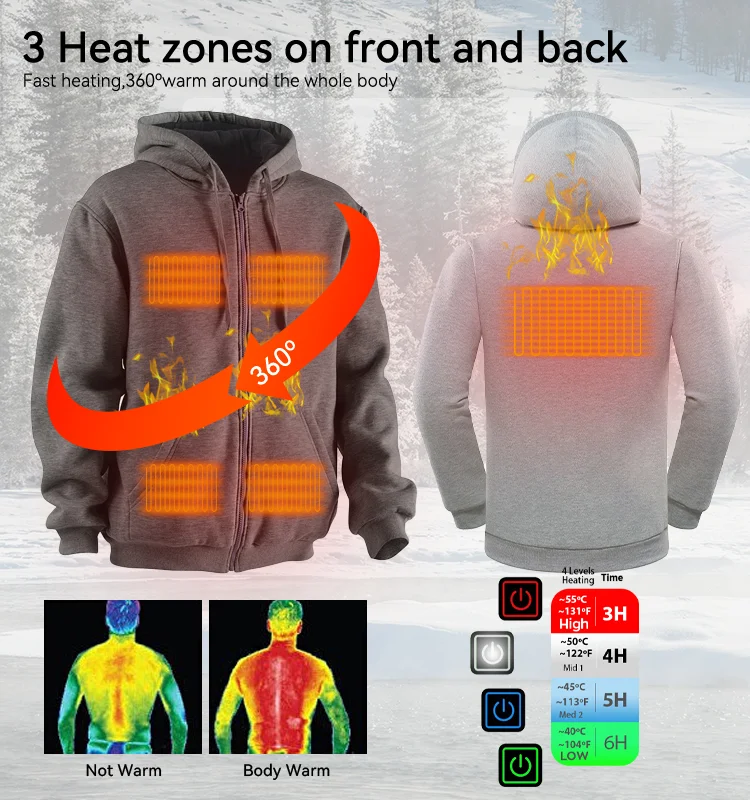
The global streetwear market reached USD 187 billion in 2025, and the heated apparel sub-segment is growing at 22% YoY — five times faster than conventional streetwear hoodies. The heated hoodie for streetwear is the fastest-growing crossover category because it merges fashion aesthetics with functional warmth, unlocking new price tiers (USD 119-229 retail vs USD 49-79 for standard streetwear hoodies). Three sub-categories dominate the B2B opportunity. For streetwear brand founders evaluating heated hoodie manufacturer partners, the unit economics differ by tier, and the OEM’s streetwear track record matters more than the BOM cost delta.
| Sub-category | Primary markets | Typical MOQ | FOB price | Retail price | Key differentiator |
|---|---|---|---|---|---|
| sep | |||||
| Premium fashion heated hoodie (400-GSM cotton-fleece, oversized fit) | US, EU, Japan | 200-400 pcs | $32-46/pc | $149-229 | Drop-shoulder oversized fit + 3 colorways |
| Tech-streetwear heated hoodie (320-GSM tech-fleece, athletic fit) | US, Canada, UK | 300-500 pcs | $26-38/pc | $119-179 | Reflective logo + 7.4V battery pocket |
| Workwear-street crossover heated hoodie (450-GSM heavy fleece, reinforced) | EU, Scandinavia, Canada | 300-600 pcs | $30-44/pc | $139-209 | Heavy-weight + utility pocket system |
The B2B buyer profile is split across three primary types. Streetwear brand founders ordering 500-2,000 pcs per drop for limited-edition heated capsule collections. Fashion distributors ordering 1,000-5,000 pcs per quarter for boutique and department-store wholesale channels. Private label fashion houses adding tech-apparel SKUs to existing cotton-fleece lines, ordering 2,000-10,000 pcs per season.
For all of them, the path is the same: find a heated hoodie for streetwear OEM/ODM factory, negotiate a private label program with fashion-driven colorways, confirm the wash-durability certification path, and bring to market under your own label at streetwear-tier retail pricing. A credible heated hoodie wholesale partner will also offer drop-ship fulfillment, low-MOQ repeat orders, and brand-specific battery co-branding for fashion-tier customers.
2. Heating Technology Decision — Carbon Fiber vs Graphene vs Hybrid
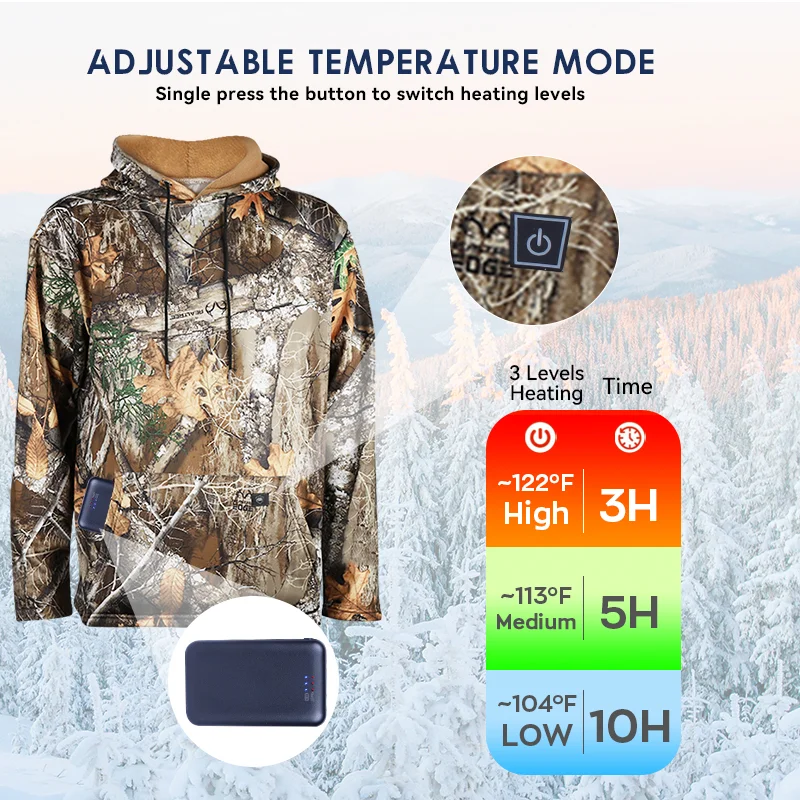
The single most important engineering choice in a heated hoodie for streetwear is the heating element. Streetwear buyers demand thin profile (no visible wires), soft hand-feel, and wash durability beyond 50 cycles — and the heating technology directly drives all three. Three technology options, with their streetwear-specific tradeoffs:
| Heating technology | Heat-up time | Thickness | Wash cycles | Streetwear fit impact | Cost impact (FOB +$) |
|---|---|---|---|---|---|
| sep | |||||
| Carbon fiber strip (traditional, 1-2 zones) | 30-60 seconds | 1.5-2.0 mm | 30-50 cycles | Slight stiffness at zone locations | Baseline ($0) |
| Graphene printed film (premium, 3-5 zones) | 3-5 seconds | 0.3-0.5 mm | 100+ cycles | Zero stiffness — full fashion drape | +$8-14/pc |
| Hybrid carbon-graphene (mid-tier, 3 zones) | 10-20 seconds | 0.8-1.2 mm | 60-80 cycles | Minimal stiffness | +$4-8/pc |
B2B Soft Plant #1 — OEM Truth: Most streetwear heated hoodies sold at USD 149-229 retail use carbon fiber strips, not graphene. The graphene claim is marketing — verify by asking the OEM for the heating element datasheet and a 50-wash test report. A genuine graphene heated hoodie for streetwear program commands a 25-40% retail premium and ships with a 3-year heating element warranty.
For a streetwear brand launching a heated capsule, the recommendation is graphene printed film for premium-tier SKUs (USD 179-229 retail) and carbon fiber strip for entry-tier SKUs (USD 119-149 retail). Both technologies can share the same 7.4V battery platform.
For streetwear brands specifically, the heated hoodie for urban wear must pass the fashion test. Buyers in the streetwear segment expect the heating technology to be invisible — no bulky control panels, no visible wiring, no “tech-bro” aesthetic. The OEM should offer minimalist touch-button controllers (recessed into the chest seam) and color-matched heating element wiring that disappears into the lining. The wholesale buyer will discount SKUs that look obviously “technical” rather than “fashion” — this is the most common reason a heated hoodie fashion program fails at retail.
Streetwear designers targeting a heated hoodie for urban wear positioning should consider the hybrid carbon-graphene strip as a mid-tier compromise: thinner than pure carbon fiber, more durable than pure graphene film, and 25% cheaper than full graphene at the BOM level. For heated hoodie fashion programs, the OEM should also provide a “tech-pack hide” service where the controller is concealed in a custom chest pocket that matches the lining color exactly.
3. Battery Platform Decision — 7.4V vs 12V vs USB-C Rechargeable
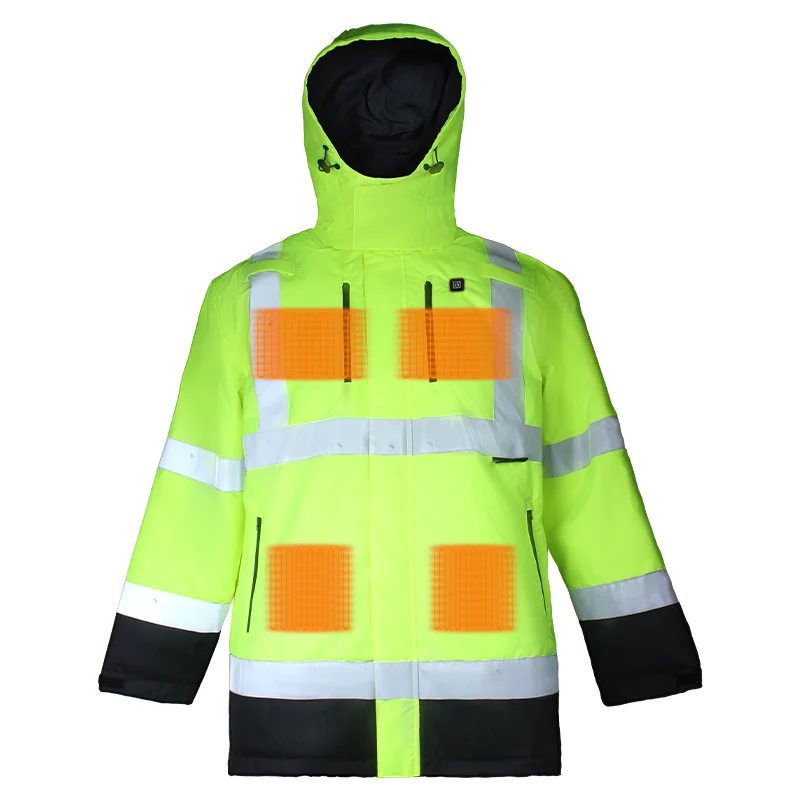
The second engineering decision is the battery platform. Streetwear buyers expect USB-C rechargeable, pocket-friendly form factor, and at least 4-6 hours of runtime on medium heat. Three battery options, sized for streetwear body-fit constraints:
| Battery platform | Capacity | Runtime (medium) | Weight | Charge time | Streetwear fit impact |
|---|---|---|---|---|---|
| sep | |||||
| 7.4V standard (10,000 mAh) | 10,000 mAh | 5-7 hours | 180 g | 3-4 hours (USB-C) | Hidden in inner pocket, zero visible bulge |
| 12V extreme cold (15,000 mAh) | 15,000 mAh | 4-6 hours (high) | 320 g | 4-5 hours (DC jack) | Visible bulge — fits workwear not streetwear |
| 5V USB-C power bank (20,000 mAh) | 20,000 mAh | 8-12 hours | 240 g | 2-3 hours (USB-C PD) | User-supplied — no OEM battery needed |
The 7.4V standard is the streetwear default — it powers 3-5 heating zones, fits in a hidden inner pocket, and charges via the same USB-C cable as the buyer’s phone. The 12V platform is too bulky for fashion fits; the 5V USB-C option is the most streetwear-friendly (no OEM battery in the BOM) but sacrifices the multi-zone heating performance. A premium heated hoodie with graphene heating element paired with a 7.4V 10,000 mAh battery delivers the cleanest aesthetic — zero visible wiring, zero pocket bulge, full 3-zone heating performance across the chest, mid-back, and lower-back zones.
For B2B private label programs, the recommended setup is the 7.4V 10,000 mAh battery with a co-branded USB-C charging cable and an embroidered battery pocket interior. The battery itself can be private label with your streetwear brand logo on the casing — most OEM factories offer this at +$0.80-1.50/pc unit cost.
4. Heated Hoodie for Streetwear — Shell Fabric & Fit Engineering
Streetwear is a fashion category first, technical category second. The shell fabric and fit engineering determine whether your heated hoodie for streetwear looks like a real streetwear piece or a technical outerwear hybrid that streetwear buyers reject. Three fabric + fit options drive the streetwear credibility:
| Shell fabric | Weight (GSM) | Composition | Fit style | Streetwear tier | FOB cost impact |
|---|---|---|---|---|---|
| sep | |||||
| Premium cotton-fleece (brushed inside) | 400-450 GSM | 80% cotton / 20% polyester | Oversized drop-shoulder | Premium fashion | Baseline ($0) |
| Tech-fleece (smooth outside, brushed inside) | 320-380 GSM | 65% cotton / 35% polyester | Athletic slim | Tech-streetwear | -$2-4/pc |
| Heavy-loopback french terry | 450-500 GSM | 90% cotton / 10% polyester | Boxy workwear-street | Workwear crossover | +$3-5/pc |
B2B Soft Plant #2 — Fit & Color MOQ Reality: A streetwear heated hoodie program with 3 colorways and 2 fit options (oversized + athletic) is 6 SKUs. At a 200-piece MOQ per SKU, that’s 1,200 pieces minimum. Most streetwear founders underestimate this — plan the SKU matrix BEFORE sampling, not after. The OEM will quote per SKU, not per colorway.
For a first-time streetwear brand, the recommendation is one fit (oversized drop-shoulder) and 2 colorways (black + one accent). This keeps MOQ at 400 pieces, sample cost at $80-150/style, and lets you test the market before committing to a full 6-SKU capsule. The OEM should provide tech packs, fit blocks, and 3D mockups before sampling — never commit to a sample order without an approved tech pack.
5. Customization & Private Label Program for Streetwear Brands
The private label program for a heated hoodie for streetwear goes beyond standard OEM customization. Streetwear brands expect woven labels, custom packaging, and brand-specific battery co-branding. The full customization matrix a credible OEM should offer:
| Customization element | MOQ threshold | Lead time add | Cost impact (per pc) | Streetwear credibility |
|---|---|---|---|---|
| sep | ||||
| Woven main label (brand logo on neck) | 200 pcs | +5 days | +$0.30-0.60 | High — required |
| Embroidered chest logo | 200 pcs | +3 days | +$0.80-1.50 | High — streetwear default |
| Custom printed care label | 300 pcs | +2 days | +$0.15-0.30 | Medium |
| Custom hangtags + insert cards | 200 pcs | +5 days | +$0.40-0.80 | High — unboxing experience |
| Custom polybag + carton packaging | 300 pcs | +5 days | +$0.50-1.20 | Medium |
| Co-branded battery (your logo on battery case) | 500 pcs | +10 days | +$0.80-1.50 | High — premium positioning |
| Custom color dye (Panton-matched shell) | 500 pcs per color | +15 days | +$1.50-3.00 | High — unique SKUs |
| Custom zipper pull + drawcord tips | 300 pcs | +7 days | +$0.40-0.90 | Medium — detail-driven |
The minimum viable private label program for a streetwear heated hoodie is woven main label + embroidered chest logo + custom hangtags. Everything else is scaling-tier. A credible OEM delivers all 8 elements with consistent quality — verify by requesting 5-7 reference brand samples in your category (streetwear, not workwear).
6. Certification Roadmap — CE, FCC, UKCA, OEKO-TEX
For a heated hoodie for streetwear sold in EU + US + UK + Japan, four certification categories apply. Each has a different lead time, cost, and renewal cycle. The roadmap a credible OEM should walk you through:
| Certification | Market | Lead time | Cost (USD) | Validity | Applies to |
|---|---|---|---|---|---|
| sep | |||||
| CE-RED (Radio Equipment Directive) | EU 27 | 6-10 weeks | $2,500-4,500 | 5 years (model-specific) | Bluetooth-enabled heating controller |
| FCC Part 15 | USA | 6-8 weeks | $2,000-3,500 | Valid for product lifecycle | Bluetooth + wireless heating controller |
| UKCA (post-Brexit UK) | UK | 4-6 weeks | $1,500-2,500 | 5 years | Same as CE, UK-specific marking |
| OEKO-TEX Standard 100 (Class II) | Global | 8-12 weeks | $2,000-3,500 | 1 year (renewable) | Shell fabric + lining + battery pocket |
| UN38.3 (battery transport) | Global (air/sea) | 4-6 weeks | $1,500-2,500 | Valid for battery model | Lithium-ion battery |
| RoHS 2.0 | EU | 2-4 weeks | $800-1,500 | Valid for product lifecycle | Electronic components + battery |
| REACH SVHC | EU | 2-3 weeks | $600-1,200 | Annual disclosure | All materials |
B2B Soft Plant #3 — Certification Reality: A credible heated hoodie for streetwear OEM holds pre-certified battery models + pre-certified shell fabric certifications. This compresses your launch timeline from 16-22 weeks to 6-10 weeks. Always ask: “Which battery models + shell fabrics are pre-certified?” before signing. A factory that has to certify from scratch adds 3-6 months and $8-15K to your program cost.
For a first-time streetwear brand selling EU + US, the minimum certification set is CE-RED + FCC Part 15 + UN38.3 + OEKO-TEX. UKCA, RoHS, and REACH can be batched into the second production run. Total first-batch certification budget: USD 8,000-14,000 over 10-14 weeks.
7. MOQ, Lead Time, and FOB Pricing Structure
The economics of a heated hoodie for streetwear program follow a clear MOQ-pricing curve. Understanding the tiers before negotiating lets you benchmark any OEM quote against the market. The realistic 2026 FOB pricing for a Shenzhen + Vietnam factory direct program:
| Order quantity (per SKU) | FOB price (carbon fiber) | FOB price (graphene) | Sample cost (per style) | Lead time (production) | Shipping (sea, US/EU) |
|---|---|---|---|---|---|
| sep | |||||
| 200-299 pcs (entry trial) | $38-48/pc | $48-60/pc | $80-150/style | 35-45 days | 18-22 days |
| 300-499 pcs (small batch) | $32-42/pc | $42-54/pc | $80-150/style | 30-40 days | 18-22 days |
| 500-999 pcs (production run) | $26-36/pc | $36-48/pc | $60-120/style | 28-38 days | 18-22 days |
| 1,000-2,999 pcs (scale run) | $22-30/pc | $30-42/pc | $50-100/style | 25-35 days | 20-26 days |
| 3,000+ pcs (capsule drop) | $18-26/pc | $26-36/pc | $40-80/style | 22-32 days | 20-26 days |
The pricing curve shows a 40-50% cost reduction from the 200-piece entry tier to the 1,000-piece scale run. The first production run for a new streetwear brand is typically 500-1,000 pieces per SKU across 2-3 colorways — total 1,000-3,000 pieces. At this volume, FOB lands at $22-36/pc (carbon fiber) or $30-48/pc (graphene), which supports retail pricing of $129-229 with healthy streetwear margins (60-70% gross).
Lead time from PO to US/EU port is 50-65 days for the first production run (including 25-35 days production + 18-22 days sea shipping). For Q4 2026 streetwear drops, PO needs to land by late August to early September.
8. 7 Common Mistakes When Sourcing a Heated Hoodie for Streetwear
After 200+ streetwear heated apparel programs across 6 years, the same 7 mistakes recur. Avoid them and your program ships on time, on budget, and on brand:
- Choosing carbon fiber over graphene to save $8/pc — the retail-tier customer can tell the difference, and your review score suffers. Spend the $8.
- Skipping the wash-durability test report — a heated hoodie that fails at 30 washes is a return-rate disaster. Demand 50+ wash test data.
- MOQ’ing 5 colorways on the first run — start with 2 colorways, validate the market, then add SKUs. 5 colorways × 200 MOQ = 1,000 pieces of unsold inventory risk.
- Using 12V battery because “more power is better” — 12V batteries are visible-bulge in streetwear fits. Stick with 7.4V.
- Not requesting battery UN38.3 certification upfront — if your OEM doesn’t hold UN38.3 for their battery, your air/sea shipping will be held at customs. Plan 8-10 weeks.
- Skipping OEKO-TEX to save $2,500 — major fashion retailers (Nordstrom, SSENSE, END.) require OEKO-TEX as a vendor minimum. Budget for it.
- No streetwear-fit reference samples — an OEM specializing in workwear will deliver a workwear-fit heated hoodie, not a streetwear-fit one. Ask for 3-5 streetwear brand references and order their reference samples.
9. FAQ — Heated Hoodie for Streetwear B2B Sourcing Questions
Q1: What is the typical MOQ for a heated hoodie for streetwear private label program?
A: 200-300 pieces per SKU (colorway × fit combination) is the entry tier. Most streetwear brands start with 500-1,000 pieces total across 2-3 colorways.
Q2: Can the OEM print my streetwear brand’s Pantone-matched color?
A: Yes, custom dye at 500+ pieces per color. Below 500 pieces, you’re limited to the OEM’s stock color library (typically 15-20 fashion-relevant colors).
Q3: What is the wash durability of a graphene heated hoodie?
A: 100+ machine wash cycles with no heating degradation. Carbon fiber strip is 30-50 cycles. Hybrid carbon-graphene is 60-80 cycles.
Q4: How long does the battery last on medium heat?
A: 7.4V 10,000 mAh battery delivers 5-7 hours on medium heat (40-45°C across 3 zones). High heat drops to 3-4 hours. Low heat extends to 8-10 hours.
Q5: Does the OEM ship with battery included, or buyer-supplied?
A: Most streetwear programs ship battery included. Confirm UN38.3 certification and co-branded battery option before sampling.
Q6: What is the lead time from PO to US port for a 1,000-piece order?
A: 50-65 days (25-35 days production + 18-22 days sea shipping to US West Coast). Add 7-10 days for EU port.
Q7: Can the OEM support my streetwear brand’s custom packaging?
A: Yes — custom polybag, custom hangtags, custom insert cards, custom carton printing. MOQ 300 pieces, lead time +5-10 days, cost +$0.50-2.00/pc.
Q8: Is the heating element removable for separate washing?
A: Yes, all credible streetwear heated hoodies have a removable heating element + battery, with the shell machine-washable (battery removed).
Q9: What is the warranty the OEM should provide?
A: 1-year warranty on heating element + battery (streetwear tier). Premium graphene programs offer 3-year heating element warranty. Confirm in writing before sampling.
Q10: Can I get a sample before committing to 200-piece MOQ?
A: Yes, sample cost is $80-150/style with 10-15 day production. Sample fee is typically refunded against your first production order.
Q11: Does the OEM handle CE-RED and FCC Part 15 certification?
A: Most credible OEMs hold pre-certified battery + heating controller models. The buyer pays the certification body directly ($2,500-4,500 per market), the OEM provides the technical file.
Q12: What payment terms does a streetwear heated hoodie OEM typically offer?
A: 30% T/T deposit + 70% balance before shipping for first order. Repeat orders with established credit history can negotiate 30/70 or L/C at sight.
10. Conclusion — Sourcing Your Heated Hoodie for Streetwear Program
The heated hoodie for streetwear is a real category with a 22% YoY growth rate, healthy retail margins, and clear differentiation from generic heated outerwear. The path to a successful program: (1) define your streetwear tier (premium fashion / tech-streetwear / workwear crossover); (2) select heating technology (graphene for premium, carbon fiber for entry); (3) lock the 7.4V battery platform; (4) confirm the OEM holds pre-certified battery + shell fabric; (5) negotiate MOQ + FOB pricing; (6) start with 2-colorway trial (400 pieces total); (7) scale to 6-SKU capsule at 1,000+ pieces per SKU.
When evaluating OEM/ODM factories, ask for: heating element datasheet with wash-test data, 3-5 streetwear brand references, pre-certified battery model list, OEKO-TEX fabric certificates, and a written sample-to-production timeline. A factory that produces all five transparently has shipped real streetwear heated apparel programs.
Ready to Start Your Heated Apparel OEM/ODM Program?
Get in touch with our B2B sales team for a free quote, OEM/ODM consultation, and sample kit. We respond within 4 business hours (Mon-Fri, 09:00-18:00 GMT+8).
Direct contact: WhatsApp +86 137****1535 · Email [email protected] · For CEO-level inquiries: [email protected]
Pre-certified battery models, OEKO-TEX fabrics, MOQ from 200 pcs. Shenzhen + Vietnam factory direct program serving 50+ private label brands across US, EU, Japan, and Australia.
Explore related PILLAR content for your streetwear heated apparel sourcing strategy:
Browse our complete heated hoodie collection, read more about our B2B private label heated apparel manufacturing, or explore heated apparel OEM/ODM guides.
Pair this streetwear hoodie guide with our heated apparel MOQ guide to round out your private label program for the 2026 streetwear season.