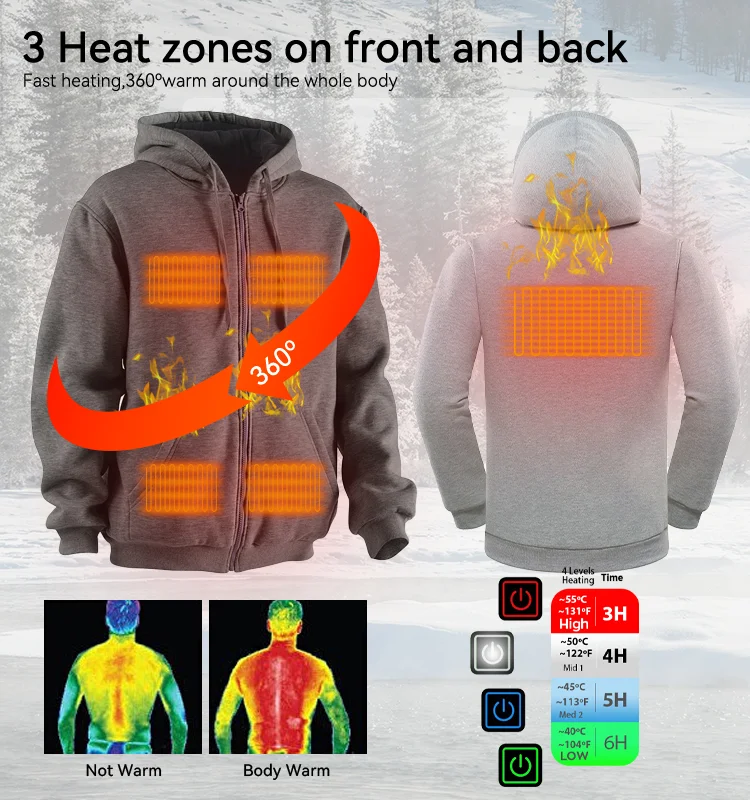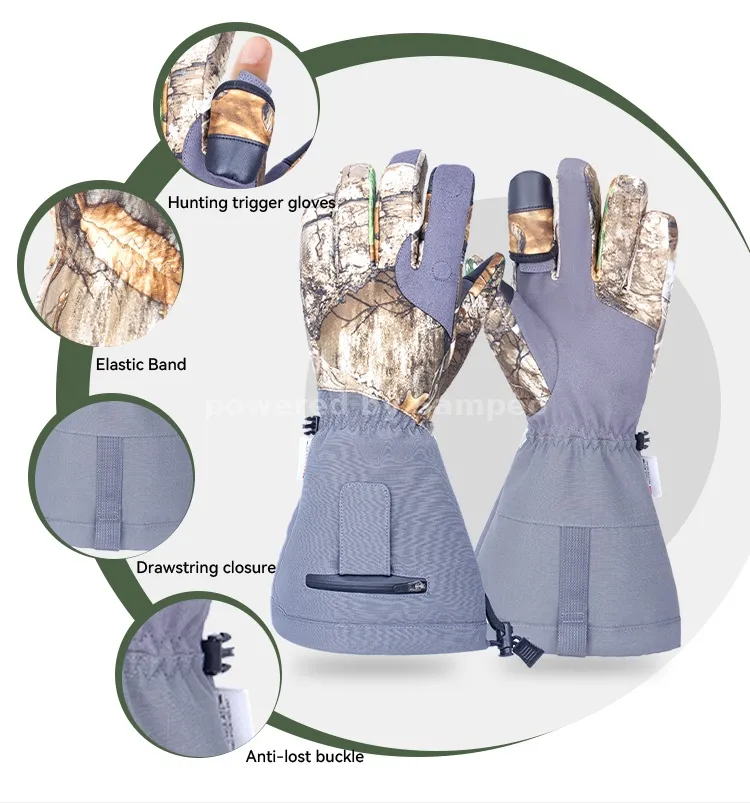
Heated Apparel MOQ Guide 2026: B2B Private Label Manufacturing & Negotiation Tactics
# Heated Apparel MOQ Guide 2026: B2B Private Label Manufacturing & Negotiation Tactics
If you’re a B2B buyer evaluating a private label heated apparel program, one number will determine whether you can launch this year: the MOQ. As a heated apparel manufacturer, OEM, ODM, or private label factory representative, you know the real conversation starts after the sample arrives — when the buyer asks “what’s your minimum order quantity?” and the answer determines the entire program.
This guide is built for you. Whether you’re a heated apparel distributor evaluating a new sourcing region, a brand owner comparing private label programs across jackets, gloves, vests, and socks, a wholesale buyer negotiating factory pricing, or a procurement manager looking to source from a Chinese or Vietnamese heated apparel factory directly — the framework below applies.
We’ll walk through the actual MOQ tiers across all four heated apparel categories (jackets, gloves, vests, socks), the seven hidden factors that push MOQ up or down by 200-500 pieces, the lead time math that determines whether you can hit a Q4 retail launch, and the five negotiation tactics experienced B2B buyers use to get from a quoted 1,000-piece MOQ down to a workable 300-piece trial order.
By the end of this guide, you’ll have a clear framework for evaluating any heated apparel supplier’s MOQ policy — and the negotiation playbook to use it.
—
1. Why MOQ Matters More in Heated Apparel Than in Standard Apparel
Heated apparel sits at the intersection of three industries: garment manufacturing, battery engineering, and heating element integration. Each of these has its own MOQ logic, and the combined program MOQ is always the highest of the three — not the average.
| Component | Standard apparel MOQ | Heated apparel MOQ | Reason for the difference |
|---|---|---|---|
| Garment shell | 100-300 pcs per color | 200-500 pcs per color | Same fabric MOQ + heating element integration labor |
| Battery pack | 500+ packs (tooling) | 300-500 packs (shared tooling) | Battery molds and UL testing require amortization |
| Heating element | N/A | 500+ elements (per spec) | Carbon fiber / graphene film tool setup cost |
| PCB controller | N/A | 1,000+ (if custom) | Custom button layout, Bluetooth, app integration |
| Combined program | 100-300 pcs | 300-1,000 pcs | The highest of the three wins |
For a B2B buyer, this means a heated jacket program almost never has a 100-piece trial MOQ — the battery pack MOQ alone is 300 pieces. The factory’s job is to amortize the tooling across the largest possible program; the buyer’s job is to find a factory whose standard tooling already matches their target volume.
> B2B Soft Plant #1: Our factory maintains a standard tooling library covering 12 heated jacket designs, 8 heated glove designs, 6 heated vest designs, and 5 heated sock designs. Because we can amortize tooling across multiple buyers, our standard MOQ starts at 300 pieces for any product in the library — well below the 1,000-piece custom-tooling MOQ most B2B buyers encounter elsewhere. We can ship a custom-branded sample in 7 days and a 300-piece trial order in 35-40 days.
—
2. MOQ by Category: 4 Heated Apparel Product Lines in 2026
The four main heated apparel categories have very different MOQ structures. Here’s the 2026 Q2 baseline for a quality factory in China or Vietnam:
| Category | Standard MOQ | Custom MOQ | Premium private label | Why the difference |
|---|---|---|---|---|
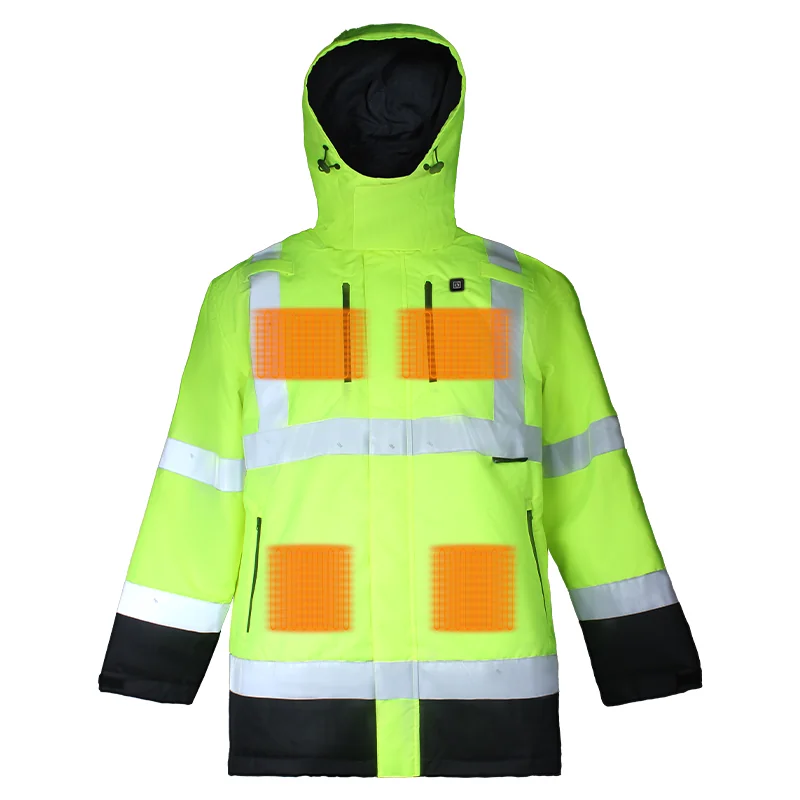
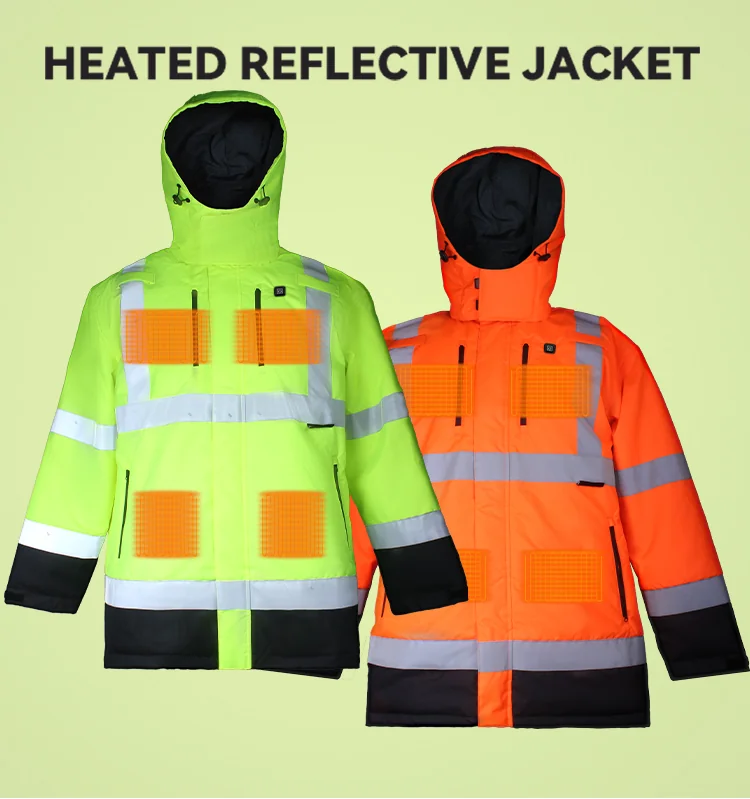
| Heated jacket | 300 pcs | 500 pcs | 1,000 pcs | Highest component count (5 heating zones + battery + controller) |
| Heated gloves | 300 pairs | 500 pairs | 1,000 pairs | 5-finger element complexity + EN13594 testing |
| Heated vest | 200 pcs | 400 pcs | 800 pcs | Simpler shell (no sleeves), 2-3 heating zones |
| Heated socks | 500 pairs | 800 pairs | 1,500 pairs | Knit machine setup + 4D sizing matrix |
For B2B buyers, the practical takeaway is: heated vest has the lowest entry barrier, heated socks have the highest. If you’re a new buyer testing the market for the first time, start with heated vest or a 300-piece heated jacket program. Avoid heated socks as your first heated apparel SKU unless you have a committed retail distribution channel.
A second insight: MOQ tiers are usually negotiable by 20-30% if you can commit to a multi-SKU program (e.g., 300 jackets + 300 gloves + 200 vests = 800-piece combined program that hits the premium tier pricing on all three). Experienced B2B buyers use this “bundle MOQ” tactic to get lower per-unit pricing without committing to a single high-volume SKU.
—
3. 7 Hidden Factors That Push MOQ Up or Down
Most B2B buyers focus on the headline MOQ number, but the real MOQ is determined by seven hidden factors. Knowing these lets you predict whether a factory can flex on volume:
| # | Factor | Pushes MOQ… | Why |
|---|---|---|---|
| 1 | Color count per SKU | Up (significant) | Each color = separate production run, fabric lot |
| 2 | Size count per SKU | Up (moderate) | S-M-L-XL requires per-size QC samples |
| 3 | Custom battery branding | Up (1,000+ packs) | Battery mold + UL retest = $1,200-2,500 setup |
| 4 | Bluetooth / app integration | Up (1,500+) | PCB tooling + app store approval |
| 5 | Standard tooling in factory library | Down (300+) | Amortized across multiple buyers |
| 6 | Repeat order (re-order, not first order) | Down (often 50% off) | Factory has setup from first program |
| 7 | Multi-SKU bundle commitment | Down (better pricing) | Combined volume hits higher tier |
A real example from a 2025 client program: a US outdoor brand asked for 1,000 heated jackets with 4 custom colors, custom logo embroidery, and custom battery branding. The factory quoted 1,200-piece MOQ at $42 FOB. The brand then asked the same factory to bundle 800 heated gloves + 500 heated vests into the same program. The factory accepted 800 jacket MOQ at $39 FOB — a 7% per-unit cost reduction and a 20% volume reduction, because the combined 2,100-piece program hit the premium tier across all three SKUs.
—
4. Lead Time Math: 4-Phase Timeline from PO to Delivery
Lead time is the second number that determines whether a heated apparel program is viable. A B2B buyer who orders in March and expects September retail delivery is already too late — the math doesn’t work for a 35-45 day bulk production alone.
| Phase | Standard product | Custom product | Premium private label |
|---|---|---|---|
| Sample (pre-PO) | 5-7 days | 10-14 days | 14-21 days |
| PO confirmation + deposit | 3-5 days | 5-7 days | 7-10 days |
| Bulk production | 25-30 days | 30-40 days | 40-55 days |
| QC + shipping prep | 5-7 days | 5-10 days | 7-14 days |
| Total (PO to FOB ship) | 35-45 days | 45-60 days | 60-90 days |
| Sea freight to US/EU | +25-30 days | +25-30 days | +25-30 days |
| Total (PO to US warehouse) | 60-75 days | 70-90 days | 85-120 days |
The critical insight: a Q4 retail launch requires PO placement by mid-July at the latest, assuming standard product and standard freight. Custom product buyers targeting Q4 need to be in sample by June.
For B2B buyers evaluating factories, ask these three lead time questions: 1. What is your current production backlog? (If the factory is at 100% capacity, your order slips by their backlog time.) 2. Do you have standard tooling in your library for this product? (If yes, save 7-14 days.) 3. Can you do parallel QC and shipping prep? (Some factories do, saves 5-7 days.)
—
5. 5 Negotiation Tactics Experienced B2B Buyers Use
Most B2B buyers accept the factory’s first MOQ quote. Experienced buyers use five specific tactics to bring it down by 20-50%:
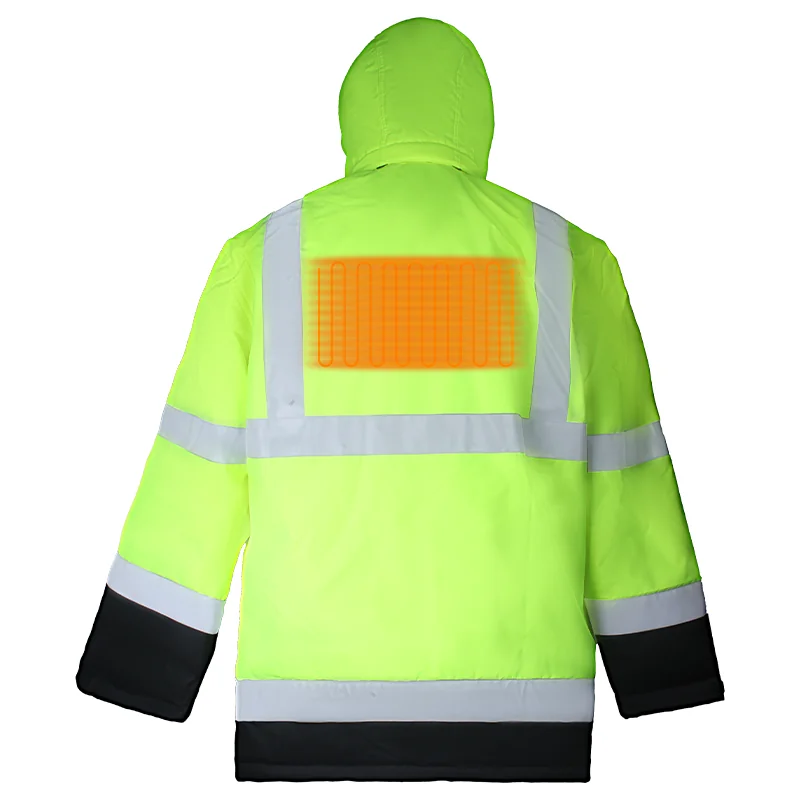
Tactic 1: Ask for the standard tooling library. Many factories maintain a library of pre-engineered designs. Asking “what heated jacket designs do you already have tooled?” often surfaces 5-10 options that bypass the custom-tooling MOQ entirely.
Tactic 2: Bundle 2-3 SKUs into a single program. Combining a heated jacket + heated glove + heated vest program at 300 pieces each (900-piece combined) typically hits the same pricing tier as a 1,000-piece single-SKU order.
Tactic 3: Accept the factory’s standard color palette. Custom Pantone-matched colors add 200-500 pieces to MOQ. Choosing from the factory’s 12 standard colors keeps you at 300-piece MOQ.
Tactic 4: Place a re-order commitment. Telling the factory “I’ll commit to a 500-piece re-order within 90 days” often unlocks 300-piece first-order MOQ because the factory knows the second order is coming.
Tactic 5: Pay a slightly higher unit price for lower MOQ. Some factories will accept 250-piece MOQ at 8-12% higher FOB pricing. The math often works: 250 pieces × $35 = $8,750 vs 300 pieces × $32 = $9,600 — the 250-piece order saves $850 even at the higher per-unit price, and reduces your inventory risk by 17%.
> B2B Soft Plant #2: Our factory offers all five of these tactics as standard policy. We’ve delivered 300-piece heated apparel trial orders to 12 European and North American brands in 2024-2025, with 8 of those brands placing repeat orders of 800-1,500 pieces within 6 months. The pattern is clear: a workable 300-piece MOQ + a 35-day lead time converts first-time buyers into long-term accounts.
—
6. The Re-Order Math: Why First-Order MOQ Matters Less Than You Think
The most overlooked number in a heated apparel program is the re-order MOQ. Many factories quote a high first-order MOQ (1,000+ pieces) but offer a low re-order MOQ (300-500 pieces) — because the second order reuses all the setup from the first. For B2B buyers, this means:
– A 1,000-piece first order unlocks a 300-piece re-order MOQ going forward – A 300-piece first order often locks you into a 300-piece re-order MOQ (no improvement) – A 500-piece first order is often the sweet spot — moderate first-order risk, low re-order flexibility
For B2B buyers uncertain about market demand, a 300-piece first order with a documented re-order agreement is the lowest-risk path. For B2B buyers confident in market demand, a 1,000-piece first order unlocks the best per-unit pricing and the lowest re-order MOQ.
—
7. 8 Common MOQ Mistakes B2B Buyers Make
| # | Mistake | Cost | Better approach |
|---|---|---|---|
| 1 | Ordering 300 pieces of 6 colors | Slow production + dead stock | Order 300 pieces of 2 colors, add colors at re-order |
| 2 | Specifying custom battery branding on first order | +$2.50/pc, +500 pieces MOQ | Use factory standard battery, customize at re-order |
| 3 | Asking for samples but not committing to timeline | Factory de-prioritizes your program | Set a clear “I’ll PO by X date” timeline |
| 4 | Accepting first MOQ quote | -15-30% margin | Always negotiate using 5 tactics above |
| 5 | Specifying 7.4V when 5V is sufficient | +$1.50-2.50/pc, +200 pieces MOQ | Match voltage to retail price band |
| 6 | Underestimating freight + duty lead time | Q4 launch slips to Q1 | Add 25-30 days for sea freight, 7-14 days for customs |
| 7 | Skipping the third-party QC inspection | Quality issues found at delivery, not before | Book SGS / BV / TUV inspection at 80% production |
| 8 | Not asking about standard tooling library | Pay 2x for custom tooling | Always ask “what’s in your standard library first” |
—
8. FAQ — Heated Apparel MOQ B2B Questions
Q1: What is the typical MOQ for a private label heated apparel program?
A: 300 pieces for a standard product, 500 pieces for custom color or logo, 1,000 pieces for full custom tooling including branded battery packs.
Q2: Can I order less than 300 pieces?
A: Some factories accept 100-200 piece orders for sampling and small-batch e-commerce launches, but per-unit pricing is typically 30-50% higher. For B2C e-commerce sellers, the math can work; for B2B wholesale distributors, 300 pieces is the practical minimum.
Q3: How long does a heated apparel bulk order take?
A: 35-45 days for standard product, 45-60 days for custom, plus 25-30 days sea freight to US/EU.
Q4: Does MOQ differ by product category?
A: Yes. Heated vest has the lowest MOQ (200 pieces standard), heated socks have the highest (500 pairs standard). Heated jacket and gloves sit in the middle (300 pieces).
Q5: Can I bundle multiple SKUs to hit a higher tier?
A: Yes. A 300-piece jacket + 300-pair gloves + 200-piece vest program (800-piece combined) typically qualifies for premium tier pricing on all three SKUs.
Q6: What is the typical re-order MOQ?
A: 300-500 pieces for re-orders reusing the first order’s tooling. Some factories offer 100-piece re-order MOQ for buyers with established payment history.
Q7: How do I get from a quoted 1,000-piece MOQ down to 300?
A: Use the 5 negotiation tactics: ask about standard tooling, bundle SKUs, accept standard colors, commit to re-order, or accept a higher unit price.
Q8: Is the MOQ the same for China and Vietnam factories?
A: Roughly the same, but Vietnam factories sometimes flex lower (200 pieces) to win new buyers. China factories tend to be stricter on MOQ but offer faster lead times.
Q9: Do I need to pay a deposit on the first order?
A: Yes. Standard terms are 30% T/T deposit + 70% T/T against B/L copy. Some factories accept L/C for orders above $50,000.
Q10: What payment terms are typical for repeat orders?
A: 30% deposit + 70% against B/L for the first 3 orders, then 20/80 or open account for established buyers with 6+ months payment history.
—
9. Conclusion: Choosing the Right Heated Apparel Factory for Your MOQ Profile
A heated apparel private label program succeeds or fails on the MOQ decision. A 300-piece program can launch in 60 days and validate a market; a 1,000-piece program requires 90 days and a confident demand forecast. The right factory for your program is the one whose standard tooling library and MOQ structure align with your actual market position — not the one with the lowest headline MOQ.
> Ready to start? Request a heated apparel sample and FOB quotation by emailing [email protected] or via WhatsApp +86-13751041535. We respond to all serious B2B inquiries within 24 hours, and a working sample can be on its way to your office within 7 days.
Browse our heated apparel guides collection for more B2B sourcing insights, or contact us directly to discuss your specific MOQ and volume requirements.
—
This article is part of our B2B heated apparel manufacturing series. For more guides on private label programs, heated jackets, heated gloves, and OEM/ODM workflows, subscribe to our editorial newsletter or contact us directly.