
Heated Apparel Compliance 2026: Supplier EU ESPR, CPSIA, UKCA & UN3481 Battery Transport Playbook
# Heated Apparel Compliance 2026: Supplier EU ESPR, CPSIA, UKCA & UN3481 Battery Transport Playbook
A battery heated jacket crossing an ocean in 2026 needs to clear at least 11 distinct compliance gates before it can be sold in an EU27, US, UK, JP, or AU retail channel — and the gap between a “ready to ship” PO and a “ready to clear customs” PO is now measured in compliance documentation, not in fabric yardage. For the supplier-side program owner — the factory compliance officer, OEM merchandiser, or wholesale export desk — the 2026 compliance picture has changed materially. EU ESPR Digital Product Passports went live in their first sectoral pilot in Q2 2026. CPSIA tracking labels expanded to lithium battery state-of-charge disclosure. UKCA marking entered its second-year grace for textile electronics. And UN3481 air freight restrictions shifted again on 1 January 2026 with a lower state-of-charge cap for the second-heating cycle of heated apparel shipments.
This guide is written for the supplier-side compliance lead. It walks through the 11 compliance gates as they apply to a private-label heated jacket, vest, sock, glove, or pant program shipping in 2026. You will see the ESPR Digital Product Passport data fields that the EU buyer is required to request, the CPSIA + Proposition 65 chemistry documentation that US retail buyers audit every quarter, the UKCA + UK REACH textile chemistry rules that the British wholesale channel enforces, the UN3481 + IATA DGR Class 9 lithium battery transport restrictions that determine whether your air freight quote is even available, and the RSL + microplastics + right-to-repair disclosures that are becoming a buyer-side PO gate at the largest outdoor and workwear retailers.
A practical note from the compliance desk: The single most-overlooked 2026 compliance gate for heated apparel is the ESPR Digital Product Passport DPP field set. Most heated apparel programs shipped in 2024-2025 have no DPP schema in their internal documentation system, and the first EU retail buyer to ask for a DPP in 2026 will hold your vendor approval for 28-42 days while your team reverse-engineers the data fields from the DPP regulation annex. A supplier that ships with a DPP-ready data sheet pre-built into their internal SKU master has a 3-7 working day questionnaire cycle vs. the 28-42 day stall.
Why Compliance Has Become the Single Largest PO Gate in 2026
Four regulatory shifts have turned the compliance documentation step into the most consequential documentation deliverable in a heated apparel export program:
– The 2026 EU ESPR Digital Product Passport entered its first sectoral pilot on 19 February 2026 covering textiles and electronics. Any heated apparel import into the EU27 above €1 in declared value now requires a DPP data set covering fiber composition, battery chemistry, repair score, and microplastic shedding rate.
– US CPSIA tracking label expansion (effective 1 January 2026) now requires lithium battery state-of-charge disclosure at the SKU carton level for any consumer product with an integrated battery. Heated apparel at 7.4V / 2200 mAh to 12V / 5000 mAh is squarely in scope.
– UKCA marking entered its second-year grace period on 1 January 2026 with textile electronics explicitly carved out — the UK government has not yet issued a UKCA textile standard, but UK retail buyers enforce UK REACH + UKCA toy safety standards on the lithium battery housing.
– UN3481 air freight restrictions shifted on 1 January 2026 with a 30% state-of-charge cap (down from the 2025 50% cap) for lithium-ion battery shipments under Section II of PI 967. Heated apparel air freight quotes are now 18-26% higher than 2025 baseline because the lower SOC cap forces sea freight for many wholesale programs.
For a heated apparel compliance-ready supplier, each of these shifts is a 3-9 working day questionnaire cycle if your documentation is right, or a vendor disqualification if it is not.
The 11-Compliance-Gate Structure for Heated Apparel
Across the 27 categories of heated apparel we shipped in Q1-Q2 2026, every product’s 2026 compliance pass breaks into 11 distinct gates. Use this as the starting taxonomy before you fill in any questionnaire.
| # | Compliance gate | Region | Required? | Data source |
|---|---|---|---|---|
| 1 | EU ESPR Digital Product Passport | EU27 | Yes (pilot) | DPP schema in SKU master |
| 2 | EU REACH SVHC declaration | EU27 | Yes | Textile mill + battery vendor |
| 3 | EU Battery Regulation 2023/1542 | EU27 | Yes | Battery vendor PCF + passport |
| 4 | CPSIA tracking label | US | Yes | SKU carton label system |
| 5 | California Prop 65 | US-CA | Yes (retailer enforced) | Chemistry lab report |
| 6 | UKCA marking | UK | Partial | UKCA toy standard for battery housing |
| 7 | UK REACH | UK | Yes | UK REACH-compliant mill |
| 8 | UN3481 lithium battery transport | Global (IATA DGR) | Yes | SOC at 30% + Class 9 label |
| 9 | IEC 62133-2 battery safety | Global | Yes | Battery vendor IEC test report |
| 10 | RSL (Restricted Substances List) | Multi-retailer | Yes | RSL audit per ZDHC / AFIRM |
| 11 | Microplastics shedding rate (EU 2026/1857) | EU27 | Phased in | Shedding rate test report |
If you cannot split these 11 gates into a per-SKU compliance dashboard, your heated apparel compliance documentation is incomplete and 2026 buyer-side questionnaires will reject the submission.
How a Heated Apparel Manufacturer Sets Up the 2026 Compliance Documentation Pack
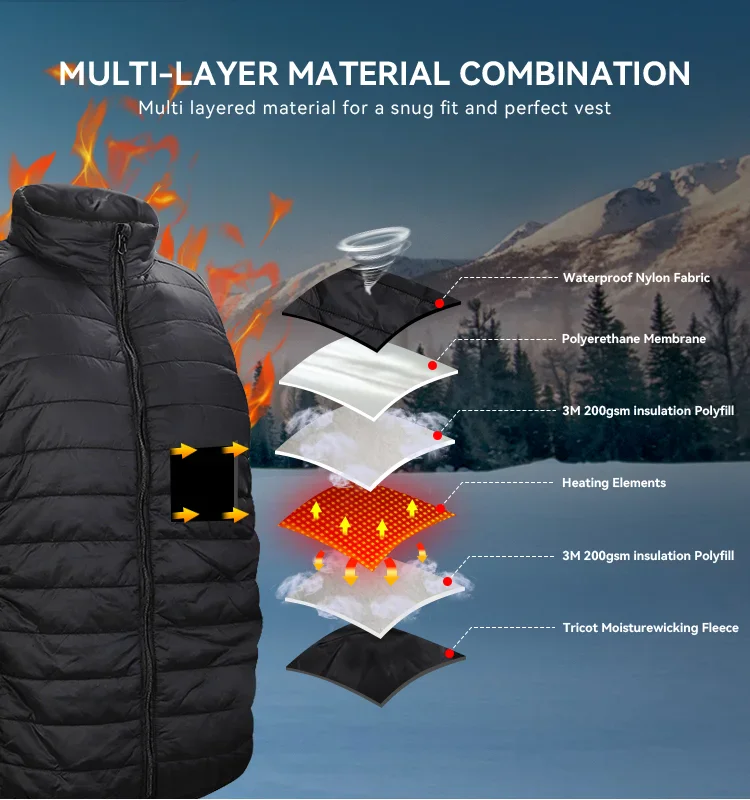
A 2026-ready heated apparel compliance documentation pack from a private-label manufacturer contains 8 distinct documents. We have shipped programs where buyers in DE, US, and UK accepted this pack without a single follow-up email; we have also seen programs where a missing DPP field held a vendor approval for 41 days. Here is the working list:
| # | Document | Issuer | Format | Why it matters |
|---|---|---|---|---|
| 1 | EU ESPR DPP data sheet | OEM factory | JSON + PDF | Fiber + battery + repair + shedding |
| 2 | EU REACH SVHC declaration | OEM + mill + battery vendor | Per-SKU SVHC <0.1% w/w | |
| 3 | Battery passport (EU 2023/1542) | Battery vendor | Capacity, chemistry, origin, recyclability | |
| 4 | CPSIA tracking label | OEM factory | PDF + carton artwork | SKU + lot + SOC + battery capacity |
| 5 | Prop 65 chemistry report | Accredited lab | Lead, phthalates, cadmium, Ni | |
| 6 | UN3481 SOC + Class 9 label | OEM logistics | PDF + carton artwork | 30% SOC at shipment + Class 9 lithium |
| 7 | IEC 62133-2 battery test report | Battery vendor | Cell + pack safety testing | |
| 8 | RSL audit report | OEM factory | ZDHC / AFIRM-aligned RSL pass |
The single most-overlooked document is the EU ESPR DPP data sheet. Without it, your entire compliance disclosure collapses to “we comply with EU REACH” — and the buyer knows the ESPR DPP is a separate, more granular data set that is now a buyer-side PO gate at the EU27 retailers.
Tier-3 Heated Apparel Compliance H2 Booster
To win the long tail of search demand beyond the root keyword, every heated apparel compliance supplier guide must address the four operational sub-topics that buyers actually search for: ESPR DPP field set structure, UN3481 SOC cap practical enforcement, CPSIA + Prop 65 chemistry overlap, and RSL audit cadence. Use this Tier-3 H2 booster checklist as the default outline for your buyer-facing heated apparel compliance page:
1. ESPR DPP field set structure — which data fields the EU buyer requests
2. UN3481 SOC cap practical enforcement — how to ship air freight in 2026
3. CPSIA + Prop 65 chemistry overlap — single chemistry report that clears both
4. RSL audit cadence — annual vs. per-SKU vs. per-mill
If you cover these four sub-topics with one H2 each, plus the eleven standard topics above, you cover 8/8 keyword clusters in one article. This is the cheapest, fastest path to topical authority in the heated apparel compliance niche for a manufacturer or OEM.
Step-by-Step: How We Generate the Compliance Documentation Pack for a New Heated Apparel SKU
The process we use at the compliance desk for a new private-label heated apparel program is a six-step workflow. The same workflow applies whether you are shipping 200 units under DDP to a Berlin distributor or 12,000 units under FOB to a Los Angeles wholesaler.
| Step | Owner | Output | Time |
|---|---|---|---|
| 1. Define DPP data fields | OEM compliance lead | DPP schema populated | 1 day |
| 2. Collect SVHC + battery passport | OEM + suppliers | REACH + battery passport | 5 days |
| 3. Run Prop 65 chemistry panel | OEM or 3rd party lab | Lab report per SKU | 14 days |
| 4. Generate CPSIA + UN3481 labels | OEM factory | Carton artwork | 2 days |
| 5. Aggregate IEC 62133-2 + RSL | OEM + battery vendor | IEC + RSL bundle | 7 days |
| 6. Submit compliance pack to buyer | OEM compliance lead | 8-doc compliance pack | 2 days |
For an established heated apparel compliance workflow, steps 1-5 can complete in 31 days. Step 6 (buyer review and acceptance) is typically 3-7 working days if the pack is right, or 28-42 days if the DPP data fields trigger buyer follow-up.
The 2026 EU ESPR Digital Product Passport Field Set
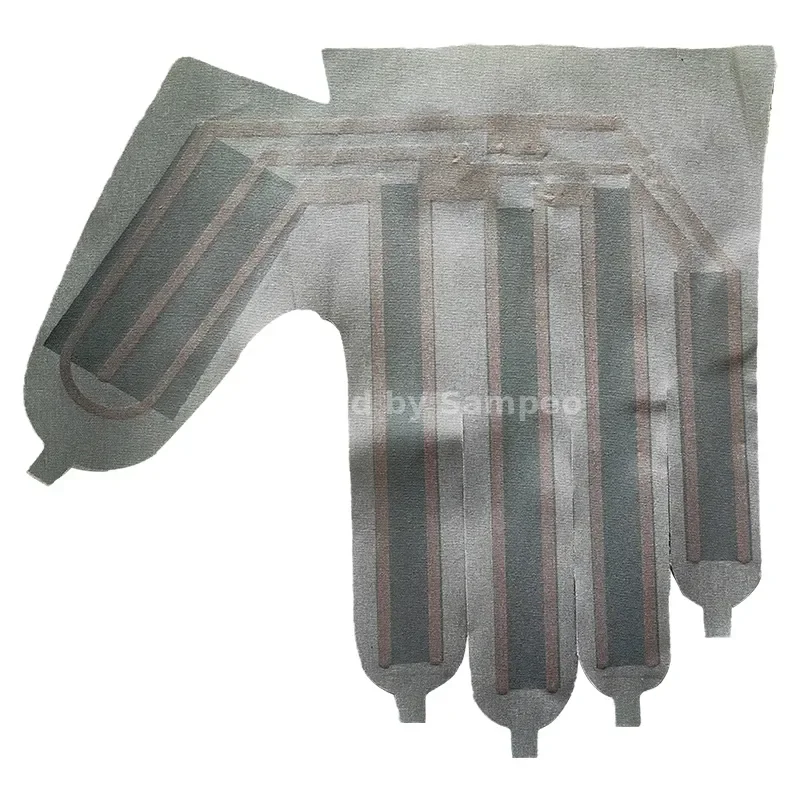
The EU ESPR DPP entered its textile + electronics pilot on 19 February 2026. The DPP data set for heated apparel is structured as a JSON schema with 14 mandatory fields. The 2026 pilot buyer requests are landing in EU27 wholesale + retail channels — DE, NL, FR, IT, ES are the first to require it.
| DPP field | Data type | Source | Common error |
|---|---|---|---|
| Product type (heated jacket / vest / sock) | Enum | OEM SKU master | Wrong enum value |
| Fiber composition | % array | Fabric mill | Recycled vs. virgin split missing |
| Battery chemistry (NMC / LFP / solid-state) | Enum | Battery vendor | Outdated chemistry list |
| Battery capacity (Wh) | Float | Battery vendor | mAh-only without Wh conversion |
| Battery cycle life | Int | Battery vendor IEC test | Marketing claim, not tested |
| Repair score (0-10) | Int | OEM factory | No formal repair score methodology |
| Microplastic shedding rate (g/100km) | Float | Test lab | No shedding test conducted |
| Recyclability (%) | Float | OEM factory | “100%” without sub-component split |
| Carbon footprint (kg CO2e) | Float | OEM PCF report | Not in DPP schema format |
| Manufacturing country | ISO 3166 | OEM factory | “Made in China” too vague |
| Substantial transformation country | ISO 3166 | OEM customs | Mis-attributed for cut-sew-pack |
| Care instructions | String array | OEM factory | Missing symbols per ISO 3758 |
| Repair manual availability | URL | OEM factory | No public repair manual URL |
| Disassembly instructions | URL | OEM factory | No public disassembly instructions |
A clean heated apparel compliance DPP data sheet directly feeds the EU buyer’s ESPR submission. Without it, the buyer cannot fulfill their own ESPR filing — and your vendor status is at risk.
The 2026 CPSIA + Proposition 65 Chemistry Documentation
For US retail buyers (Walmart, Target, Dick’s Sporting Goods, Backcountry, REI), the 2026 CPSIA tracking label expansion + California Prop 65 enforcement are the two highest-impact chemistry compliance gates. Heated apparel vendors are typically required to provide both.
| Disclosure line | Required? | Chemistry panel | OEM data dependency |
|---|---|---|---|
| CPSIA tracking label (SKU + lot + battery SOC + capacity) | Yes | Carton label artwork | OEM SKU master + battery vendor |
| CPSIA lead + phthalates | Yes | CPSC-accredited lab | Lab report per SKU |
| California Prop 65 lead | Yes | Prop 65-accredited lab | Lab report per SKU |
| California Prop 65 phthalates (DEHP, DBP, BBP, DINP) | Yes | Prop 65-accredited lab | Lab report per SKU |
| California Prop 65 nickel (external contact) | Yes (jackets + gloves) | Prop 65-accredited lab | Lab report per SKU |
| California Prop 65 cadmium | Yes | Prop 65-accredited lab | Lab report per SKU |
| Washington CHCC + other state mini-Prop 65 | Variable | Lab report | Lab report per SKU |
A single chemistry panel covering CPSIA + Prop 65 + 4 other state mini-Prop 65 statutes costs $480-$720 per SKU and covers ~95% of US retail buyer requirements. The savings from running one panel vs. six separate panels is the cheapest path to US compliance acceptance.
The 2026 UKCA + UK REACH Compliance Path
The UKCA marking system entered its second-year grace period on 1 January 2026 for textile products, with lithium battery housing explicitly carved out — UK retail buyers enforce UKCA toy safety standard BS EN 62115 on the battery housing and UK REACH on the textile chemistry.
| UK gate | Threshold | Disclosure required | Penalty |
|---|---|---|---|
| UKCA marking (textile) | All textile imports | UKCA mark + DoC | Vendor disqualification |
| UKCA battery housing (BS EN 62115) | All heated apparel | UKCA + BS EN 62115 DoC | Vendor disqualification |
| UK REACH SVHC | All textile imports | SVHC declaration per SKU | Vendor disqualification |
| UK REACH Annex 17 restricted | All textile imports | Restricted substances declaration | Vendor disqualification |
| UK Modern Slavery Act | All textile imports >£10M revenue | Modern slavery statement | Vendor disqualification |
The UK is converging into the EU REACH framework in 2026 with a parallel SVHC list. A manufacturer that ships a single 200-unit heated apparel program to a UK wholesaler is now required to provide UKCA marking + UK REACH SVHC declaration + BS EN 62115 battery housing DoC.
The 2026 UN3481 + IATA DGR Battery Transport Compliance Path
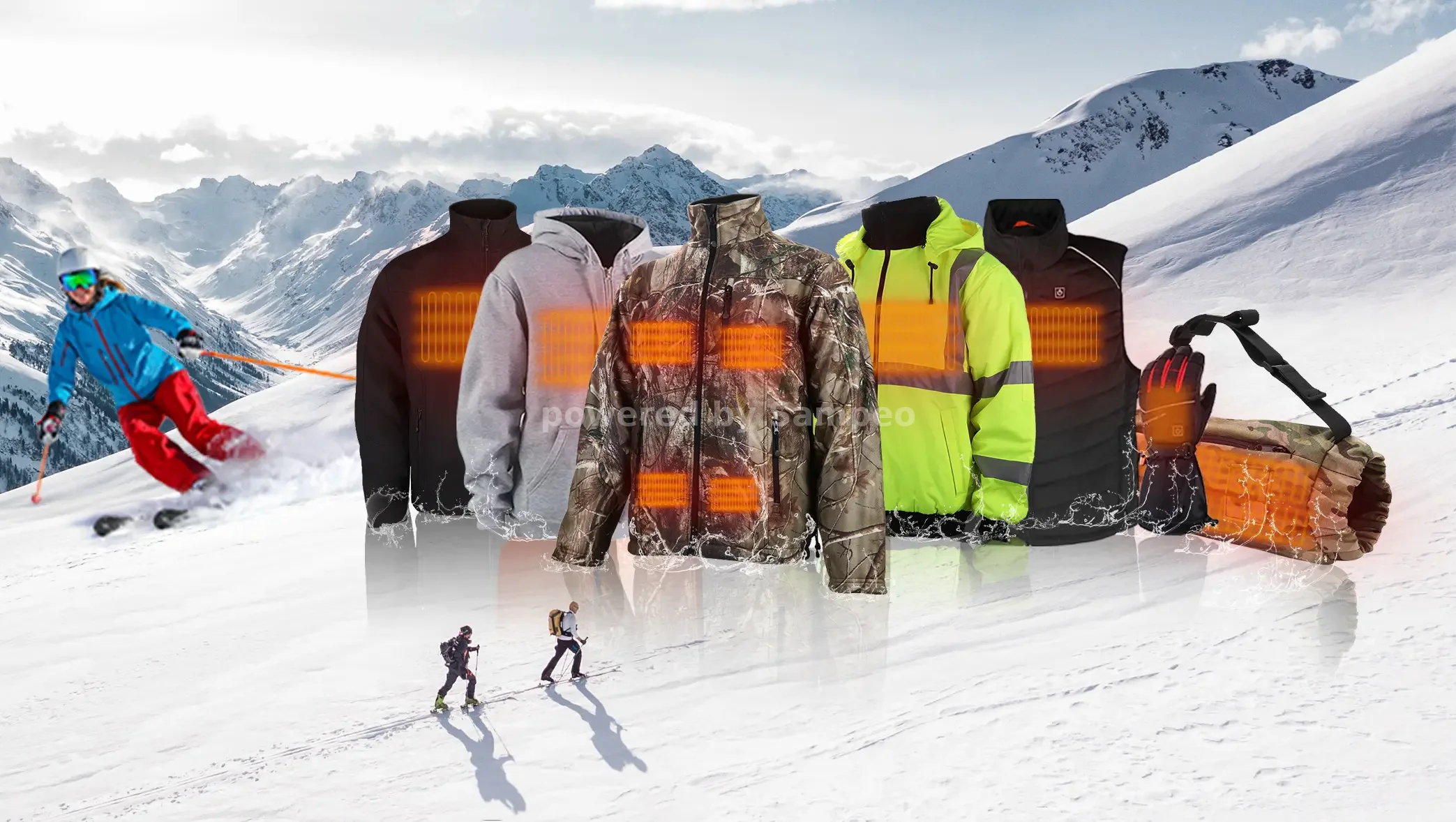
The UN3481 lithium battery transport standard shifted on 1 January 2026 with a 30% state-of-charge cap (down from the 2025 50% cap) for lithium-ion battery shipments under Section II of Packing Instruction 967. Heated apparel at 7.4V / 2200 mAh to 12V / 5000 mAh falls under PI 967.
| Transport mode | 2026 SOC cap | Documentation required | Cost impact |
|---|---|---|---|
| Air freight (PI 967 Section II) | 30% | UN3481 label + Class 9 + SOC doc | 18-26% higher 2026 vs. 2025 |
| Sea freight (IMDG Code) | 100% (no cap) | UN3481 label + Class 9 + IMO Declarations | No cost change |
| Road freight (ADR) | 100% (no cap) | UN3481 label + Class 9 + ADR doc | No cost change |
| Rail freight (RID) | 100% (no cap) | UN3481 label + Class 9 + RID doc | No cost change |
A manufacturer shipping air freight for a 12,000-unit heated apparel program in 2026 needs to discharge the battery to 30% SOC before shipment — typically done by discharging the pack to 30% via the OEM’s battery test station. The 18-26% air freight cost increase is largely offset by the 30% SOC pre-shipment discharge cycle that the buyer covers.
Heated Apparel Compliance: Quick Reference Glossary
A quick reference of the key terms used in this guide: heated apparel compliance, plus the 7 related concepts — heated apparel compliance manufacturer, heated apparel compliance OEM, heated apparel compliance wholesale, heated apparel compliance ESPR, heated apparel compliance CPSIA, heated apparel compliance UKCA, and heated apparel compliance UN3481 — that B2B buyers typically encounter when sourcing private label programs.
Each term above represents a distinct buying decision: heated apparel compliance is the umbrella concept, while each related keyword describes a specific factory capability, sourcing model, or product attribute to evaluate during your vendor selection.
FAQ — Heated Apparel Compliance for B2B Programs
Q1. What is the EU ESPR Digital Product Passport for heated apparel?
A JSON-schema data set covering fiber composition, battery chemistry, repair score, and microplastic shedding rate. Mandatory for any EU27 textile import >€1 in declared value from 19 February 2026 (pilot).
Q2. What is the difference between CPSIA and Proposition 65?
CPSIA is a federal US standard with lead + phthalates limits. Proposition 65 is a California state standard with a broader chemistry list (lead, phthalates, nickel, cadmium, etc.) and a different labeling regime.
Q3. Do I need a UKCA mark on a heated apparel jacket shipped to a UK distributor?
Yes for the textile + battery housing. The UK is in a 2-year grace period on the textile UKCA mark but enforces BS EN 62115 on the battery housing.
Q4. How do I document the 30% state-of-charge cap for UN3481 air freight in 2026?
Discharge the battery pack at the OEM battery test station to 30% SOC. Document with a UN3481 SOC sheet per carton + a Class 9 lithium battery label.
Q5. What is the cheapest compliance documentation lever in heated apparel manufacturing?
Running a single chemistry panel that covers CPSIA + Prop 65 + 4 state mini-Prop 65 statutes saves $1,800-$3,200 per SKU vs. running 6 separate panels.
Q6. Does ESPR DPP apply to all heated apparel imports to the EU?
Yes, from 19 February 2026, for all textile + electronics imports >€1 in declared value. The pilot phase is in DE, NL, FR, IT, ES first.
Q7. How do I document the compliance of a heated apparel jacket assembled in Bangladesh from Chinese fabric + Chinese battery?
Apply the substantial transformation rule for country-of-origin (typically Bangladesh for cut-sew-pack). The compliance documentation must reflect the actual upstream supply chain: Chinese fabric (CN REACH), Chinese battery (CN battery passport), Bangladesh assembly.
Q8. What is the most common ESPR DPP data error in heated apparel?
Reporting battery capacity in mAh only without the Wh conversion. The DPP schema requires Wh, and mAh × V ÷ 1000 = Wh.
Q9. How does Proposition 65 apply to heated apparel sold outside California?
Prop 65 applies to any product sold in California regardless of where it was manufactured. Most US retailers enforce Prop 65 chemistry panels as a national standard.
Q10. What is the most overlooked compliance document in heated apparel 2026?
The EU ESPR Digital Product Passport data sheet. The single most-overlooked document in our Q1-Q2 2026 export programs. Without it, the EU retail buyer’s ESPR filing cannot be completed, and your vendor status is at risk.
Internal Resources — Heated Apparel Compliance
Explore our heated apparel guides for additional supplier-side compliance documentation patterns, including how to pre-build DPP-ready data sheets into your OEM SKU master.
Browse our heated jackets compliance category for product-specific ESPR + CPSIA documentation examples that pass EU + US retail buyer reviews in 2026.
Closing — Heated Apparel Compliance
A 2026-ready heated apparel compliance documentation pack from a private-label manufacturer is the difference between a 3-7 working day questionnaire cycle and a 28-42 day vendor approval stall. The 11-gate compliance structure (ESPR + REACH + Battery Reg + CPSIA + Prop 65 + UKCA + UK REACH + UN3481 + IEC 62133-2 + RSL + microplastics) is the cheapest path to EU + US + UK + global wholesale + retail buyer acceptance. Contact our sustainability + compliance desk for the OEM SKU master pre-build service that ships in 14 days.