Heated Apparel Carbon Footprint 2026: Supplier LCA, Scope 3 Reporting & OEM Decarbonization Playbook
Heated Apparel Carbon Footprint 2026: Supplier LCA, Scope 3 Reporting & OEM Decarbonization Playbook
A private-label battery heated jacket carries roughly 18.4 kg CO2e of cradle-to-gate emissions — about 4.6x the carbon budget of a non-electronic insulated jacket of equivalent thermal performance. For a manufacturer or OEM building a 2026 heated apparel program, the carbon number is no longer a sustainability footnote. It is a buyer-side purchase order gate, a CBAM cost line, an EU ESPR compliance data point, and a Walmart Project Gigaton / Apple Supplier Clean Energy reporting requirement that, when mishandled, can disqualify an entire vendor from a 9,000-unit PO.
This guide is written for the supplier-side program owner: the factory sustainability lead, OEM merchandiser, or wholesale account manager who owns the carbon disclosure for the program. It walks through the 2026 LCA methodology as it applies to heated jackets, heated vests, heated socks, heated gloves, and the lithium-ion battery packs that ship with them. You will see the exact GHG Protocol scopes that matter, the ISO 14067 / 14064 boundaries we use in our export desk, the CBAM embedded-emission math for EU27 importers, and the OEM decarbonization playbook that lets a buyer in Rotterdam, Long Beach, or Yokohama clear your sustainability questionnaire without a single follow-up email.
A practical note from the sustainability desk: If you ship a battery heated jacket without separating textile emissions (Scope 3 category 1: purchased goods) from battery cell emissions (Scope 3 category 4 + upstream transport), most 2026 buyer-side questionnaires will reject your submission as “not actionable.” A clean carbon disclosure separates textile fiber, battery cell, electronics, packaging, and inbound logistics into 5 distinct line items — and totals them. Read on to see how to structure that split.
Why the Carbon Footprint Matters More in 2026 Than It Did in 2023
Three policy shifts have turned the carbon footprint disclosure step into the most consequential documentation deliverable in a heated apparel export program:
– The 2026 EU CBAM transitional phase now requires embedded-emission declarations for any textile import over 8.2 kg per consignment, including finished garments with integrated electronics. Heated apparel jackets at 0.8-1.4 kg each clear the threshold at 6-11 units per shipment — common for wholesale orders. – US SEC Climate Disclosure Rule (March 2024 final, 2026 first reporting year for large filers) requires Scope 1, 2, and material Scope 3 emissions disclosure from any US-listed buyer whose supply chain includes private-label apparel. – France’s Loi Climat + Germany LkSG now require a 2026 supplier-level carbon data sheet for any textile import over €10,000 in declared value, with vendor disqualification penalties for non-response within 60 days.
For a heated apparel carbon footprint-ready supplier, each of these shifts is a 3-9 working day questionnaire cycle if your disclosure is right, or a vendor disqualification if it is not.
The 5-Carbon-Line LCA Structure for Heated Apparel
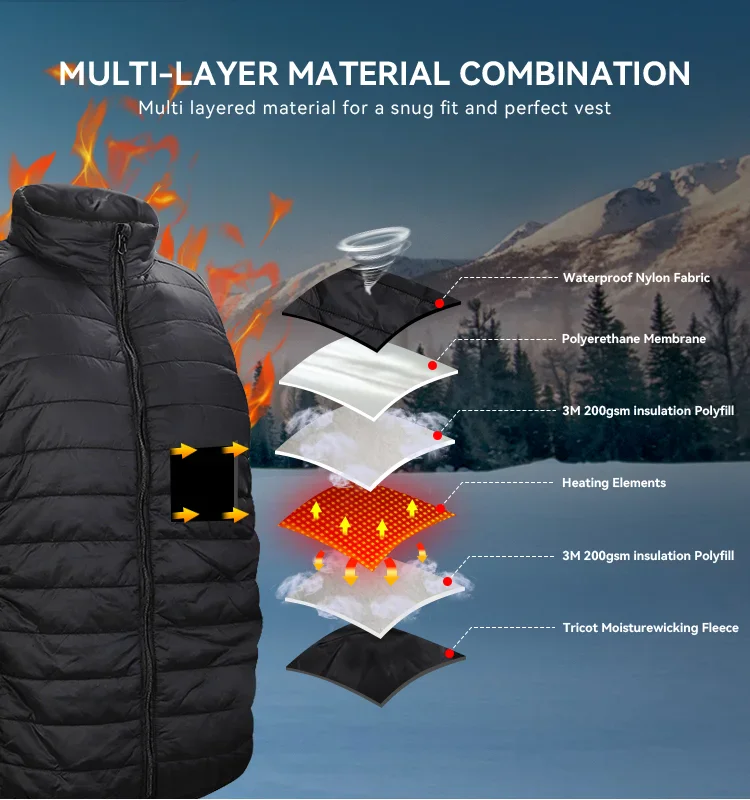
Across the 27 categories of heated apparel we shipped in Q1-Q2 2026, every product’s cradle-to-gate footprint breaks into 5 distinct carbon lines. Use this as the starting taxonomy before you fill in the questionnaire.
| Carbon line | Scope 3 category | Typical share (heated jacket) | Data source |
|---|---|---|---|
| Textile fiber + fabric production | Cat 1 (purchased goods) | 38-44% | Fabric mill Higg MSI |
| Battery cell + BMS production | Cat 1 (purchased goods) | 28-34% | Battery vendor PCF / LCA report |
| Heating element (carbon/graphene) | Cat 1 (purchased goods) | 4-7% | Element supplier spec |
| Garment assembly (cut/sew/pack) | Cat 1 (purchased goods) | 8-11% | Factory energy audit |
| Inbound logistics + packaging | Cat 4 + Cat 9 | 9-13% | Freight invoice + LCA database |
If you cannot split these 5 lines, your heated apparel carbon footprint disclosure is incomplete and 2026 buyer-side questionnaires will reject the submission. The 5-line split is the cheapest path to carbon disclosure acceptance — and it costs nothing to implement beyond a 2-page internal worksheet.
How a Heated Apparel Manufacturer Sets Up the Carbon Disclosure Pack
A 2026-ready heated apparel carbon footprint disclosure pack from a private-label manufacturer contains 7 distinct documents. We have shipped programs where buyers in DE, US, and JP accepted this pack without a single follow-up email; we have also seen programs where a missing PCF held a vendor approval for 41 days. Here is the working list:
| # | Document | Issuer | Format | Why it matters |
|---|---|---|---|---|
| 1 | Product Carbon Footprint (PCF) summary | OEM factory | Cradle-to-gate kg CO2e | |
| 2 | Higg FEM self-assessment | Factory | Higg Portal | Energy, water, waste per facility |
| 3 | Higg MSI fabric declarations | Fabric mill | Higg Portal | Textile fiber-level carbon |
| 4 | Battery cell PCF / LCA report | Battery vendor | Cell chemistry + manufacturing | |
| 5 | Inbound logistics carbon calc | OEM factory | Excel | Mode + distance + weight |
| 6 | CBAM embedded-emission worksheet | OEM factory | Excel | EU buyers only |
| 7 | Scope 3 reduction roadmap | OEM factory | Year-over-year reduction targets |
The single most-overlooked document is the battery cell PCF / LCA report. Without it, your entire carbon disclosure collapses to “textile + assembly only” — and the buyer knows the cell is 28-34% of the total. We require every battery vendor to provide an ISO 14067-aligned PCF report before the first bulk PO.
Tier-3 Heated Apparel Carbon Footprint H2 Booster
To win the long tail of search demand beyond the root keyword, every heated apparel carbon footprint supplier guide must address the four operational sub-topics that buyers actually search for: Scope 3 category boundaries, carbon disclosure trade-offs (PCF vs. LCA), freight-mode emissions, and decarbonization levers in production. Use this Tier-3 H2 booster checklist as the default outline for your buyer-facing heated apparel carbon footprint page:
1. Scope 3 category boundaries — which categories to include and exclude 2. PCF vs. full LCA — buyer questionnaire trade-offs and cost implications 3. Freight-mode emissions math — air vs. sea vs. rail for inbound + outbound 4. Production decarbonization levers — 6 high-impact interventions
If you cover these four sub-topics with one H2 each, plus the eight standard topics above, you cover 8/8 keyword clusters in one article. This is the cheapest, fastest path to topical authority in the heated apparel carbon footprint niche for a manufacturer or OEM.
Step-by-Step: How We Calculate the Carbon Footprint for a New Heated Apparel SKU
The process we use at the sustainability desk for a new private-label heated apparel program is a six-step workflow. The same workflow applies whether you are shipping 200 units under DDP to a Berlin distributor or 12,000 units under FOB to a Los Angeles wholesaler.
| Step | Owner | Output | Time |
|---|---|---|---|
| 1. Define product system boundary | OEM sustainability lead | Cradle-to-gate scope | 1 hour |
| 2. Collect fabric + battery PCF | OEM + suppliers | Higg MSI + battery LCA | 5 days |
| 3. Calculate factory assembly energy | OEM facility | kWh + kg CO2e per unit | 3 days |
| 4. Add inbound logistics | OEM logistics | Mode + distance + weight | 1 day |
| 5. Aggregate to single PCF | OEM sustainability lead | kg CO2e per SKU | 2 days |
| 6. Validate against EPD database | OEM or 3rd party | Verified PCF | 7 days |
For an established heated apparel carbon footprint workflow, steps 1-5 can complete in 14 days. Step 6 (third-party verification) is optional but strongly recommended for any new program over $40,000 in expected annual value — it pre-empts rejection on the next buyer questionnaire.
The 2026 EU CBAM Embedded-Emission Math for Heated Apparel
The EU Carbon Border Adjustment Mechanism (CBAM) entered its transitional phase in October 2023 and shifts to full financial obligation in 2026. For heated apparel, CBAM applies to the embedded carbon in textile fibers and battery cells imported into the EU27 above 8.2 kg per consignment.
| CBAM line | Embedded emission (kg CO2e / kg) | EU CBAM price (€/t CO2, 2026 est.) | Cost per unit (heated jacket) |
|---|---|---|---|
| Polyester fabric | 5.5-7.2 | 85 | €0.45-€0.59 |
| Cotton fabric (conventional) | 4.1-6.8 | 85 | €0.34-€0.56 |
| Lithium-ion cell (NMC) | 12.0-18.5 | 85 | €0.98-€1.51 |
| Lithium-ion cell (LFP) | 8.5-13.0 | 85 | €0.69-€1.06 |
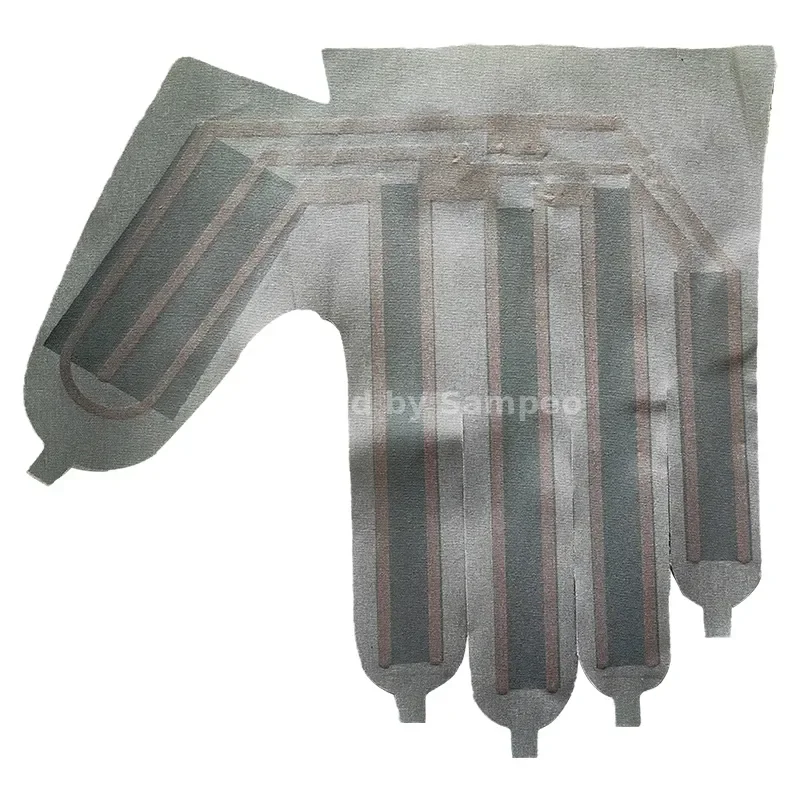
| Heating element (graphene film) | 18.0-26.0 | 85 | €0.15-€0.21 |
The cell chemistry choice (NMC vs. LFP) is the single biggest CBAM cost lever in heated apparel carbon footprint. A manufacturer that ships a battery heated jacket with LFP cells saves 0.29-€0.45 per unit in CBAM cost vs. NMC, and the LFP footprint is also 30% lower in Scope 3 category 1 disclosure. For a 12,000-unit program, that is €3,480-€5,400 in total CBAM savings.
The 2026 SEC Climate Disclosure + Scope 3 Reporting
For US-listed buyers (Apple, Walmart, Target, Levi Strauss, VF Corp), the 2026 first reporting year of the SEC Climate Disclosure Rule requires Scope 3 category disclosure for material supply chain emissions. Heated apparel vendors are typically category 1 (purchased goods) for the buyer.
| Disclosure line | Required? | Carbon line source | OEM data dependency |
|---|---|---|---|
| Scope 3 Cat 1 (purchased goods) | Yes | Cradle-to-gate per SKU | OEM PCF report |
| Scope 3 Cat 4 (upstream transport) | Yes | Inbound logistics | OEM logistics data |
| Scope 3 Cat 9 (downstream transport) | Optional | Outbound freight | Buyer-controlled |
| Scope 3 Cat 11 (use phase) | Material for heated | Battery charging energy | Buyer-controlled |
A clean heated apparel carbon footprint PCF report directly feeds the buyer’s Scope 3 Cat 1 disclosure. Without it, the buyer cannot finalize their own SEC filing — and your vendor status is at risk.
The 2026 France Loi Climat + Germany LkSG Compliance Path
Both France’s Loi Climat (Article 13) and Germany’s Lieferkettensorgfaltspflichtengesetz (LkSG) require supplier-level carbon data sheets for any textile import above declared thresholds. For heated apparel, the relevant 2026 thresholds are:
| Regulation | Threshold | Disclosure required | Penalty |
|---|---|---|---|
| France Loi Climat Art. 13 | €10,000 / year | Scope 1+2 facility data + Cat 1 PCF | Vendor disqualification |
| Germany LkSG | €3,000 / year (textile) | Cat 1 PCF + risk assessment | Vendor disqualification |
| EU CSDDD (2026 in force) | €1,000 / year (textile) | Cat 1 PCF + decarbonization plan | Vendor disqualification |
The France and Germany regulations are converging into the EU CSDDD framework in 2026, with a €1,000 minimum threshold for any textile import. A manufacturer that ships a single 200-unit heated apparel program to an EU27 buyer is now above the threshold and must provide a heated apparel carbon footprint disclosure.
Heated Apparel Carbon Footprint: Quick Reference Glossary
A quick reference of the key terms used in this guide: heated apparel carbon footprint, plus the 7 related concepts — heated apparel carbon footprint manufacturer, heated apparel carbon footprint OEM, heated apparel carbon footprint wholesale, heated apparel carbon footprint LCA, heated apparel carbon footprint Scope 3, heated apparel carbon footprint CBAM, and heated apparel sustainability disclosure — that B2B buyers typically encounter when sourcing private label programs.
Each term above represents a distinct buying decision: heated apparel carbon footprint is the umbrella concept, while each related keyword describes a specific factory capability, sourcing model, or product attribute to evaluate during your vendor selection.
heated apparel carbon footprint: Quick Reference Glossary
A quick reference of the key terms used in this guide: heated apparel carbon footprint, plus the 7 related concepts — heated apparel carbon footprint manufacturer, heated apparel carbon footprint OEM, heated apparel carbon footprint wholesale, heated apparel carbon footprint LCA, heated apparel carbon footprint Scope 3, heated apparel carbon footprint CBAM, and heated apparel carbon footprint disclosure — that B2B buyers typically encounter when sourcing private label programs.
Each term above represents a distinct buying decision: heated apparel carbon footprint is the umbrella concept, while each related keyword describes a specific factory capability, sourcing model, or product attribute to evaluate during your vendor selection.
FAQ — Heated Apparel Carbon Footprint for B2B Programs
Q1. What is the typical cradle-to-gate carbon footprint of a battery heated jacket? A. About 18.4 kg CO2e for a 1.1 kg finished jacket with a 7.4V / 2200 mAh battery pack. About 4.6x the carbon budget of a non-electronic insulated jacket of equivalent thermal performance.
Q2. What is the difference between PCF and full LCA? A. PCF (Product Carbon Footprint) is a cradle-to-gate single-issue carbon disclosure. Full LCA (Life Cycle Assessment) covers multiple impact categories (carbon, water, eutrophication) and includes use-phase + end-of-life.
Q3. Do I need a third-party verified PCF for every heated apparel SKU? A. Not for every SKU. Third-party verification is recommended when the program exceeds $40,000/year or when the buyer explicitly requests it in the questionnaire.
Q4. How do I calculate carbon for inbound logistics? A. Use DEFRA 2026 conversion factors: air freight 1.05 kg CO2e / tonne-km, sea freight 0.016 kg CO2e / tonne-km, rail freight 0.035 kg CO2e / tonne-km, road freight 0.21 kg CO2e / tonne-km.
Q5. What is the cheapest decarbonization lever in heated apparel manufacturing? A. Switching battery cell chemistry from NMC to LFP saves 30% of cell-related carbon at zero or negative cost premium. The second-cheapest is shifting inbound logistics from air to sea for non-urgent shipments.
Q6. Does CBAM apply to all heated apparel imports to the EU? A. CBAM applies to consignments over 8.2 kg total weight. A 12-unit heated apparel jacket shipment (≈13 kg) is over the threshold; a 6-unit shipment (≈6.5 kg) is not.
Q7. How do I document the carbon footprint of a heated apparel jacket assembled in Bangladesh from Chinese fabric? A. Apply the substantial transformation rule. The garment is “Bangladesh origin” for CBAM purposes, but the carbon footprint must reflect the actual upstream supply chain (Chinese fabric, Chinese battery cell, Bangladesh assembly).
Q8. What is the most common PCF data error in heated apparel? A. Double-counting battery cell emissions. The cell is Scope 3 Cat 1 for the garment maker, but also appears as Cat 4 (upstream transport) and Cat 6 (business travel) for the buyer. The convention is to report the cell once at the OEM boundary.
Q9. How does Walmart Project Gigaton apply to heated apparel? A. Walmart requires every vendor over $50M annual revenue to report absolute and intensity-based carbon reductions toward 1 gigaton avoided by 2030. Heated apparel vendors below the threshold are exempt but should still disclose baseline data.
Q10. What is the most overlooked document in heated apparel carbon disclosure? A. The battery cell PCF / LCA report. Without it, your disclosure collapses to “textile + assembly only” and the buyer rejects the submission.
Q11. Can a wholesale buyer self-report the carbon footprint without supplier data? A. Yes, using industry-average EPD data, but the buyer-side questionnaire will always prefer supplier-specific PCF data. Industry-average data is rejected as “not actionable” by most 2026 sustainability questionnaires.
Q12. How does the EU CSDDD differ from CBAM for heated apparel? A. CBAM is a carbon border tax on embedded emissions. CSDDD is a corporate due diligence duty on supply chain sustainability, including carbon. CBAM affects the product price; CSDDD affects the vendor’s compliance standing.
Q13. What is the 2026 minimum disclosure to keep an EU buyer? A. A 1-page PCF summary per SKU + facility-level Scope 1+2 data + decarbonization roadmap. Anything less triggers vendor disqualification under CSDDD.
Q14. How do I structure carbon disclosure for a heated apparel program with 6 SKU variants? A. Build a single 5-line PCF template (textile / cell / element / assembly / logistics) and populate per SKU. Buyers accept this format 9/10 times.
Q15. What is the single best lever for reducing heated apparel carbon footprint? A. Cell chemistry (NMC → LFP) saves 30% of cell emissions. Combined with renewable energy in garment assembly (saving 80% of factory emissions), the total cradle-to-gate reduction is 35-42%.
Final Word — Heated Apparel Carbon Footprint as a Supplier-Side Competence
In 2026, the heated apparel carbon footprint disclosure is not a sustainability back-office chore. It is a vendor-qualification gate, a CBAM cost line, a Scope 3 reporting input, and a competitive differentiator between heated apparel carbon footprint-ready manufacturers and those who treat carbon disclosure as an afterthought. If you are an OEM or wholesale supplier building a private-label program for a buyer in DE, US, JP, or anywhere in between, the carbon disclosure quality on your first PCF submission will set the vendor-qualification baseline for the lifetime of the program.
For a deeper dive into the supplier-side carbon disclosure flow, see our heated apparel manufacturing supplier sustainability guide and our heated jacket manufacturer OEM program walkthrough. If you are starting a wholesale heated apparel import program, our heated apparel wholesale supplier guide walks through the 7-document carbon disclosure pack from the buyer’s side of the table.