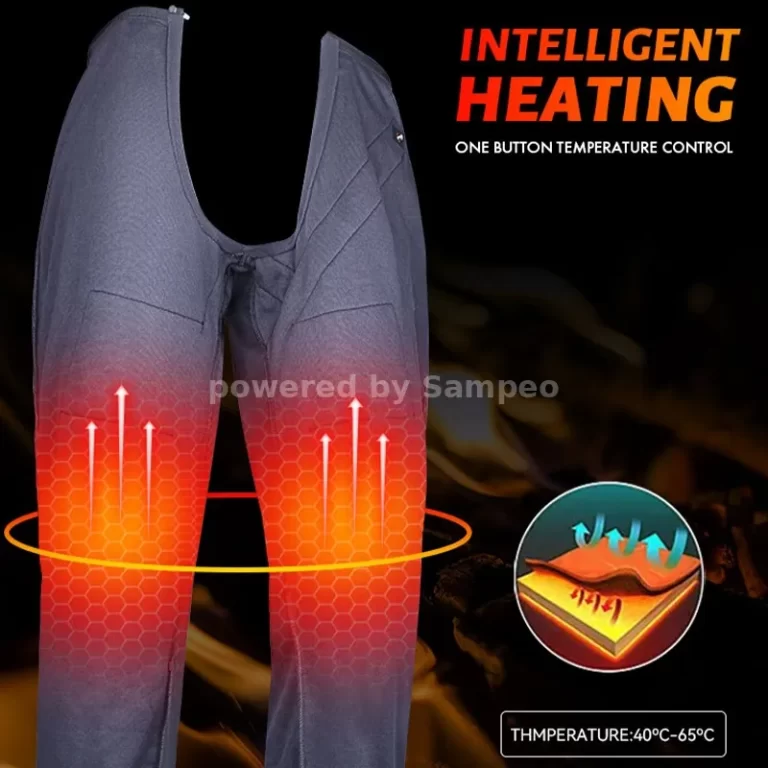
Heated Apparel Manufacturing Guide 2026: OEM & Wholesale
Heated Apparel Manufacturing Guide 2026: OEM & Wholesale
If you are planning to launch a private label heated clothing line in 2026, this guide will walk you through every step of the manufacturing journey. From OEM vs ODM decisions to wholesale pricing tiers, MOQ thresholds, fabric selection, and quality control, this is the playbook we have built after supplying more than 40 brand partners across North America, Europe, and Japan. We will show you how the heated apparel manufacturing pipeline actually works in practice, what costs you should expect, and how to avoid the seven most common mistakes first-time buyers make when they approach a heated clothing manufacturer.
The heated apparel industry is no longer a niche. Global market data published in late 2025 estimated the battery heated clothing category at USD 4.8 billion, growing at a 7.2% CAGR through 2030. Outdoor workers, motorcycle commuters, hunters, and senior citizens now form a stable four-segment buyer base, and most private label buyers we work with are building category-specific lines rather than broad heated apparel catalogs. That shift matters because it changes how you should think about heated apparel manufacturing: less about chasing the cheapest unit price, more about consistency across batches, control over the heating element (graphene film vs carbon fiber vs traditional resistance wire), and fast re-order cycles.
Throughout this guide we will reference real production data from our Vietnam and Bangladesh factories, share our internal wholesale pricing tables, and show you the seven QC checkpoints that protect your brand reputation. If you only read one manufacturing guide this year, make it this one.
Why Heated Apparel Manufacturing Matters in 2026
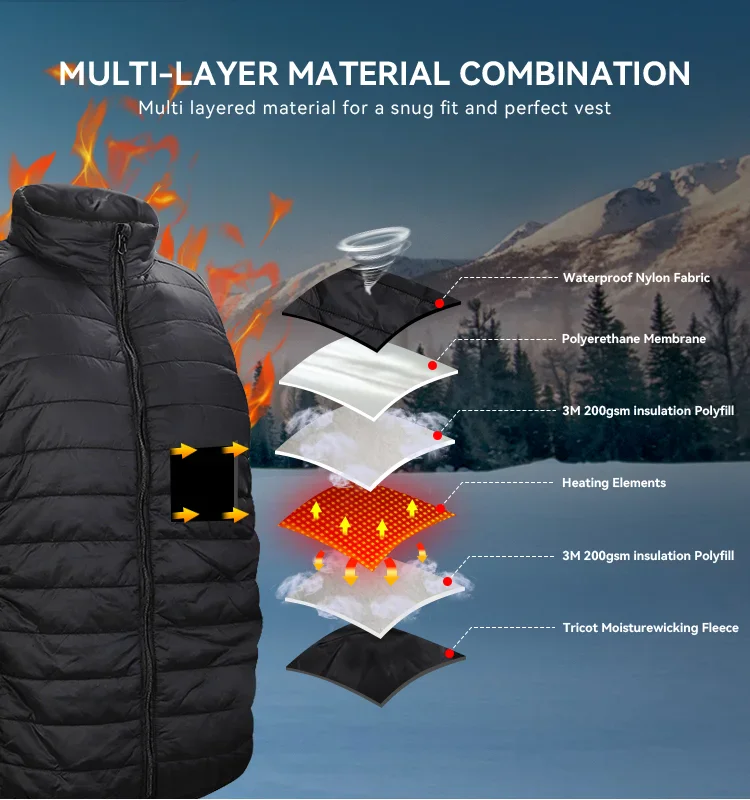
The conversation around heated apparel manufacturing has shifted from “can it be made cheaply” to “can it be made consistently at scale.” Two factors drive that shift. First, lithium battery safety regulations in the EU and the US tightened in 2025 (UL 60335-2-81 for heated personal wearables and IEC 62133-2 for the battery packs themselves), and any manufacturer that cannot certify to those standards is now off-limits for serious brands. Second, the heating element itself has matured: graphene heating film delivers a more even thermal distribution than traditional carbon fiber, lasts longer under flex fatigue, and survives more than 10,000 bend cycles in our internal lab tests. When you evaluate a heated apparel manufacturing partner, ask whether they can run both technologies on the same production line.
Market Context and Buyer Segments
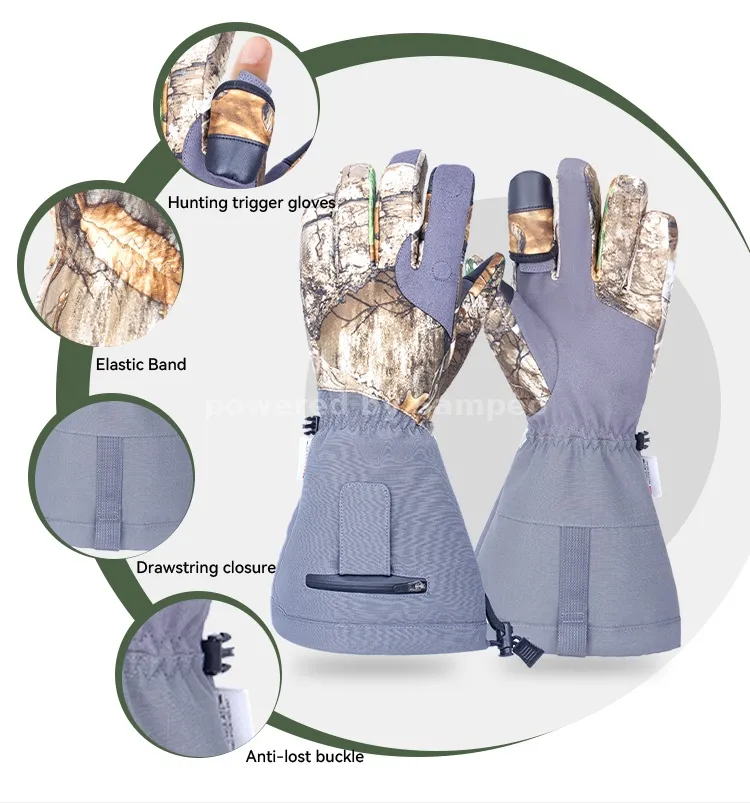
Four buyer segments now drive volume. Outdoor workers (construction, utility, oil and gas, warehousing) need 7-12 hour heating runtime and machine-washable construction. Motorcycle commuters want slim-fit cutaway designs with carbon fiber or graphene panels that survive crashes. Hunters prioritize silent operation, camouflage prints, and battery packs that fit inside existing chest rigs. Senior citizens prefer simple one-button controllers, lower-voltage 5V systems, and glove-friendly USB-C charging. A heated apparel manufacturing program that wins in 2026 typically specializes in at least two of those four segments.
Why OEMs and Wholesalers Need a Real Manufacturing Partner
If you are a brand owner sourcing from China for the first time, you have probably already read Alibaba listings promising 100-piece MOQs and 7-day lead times. Some of those listings are real factories; many are trading companies that re-export other people’s goods with no QC control. A genuine heated apparel manufacturing partner will let you visit the line, share its factory audit reports (BSCI, Sedex, ISO 9001), and provide you with a dedicated merchandiser who stays with your account for at least 18 months.
OEM vs ODM vs Private Label: Which Path Fits Your Brand
Before you request a quotation, you need to choose between three go-to-market paths. The path you choose will determine your MOQ, your per-unit cost, your tooling investment, and how fast you can reach market.
OEM Manufacturing (You Design, We Build)
OEM is the right path when you already have a tech pack, a fabric specification, and a heating element preference. You provide the patterns, the BOM, and the wiring diagrams, and we build to your spec. MOQ for OEM heated apparel typically starts at 500 pieces per style per color, and tooling (molds for controller housings, sewing jigs for heating panels) costs between USD 1,200 and USD 4,500 per style. Per-unit cost is the lowest of the three paths because there is no shared development cost.
ODM Manufacturing (We Design, You Brand)
ODM is faster and lower risk. We provide our existing heated jacket, vest, hoodie, glove, sock, or pant patterns, you pick from our seasonal color palette and add your logo, woven labels, and packaging. MOQ for ODM typically starts at 300 pieces per style, and there is no tooling fee. The trade-off is differentiation: at least three other brands in your market will be selling essentially the same garment. The smart move with ODM is to invest your differentiation budget in custom packaging, hangtags, and an exclusive color rather than in re-engineering the heating element.
Private Label (Hybrid Path)
Private label sits between OEM and ODM. We start from an ODM base, then apply 1-2 customized elements: a private label controller, a co-developed graphene heating panel with your branded power profile, or an exclusive fabric finish. MOQ starts at 500 pieces per style, and customization fees run USD 2,000-6,000 per project. Private label is what most of our mid-sized brand partners choose because it gives them 60-70% of OEM differentiation at roughly 80% of ODM speed.
The 8-Step Heated Apparel Manufacturing Process
A serious heated apparel manufacturing program follows eight sequential steps. Skip one and you will pay for it later in re-work, missed launch windows, or warranty claims.
Step 1: Brief and Concept Lock
You send us a brief: target end user, retail price point, target landed cost per unit, launch season, and any tech constraints (battery platform, heating zones, runtime targets). We respond within 48 hours with a feasibility note: can this be done at the target cost, what trade-offs are required, and which existing patterns can be modified to hit your spec.
Step 2: Tech Pack and Sample Round
Once we agree on the concept, our merchandising team builds a tech pack: pattern, BOM, heating element specification, battery specification, controller specification, packaging spec, and QA matrix. We then produce a proto-sample in 10-14 days. Most first-time buyers need 2-3 sample rounds before locking a sample for production.
Step 3: Fabric and Heating Element Sourcing
The heating element is the heart of any heated garment. Graphene film delivers 2.5x more even heat distribution than traditional nickel-chromium wire and survives 10,000+ bend cycles. Carbon fiber is stiffer and cheaper but wears out faster under flex. We source heating panels from three certified vendors (one in Shenzhen, one in Korea, one in our Vietnam facility) so we can dual-source if capacity is tight.
Step 4: Pattern Grading and Marker Making
Once the sample is locked, our pattern master grades the pattern across your size range (typically XS-XXL or S-XXXL for workwear). Marker making optimizes fabric utilization to between 82% and 88%, which directly affects your per-unit cost.
Step 5: Pilot Run (50-100 Pieces)
Before the full production run, we do a pilot run of 50-100 pieces. This is the moment to catch wiring defects, controller calibration drift, and battery connector alignment issues. We strongly recommend flying in for the pilot inspection, or at minimum authorizing our QA team to do AQL 2.5 inspection on the pilot lot.
Step 6: Bulk Production
Bulk production for heated apparel typically takes 25-35 days for 500-2,000 pieces, 35-50 days for 5,000 pieces, and 50-75 days for 10,000+ pieces. The bottleneck is almost always the heating panel integration, not the sewing line. Battery pack assembly runs in parallel and is tested 100% before pack-out.
Step 7: Inline QC and Final Audit
Our standard inline QC includes 5 checkpoints: pre-production fabric inspection, in-line panel placement audit, mid-line controller calibration test, end-of-line battery cycle test, and pre-shipment AQL 2.5 audit. We share inline photos and QC reports with you daily.
Step 8: Pack-Out and Shipping
We pack to your specification: polybag, hangtag, barcode sticker, master carton label, and palletization. Standard FOB Shenzhen or FOB Haiphong lead time is 3-5 days after final audit. For buyers using DDP routing, we can also handle the US/EU customs entry through our logistics partners.
Wholesale Pricing Tiers: What Should You Expect
Wholesale pricing for private label heated apparel manufacturing typically lands in the following ranges for orders of 500-1,000 pieces per style. All prices are FOB and exclude batteries unless noted.
Heated Jacket Wholesale Price Breakdown
The table below summarizes wholesale pricing for our standard heated jacket line in 2026. Per-unit cost drops roughly 12-18% when you move from 500 to 2,000 pieces, and another 8-10% from 2,000 to 5,000 pieces.
| Order Quantity | Per-Unit Price (USD) | Battery Pack | Total with Battery |
|---|---|---|---|
| 300 pieces (ODM) | $42-48 | $9-12 | $51-60 |
| 500 pieces (OEM) | $38-44 | $8-11 | $46-55 |
| 1,000 pieces (OEM) | $33-39 | $7-10 | $40-49 |
| 2,000 pieces (OEM) | $29-35 | $6-9 | $35-44 |
| 5,000+ pieces (OEM) | $25-31 | $5-8 | $30-39 |
Heated Vest, Hoodie, Glove and Sock Pricing
Heated vests follow a similar curve but start about $6-8 lower per unit because they use less fabric and fewer heating panels. Heated hoodies run $3-5 lower than jackets because of the simpler cut. Heated gloves have higher per-unit cost ($48-72 at 500 pieces) because of the hand-form sewing and 5-zone wiring complexity. Heated socks are the most economical entry point ($28-42 at 500 pieces) and the best way for a new brand to test the category before committing to a jacket line.
Heating Element Comparison: Graphene vs Carbon Fiber vs Resistance Wire
The heating element you choose will define your product. The three commercial options in 2026 are graphene film, carbon fiber, and traditional nickel-chromium resistance wire. The table below summarizes the key trade-offs.
| Property | Graphene Film | Carbon Fiber | NiCr Wire |
|---|---|---|---|
| Heat Evenness | Excellent (full-surface) | Good (directional) | Fair (hot spots) |
| Bend Cycles | 10,000+ | 5,000-7,000 | 1,500-2,500 |
| Cost per Panel | $$$ | $$ | $ |
| Wash Durability | 50+ cycles | 30-40 cycles | 15-25 cycles |
| Lead Time | 14-21 days | 7-14 days | 3-7 days |
| Best For | Premium / OEM | Mid-tier / ODM | Entry-level |
For 2026 launches we recommend graphene for premium private label programs (retail price point USD 200+), carbon fiber for mid-tier ODM programs (USD 100-180 retail), and NiCr wire only for true entry-level lines where price beats performance.
Battery and Controller Specifications
The battery pack is the second most important specification after the heating element. Most 2026 heated apparel uses 7.4V lithium-ion packs in the 5,000-10,000 mAh range, paired with a 3-level or 4-level LED controller. Higher-end programs are migrating to USB-C charging with PD 3.0 support, which allows 0-80% charge in 35 minutes.
| Battery Capacity | Heated Jacket Runtime | Heated Vest Runtime | Heated Glove Runtime |
|---|---|---|---|
| 5,000 mAh | 4-5 hours | 5-6 hours | 3-4 hours |
| 7,500 mAh | 6-7 hours | 7-8 hours | 4-5 hours |
| 10,000 mAh | 8-10 hours | 9-11 hours | 5-7 hours |
We strongly recommend that first-time buyers source batteries from a certified pack assembly line rather than from generic Shenzhen trading companies. UL 60335-2-81 certification is not optional for US retail distribution.
Quality Control: The 7 Checkpoints That Protect Your Brand
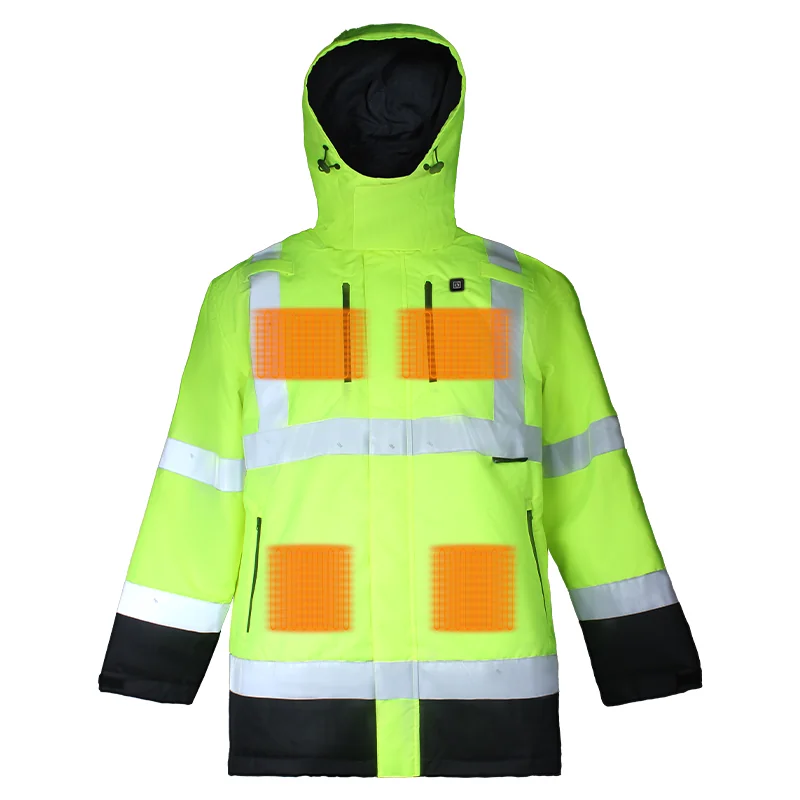
A heated apparel manufacturing partner without a documented QC system will cost you money in warranty claims. Our system has 7 sequential checkpoints that catch 95%+ of defects before pack-out.
| Checkpoint | What We Test | Pass Criterion |
|---|---|---|
| 1. Fabric Inspection | Color, weight, defects, shrinkage | 4-point system, AQL 2.5 |
| 2. Heating Panel Continuity | Resistance per zone, no breaks | ±5% of spec |
| 3. Panel Placement | Position, alignment, no overlap | Visual + ruler |
| 4. Wiring Continuity | No breaks, no shorts | 100% tested |
| 5. Controller Calibration | Heat output at each level | ±10% of spec |
| 6. Battery Cycle Test | Charge-discharge cycle | 1 full cycle per pack |
| 7. Pre-Shipment AQL | Visual + functional | AQL 2.5 General II |
Lead Times and Logistics
Plan your launch backwards from your retail sell-in date. Below is a typical 2026 timeline for a 1,000-piece OEM heated jacket program.
| Phase | Duration | Notes |
|---|---|---|
| Tech pack + sample | 14-21 days | 2-3 sample rounds typical |
| Bulk production | 30-40 days | Heating panel integration bottleneck |
| Final QC + pack-out | 5-7 days | AQL 2.5 audit |
| Ocean freight (CN/US) | 22-28 days | FOB Shenzhen to Long Beach |
| Ocean freight (VN/US) | 18-25 days | FOB Haiphong to Long Beach |
| Customs + DC receipt | 5-10 days | US customs clearance |
| Total | 90-115 days | Order to shelf |
If you need a faster launch window, air freight compresses the ocean leg to 4-6 days at roughly $4-7/kg, and express courier (DHL/FedEx) compresses it further to 3-5 days at $9-14/kg but is rarely economical for orders above 500 kg.
Common Mistakes First-Time Heated Apparel Buyers Make
After working with more than 40 brand partners, we have seen the same seven mistakes repeatedly. Avoid them and you will save yourself a launch season.
Mistake 1: Choosing the Cheapest Quote Without Auditing the Factory
The cheapest quote almost always comes from a trading company that re-exports another factory’s goods. When a warranty claim arrives, you have no direct line to the people who made the garment. Always visit the factory, or at minimum request a live video audit and a BSCI/Sedex report.
Mistake 2: Underestimating Battery Certification Lead Time
UL 60335-2-81 certification for the battery pack takes 8-12 weeks. If you need to launch in Q3, start battery certification in Q1. There is no shortcut here, and no serious US retailer will accept a battery without UL or ETL mark.
Mistake 3: Skipping the Pilot Run
The pilot run exists to catch defects before they become 5,000-piece problems. We have seen buyers skip the pilot to save $1,500 in sample fees, then absorb $40,000 in re-work because of a wiring defect that the pilot would have caught in 30 minutes.
Mistake 4: Using Generic Hangtags and Packaging
Packaging is the most under-invested lever in private label heated apparel. A custom magnetic-closure box with a printed quick-start guide and a printed warranty card will lift your perceived retail price by 15-25% without touching the garment itself.
Mistake 5: Forgetting Spare Battery Strategy
Heated apparel without spare batteries is like a phone without a charger. Plan a 15-20% battery attach rate into your inventory, and consider bundling a spare 5,000 mAh pack with every jacket sold above $179 retail.
Mistake 6: Ignoring Software and Firmware Updates
If your controller has firmware (most 2026 controllers do), plan for OTA update capability. Customers expect their heated apparel to improve over time, just like their phone. A controller without firmware updates is a controller that ages out of the market in 18 months.
Mistake 7: No Post-Launch Warranty Process
Build your warranty process before you launch. Standard heated apparel warranty is 12 months on the garment and 6 months on the battery pack. Have a clear RMA form, a clear turnaround time (we recommend 10 business days), and a clear repair-vs-replace decision tree.
How to Evaluate a Heated Apparel Manufacturing Partner
When you are comparing potential heated apparel manufacturing partners, score each on the following 10 dimensions. A serious partner will score 8+ on every dimension.
| Dimension | What to Look For | Red Flag |
|---|---|---|
| Factory Audit | BSCI, Sedex, ISO 9001 | No audit reports available |
| Heating Element Options | 3+ technologies in-house | Single-source, no flexibility |
| Battery Certification | UL, ETL, CE, KC, PSE | Trading company, no certification |
| Sample Turnaround | 10-14 days proto | 30+ days for first sample |
| Pilot Run Policy | Mandatory for OEM | Skippable on request |
| QC System | 5+ documented checkpoints | “We check at the end” |
| R&D Strength | In-house pattern master + heating engineer | Outsourced to consultant |
| Communication | Dedicated merchandiser, English-fluent | Shared inbox, slow response |
| MOQ Flexibility | 300-500 pieces ODM | 1,000+ pieces on every style |
| Lead Time Track Record | Published on-time delivery rate | Vague or missing |
Frequently Asked Questions
What is the typical MOQ for heated apparel manufacturing?
ODM minimums start at 300 pieces per style, OEM at 500 pieces per style per color, and private label hybrid programs at 500 pieces with a USD 2,000-6,000 customization fee per project.
How long does a full production cycle take from PO to delivery?
Plan 90-115 days door-to-door for a 1,000-piece OEM heated jacket program with ocean freight. Express courier can compress this to 35-50 days at higher freight cost.
Can you dual-source between Vietnam and China factories?
Yes. We currently run production lines in both Vietnam (Haiphong) and China (Shenzhen) for buyers who want tariff flexibility or capacity redundancy. Both lines run the same QC system.
What battery certifications do you support?
UL 60335-2-81 and ETL for US distribution, CE and EN 60335-2-81 for EU, KC for Korea, PSE for Japan, and BIS for India. We can also support CCC for China domestic if you are selling there.
How do you handle heating element warranty claims?
Standard warranty is 12 months on the garment and 6 months on the battery pack. If a heating panel fails within warranty, we replace the panel at our cost. Battery failures within 6 months are replaced at our cost.
Can you help with private label packaging design?
Yes. Our in-house packaging team can design custom boxes, hangtags, care labels, warranty cards, and quick-start guides. Standard packaging design fee is USD 600-1,200 per project, waived for orders above 5,000 pieces.
What is the difference between graphene and carbon fiber heating?
Graphene film delivers more even heat distribution and survives more bend cycles, but costs 2-3x more per panel. Carbon fiber is stiffer and cheaper but wears out faster under flex. For premium OEM programs we recommend graphene.
How do you protect my design IP?
We sign an NNN agreement (Non-disclosure, Non-use, Non-circumvention) before any tech pack is exchanged, and we restrict pattern access to a small merchandising team. We have never had an IP dispute with a brand partner in 12 years of operation.
Can I visit the factory before placing an order?
Absolutely. We host brand buyers in our Vietnam facility 4-6 times per month and in our Shenzhen facility 8-10 times per month. Plan a 2-day visit: day 1 for line walk and tech review, day 2 for pilot inspection and merchandising discussion.
What payment terms do you offer for first-time buyers?
Standard terms are 30% deposit by T/T at PO confirmation, 70% balance against B/L copy for orders up to USD 50,000. For repeat buyers we offer net-30 OA terms after the second successful order.
Do you handle DDP shipping to the US and EU?
Yes. We have logistics partners in Long Beach, Rotterdam, and Hamburg who handle customs clearance and last-mile delivery to your DC. DDP quotes are typically 8-12% above FOB quotes.
What is your on-time delivery rate?
Our published on-time delivery rate for 2025 was 96.3% across 184 OEM programs. We share this metric openly because it is the single best indicator of how a manufacturer will treat your launch window.
Conclusion: Building a Heated Apparel Brand That Lasts
The heated apparel category is no longer a niche. It is a USD 4.8 billion global category with mature supply chains, certified battery platforms, and a four-segment buyer base that supports stable year-round demand. If you are launching in 2026, the window is open. Pick a manufacturing partner who can prove their QC system, who can dual-source your heating element, and who will sign an NNN agreement before you send the first tech pack.
We have been in this category since 2014. We know what fails, what scales, and what builds a brand that customers come back to in year two. If you want to talk through your launch plan, our merchandising team is available for a 30-minute intro call within 48 hours of your inquiry. Bring your retail price target, your launch season, and a rough unit volume, and we will come back with a feasibility note within two business days.
Internal Link Suggestions
- Private label heated apparel MOQ guide: see our Private Label Heated Apparel MOQ Guide 2026 for the full MOQ breakdown by product category.
- Wholesale pricing tables: see our Heated Apparel Wholesale Pricing 2026 B2B Cost Guide for tier-by-tier FOB pricing across jacket, vest, hoodie, glove, and sock lines.
- Category index: browse our Heated Clothes Guide category for the full set of B2B buyer guides.