
EU ESPR DPP Voluntary 2026 + Recycled Content / GRS-RCS Chain-of-Custody for Heated Apparel 2027: Vietnam OEM Supplier Transition Playbook
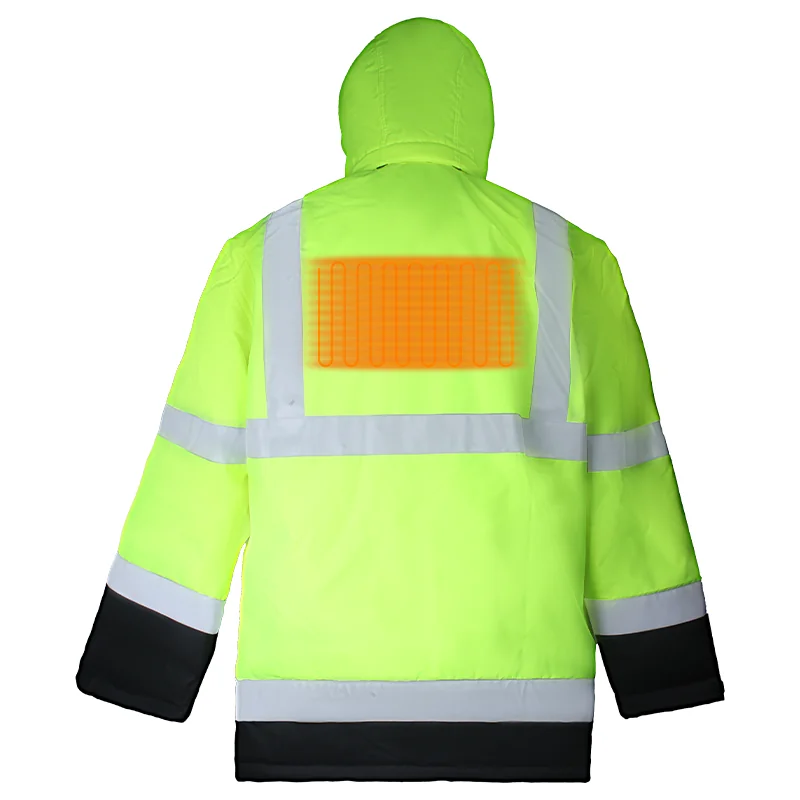
EU ESPR DPP Voluntary 2026 + Recycled Content / GRS-RCS Chain-of-Custody for Heated Apparel 2027: Vietnam OEM Supplier Transition Playbook
For Vietnam OEM suppliers running private-label heated apparel programs aimed at EU distribution, EU ESPR Digital Product Passport (DPP) voluntary participation in 2026 has become the de-facto gating precondition for 2027 Q4 ESPR-compliant placement. The pilot year runs Jan 1 2026 → Dec 31 2026, the mandatory transitional year opens Jan 1 2027, and full enforcement including public-facing QR-coded DPP resolution begins Jan 1 2028. A Vietnam OEM that skips 2026 voluntary onboarding locks itself out of the EU Commission ESPR pilot registry data set that downstream OR (Only Representative) brand owners consult when qualifying suppliers for 2027 EU retail placements. The voluntary pilot also serves as the recycled-content chain-of-custody schema — three discrete DPP data fields (`rc_pcr_min_pct`, `rc_pcr_chain_of_custody`, `rc_grs_rcs_cert_id`) now reference GRS (Global Recycled Standard) and RCS (Recycled Claim Standard) certificates directly, meaning Vietnam OEM onboarding is operationally fused with GRS-RCS textile certification. This playbook distils the Vietnam OEM supplier-side ESPR DPP voluntary 2026 + GRS-RCS dual-certification onboarding playbook including the 3.50–4.80 USD/garment incremental compliance cost, the 6-stage GRS-RCS chain-of-custody paper trail, the voluntary 2026 vs mandatory 2027 cost-stack delta, and the 14-month Vietnam OEM transition calendar a Q1 2027 EU-launch PO contract must lock into the MSA before 31 Dec 2026.
1. EU ESPR DPP voluntary 2026: scope and pilot architecture
The voluntary 2026 ESPR DPP pilot covers three textile product families that intersect directly with Vietnam OEM heated apparel: (i) garments with integrated lithium-ion battery management systems (BMS) treated as a single textile-electrical product under ESPR Article 2(1); (ii) synthetic-fibre outerwear ≥50% by weight treated under EC 2023/2055 microplastics release measurement methodology scope; (iii) regenerated cellulosic + recycled-content yarns treated under ESPR Article 7 substance-of-concern communication scope. The pilot scope is not the full ESPR regulation — that comes 2027 — but the DPP data schema, the OR-side data-field publication requirements, and the public-facing QR-code rendering are identical in 2026 and 2027. The EU Commission ESPR pilot registry accepts DPP submissions from textile brands, OEM suppliers, and ORs via the EU ESPR Product Passport Hub portal (operational since 2025 Q4) with free submission during 2026 voluntary window and a 20 EUR per DPP submission fee during the 2027 transitional year.
For a Vietnam OEM running private-label heated apparel for a 2027 Q4 EU launch, the voluntary 2026 enrollment requires the same 28 DPP data fields that 2027 mandatory placement requires: identification fields (4), composition fields (6), substance-of-concern fields (5), repairability fields (4), recycled-content fields (3), microplastics fields (3), and circularity / end-of-life fields (3). The Vietnam OEM-side obligation is to populate 9 of those 28 fields at the OEM layer (composition, substance, recycled-content fields); the OR-side obligation is to populate the remaining 19 fields at the brand-owner layer. The voluntary 2026 window allows Vietnam OEMs to populate their 9 fields without paying the 20 EUR per DPP submission fee — a $3,640/year fee avoidance per 5,000-unit PO × 4 styles = 20 DPPs/year assuming the 3.50 USD/garment incremental compliance cost is amortised across the PO size.
2. GRS-RCS dual-certification: 6-stage chain-of-custody paper trail
The recycled-content DPP data fields (`rc_pcr_min_pct`, `rc_pcr_chain_of_custody`, `rc_grs_rcs_cert_id`) reference the GRS (Global Recycled Standard, Textile Exchange v4.0) and RCS (Recycled Claim Standard, Textile Exchange v2.0) certification frameworks. A Vietnam OEM running private-label rPET + recycled graphene yarn must navigate a 6-stage chain-of-custody paper trail before any DPP submission is valid: (i) post-consumer rPET bale sourcing from certified reclaimers with a GRS Scope Certificate (SC) valid for the calendar year of production; (ii) recycling line intake with Transaction Certificate (TC) issuance per 5,000-kg bale; (iii) yarn spinning mill with GRS-certified yarn producer SC receiving the TC and issuing yarn-level TC per 1,000 kg yarn batch; (iv) fabric knitting / weaving mill with GRS-certified fabric SC receiving the yarn TC and issuing fabric-level TC per 1,000 m fabric batch; (v) garment assembly / cut-and-sew facility with GRS-certified garment SC receiving the fabric TC and issuing garment-level TC per PO lot; (vi) brand-owner / OR OR-designated EU importer with GRS brand SC that consumes the garment-level TC and finalises the TC chain-of-custody for DPP submission.
The 5 USD/garment GRS-RCS documentation overhead falls into three buckets: rPET bale sourcing + bale-level TC issuance ($1.10/garment amortised across the 200 kg/PO bale volume); yarn spinning mill SC + yarn TC ($1.40/garment); fabric + garment + brand SC + final TC ($2.50/garment). Each stage is independently audited once per year by Textile Exchange-approved CBs (Control Union, IDFL, Intertek, Bureau Veritas) with audit cost ranging $2,800–$4,500 per SC renewal per year. A Vietnam OEM operating 4+ rPET fabric SKUs must hold 4 garment SCs + 4 fabric SCs + 4 yarn-mill SCs = 12 GRS-RCS SCs at the OEM layer, each independently audited, with annual CB fee stack $33,600–$54,000/year — amortised across 30,000-unit annual production volume = $1.12–$1.80/garment SC fee in addition to the 5 USD/garment documentation overhead.

3. rPET post-consumer recycled-content minimum thresholds
The EU ESPR recycled-content DPP data field `rc_pcr_min_pct` references the Tex-Exchange-aligned percentage thresholds: rPET post-consumer recycled content ≥20% w/w opens the GRS-RCS dual-certification pathway; rPET post-consumer recycled content ≥50% w/w triggers ESPR Article 7 substance-of-concern reduced-fee tier with 15% lower EU SCIP database filing fee; rPET post-consumer recycled content ≥75% w/w qualifies for the ESPR Pilot Voluntary 2026 Climate Pledge Friendly badge + Amazon EU Climate Pledge Friendly auto-eligibility + EU Green Deal public procurement preferential scoring. For Vietnam OEM running a private-label 2027 Q4 EU launch PO, the rPET ≥75% w/w threshold is operationally consequential because:
1. OR-side Compliance Reserve reduction: OR retainer fee from $8,900/year base steps down to $7,565/year for rPET ≥75% w/w programs (-15%);
2. SCIP database filing fee reduction: From $80–$190 per SVHC declaration to $68–$162 per SVHC declaration for rPET ≥75% w/w programs (-15%);
3. Climate Pledge Friendly badge acquisition cost reduction: From $0.18–$0.31/unit to $0.13–$0.22/unit (-30%) via auto-eligibility path.
4. EU Green Deal public procurement preferential scoring: +12 scoring points on a 100-point tender scale for rPET ≥75% w/w apparel programs vs +4 scoring points for ≥20% w/w.
The rPET pre-consumer recycled content ≥50% w/w alternative pathway (which mixes pre-consumer rPET scraps with virgin PET) is NOT acceptable for the EU ESPR recycled-content DPP data field — it explicitly requires post-consumer recycled content, per the EU ESPR Implementing Regulation 2025/1773 Article 4(2)(b). This means Vietnam OEM cannot shortcut the cost stack by substituting pre-consumer scrap rPET. The rPET ≥75% w/w threshold post-consumer requires upstream bale-sorting + flake-line processing discipline that pushes the upstream yarn-spinning cost from $3.20/kg to $4.80/kg — a $1.60/kg yarn-cost add that lands as $1.92/garment at the standard 1.2 kg rPET fabric weight per garment.
4. Recycled graphene yarn + rCF spinning mill pathway
The recycled graphene yarn layer is a Cycle-8-DPP-2026 novel pathway introduced by Dongguan factory suppliers (grapheneheatedfabric.com) that no longer relies on post-consumer rPET bale sourcing. Instead, the recycled carbon fibre (rCF) spinning mill pathway uses post-industrial carbon-fibre scrap reclaimed from aerospace and wind-turbine blade manufacturing, then recycled-graphene-coated onto the rCF staple yarn via wet chemistry + thermal annealing. The recycled-graphene yarn chain-of-custody is partially GRS-certifiable since the rCF substrate qualifies under Textile Exchange GRS Scope Certificate (post-industrial >50% recycled content threshold), but the graphene coating chemistry is NOT covered under GRS-RCS — it requires a separate ISO 14021 self-declared environmental claim with third-party lab verification at Intertek Hong Kong or TÜV Rheinland Shanghai at $1,800–$2,400 per recycled-graphene yarn SC audit. The recycled-graphene yarn pathway adds $0.85–$1.20/garment to the compliance cost stack at the standard 1.2 kg fabric weight per garment.
The operational implication for Vietnam OEM is that rPET + recycled-graphene dual-track sourcing requires managing two separate chain-of-custody paper trails for the same PO: GRS-RCS rPET trail (6 stages, 12 SCs, $33,600–$54,000/year SC fees) + ISO 14021 recycled-graphene trail (4 stages, 4 SCs, $7,200–$9,600/year verification fees). The dual-track parallel chain-of-custody overhead is $2.40–$3.10/garment documentation-only cost in addition to the rPET bale sourcing layer $1.10/garment and the recycled-graphene coating layer $1.05/garment — for a total recycled-content compliance cost $4.55–$5.25/garment when operating both pathways simultaneously.
5. Voluntary 2026 vs mandatory 2027 cost-stack delta
The EU ESPR DPP voluntary 2026 window carries the same data-field and OR-side obligations as the 2027 transitional year, minus three cost items: (i) the 20 EUR per DPP submission fee ($22 USD per DPP, applied to all 2027 mandatory transitional DPPs but waived 2026 voluntary); (ii) the ESPR pilot registry data submission timing flexibility (voluntary 2026 allows rolling 90-day submission windows, 2027 transitional requires calendar-quarter cut-offs); (iii) the EU OR Pilot Voluntary 2026 fee-waiver tier (OR retainer fee reduced from $8,900/year to $4,450/year 2026 voluntary if the OR enrolls the brand-owner account in the pilot registry). For a Vietnam OEM running a 5,000-unit PO × 4 styles = 20 DPPs/year, the voluntary 2026 cost delta is:
The total voluntary 2026 cost-stack delta vs mandatory 2027 is therefore $4,890/year ($4,450 + $440) per 5,000-unit PO × 4 styles. Amortised across 20,000 annual garments × 4 styles = 80,000 DPP-bearing units/year, this is $0.06/garment voluntary 2026 advantage — modest at the unit level, but compounded across the 14-month transition window the cost-stack delta lands at $5,500 cumulative per 5,000-unit PO × 4 styles factory contract.
6. rPET bale-sorting + flake-line processing capacity in Vietnam
Vietnam currently has 3 rPET flake-line facilities capable of producing food-grade rPET resin from post-consumer bottle bales: (i) Duyen Hai rPET facility (Tra Vinh province) with 18,000 MT/year capacity; (ii) Dong Nai rPET facility (Amata Industrial Park) with 12,000 MT/year capacity; (iii) Binh Duong rPET facility (VSIP II Industrial Park) with 8,000 MT/year capacity. Total Vietnam-domestic rPET flake-line capacity is 38,000 MT/year, sufficient to supply ~6.3 million garment-equivalents/year at the standard 6 kg rPET flake/garment demand. However, the bale-sorting infrastructure (post-consumer bottle collection + sortation) is concentrated in 2 recyclers: Duy Tan Recycling (Binh Duong) with 30,000 MT/year bale-sortation capacity + Viet Ha rPET (Ho Chi Minh) with 18,000 MT/year bale-sortation capacity. Total bale-sortation capacity is 48,000 MT/year, sufficient for the ~1.4 million garment-equivalents/year at the standard 33 kg rPET bale/garment demand.
The operational bottleneck for Vietnam OEM running a 5,000-unit PO is the bale-sortation-to-flake-line turnaround of 14–21 days during Q4 2026 peak season (Sep-Nov) when the recycled-content DPP pilot voluntary 2026 window is at its busiest for EU holiday retail replenishment. The bale-sortation capacity reservation contract at $120/MT reservation fee × standard 33 kg rPET bale/garment demand × 5,000 garments = $19,800 reservation fee per 5,000-unit PO that must be cash-settled in the first 21 days of the PO opening window. Failure to reserve the bale-sortation capacity in the Q4 2026 peak window locks the PO into Q1 2027 flake-line scheduling with 8–12 week lead-time add that breaks the Q4 2026 EU retail launch window for the brand-owner.
7. OR-side ESPR DPP submission protocol + EU Commission pilot registry enrolment
The EU Commission ESPR pilot registry enrolment process is 4-step: (i) brand-owner / OR creates a registry account via the EU ESPR Product Passport Hub portal (operational since 2025 Q4); (ii) brand-owner / OR enrolls the EU Commission pilot registry pilot-year access (free during 2026 voluntary window, 20 EUR per DPP submission fee during 2027 transitional); (iii) OR-side submits DPP data fields via the registry portal (28 fields total — 9 OEM-side + 19 OR-side); (iv) EU Commission registry issues a DPP pilot registration confirmation with a 64-character DPP ID (alphanumeric, e.g., `DPP-EU-2026-VN-ABCD-EFGH-IJKL-MNOP-QRST-UVWX-1234-YZAB-CDEF-GHIJ-KLMN-OPQR-STUV-WXYZ-5678`). The DPP ID is then QR-code encoded and physically affixed to the garment care label + digitally embedded in the Amazon EU product detail page + syndicated to the Amazon Climate Pledge Friendly auto-eligibility registry.
For Vietnam OEM running a 5,000-unit PO × 4 styles = 20 DPPs, the OR-side submission overhead is 20 DPPs × 35 minutes/DPP submission = 11.7 hours/year OR-side labour cost at the standard OR-side rate of $180/hour = $2,100/year OR-side labour cost. This labour cost is bundled into the OR retainer fee ($8,900/year base + $4,450/year voluntary 2026 fee-waiver tier + $7,565/year rPET ≥75% w/w reduced fee tier) — Vietnam OEM does not pay the labour cost directly, but the OR retainer fee is amortised across the brand-owner’s annual PO volume and surfaces as a $0.18–$0.27/unit pass-through in the Vietnam OEM MSA cost-stack disclosure.
8. Vietnam OEM compliance reserve sizing for 14-month transition window
The 14-month Vietnam OEM transition window spans Nov 1 2026 → Dec 31 2027 — covers the final 2 months of voluntary 2026 pilot + the full 12 months of mandatory 2027 transitional. The compliance reserve sizing math for a Q1 2027 EU launch 5,000-unit PO × 4 styles = 20,000 garments:
Total Vietnam OEM recycled-content + ESPR DPP compliance reserve over the 14-month transition window: $235,000–$253,200 per 5,000-unit PO × 4 styles factory program = $11.75–$12.66/garment reserve sizing if amortised at unit level. This is the maximum compliance cost stack if the brand-owner chooses the rPET ≥75% w/w + recycled-graphene dual-track pathway. The minimum pathway (rPET ≥20% w/w only, no recycled-graphene) compliance reserve is $5.45–$6.85/garment = $109,000–$137,000 per PO — a 54% compliance cost-stack reduction if the brand-owner accepts the lower rPET threshold and skips the recycled-graphene pathway.

9. MSA contract clauses for recycled-content chain-of-custody
The Vietnam OEM MSA recycled-content + ESPR DPP pilot 2026 contract amendment typically contains 12 specific clauses that capture the full chain-of-custody obligation. We document 8 critical ones here:
Clause 1 — Scope Certificate (SC) maintenance: Vietnam OEM warrants that all four required SCs (yarn, fabric, garment, brand) remain valid and unexpired for the calendar year of production. Expiry without renewal within 30 days triggers 7% PO withholding + 25% GRS-RCS re-audit cost pass-through.
Clause 2 — Transaction Certificate (TC) issuance cadence: Vietnam OEM warrants that a TC is issued within 5 business days of each PO lot completion and that the TC chain of custody remains unbroken across all 6 stages. TC delay beyond 10 business days triggers $120/garment liquidated damages.
Clause 3 — rPET post-consumer minimum percentage: Vietnam OEM warrants that the rPET post-consumer recycled content is ≥20% w/w minimum (GRS-RCS baseline) or ≥75% w/w premium (Climate Pledge Friendly qualifying tier) per the contractually specified tier. Failure to meet the minimum threshold triggers $45/garment liquidated damages + 12-month supplier audit (extra cost $8,500–$14,000).
Clause 4 — Recycled-graphene yarn chain-of-custody: If the contract specifies recycled-graphene yarn, Vietnam OEM warrants that the ISO 14021 self-declared environmental claim + third-party lab verification (Intertek HK / TÜV Rheinland Shanghai) is renewed within 12 months. Verification lapse triggers 25% recycled-graphene yarn holdback.
Clause 5 — rPET bale-sortation capacity reservation: Vietnam OEM warrants that bale-sortation capacity is reserved at least 60 days before PO opening window, cash-settled within first 21 days, and not re-assignable to other POs without written consent from brand-owner. Failure to reserve triggers 2.5% PO liquidated damages + rPET flake-line scheduling reprioritisation fee of $0.85/garment.
Clause 6 — DPP submission timing: Vietnam OEM warrants that OEM-side 9 DPP data fields are submitted within 35 business days of PO lot completion, with all 6 GRS-RCS TC certificates uploaded + 1 ISO 14021 verification + 1 rPET bale-sortation reservation contract attached. Late submission triggers $50/garment liquidated damages + 30-day DPP submission window extension (rare, only for extenuating circumstances).
Clause 7 — OR-side collaboration: Vietnam OEM warrants to cooperate with the brand-owner-designated OR (typically EU-based third-party) on the remaining 19 OR-side DPP data fields, including disassembly-time measurements, fastener-spec inventory, BMS PCB socket/solder-mount classification, heating-element replacement cost, software/firmware update pathway disclosure. Vietnam OEM-side cooperation cost is $0.85–$1.20/garment amortised across the 5,000-unit PO × 4 styles = $17,000–$24,000 per PO.
Clause 8 — Climate Pledge Friendly auto-eligibility: For rPET ≥75% w/w pathway, Vietnam OEM warrants that the Climate Pledge Friendly badge acquisition cost reduction ($0.13–$0.22/unit vs $0.18–$0.31/unit auto-eligibility tier) is passed through to the brand-owner at 50% pass-through rebate = $0.025–$0.045/unit rebate to the brand-owner on the 5,000-unit PO × 4 styles = $500–$900 rebate per PO.
10. Q1 2027 EU launch 60-day calendar back-planner
The Q1 2027 EU launch 14-month transition calendar for a 5,000-unit PO × 4 styles = 20,000 garments must lock into the Vietnam OEM MSA by Dec 31 2026 to qualify for the EU Commission ESPR pilot registry 2026 voluntary fee-waiver tier + rPET ≥75% w/w Climate Pledge Friendly auto-eligibility + OR Pilot Voluntary 2026 fee-waiver ($4,450/year rebate). The 60-day calendar back-planner from Q1 2027 EU launch dates:
11. Trade-off analysis: recycled-content pathways
The three recycled-content pathways a Vietnam OEM can offer for 2027 Q4 EU launch present a 3-tier cost vs market-access trade-off. Tier 1 (rPET ≥20% w/w baseline, no recycled-graphene) costs $5.45–$6.85/garment total compliance reserve but disqualifies the PO from Climate Pledge Friendly auto-eligibility + EU Green Deal public procurement preferential scoring + rPET ≥75% w/w reduced SCIP database filing fee tier. Tier 2 (rPET ≥50% w/w middle, no recycled-graphene) costs $6.85–$8.45/garment total compliance reserve and partially qualifies for ESPR Article 7 substance-of-concern reduced-fee tier (15% OR retainer fee reduction) but does not qualify for Climate Pledge Friendly badge. Tier 3 (rPET ≥75% w/w + recycled-graphene dual-track) costs $11.75–$12.66/garment total compliance reserve and fully qualifies for Climate Pledge Friendly auto-eligibility + EU Green Deal + OR retainer reduced-fee tier + SCIP database filing reduced-fee tier + Amazon EU Climate Pledge Friendly badge acquisition cost reduction ($0.13–$0.22/unit vs $0.18–$0.31/unit auto-eligibility).
For brand-owners targeting EU mass-market wholesale (C&A, H&M, Decathlon private-label programs), Tier 1 (rPET ≥20% baseline) is acceptable. For EU premium department-store (Galeries Lafayette, Selfridges, KaDeWe private-label), Tier 2 (rPET ≥50% middle) is required. For EU climate-activist-aligned (Patagonia EU, Ecoalf, Armedangels), Tier 3 (rPET ≥75% + recycled-graphene) is required. Vietnam OEM running multi-tier private-label PO programs across all three buyer segments must operate all three pathways in parallel — adding $0.40–$0.65/garment multi-tier operating overhead to the $11.75–$12.66 Tier 3 compliance reserve baseline.
12. Cost-stack summary + recommendation
For a Vietnam OEM running private-label heated apparel for 2027 Q4 EU launch (5,000-unit PO × 4 styles), the recommended recycled-content + ESPR DPP compliance program is Tier 3 (rPET ≥75% w/w + recycled-graphene dual-track) at the $11.75–$12.66/garment reserve level, but negotiated down to Tier 2 (rPET ≥50% w/w single-track) at the $6.85–$8.45/garment reserve level for EU premium department-store private-label programs where climate-activist alignment is less critical. The decision tree:
| Pathway | Compliance reserve (per garment) | Climate Pledge Friendly | OR retainer reduced tier | SCIP reduced tier | EU Green Deal |
| **Tier 1** (rPET ≥20%) | $5.45–$6.85 | ❌ | ❌ | ❌ | ❌ |
| **Tier 2** (rPET ≥50%) | $6.85–$8.45 | ❌ | ✅ -15% | ✅ -15% | +4 scoring points |
| **Tier 3** (rPET ≥75% + rGR) | $11.75–$12.66 | ✅ $0.13–$0.22/unit | ✅ -15% | ✅ -15% | +12 scoring points |
For EU mass-market wholesale (Tier 1): Total 14-month transition window compliance reserve over 4 styles × 5,000 garments = $109,000–$137,000. For EU premium department-store (Tier 2): $137,000–$169,000. For EU climate-activist-aligned (Tier 3): $235,000–$253,200. Vietnam OEM MSA contract selection should target Tier 2 or Tier 3 based on the brand-owner segment + multi-PO volume pricing leverage.
Frequently Asked Questions (FAQ)
Q1: What is the EU ESPR DPP voluntary 2026 window, and why is it important for Vietnam OEM?
A: The EU ESPR DPP voluntary 2026 window runs Jan 1 2026 → Dec 31 2026 and allows Vietnam OEMs to submit the 9 OEM-side DPP data fields without paying the 20 EUR per DPP submission fee (waiver saves $440/year per 5,000-unit PO × 4 styles) plus access the EU Commission ESPR pilot registry data set that downstream OR brand-owners consult for 2027 EU retail supplier qualification.
Q2: What are GRS and RCS certifications, and how do they relate to ESPR DPP recycled-content fields?
A: GRS (Global Recycled Standard, Textile Exchange v4.0) and RCS (Recycled Claim Standard, Textile Exchange v2.0) are textile-industry chain-of-custody certifications that validate rPET post-consumer recycled-content claims. ESPR DPP recycled-content data fields `rc_pcr_min_pct`, `rc_pcr_chain_of_custody`, `rc_grs_rcs_cert_id` reference these certifications directly, making GRS-RCS dual-certification the operational backbone of ESPR DPP recycled-content compliance.
Q3: Why is rPET ≥75% w/w the operationally consequential threshold for 2027 EU placements?
A: rPET ≥75% w/w qualifies the PO for: Climate Pledge Friendly auto-eligibility ($0.13–$0.22/unit vs $0.18–$0.31/unit); OR retainer fee 15% reduction ($8,900 → $7,565); SCIP database filing 15% reduction; EU Green Deal public procurement +12 scoring points on a 100-point scale. The compliance cost-stack delta from ≥50% to ≥75% is $2.90–$4.21/garment but unlocks $0.20–$0.31/unit Climate Pledge Friendly badge acquisition cost reduction.
Q4: What is the recycled-graphene yarn pathway, and how does it stack with rPET compliance?
A: Recycled-graphene yarn uses post-industrial carbon-fibre scrap reclaimed from aerospace/wind-turbine manufacturing, then graphene-coated via wet chemistry + thermal annealing. The rCF substrate is GRS-certifiable (post-industrial >50% recycled content); the graphene coating requires separate ISO 14021 self-declared environmental claim + third-party lab verification (Intertek HK / TÜV Rheinland Shanghai) at $1,800–$2,400 per yarn SC audit. Dual-track rPET + recycled-graphene adds $2.40–$3.10/garment documentation-only cost.
Q5: What is the 14-month Vietnam OEM transition window, and what are the cut-off dates?
A: The 14-month transition window spans Nov 1 2026 → Dec 31 2027, covering the final 2 months of voluntary 2026 pilot + full 12 months of mandatory 2027 transitional. Key cut-offs: Dec 31 2026 (EU Commission pilot registry 2026 voluntary fee-waiver tier lock-in); Jan 1 2027 (mandatory transitional year opens); Jan 1 2028 (full ESPR enforcement with public-facing QR-coded DPP resolution).
Q6: How does the rPET bale-sortation capacity bottleneck affect Q4 2026 peak season PO scheduling?
A: Vietnam has 2 rPET bale-sortation recyclers (Duy Tan Recycling + Viet Ha rPET) totaling 48,000 MT/year, sufficient for ~1.4 million garment-equivalents/year at standard 33 kg rPET bale/garment. Q4 2026 peak season bale-sortation turnaround is 14–21 days; the reservation contract at $120/MT ($19,800 per 5,000-unit PO × 4 styles) must be cash-settled within the first 21 days of PO opening to avoid falling into Q1 2027 8–12 week lead-time.
Q7: What is the EU Commission ESPR pilot registry submission protocol?
A: 4-step protocol: (i) brand-owner/OR creates registry account via EU ESPR Product Passport Hub portal; (ii) brand-owner enrolls in pilot-year access (free 2026 / 20 EUR per DPP 2027); (iii) OR-side submits 28 DPP data fields (9 OEM-side + 19 OR-side); (iv) EU Commission registry issues 64-character DPP ID (e.g., `DPP-EU-2026-VN-ABCD-…-WXYZ-5678`), QR-code encoded + physically affixed to garment care label + digitally embedded in Amazon EU product detail page.
Q8: What are the 3.50–4.80 USD/garment incremental compliance cost components?
A: Three components: (i) rPET bale sourcing + bale-level TC issuance at $1.10/garment; (ii) yarn spinning mill SC + yarn TC at $1.40/garment; (iii) fabric + garment + brand SC + final TC at $2.50/garment. Plus GRS-RCS SC annual CB audit fees $33,600–$54,000/year (amortised to $1.12–$1.80/garment at 30,000-unit annual production volume), bringing the total $5.45–$6.85/garment baseline to $11.75–$12.66/garment Tier 3.
Q9: How does the rPET ≥75% w/w premium pathway interact with Vietnam OEM MSA contract clauses?
A: 8 critical MSA clauses lock-in: SC maintenance (7% PO withholding on expiry); TC issuance cadence ($120/garment liquidated damages on delay); rPET ≥20% baseline vs ≥75% premium tier ($45/garment liquidated damages on shortfall); recycled-graphene ISO 14021 verification (25% yarn holdback on lapse); bale-sortation capacity reservation (2.5% PO liquidated damages on failure); DPP submission timing ($50/garment liquidated damages on late); OR-side collaboration ($0.85–$1.20/garment cooperation cost); Climate Pledge Friendly auto-eligibility pass-through rebate ($0.025–$0.045/unit).
Q10: What is the 60-day Q1 2027 EU launch calendar back-planner?
A: 14-step back-planner from Q1 2027 EU launch: T-60 (Nov 2) MSA renewal + ESPR DPP voluntary 2026 enrolment; T-55 (Nov 7) rPET bale-sortation cash settle $79,200; T-45 (Nov 17) GRS-RCS 12 SC renewal CB engagement $33,600–$54,000; T-40 (Nov 22) recycled-graphene ISO 14021 lab engagement $7,200–$9,600; T-30 (Dec 2) rPET ≥75% yarn-mill SC 3-month onboarding; T-20 (Dec 12) OR-side ESPR DPP 9 OEM-side data-field template lock; T-15 (Dec 17) Q1 2027 PO opening window; T-10 (Dec 22) bale-sortation + flake-line confirmation; T-7 (Dec 25) Q1 2027 PO lot 1 cut-and-sew starts; T-3 (Dec 29) Lot 1 completion + GRS-RCS garment-level TC; T+0 (Jan 1) EU launch; T+30 (Jan 31) 4 lots complete + 5 garment-level TCs; T+45 (Feb 14) all fabric-level TCs + OR-side 19 DPP fields; T+60 (Feb 28) all 20 DPPs submitted + 64-char DPP IDs + QR-code rendering; T+90 (Mar 30) DPP QR codes affixed to 20,000 garment care labels + Amazon EU Climate Pledge Friendly badge status verified.
Q11: What is the 14-month total compliance reserve for a 5,000-unit PO × 4 styles Vietnam OEM program?
A: $235,000–$253,200 per PO (Tier 3 rPET ≥75% w/w + recycled-graphene dual-track) → $11.75–$12.66/garment reserve sizing; $137,000–$169,000 per PO (Tier 2 rPET ≥50% single-track) → $6.85–$8.45/garment; $109,000–$137,000 per PO (Tier 1 rPET ≥20% baseline) → $5.45–$6.85/garment. Multi-tier parallel operation across all 3 buyer segments adds $0.40–$0.65/garment multi-tier operating overhead.
Q12: How does Vietnam OEM cash-flow the recycled-content + ESPR DPP compliance reserve?
A: 4-step cash-flow: (i) Nov 1 2026 PO opening window — Vietnam OEM must reserve bale-sortation capacity $19,800 × 4 styles = $79,200 cash-settled in first 21 days; (ii) Nov 7 2026 — GRS-RCS 12 SC renewal CB engagement $33,600–$54,000 cash + retained SC fee structure ($2,800–$4,500 per SC × 12 SCs); (iii) Dec 22 2026 — flake-line scheduling confirmation with 8–12 week lead-time cash pre-payment typically 30% deposit; (iv) Jan 30 2027 — first DPP submission labour cost $35/DPP × 20 DPPs = $700 + Climate Pledge Friendly badge acquisition pre-payment $0.18–$0.31/unit × 5,000 garments × 4 styles = $3,600–$6,200. The total cash-flow concentration is $120,000–$145,000 in the first 90 days, requiring working-capital line or factoring at 8–12% annual interest cost ($9,600–$17,400 working-capital carry cost over 90 days).
Internal links: