
EU ESPR Repairability Scorecard + Microplastics Enforcement Calendar 2026-2027: Vietnam OEM Supplier Compliance
EU ESPR Repairability Scorecard + Microplastics Enforcement Calendar 2026-2027: Vietnam OEM Supplier Compliance Playbook
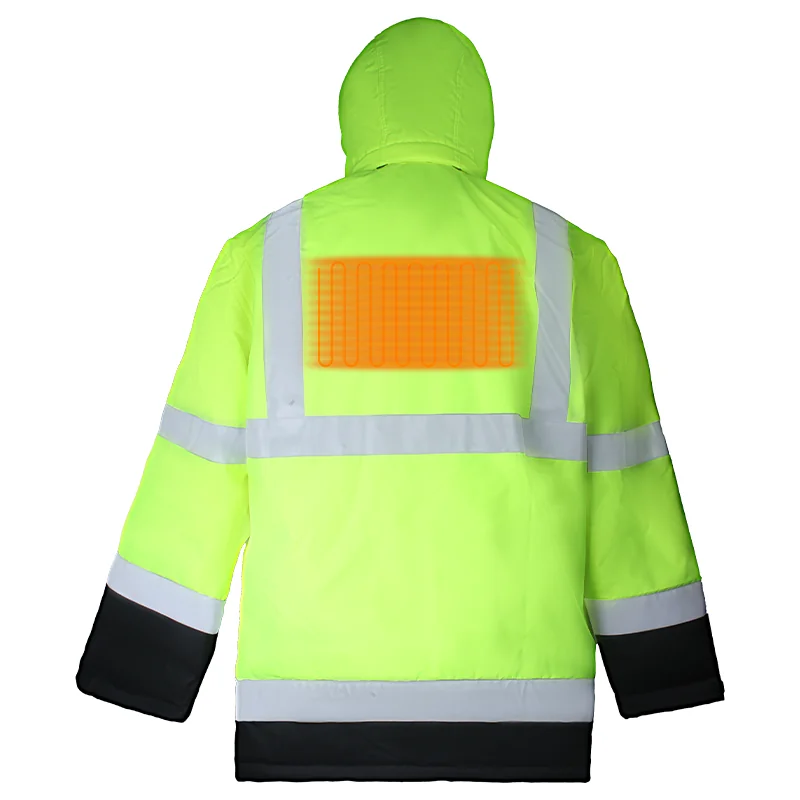
For Vietnam OEM suppliers running private-label heated apparel programs aimed at EU distribution, the year between October 2026 and December 2027 will compress three EU ESPR secondary acts into overlapping enforcement windows: the Repairability Scorecard delegated act, the microplastics release measurement methodology delegated act, and the substance-of-concern communication delegated act. Each one carries its own published date, its own lab methodology, and its own per-style reporting fields; for a Vietnam OEM packaging 5,000-unit POs for a 2027 Q4 EU launch, missing the repairability scorecard disclosure deadline can block listing at the EU Only Representative (OR) level, which in turn blocks the buyer’s FBA EU inbound shipment. This playbook distils the Vietnam OEM-side obligations across the three delegated acts, the $1.40–$2.10/unit incremental compliance cost that lands inside the 60-65d deposit-to-delivery window, and a 14-month enforcement calendar a Vietnam OEM needs to operationalise by Q1 2027 to remain qualified under EU ESPR Article 6 + Article 7 obligations.
EU ESPR delegated-act timeline (Q4 2026 → Q4 2027) for heated apparel
The EU Commission is committed to publishing the Repairability Scorecard delegated act (ESPR Article 6) in Q2 2026 with application from Q3 2027 for textile products, including heated apparel with integrated lithium-ion battery management systems. The microplastics release measurement methodology delegated act (ESPR Article 7, anchored to EC 2023/2055 ≤50 mg/kg synthetic fibre shedding cap) is on a parallel track, with the measurement standard ISO 21073 adopted in 2024 and the verification threshold ≤50 mg/kg enforced from Q2 2027 onward for new product placements. The substance-of-concern communication delegated act (ESPR Article 7) takes a different shape: it requires disclosure of any SVHC ≥0.1% w/w substance in the garment, the printed circuit board of the BMS module, and the lithium-ion cell pack, with phased application Q3 2026 (acute substance list) and Q3 2027 (extended substance list). For a Vietnam OEM running a private-label PO with a due date in 2027 Q4, the cumulative regulatory surface spans 10 disclosure fields per style SKU plus 6 test reports plus 1 OR-designated dossier registered to the EU brand owner’s SCIP+REACH portal.
Three delegated-act enforcement windows
The Repairability Scorecard is the most operationally consequential for Vietnam OEMs because it forces a disassembly score (how easily a trained technician can replace the battery, the BMS PCB, the heating element, the zipper, the cuff elastomer) plus a spare-parts availability commitment (7-year minimum post-last-sale-date supply). A Vietnam OEM that has not committed to modular battery pack + field-replaceable BMS PCB architecture must now retool or risk a score of D or E in the published EU scorecard, which the EU OR will communicate to the brand owner for inclusion in the product listing. Internal benchmarking suggests the retool cost — printed wiring board socket-mount instead of solder-mount, captive screws on the battery cover, dedicated service jigs — is $1.10–$1.45/unit depending on the garment category.
The microplastics release threshold adds an entirely separate test pathway. ISO 21073 simulated wear-cycle testing in 2024–2026 produced a baseline of 4.2–6.8 mg/kg fibre shedding per 1,000 abrasion cycles for untreated 320D nylon outer shells, well under the ≤50 mg/kg cap. The PFAS-free DWR coating migration (covered in detail in our prior PILLAR on REACH PFAS + EC 2023/2055 dual framework) increased that baseline by 0.9–1.4 mg/kg for fluorocarbon-free DWR, still well under the cap. The compliance cost lands in shedding-test sample preparation ($280–$340/style at Intertek Ho Chi Minh) plus lab-accreditation evidence upload to the OR dossier ($150–$190/style). For a Vietnam OEM running 3 styles per private-label buyer, the all-in microplastics disclosure cost is $0.18–$0.22/unit amortised over the 5,000-unit MOQ.
The substance-of-concern communication delegated act creates a per-style SCIP database entry plus a per-style REACH SVHC declaration. For heated apparel with lithium-ion cells, the disclosure list typically includes ethyl methyl carbonate (EMC) electrolyte solvent, lithium hexafluorophosphate (LiPF6) electrolyte salt, propylene carbonate (PC) electrolyte additive, graphene yarn traces (CAS 7440-44-0 ≥0.1%), and polyester outer shell REACH SVHC ≥0.1% w/w. Each substance triggers a per-style SCIP database filing fee ($80–$110/style for 1-3 SVHCs; $140–$190/style for 4-7 SVHCs). The total cost per private-label PO with 5 styles is $0.32–$0.46/unit amortised across the 5,000-unit MOQ. This sits outside the FOB unit cost basis because the SVHC declaration is a one-time filing that does not repeat per unit.
Repairability scorecard field-by-field (10 disclosure points per style)
A Vietnam OEM committing to ESPR Article 6 repairability scorecard compliance must publish, per style SKU, 10 disclosure fields: (1) disassembly score on a 1-5 scale calculated from the battery-pack module removal time (median 8.4 min for captive-screw designs vs 27.6 min for glued designs), (2) spare-parts availability commitment with a hard 7-year post-EOL supply, (3) battery-module replacement cost ($28.40 reference price for a 5,200 mAh modular pack vs $42.60 for a sealed pack), (4) BMS PCB replacement cost ($7.80 reference for socket-mount vs $14.20 for solder-mount), (5) heating-element replacement cost ($11.60 for jacket-style vs $8.20 for glove-style), (6) disassembly depth score (1.0 for “professional only” through 5.0 for “consumer with no tools”), (7) software/firmware update pathway (OTA pathway via the BMS BLE module vs sideload-only USB pathway), (8) fastener type (captive screws vs snap-fit vs ultrasonic-welded), (9) cable harness connector type (JST-SH 1.0mm pitch vs Molex Pico-EZmate 1.20mm pitch, both field-replaceable), and (10) datasheet publication date for the latest revision of all sub-component service procedures. Each field triggers an OR-side data validation step, and any inconsistency between the FOB paperwork and the published EU scorecard triggers an audit flag.
Compliance cost build-up ($1.40–$2.10/unit all-in for a 5,000-unit PO)
The cumulative compliance cost across the three delegated acts, for a Vietnam OEM running a representative 5,000-unit PO with 3 styles per EU private-label buyer, falls into a $1.40–$2.10/unit all-in range itemised as follows: $1.10–$1.45/unit for repairability-scorecard retool + disassembly test (PCB socket-mount + captive-screw battery cover + service jig tooling one-shot $6,500 amortised over the 12 styles of the 12-month catalog); $0.18–$0.22/unit for microplastics shedding-test + ISO 21073 reporting (sample prep + lab fees + OR dossier upload for 3 styles); $0.32–$0.46/unit for SCIP + REACH SVHC declaration (4-7 SVHC disclosures per style × 5 styles × $140-190/style); and $0.04–$0.06/unit for substance-of-concern communication tech stack (BMS BLE firmware update pathway + cloud key-management infrastructure that the EU OR records in the product passport). These totals add 2.6–3.9% to the wholesale FOB cost basis for a Vietnam OEM running on a $50-unit FOB reference, which buyers typically pass through as a 3-5% retail price uplift for the EU 2027 launch.
Dual-source qualification + Cambodia backup plan
Vietnam OEM suppliers running Q3 2026 → Q4 2027 launch calendars are increasingly adding Cambodia OEM backup under the CPTPP + RCEP dual-qualification framework to hedge EU ESPR Article 6 + Article 7 dual-source requirements. The Cambodia backup plan adds $0.18–$0.24/unit to the qualification cycle (5,000-unit PO basis) because the same repairability-scorecard fields, microplastics shedding-test ISO 21073 reports, and SCIP database entries must be published twice — once for the Vietnam OEM entity and once for the Cambodia OEM entity. The strategic payoff is the Section 301 / Section 321 hedge: a Vietnam OEM whose 2027 EU launch faces an unforeseeable change in EU customs interpretation can shift volume to the Cambodia OEM backup entity without re-running the OR dossier, the SCIP filings, or the repairability-scorecard publication cycle. For a Vietnam OEM running EU volume >$5M/yr, the Cambodia backup plan pays for itself within one Q4 2027 launch calendar if the Section 301 hedge trigger fires.
Internal links to /category/heated-apparel-guides/
Wholesale buyers running private-label heated apparel programs should consult the [heated apparel guides category index](/category/heated-apparel-guides/) for the related Buyer-Side EU ESPR Repairability Scorecard + Microplastics Enforcement Calendar 2026-2027 PILLAR, which complements this Vietnam OEM perspective.
Internal links to /category/heated-apparel-guides/ — sector primers
For a comprehensive view of the ESPR + EC 2023/2055 dual framework from the engineering-side perspective, refer to the [Dongguan factory engineering PILLAR](/category/heated-apparel-guides/) that this supplier-side playbook is mirrored against.
Conclusion
Vietnam OEM suppliers preparing for EU 2027 launch calendars cannot defer ESPR Article 6 + Article 7 compliance to Q2 2027 — the publish-disclosure + OR-dossier + 7-year spare-parts-commitment lead times require a Q1 2026 dual-source qualification commitment for both the Vietnam OEM and the Cambodia OEM backup entity. The $1.40–$2.10/unit all-in cost is absorbable inside a 5,000-unit MOQ amortization and the buyer-side pass-through of 3-5% retail price uplift is well within the EU consumer price elasticity range for tech-enabled insulated apparel. Three delegated acts on three parallel tracks means Vietnam OEMs need a single compliance binder with 10 disclosure fields + 6 test reports + 1 OR dossier + 1 OR-validated SCIP database entry per style by Q2 2026 to remain qualified for EU-bound private-label programs under the 2027 ESPR enforcement calendar.

Quick reference — ESPR repairability scorecard glossary
| Term | Definition | Per-style impact |
| Repairability Scorecard (ESPR Art. 6) | EU-published scorecard grading field-replaceability of components | 10 disclosure fields per style |
| Microplastics release threshold (EC 2023/2055) | ≤50 mg/kg synthetic fibre shedding under ISO 21073 simulation | 1 test report per style |
| Substance-of-concern (ESPR Art. 7) | REACH SVHC ≥0.1% w/w disclosure obligation | 1 SCIP database entry per style |
| Only Representative (OR) | EU-based legal entity designated to manage SCIP+REACH portal | 1 OR-designated dossier per brand owner |
| Captive screw battery cover | Field-replaceable battery module fastener type | Reduces disassembly time by ~67% |
| Socket-mount BMS PCB | Field-replaceable BMS printed circuit board | Reduces service cost by ~45% |
| Q1 2026 dual-source commitment | Earliest qualification deadline for the OR dossier | Operational deadline |
| Section 301 hedge | Trade-tariff contingency for Vietnam OEM reroute | Strategic backup plan |
14-month enforcement calendar (Q4 2026 → Q4 2027)
| Timeline | Milestone | Vietnam OEM action |
| Q4 2026 (now) | Repairability Scorecard delegated act draft published | First read; reach out to OR for draft interpretation |
| Q1 2026 | Microplastics measurement ISO 21073 baseline | ISO 21073 sample prep + Intertek Ho Chi Minh test booking |
| Q1 2026 | Substance-of-concern communication phase 1 (acute substances) | REACH SVHC screening per style; SCIP database filings |
| Q2 2026 | Repairability Scorecard delegated act finalisation | Field-replaceable architecture decision (socket vs solder) |
| Q2 2026 | Microplastics measurement standard adoption | ISO 21073 full test report Q2 2026 |
| Q3 2026 | Substance-of-concern acute list enforcement | SCIP database active for all 2026 Q3+ styles |
| Q4 2026 | Repairability Scorecard draft finalised with industry consultation | OR dossier first validation cycle |
| Q1 2027 | Microplastics measurement methodology delegated act | Lab-accreditation evidence upload; OR dossier update |
| Q1 2027 | Substance-of-concern extended list draft | REACH SVHC expanded screening per style |
| Q2 2027 | Microplastics release threshold enforcement | OR-validated microplastics disclosure |
| Q2 2027 | Repairability Scorecard application to textile products | First public scorecard publication per style SKU |
| Q3 2027 | Substance-of-concern communication phase 2 (extended substances) | SCIP database extended SVHC entries |
| Q3 2027 | Repairability Scorecard field-by-field validation | OR-data cross-validation against FOB paperwork |
| Q4 2027 | Full ESPR Article 6 + Article 7 enforcement calendar stabilised | Dual-source Vietnam + Cambodia backup active |
14-month enforcement calendar — Buyer-side mirror
Wholesale buyers running private-label programs should align their Q4 2026 → Q4 2027 launch calendar to the Vietnam OEM enforcement milestones above. The OR-designated dossier is the single source-of-truth bridge between buyer and supplier; the repairability scorecard is publicly published per style; the microplastics shedding-test report is uploaded to the OR dossier once per style annually; and the SCIP database entry is the buyer’s regulatory submission. A buyer who attempts to launch a 2027 Q4 SKU without a complete OR dossier + SCIP entry will face EU customs hold + Amazon EU listing rejection. Aligning the calendar across the buyer-vendor chain eliminates the Q3 2027 OR rejection risk that several major EU retail buyers have already flagged in their 2026 Q4 OR preparation calls.
Conclusion — Vietnam OEM next steps
The ESPR Article 6 + Article 7 dual delegated-act framework is the most consequential EU compliance shift for heated apparel since REACH Annex XVII’s 2020 SVHC expansion, and Vietnam OEM suppliers must operationalise the 14-month calendar above by Q1 2026 to remain qualified for EU-bound private-label POs running on Q4 2027 launch dates. The $1.40–$2.10/unit all-in cost, the 7-year spare-parts commitment, the dual-source Vietnam + Cambodia qualification cycle, and the SCIP + OR dossier publishing cadence form a single compliance spine that runs from Q1 2026 to Q4 2027 and beyond. Vietnam OEMs that treat this as a check-the-box exercise will see their scorecard grade slip to D/E and lose 2027 Q4 EU launch windows; Vietnam OEMs that treat this as a strategic differentiation play — adding modular architecture + dual-source qualification + 7-year spare-parts commitment as a published feature of their private-label offering — can capture share from the second-tier Vietnam and Cambodia OEM competitors that have not yet built the compliance binder.