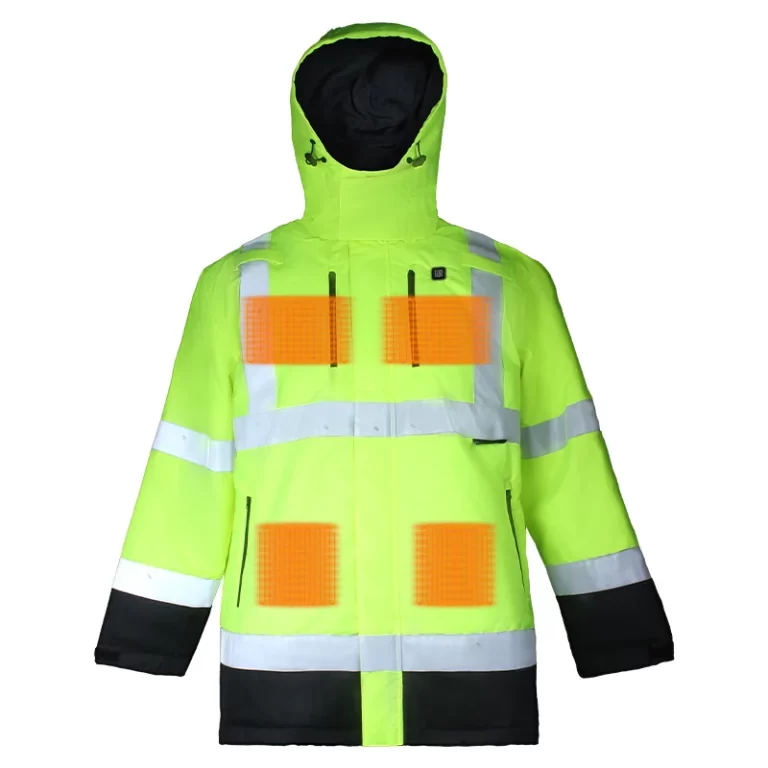
Heated Apparel Inventory Planning 2026: Safety Stock, Component Buffers and Q4 Warehousing for OEM Suppliers
Heated Apparel Inventory Planning 2026: Safety Stock, Component Buffers and Q4 Warehousing for OEM Suppliers
Every October a heated apparel program either has stock in the right place or it does not, and by then nothing can be fixed. Heated apparel inventory planning is the discipline that decides which of those two outcomes a brand gets, and it starts on the factory floor six to nine months earlier. This pillar is written from the supplier side — a Vietnam OEM/ODM view of how safety stock is calculated, how battery cells and heating elements are buffered, and how finished goods are staged for a Q4 that compresses eight weeks of shipping into a four-week window.
The numbers below are typical planning ranges from a Vietnam factory running heated jackets, vests, gloves, socks, pants and hoodies for global brands. They are illustrative and meant to be re-derived against your own demand history, not quoted as audited results. What is not illustrative is the structure: any serious heated apparel inventory planning model has three layers — component buffer, work-in-process cycle stock, and finished-goods staging — and each layer has its own math.
For program-level background, see our heated apparel guides. For the single SKU family that drives most Q4 buffer decisions, see our heated vests category.
Why Heated Apparel Inventory Planning Is Not Normal Apparel Planning
A cotton hoodie has one clock: fabric. A heated vest has five clocks running at different speeds, and heated apparel inventory planning has to reconcile all of them into a single ship date.
| Clock | Typical lead time | Who controls it | Buffer strategy |
|---|---|---|---|
| Shell fabric + trims | 30–45 days | Mill, factory | Hold greige, dye to order |
| Heating film / carbon element | 25–40 days | Component factory | Buffer by watt density, not SKU |
| Lithium cell + BMS pack | 45–75 days | Cell maker allocation | Reserve slots pre-season |
| Harness, connectors, controller | 20–35 days | Electronics supplier | Buffer at part level |
| Cut-and-sew capacity | 15–30 days | Garment factory | Reserve line time, not units |
The asymmetry matters. Fabric can be re-dyed in three weeks; a lithium cell allocation missed in May cannot be recovered in September at any price. So the buffer is never uniform — a good heated apparel inventory planning model deliberately over-buffers the slow, allocation-controlled parts and under-buffers everything that can be replaced quickly.
The Safety Stock Formula, Applied to Heated Garments
The textbook formula still works. Safety stock = Z × σ_LT × √(lead time in periods), where Z is the service-level factor. What changes for heated apparel is the size of σ — demand variance is weather-driven, so it is far wider than for base apparel.
| Service level | Z factor | Illustrative safety stock on 10,000-unit season | Typical use |
|---|---|---|---|
| 90% | 1.28 | ~1,150 units | Long-tail colourways |
| 95% | 1.65 | ~1,480 units | Core replenishment SKUs |
| 98% | 2.05 | ~1,840 units | Key account programs |
| 99% | 2.33 | ~2,100 units | Contractual fill-rate accounts |
Two supplier-side notes. First, safety stock for heated jackets should be held in the size band that actually sells — typically M/L/XL carrying 62–70% of a men’s curve — rather than spread evenly across the range, or you finish the season with 99% availability in XS and a stockout in L. Second, safety stock at the finished-goods level is the most expensive place to hold it. Wherever possible, push the buffer upstream to components, where the same inventory dollars cover multiple SKUs.

Component Buffers: Where the Real Leverage Sits
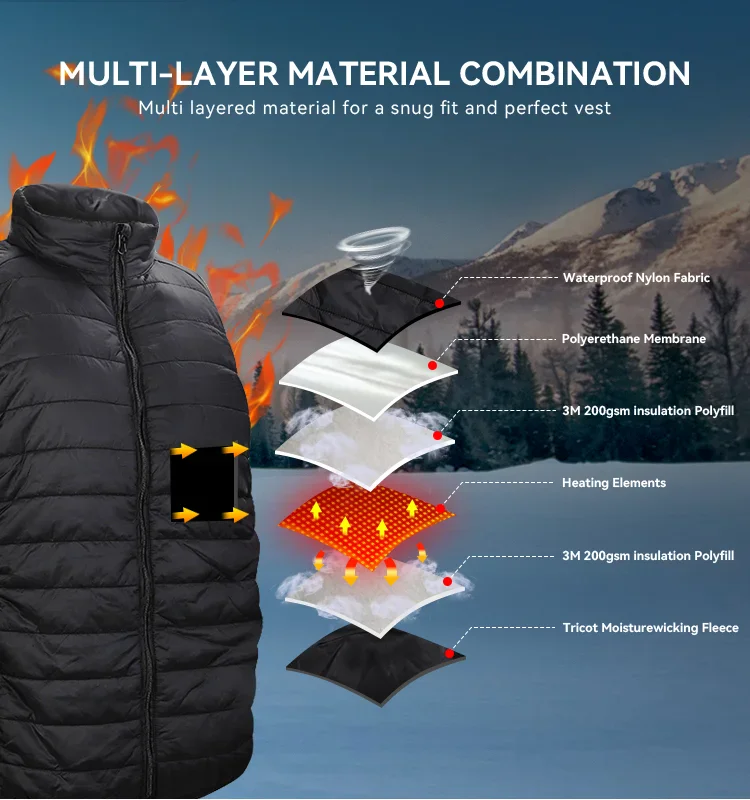
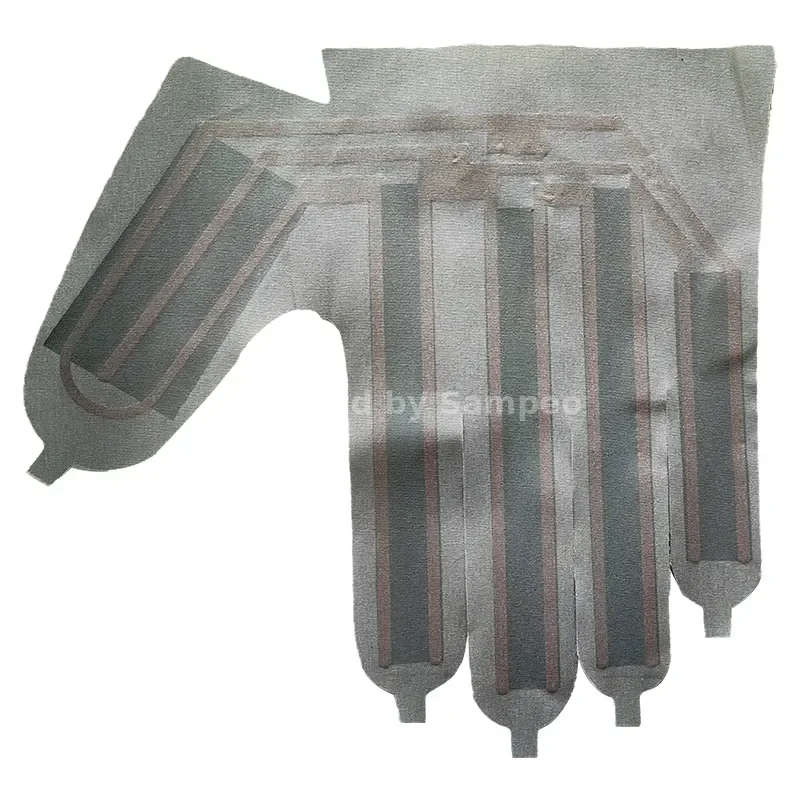
A component buffer for heated vests is the highest-yield inventory a heated apparel supplier can hold, because one buffered part serves many finished SKUs. A 7.4V 5,000mAh pack fits a vest, a jacket liner and a hoodie; a 12V heating film cut can serve three garment shapes.
| Component | Buffer basis | Illustrative buffer level | SKUs covered |
|---|---|---|---|
| 7.4V battery pack | Weeks of forward demand | 4–6 weeks | 8–14 |
| Heating film (per watt density) | Linear metres | 3–5 weeks | 6–12 |
| Controller / 3-stage button | Units | 6–8 weeks | All electric SKUs |
| Connectors + harness | Units | 8–10 weeks | All electric SKUs |
| Shell fabric (greige) | Metres | 2–4 weeks | 4–10 |
This is where a factory partner earns its keep. IMISSKY runs its own Vietnam plant, which means component buffer stock can be held against a forecast rather than a firm PO — the brand carries commitment risk on a component-level dollar figure instead of on finished garments that may end up in the wrong colour. It is a smaller and far more recoverable exposure than staged finished goods.
Battery Cell Safety Stock and the Storage Constraints Nobody Plans For
Battery cell safety stock is the one buffer with a physical expiry attached. Lithium-polymer cells stored at high state of charge in a hot warehouse lose usable capacity, so cell buffers must be planned as inventory and as a storage regime.
| Storage condition | State of charge | Illustrative capacity retained at 6 months | Notes |
|---|---|---|---|
| 20–25°C, 40–60% RH | 40–50% SOC | 96–98% | Recommended buffer condition |
| 20–25°C | 100% SOC | 90–93% | Avoid for buffered stock |
| 30–35°C | 40–50% SOC | 92–94% | Acceptable, shorten rotation |
| 30–35°C | 100% SOC | 84–88% | Do not buffer |
Practical consequences for heated apparel inventory planning: buffer cells at partial charge, rotate strictly FIFO, cap buffer age at roughly six months, and top-up charge before final assembly rather than storing finished packs at full charge. Also plan the shipping mode early — UN3481 rules on packs installed in or shipped with equipment restrict how much can move by air, so a cell buffer that assumed an air-freight rescue in November is often not a real plan.
SKU-Level Replenishment Lead Time: Building the Real Calendar
SKU-level replenishment lead time is the number that turns a forecast into a cut-off date. It is not the factory’s production time — it is the full chain from reorder trigger to warehouse receipt.
| Stage | Ocean scenario | Air scenario |
|---|---|---|
| Order confirmation + BOM release | 3–5 days | 3–5 days |
| Component draw from buffer | 2–5 days | 2–5 days |
| Cut, sew, electric assembly | 15–25 days | 15–25 days |
| QC + packing | 3–5 days | 3–5 days |
| Vietnam → US West Coast | 18–26 days | 5–8 days |
| Vietnam → EU (Rotterdam/Hamburg) | 28–38 days | 5–9 days |
| Inland + receiving | 5–10 days | 3–6 days |
| Total | ~50–75 days | ~35–50 days |
Note that air freight compresses the chain by two to four weeks, not by two months — assembly and QC do not accelerate. Any plan that assumes a 10-day emergency turnaround on battery-integrated garments is, in practice, fiction.
Q4 Cut-off Calendar: What a Supplier Actually Commits To
| Milestone | Target date | Why it binds |
|---|---|---|
| Cell allocation reserved | Late May – June | Cell makers ration Q4 volume early |
| BOM frozen, samples approved | Early July | ECOs after this point push the whole chain |
| First bulk PO issued | Mid July | Protects October arrival by ocean |
| Component buffer drawn | August | Buffer converts to WIP |
| Bulk production window | Aug – early Oct | Peak line contention Oct–Nov |
| Last ocean sailing for Christmas | Early–mid October | Transit + inland + receiving |
| Last practical air reorder | Early November | UN3481 capacity constraints tighten |
| Mid-season reorder from buffer | Nov – Dec | Only viable if buffer exists |
The last row is the whole argument for buffered inventory. A November reorder is only a real option when components were bought in July.
Warehousing Cost: Carry vs Stockout
| Cost element | Illustrative range | Basis |
|---|---|---|
| Ambient warehouse, Vietnam | USD 4–7 / CBM / month | Third-party bonded or factory-adjacent |
| Climate-controlled cell storage | USD 9–15 / CBM / month | Temperature + RH controlled |
| Capital cost of inventory | 8–14% annualised | Working capital rate |
| Obsolescence / dead stock risk | 5–15% of carried value | Colour and trend exposure |
| Blended monthly carry | ~2.0–3.5% of goods value | Sum of above |
Now compare that to a stockout. A missed replenishment in week 46 does not cost the carry rate — it costs the gross margin on unsold demand plus, frequently, the shelf space next season. As a rough planning heuristic, if carry is 2.5% per month and gross margin is 45%, roughly four months of carry still costs less than losing one unit of peak-season demand. That single comparison is why heated apparel inventory manufacturer partners generally recommend over-buffering components and under-buffering finished goods, rather than the reverse.
ABC-XYZ Classification for Heated SKUs
Not every SKU deserves the same buffer. Classify by value (ABC) and by demand volatility (XYZ).
| Class | Share of SKUs | Share of revenue | Demand variance | Buffer policy |
|---|---|---|---|---|
| AX | 5–10% | 30–40% | Low | High buffer, weekly review |
| AY | 10–15% | 20–30% | Medium | Component buffer + staged FG |
| AZ | 5–10% | 10–15% | High | Component buffer only |
| BX / BY | 20–25% | 15–20% | Low–medium | Standard buffer |
| CZ | 35–45% | 5–10% | High | Make to order, no buffer |
Most heated apparel ranges are heavily CZ by SKU count — long tails of colourways that generate a fraction of revenue but the majority of dead stock. Cutting buffer on CZ and reinvesting it in AX is usually the single largest improvement available to a heated apparel inventory OEM program in its second season.
Weeks of Supply Targets by Channel
| Channel | Pre-season WOS | Peak WOS | End-of-season target |
|---|---|---|---|
| DTC ecommerce | 10–14 | 6–8 | 2–3 |
| Marketplace (FBA-style) | 8–12 | 5–7 | 1–2 |
| Wholesale / distributor | 12–16 | 8–10 | 3–4 |
| Key account / program | Contract-driven | Contract-driven | 0–1 |
A heated apparel inventory wholesale program typically needs the highest weeks of supply, because distributor replenishment cycles are slower and fill-rate penalties are common. DTC can run leaner because demand signal latency is measured in hours rather than weeks.
Incoming Inspection and Buffer Integrity
Buffered stock that fails inspection in October is worse than no buffer at all, because it consumed both cash and planning confidence. Practical controls: AQL sampling on every incoming component lot, capacity spot-checks on buffered cell lots at intake and again before draw, humidity logging in the element store, and lot-level traceability so a defective batch can be quarantined without freezing the entire buffer.
IMISSKY holds buffered components in segregated, logged zones with lot travellers, and re-tests cell lots before they are drawn into assembly. For private-label partners this means the buffer is auditable — you can see what is held, how old it is, and what condition it is in, which is what makes a mid-season reorder commitment credible rather than aspirational.
Dead Stock: Planning the Exit Before the Entry
| Week (of Q4) | Sell-through checkpoint | Action if below target |
|---|---|---|
| W40 | 10–15% | Hold, verify weather index |
| W44 | 30–38% | Reallocate between channels |
| W47 | 55–65% | First markdown on CZ SKUs |
| W50 | 75–85% | Broad markdown, stop reorders |
| W02 (Jan) | 90%+ | Clear, carry over AX only |
Carry-over policy should be decided before the season, not during it. Shell garments carry over acceptably; battery packs carry over badly, because a pack that sat a full year at the wrong SOC is a warranty liability. A defensible rule is to carry over garments without packs and re-pair with fresh cells the following season.
Governance: Who Owns Which Number
| Decision | Brand owns | Supplier owns | Reviewed |
|---|---|---|---|
| Demand forecast | ✔ | — | Monthly |
| Service-level target | ✔ | — | Pre-season |
| Component buffer level | Joint | Joint | Monthly |
| Cell allocation reservation | — | ✔ | May–June |
| Storage regime + rotation | — | ✔ | Continuous |
| Reorder trigger points | ✔ | — | Weekly in peak |
| Markdown cadence | ✔ | — | Weekly from W44 |
Ambiguity in this table is the most common root cause of Q4 failures. When nobody explicitly owns the buffer level, the buffer defaults to zero.
Frequently Asked Questions
What is heated apparel inventory planning?
It is the process of deciding how much component, work-in-process and finished-goods inventory to hold, where to hold it, and when to convert it, so that demand is met at a target service level without excess carry. For heated apparel it must account for battery lead times and storage constraints alongside normal garment planning.
How much safety stock should I hold on a heated vest program?
For a core replenishment SKU at a 95% service level, roughly 14–16% of season volume is a reasonable planning starting point. Re-derive it from your own demand standard deviation and replenishment lead time rather than adopting the percentage directly.
Is it better to buffer components or finished goods?
Components, in almost every case. One buffered battery pack or heating film lot serves many finished SKUs, so the same working capital covers more of the demand distribution and carries far less colour and size obsolescence risk.
How long can battery cells sit in a buffer?
Plan for about six months at 40–50% state of charge in a temperature- and humidity-controlled store, with strict FIFO rotation. Longer is technically possible but capacity fade and warranty exposure both rise.
What is the last realistic reorder date for Christmas?
Early to mid-October for ocean freight and early November for air, assuming components are already buffered. Without a buffer, both dates move earlier by the length of the component lead time.
Can air freight rescue a late Q4 order?
Partially. Air compresses transit but not assembly or QC, so it saves two to four weeks rather than two months. UN3481 constraints on battery-integrated garments also limit how much volume can realistically move by air during peak.
How do I calculate weeks of supply?
Divide on-hand and in-transit units by the forecast weekly sell-through for the coming period. Use forward-looking demand, not trailing average, because heated apparel demand is steeply seasonal.
What does a heated apparel inventory manufacturer typically hold on my behalf?
Usually components against a forecast — cells, heating elements, controllers, harnesses and sometimes greige fabric — plus a limited quantity of staged finished goods for agreed core SKUs. Scope, ownership and liability should be written into the supply agreement.
How should a heated apparel inventory OEM program handle size curves?
Buffer to the shape of actual sell-through rather than evenly. Concentrating buffer in the two or three sizes that carry most of the curve raises effective fill rate at the same total inventory.
What service level should a wholesale program target?
Commonly 97–99%, because distributor and key-account contracts often carry fill-rate obligations. A heated apparel inventory wholesale program therefore needs meaningfully more buffer than a DTC channel at the same volume.
How do I stop long-tail colourways becoming dead stock?
Classify them as CZ and make them to order with no finished-goods buffer, while keeping the shared components buffered. That preserves the ability to produce them without carrying the finished risk.
What is SKU-level replenishment lead time and why does it matter?
It is the full elapsed time from reorder trigger to receipt in your warehouse, typically 50–75 days by ocean and 35–50 days by air. It sets every reorder cut-off date on the Q4 calendar, so an inaccurate figure invalidates the whole plan.
How often should buffer levels be reviewed?
Monthly outside peak and weekly from about week 40 onward. Weekly review is what turns a buffer into a usable mid-season reorder option instead of a static pile of stock.
Glossary of Inventory Terms
Safety stock — Inventory held above forecast demand to absorb variability in demand and lead time.
Reorder point (ROP) — The inventory level that triggers a replenishment order; equals expected demand over lead time plus safety stock.
Cycle stock — The portion of inventory that is consumed and replenished in normal order cycles, excluding buffer.
Weeks of supply (WOS) — On-hand plus in-transit inventory divided by forecast weekly demand.
Fill rate — The share of ordered units shipped complete from available stock, the practical measure of service level.
Service level — The target probability of not stocking out during a replenishment cycle, expressed through the Z factor in the safety-stock formula.
ABC-XYZ — A two-axis classification of SKUs by revenue contribution (ABC) and demand volatility (XYZ), used to set differentiated buffer policy.
State of charge (SOC) — The charge level of a lithium cell as a percentage of capacity; buffered cells are held partially charged to limit capacity fade.
FIFO — First in, first out rotation, mandatory for cell and element buffers where age degrades usable performance.
Dead stock — Inventory with no remaining realistic sell-through path at acceptable margin, usually long-tail colourways or aged battery packs.
Component buffer — Inventory held at part level rather than finished-goods level so that one buffer serves multiple SKUs.
Carry cost — The total monthly cost of holding inventory: warehousing, capital, insurance and obsolescence risk.
Closing: Build the Buffer Before You Need the Buffer
Good heated apparel inventory planning is unglamorous and almost entirely front-loaded. The decisions that determine whether a brand can reorder in week 47 are made in May and June, when cell allocation is reserved and component buffer levels are agreed. Everything after that is execution against a plan that either has slack in the right places or does not.
The practical checklist is short: reserve cell allocation early, buffer at component level rather than finished-goods level, hold cells partially charged and rotate them, classify SKUs so long tails never get a finished buffer, and put explicit ownership against every number in the plan. Do that and a November reorder is a decision. Skip it and November is only a report on what already happened.