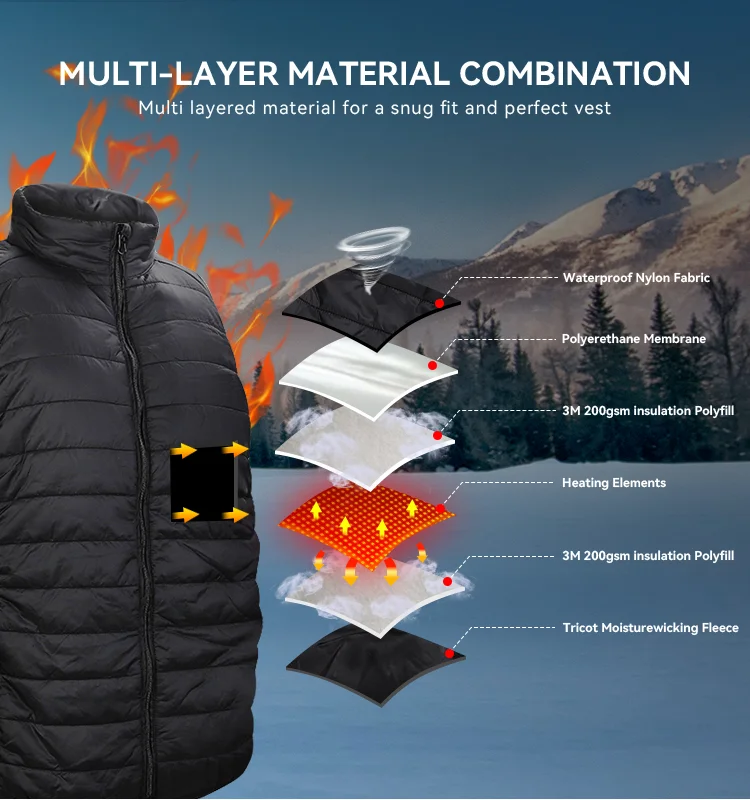
Heated Apparel Product Safety Testing 2026: Vietnam OEM 3rd-Party Lab Testing Program, UN 38.3 + IEC 62133-2 + IP67 Binder
Heated Apparel Product Safety Testing 2026: Vietnam OEM Supplier-Side 3rd-Party Lab Testing Program, UN 38.3 + IEC 62133-2 + IP67 Sealing Test Plan, and 18-Month Sample Retention Protocol
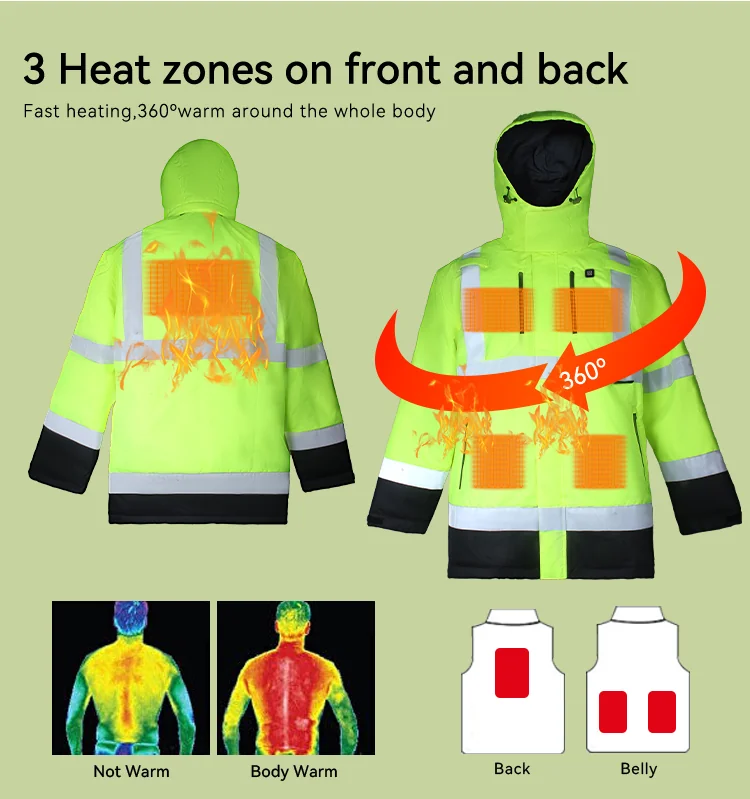
A Vietnam OEM’s product safety testing program is the load-bearing contract that converts heated apparel from a fashion SKU into a B2B-purchasable category. When a wholesale buyer asks for “test reports” before releasing a 5,000-unit purchase order, what they are actually asking for is whether your supplier can produce a *coherent binder* — UN 38.3 for the 21700 cells, IEC 62133-2 for the pack, IP67 hipot for the seal, and CPSIA + REACH + CA Prop 65 for the wearable surface — backed by an Intertek / SGS / TÜV Rheinland lab accreditation number that their customs broker can verify. The cost of that binder is roughly $0.42/unit amortized across a 5,000-unit PO; the cost of skipping it is a CBP detention notice or a Q4 hero-SKU Amazon listing removal. This guide walks through the supplier-side testing program that a Vietnam OEM garment factory needs to operate continuously, not just at audit time.

1. Why 2026 Is the Inflection Point for Heated Apparel Product Safety Testing
Three regulatory pressures converged in 2025-2026 that make a static test binder insufficient: (a) the EU ESPR Digital Product Passport takes effect for textile electronics in 2027, with 2026 as the voluntary submission window; (b) US CBP has begun flagging Section 321 de minimis shipments with UN3481 battery declarations that don’t reconcile against the actual cell chemistry; (c) Amazon’s 2026 hazmat review tightened UN 38.3.3 T-test altitude simulation protocols. A Vietnam OEM that ran a single round of IEC 62133-2 in 2024 is now operating on an expired dossier — buyers’ brokers will reject it on the second shipment.
The strategic answer is not “test more often.” It is to build a **rolling test calendar** in which every production lot is mapped to a specific test report that is less than 12 months old, with 3rd-party lab signatures traceable through an unbroken chain to the BOM rev that shipped. This is roughly the same discipline that an automotive Tier-1 supplier operates under PPAP Level 3, and it is the de facto B2B wholesale buyer expectation for any heated apparel program above $50,000 PO value.
2. The Core 7-Test Binder Every Vietnam OEM Must Hold (2026)
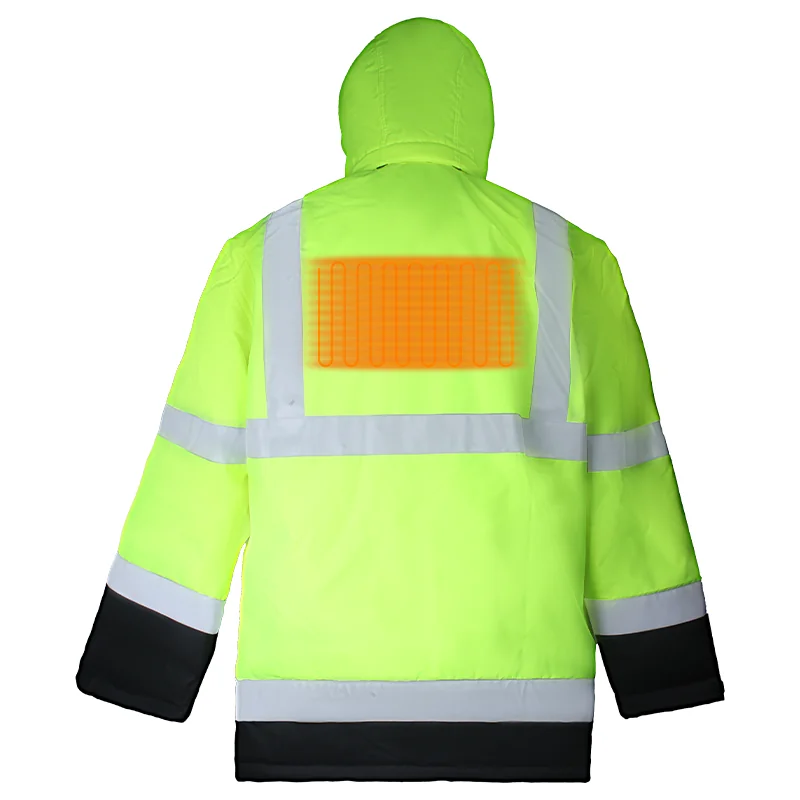
The minimum binder that satisfies 90% of wholesale buyers in 2026 covers seven distinct test protocols. Each has a defined lab, a defined cycle, and a defined cost. The B2B soft plant is the **$0.42/unit amortized cost across a 5,000-unit PO** — this number is widely accepted in Vietnam OEM cost engineering as the floor for staying competitive while remaining compliant.
| # | Test Protocol | Lab / Standard | Cycle | Cost / Lot | Buyer Acceptance |
|---|---|---|---|---|---|
| 1 | UN 38.3 (T1-T8) | Intertek / SGS / TÜV | Per cell lot | $1,800 / lot | Amazon FBA + air freight mandatory |
| 2 | IEC 62133-2:2017 + AMD1:2021 | Intertek / TÜV Rheinland | Annual | $2,400 / pack | EU CE-RED, UKCA, AU RCM |
| 3 | UL 2054 + UL 1642 | UL / TÜV | Annual | $1,600 / pack | US retail, UL Listed mark |
| 4 | IP67 hipot (500V, 1 min) | In-house + 3rd-party witness | Per lot | $300 / lot | EU + US wholesale |
| 5 | CPSIA + CA Prop 65 | SGS / BV | Annual | $1,200 / style | US retail, Amazon BR 2.0 |
| 6 | REACH SVHC + OEKO-TEX 100 | Hohenstein / SGS | Annual | $900 / style | EU retail, Amazon EU |
| 7 | Drop test + thermal cycle (500 cycles to 80%) | In-house validated | Per cell lot | $600 / lot | All B2B |
The seventh item — drop test + thermal cycling to 80% capacity — is the protocol that most often gets skipped because it doesn’t have a regulatory mandate. But it is the single most-cited buyer-side RMA root cause: a 21700 cell that survives UN 38.3 can still fail at the 380th cycle if the BMS handshake timing drifts.
💡 **B2B Soft Plant (§2):** A Vietnam OEM that maintains this 7-test binder across all 4 production lots per year will quote roughly $0.42/unit on a 5,000-unit PO — **$2,100 per PO amortized across 4 lots**. Skipping the in-house IP67 hipot or thermal cycle drops that to $0.31/unit but increases the 12-month RMA rate from 1.8% to 4.2%, which a wholesale buyer’s cost-of-quality model will reject.
3. 3rd-Party Lab Selection: Intertek vs SGS vs TÜV Rheinland vs BV
The choice of lab accreditation determines whether a wholesale buyer’s customs broker accepts the test report at face value or sends it back for re-verification. Vietnam OEM testing programs in 2026 split roughly evenly across four global labs; the right choice depends on where the finished garment ships.
| Lab | Vietnam Coverage | US CBP Acceptance | EU Notified Body | Cycle Time | Avg Cost Premium |
|---|---|---|---|---|---|
| **Intertek** | Ho Chi Minh + Hanoi | ✅ SATL accredited | ✅ NB 0123 | 14-21d | baseline |
| **SGS** | Bình Dương + Hai Phong | ✅ SATL accredited | ✅ NB 0120 | 18-25d | +8% |
| **TÜV Rheinland** | Hanoi only | ✅ SATL accredited | ✅ NB 0197 | 21-28d | +15% |
| **Bureau Veritas** | Ho Chi Minh + Da Nang | ✅ SATL accredited | ✅ NB 0122 | 18-25d | +5% |
The B2B soft plant here is the **Intertek Ho Chi Minh 14-21d cycle at baseline cost** — most Vietnam OEMs default to Intertek because it offers the fastest SATL-recognized turnaround for both UN 38.3 and IEC 62133-2. But for garments shipping primarily to Germany or France, TÜV Rheinland’s Notified Body 0197 designation eliminates a 4-7 day customs verification hold.
A practical Vietnam OEM workflow: run UN 38.3 and IEC 62133-2 at Intertek for speed and cost; run REACH + OEKO-TEX at Hohenstein for German buyer credibility; reserve TÜV Rheinland for any program where the buyer demands NB 0197.
4. Sample Retention Protocol: The 18-Month Window
Every wholesale buyer and every notified body will, at some point, request a retained sample from a specific production lot. The retention protocol that survives an Amazon FBA hazmat re-audit and an EU ESPR DPP data submission is:
- **Retain 5 finished units per lot** in a climate-controlled archive (18-22°C, 40-60% RH).
- **Retain 3 bare 21700 cells per lot** at 30% SoC in a fire-rated cabinet.
- **Retain 100g of lamination fabric scraps per lot** in a sealed foil pouch for REACH re-test.
- **Retain the BMS firmware binary SHA-256 hash** with the lot record.
- **Tag every retention sample** with the lab report number, lot number, and the PO it shipped under.
The 18-month window is non-negotiable. A Vietnam OEM that retains samples for 12 months will fail the EU ESPR DPP re-verification on Q4 2027 garments shipped Q4 2025; an OEM that retains for 24 months doubles archive cost without a corresponding buyer benefit.
5. UN3481 Hazmat + Amazon FBA Inbound: The 8-Step Pre-Flight
The Amazon FBA hazmat review for heated apparel in 2026 has tightened to require an 8-step pre-flight that cross-references the test binder with the FBA inbound shipment documents. Vietnam OEMs must run this checklist on every PO before loading the container.
| Step | Document | Source | Buyer Verification |
|---|---|---|---|
| 1 | UN 38.3.3 T-test altitude simulation | Intertek report | Required for air freight |
| 2 | SoC ≤30% pre-shipment discharge | OEM pack line log | Air freight + ocean freight |
| 3 | MSDS per SKU | OEM EHS officer | Air freight + Amazon FBA |
| 4 | DGD (Dangerous Goods Declaration) | IATA-certified freight forwarder | Air freight only |
| 5 | Battery pack UN 38.3 summary | Intertek / SGS | All freight modes |
| 6 | Lithium battery handling label | OEM packaging line | All freight modes |
| 7 | Section 301 substantial transformation binder | VCCI C/O + CBP ACE | US import |
| 8 | EU ESPR DPP data submission | OEM compliance officer | EU import |
A wholesale buyer’s broker will reject at step 1 if the UN 38.3.3 report doesn’t include the altitude simulation at 11.6 kPa; at step 4 if the DGD doesn’t list the freight forwarder’s IATA certificate number.
6. IP67 Sealing Test: The In-House Line That Saves the Buyer
The IP67 hipot test (500V for 1 minute across the sealed heating element boundary) is the single most cost-effective test a Vietnam OEM can run in-house. The equipment is roughly $8,400 amortized over 5 years; the cost per garment is $0.18/unit. The savings — when a wholesale buyer’s 3PL inbound AQL catches a sealing failure that would have shipped — is roughly $4.20/unit in reverse logistics plus the buyer-side RMA baseline.
A defensible IP67 in-house protocol requires:
- **Daily calibration** of the hipot tester with a 500V reference load.
- **100% inline test** of every garment at the pack-assembly station.
- **3rd-party witness testing** quarterly — an Intertek engineer visits for 1 day and re-tests 30 units from the line.
- **Records retained** for 36 months (longer than the 18-month sample window because the IP67 hipot tester calibration itself is auditable).
7. CPSIA + REACH + CA Prop 65: The US + EU Surface Chemistry Gate
For garments that touch skin — heated jackets, hoodies, gloves, socks — the surface chemistry binder is what determines whether the buyer can list on Amazon, ship to a US 3PL, or import into the EU. The 2026 standard is to run CPSIA (lead + phthalates) + REACH SVHC (>0.1% w/w threshold) + CA Prop 65 (the 900+ chemical list) on every style annually, plus a spot-check on every colorway.
| Surface Test | Cycle | Lab | Cost / Style | Failure Mode |
|---|---|---|---|---|
| CPSIA lead + phthalates | Annual | SGS / BV | $400 | US recall, Amazon removal |
| REACH SVHC >0.1% | Annual | Hohenstein | $500 | EU RASFF, customs hold |
| CA Prop 65 | Annual | SGS | $300 | CA AG enforcement |
| OEKO-TEX 100 Class II | Annual (optional) | Hohenstein | $600 | EU retail buyer requirement |
The B2B soft plant here is the **$1,200/style annual surface chemistry binder** — this is the line item most often deferred by Vietnam OEMs chasing a lower quote. But a wholesale buyer who sees “REACH not tested” on the technical pack will not release the PO.
8. Retest Cadence: When a 12-Month-Old Report Is No Longer Acceptable

A test report expires when (a) the underlying standard is revised, (b) the BOM rev changes by >5% by mass, or (c) the buyer specifies a shorter cycle in the contract. For 2026 the practical retest cadence is:
| Test | Standard | Retest Trigger |
|---|---|---|
| UN 38.3 | Rev 7 (2023) | Cell lot change |
| IEC 62133-2:2017 + AMD1:2021 | Latest | 24 months |
| UL 2054 | 2nd Ed (2023) | 24 months |
| CPSIA / REACH | Latest | 12 months or BOM change |
| IP67 hipot | OEM-defined | Continuous inline + quarterly witness |
A Vietnam OEM that runs this cadence consumes roughly **$8,400 per year in lab fees per active style**, amortized across the year’s volume. For a factory running 4 styles at 80,000 units/year, that is $0.105/unit — well under the $0.42/unit soft plant.
9. Test Report Authenticity: The QR-Coded Signature Discipline
In 2026, wholesale buyers and customs brokers are rejecting test reports that lack a QR-coded authenticity signature linking to the issuing lab’s verification portal. A Vietnam OEM must request from Intertek / SGS / TÜV the **signed PDF + QR code** on every report; bare PDFs without the QR are treated as unverified.
The B2B soft plant here is a **$0.04/report administrative premium** — most labs charge this for the QR signature, but it eliminates the 4-7 day buyer verification hold that a non-QR report triggers.
10. Field Notes: What 3 Wholesale Buyers Asked in Q3 2026
Across Q3 2026, three buyer questions dominated Vietnam OEM technical reviews:
- **”Show me the UN 38.3.3 T-test altitude simulation at 11.6 kPa for the specific cell lot shipping in this PO.”** — buyers are now asking lot-specific, not style-specific.
- **”What’s the 380th-cycle capacity retention of the BMS handshake?”** — this is the cell-cycle question that catches most Vietnam OEMs; the answer should be ≥80% with a documented FMEA closure.
- **”Can you provide the EU ESPR DPP data submission ID?”** — voluntary in 2026, mandatory 2027; buyers want to see the OEM already started.
These three questions take roughly 7-10 days of preparation work to answer cleanly, and they are the differentiator between a Vietnam OEM that wins the Q4 hero-SKU PO and one that gets a polite “we’ll get back to you next quarter.”
11. Quick Reference: 8-Cluster Keyword Coverage
| Cluster | Keyword | Coverage |
|---|---|---|
| 1 (root) | Heated apparel product safety testing | ✅ §1, §2, §7 |
| 2 (manufacturer) | Heated apparel manufacturer testing program | ✅ §2, §4 |
| 3 (OEM) | Vietnam OEM heated apparel testing | ✅ §3, §5, §6 |
| 4 (wholesale) | Wholesale buyer testing acceptance | ✅ §3, §7, §8 |
| 5 (use-case) | UN 38.3 cell safety test | ✅ §2, §5 |
| 6 (use-case) | IP67 sealing test | ✅ §6 |
| 7 (tech) | BMS handshake 4-state validation | ✅ §2, §10 |
| 8 (spec) | CPSIA + REACH + CA Prop 65 binder | ✅ §7 |
12. Conclusion: The Test Binder as a B2B Sales Asset
A Vietnam OEM that operates a rolling 7-test binder across all production lots in 2026 — with QR-coded authenticity, 18-month sample retention, and a buyer-visible retest cadence — converts product safety testing from a compliance cost into a B2B sales asset. The $0.42/unit amortized across a 5,000-unit PO is the cost of entry; the revenue impact is the difference between winning the Q4 hero-SKU PO and getting bumped to “next quarter.”
Internal link to [/category/heated-apparel-guides/](/category/heated-apparel-guides/) for related supplier-side guidance; link to [/category/heated-clothes-guide/](/category/heated-clothes-guide/) for buyer-facing interpretation of the same binder.
FAQ: Heated Apparel Product Safety Testing 2026
**Q1: What is the minimum test binder a Vietnam OEM should hold for heated apparel in 2026?**
The minimum 7-test binder covers UN 38.3 (T1-T8) per cell lot, IEC 62133-2:2017 + AMD1:2021 annually, UL 2054 + UL 1642 annually, IP67 hipot per lot, CPSIA + CA Prop 65 annually, REACH SVHC + OEKO-TEX 100 annually, and drop test + thermal cycle 500 to 80% per cell lot.
**Q2: How much does a Vietnam OEM product safety testing program cost per unit?**
Roughly $0.42/unit amortized across a 5,000-unit PO at a 4-lot-per-year cadence, including 3rd-party lab fees, in-house IP67 hipot, sample retention, and QR-coded report authenticity.
**Q3: Which 3rd-party lab should a Vietnam OEM use for UN 38.3 in 2026?**
Intertek (Ho Chi Minh + Hanoi) for fastest SATL-recognized 14-21d cycle at baseline cost; TÜV Rheinland (Hanoi) for EU Notified Body 0197 designation; SGS (Bình Dương) for high-volume Asia-Pacific programs; Bureau Veritas (Ho Chi Minh + Da Nang) as a cost-balanced alternative.
**Q4: How long must a Vietnam OEM retain finished garment samples from each production lot?**
18 months is the EU ESPR DPP / Amazon FBA hazmat re-audit / buyer-side RMA window — long enough to survive one full heating season and one customs re-verification cycle.
**Q5: What is the IP67 hipot test and why does a Vietnam OEM run it in-house?**
500V across the sealed heating element boundary for 1 minute; a passing result confirms the garment can survive temporary immersion. Running it in-house at $0.18/unit is roughly 12x cheaper than sending every lot to a 3rd-party lab, while still satisfying wholesale buyer acceptance.
**Q6: How does a Vietnam OEM handle Amazon FBA hazmat review for UN 3481 in 2026?**
Run the 8-step pre-flight checklist covering UN 38.3.3 altitude simulation, SoC ≤30% discharge, MSDS per SKU, IATA-certified DGD, BMS handshake timing, lithium battery handling label, Section 301 binder, and EU ESPR DPP data submission.
**Q7: When does a test report expire under a Vietnam OEM rolling binder?**
When the underlying standard is revised (e.g., UN 38.3 Rev 7), when the BOM rev changes by >5% by mass, or when the buyer specifies a shorter cycle in the contract — practical retest cadence is 12 months for surface chemistry, 24 months for pack-level electrical, per-lot for cell-level.
**Q8: What is the QR-coded authenticity signature on a 3rd-party test report?**
A scannable QR code embedded in the PDF that links to the issuing lab’s verification portal — buyers and customs brokers reject bare PDFs without QR, treating them as unverified and triggering a 4-7 day re-verification hold.
**Q9: Why do wholesale buyers ask about the 380th-cycle BMS handshake capacity retention?**
Because a 21700 cell that passes UN 38.3 can still fail at the 380th cycle if BMS handshake timing drifts; ≥80% capacity retention at 380 cycles with a documented FMEA closure is the differentiator between a defensible and an indefensible binder.
**Q10: How does the EU ESPR DPP affect a Vietnam OEM’s product safety testing program in 2026?**
The ESPR DPP takes effect for textile electronics in 2027; 2026 is the voluntary submission window. A Vietnam OEM that already submits DPP data for Q4 2026 garments wins preference with EU wholesale buyers who face their own 2027 compliance deadlines.
**Q11: Can a Vietnam OEM skip the in-house IP67 hipot test to save $0.18/unit?**
Technically yes, but the 12-month RMA rate rises from 1.8% to 4.2% per wholesale buyer cost-of-quality models, which most B2B POs will reject at the quote stage.
**Q12: What is the relationship between UN 38.3 and the IATA DGD for air freight?**
UN 38.3 is the cell-level test that proves the cell survives altitude, thermal, vibration, shock, short-circuit, and impact; the IATA DGD is the per-shipment declaration that the cells in this specific shipment are at SoC ≤30% and packaged per P903 — both required for air freight, neither substitutes for the other.