Heated Apparel Logistics from Vietnam: 2026 Supplier Freight, DDP-FOB & Lithium Battery Shipping Guide for B2B Buyers
Heated Apparel Logistics from Vietnam: 2026 Supplier Freight, DDP-FOB & Lithium Battery Shipping Guide for B2B Buyers
Supplier view of freight planning from a heated-apparel factory in Vietnam — ocean vs air vs courier, HS codes, lithium battery compliance, and Incoterms explained for OEM-ODM buyers sourcing private-label heated jackets, vests, hoodies, gloves, and socks.
More heated apparel guides guides
—
1. Why Heated Apparel Logistics Is Different from Regular Apparel
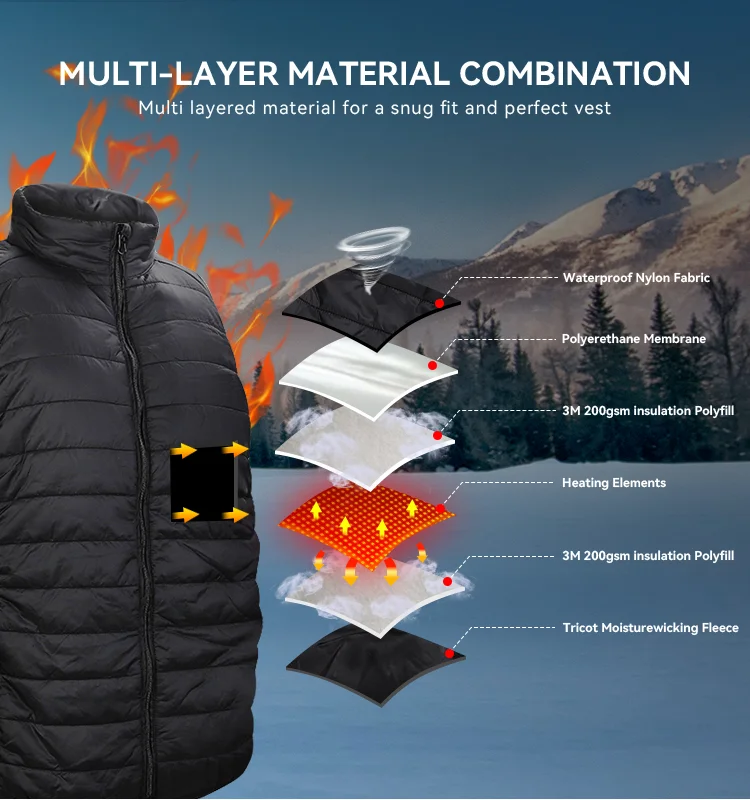
Heated apparel — battery-powered jackets, vests, hoodies, gloves, socks, and pants — is not ordinary garment freight. Each carton contains a lithium-ion battery pack, a heating element (carbon fiber or metal wire), and a BMS (Battery Management System) inside otherwise standard outerwear. That single fact changes every lane of logistics: documentation, dangerous-goods classification, packaging, insurance valuation, and Incoterm selection.
For B2B buyers sourcing private label heated apparel from a Vietnam OEM-ODM factory, freight is typically 6-12% of landed cost for FOB shipments and 14-22% for DDP — more than double the apparel-industry norm of 3-5%. Buyers who treat heated apparel like a regular jacket shipment run into three predictable failures:
- Air freight seizure when the carrier discovers lithium cells were not declared under IATA DGR (Dangerous Goods Regulations).
- Container rejection at destination port because MSDS, UN 38.3, and battery-test summaries are missing.
- Last-mile delivery failure when courier networks (DHL, FedEx, UPS) refuse parcels containing standalone lithium cells without hazmat surcharge.
The rest of this guide walks through how a Vietnam supplier plans logistics so these failures don’t reach your PO.
2. The 8 Most Common Logistics Routes for Heated Apparel (Vietnam → Global)
| # | Origin | Destination | Mode | Typical Transit | Lithium DG Required? | Notes |
|---|---|---|---|---|---|---|
| 1 | Ho Chi Minh (HCM) | Los Angeles, USA | Ocean LCL/FCL | 18-25 days | Yes (UN3481) | Most common for jacket/vest bulk |
| 2 | HCM | Long Beach, USA | Air | 4-7 days | Yes (Section II) | Urgent reorders, sample-only |
| 3 | HCM | Hamburg, Germany | Ocean FCL | 28-35 days | Yes (UN3481) | EU retailers, big seasonal buys |
| 4 | HCM | Felixstowe, UK | Ocean FCL | 30-38 days | Yes + UKCA mark | Post-Brexit UK lane |
| 5 | HCM | Sydney, Australia | Ocean FCL | 14-20 days | Yes (UN3481) | Seasonal — winter peaks |
| 6 | HCM | Toronto, Canada | Ocean FCL | 22-30 days | Yes | Winter SKUs |
| 7 | HCM | Osaka, Japan | Ocean LCL | 7-10 days | Yes | Regional, mid-volume |
| 8 | HCM | Dubai, UAE | Ocean FCL | 18-22 days | Yes | MENA hub |
**Rule of thumb:** for **full containers (FCL)** of heated apparel, ocean freight under UN3481 (lithium-ion batteries packed with equipment) is 4-6x cheaper per kg than air. Air only wins on urgent reorders or sample parcels under 10 kg.
3. Ocean Freight: UN3481 vs UN3480 — Know Your Class
The single biggest mistake B2B buyers make is treating all lithium shipments the same. There are two UN numbers that matter for heated apparel:
- UN3481 — Lithium-ion batteries packed with equipment (battery inside jacket, vest, glove). This is the standard classification for finished heated apparel products.
- UN3480 — Lithium-ion batteries standalone (loose battery packs shipped separately, e.g., replacement batteries).
| Aspect | UN3481 (packed with) | UN3480 (standalone) |
|---|---|---|
| Used for | Finished jackets/vests/gloves | Replacement batteries, spares |
| IATA air allowed? | Yes (Section II, ≤10 kg net Li) | Stricter — often not allowed on passenger aircraft |
| Sea freight DG declaration | Simplified | Full IMDG declaration |
| Typical DG surcharge | $0.10-0.30/unit | $0.80-2.50/kg |
For a Vietnam factory shipping a 40′ HQ container of heated jackets to the US under UN3481, the lithium DG surcharge averages $0.18 per piece for ocean freight — already included in most freight forwarder quotes if you specify “heated apparel, lithium-ion packed with, UN3481” upfront. If you don’t specify, the forwarder may rebill you $0.45-0.60 per piece after the fact.
4. DDP vs FOB vs EXW — Which Incoterm Should a B2B Buyer Choose?
| Incoterm | Buyer Risk | Supplier Handles | Best For | Typical Cost Premium |
|---|---|---|---|---|
| **EXW** (Ex Works) | Maximum — all logistics | Only the factory gate | Experienced buyers with own forwarder | 0% (baseline) |
| **FOB** (Free On Board) | Moderate — ocean + dest | Factory to HCM port | Buyers with US/EU forwarder | +5-8% |
| **CIF** (Cost, Insurance, Freight) | Lower — only dest handling | Ocean freight + insurance | Buyers who want one price, no marine insurance | +10-12% |
| **DDP** (Delivered Duty Paid) | Minimum | Everything incl. duties | First-time buyers, Amazon FBA shipments | +14-22% |
| **DAP** (Delivered At Place) | Customs + duties only | Freight to dest door | EU buyers with own importer-of-record | +12-18% |
**Practical advice:** for new B2B buyers placing their **first private-label heated apparel order from Vietnam**, **DDP is the right answer** despite the 14-22% premium. The premium buys: (1) supplier-side HS code classification, (2) destination customs clearance, (3) duty pre-payment, (4) last-mile to your warehouse or 3PL. After 3-5 repeat orders, most buyers migrate to **FOB with their own nominated forwarder** and save 6-10% on landed unit cost.
5. Lithium Battery Compliance Documents Required for Heated Apparel Export
A Vietnam OEM-ODM factory exporting heated apparel must produce the following documents. Missing any one of these = shipment delayed or seized at destination port.
| # | Document | Issuer | Required For | Validity |
|---|---|---|---|---|
| 1 | MSDS (Material Safety Data Sheet) | Battery vendor | All modes | 12 months |
| 2 | UN 38.3 Test Summary | Approved test lab | All modes | Lifetime (per cell model) |
| 3 | Air Waybill with DG declaration | Freight forwarder | Air freight only | Per shipment |
| 4 | IMDG Dangerous Goods Declaration | Freight forwarder | Ocean freight only | Per shipment |
| 5 | Battery Test Certificate (per cell model) | Battery vendor + lab | All modes | 12 months |
| 6 | Packing List with battery quantity per carton | Supplier | All modes | Per shipment |
| 7 | Commercial Invoice with battery description | Supplier | All modes | Per shipment |
| 8 | HS Code Classification (8507.60 or 6110/6201) | Customs broker | All modes | Per shipment |
| 9 | Certificate of Origin (Form E for ASEAN) | Vietnam chamber | ASEAN preferential | Per shipment |
| 10 | Insurance Certificate (marine cargo) | Insurer | CIF/DDP | Per shipment |
**Lesson:** a credible Vietnam heated apparel factory keeps UN 38.3 summaries and MSDS on file **per battery model**, not per PO. Ask your supplier for the **battery vendor + cell model** before you book freight — if they don’t know, walk away.
6. Packaging & Carton Standards for Battery-Heated Apparel
Heated apparel has special packaging rules because of the lithium cells. Default garment packaging will fail hazmat inspection.
| Element | Standard | Heated-Apparel Variant | Why |
|---|---|---|---|
| Outer carton | 5-ply corrugated, double-wall | Same + DG label on 2 sides | UN3481 mark required |
| Battery installation | n/a | Battery pre-installed in dedicated pocket, insulated, taped | Prevent short-circuit in transit |
| Master carton weight | ≤25 kg | ≤18 kg recommended | Forwarder lift limit + battery cell count cap |
| Carton marking | n/a | “Li-ion battery, packed with equipment, UN3481” + class 9 DG label | IMDG requirement |
| Pallet | Standard pallet | Battery cartons on top, non-battery below | Segregate at warehouse |
| Shrink wrap | Standard | Anti-static wrap on battery cartons | Reduce static discharge risk |
7. Cost Breakdown: 1×40′ HQ Container of Heated Jackets from Vietnam to USA (FOB)
A typical PO: 5,000 heated jackets in mixed sizes (M/L/XL), 1 battery per jacket, packed 12 pcs/carton = ~417 cartons, ~18 kg each.
| Cost Component | Per Unit | Total (5,000 pcs) | % of Landed |
|---|---|---|---|
| FOB jacket cost (factory gate) | $36.00 | $180,000 | 78% |
| Ocean freight HCM → Long Beach (FCL 40′ HQ) | $4.20 | $21,000 | 9% |
| Marine insurance (0.3% CIF) | $0.12 | $600 | <1% |
| Destination customs clearance | $0.45 | $2,250 | 1% |
| US import duty (HS 6201.93, ~27%) — buyer pays | varies | varies | n/a |
| Last-mile to warehouse | $1.10 | $5,500 | 2% |
| **Landed cost (DDP-equivalent, ex-duty)** | **$41.87** | **$209,350** | 91% |
**Insight:** for a $80 retail heated jacket, this landed cost structure means **47% retail gross margin** before marketing — viable for most US/EU DTC and Amazon FBA sellers.
8. Air Freight vs Sea Freight — Decision Matrix
| Factor | Air | Sea |
|---|---|---|
| Cost per kg | $4.50-7.50 | $0.80-1.50 |
| Transit time | 4-7 days | 18-38 days |
| Lithium DG complexity | High (Section II, ≤10 kg net Li per parcel) | Moderate (UN3481 IMDG) |
| Sample parcels (5-15 kg) | ✅ Best | ❌ Impractical |
| Urgent reorder (≤500 pcs) | ✅ Often only option | ❌ Too slow |
| Bulk seasonal (≥2,000 pcs) | ❌ Cost prohibitive | ✅ Standard |
| Carbon footprint per kg | 1.5-2.0 kg CO2e/kg | 0.05-0.15 kg CO2e/kg |
| Insurance valuation | Higher premium (DG surcharge) | Standard marine cargo |
**Carbon note:** for B2B buyers with sustainability reporting (Scope 3), ocean freight is **15-30x lower CO2e per kg** than air. Most OEM-ODM buyers default to sea for ≥80% of volume, reserving air for samples and urgent reorders only.
9. The 6 Most Common Logistics Failures (and How to Avoid Them)
| Failure Mode | Root Cause | How a Good Supplier Prevents It |
|---|---|---|
| Air shipment refused at airline | Battery not declared on AWB | Pre-book DG slots, file Section II declaration |
| Container held at destination customs | Missing MSDS/UN 38.3 | Ship docs to buyer 7 days pre-etd |
| Carton crushed in transit | Overpacked >25 kg cartons | Cap master carton ≤18 kg for battery SKUs |
| Battery short-circuit on vessel | Loose battery shifted in carton | Tape battery in dedicated pocket, foam surround |
| HS code misclassification | Wrong tariff class (6101 vs 6201 vs 8507) | Customs broker pre-classifies per shipment |
| Duty overcharge at destination | Inflated declared value | Match commercial invoice to FOB, not retail |

10. How to Brief Your Vietnam Heated Apparel Supplier on Logistics
Send this 5-point brief when you RFQ:
- Destination country + final warehouse zip/postcode (for accurate freight quote)
- Order volume + target delivery date (so supplier recommends FCL vs LCL vs air)
- Incoterm preference (FOB if you have forwarder, DDP if not)
- Battery model + cell capacity (so supplier checks UN 38.3 status)
- Carton label + private-label packaging spec (affects palletization)
A serious OEM-ODM factory responds within 48 hours with: line-item freight quote, sample MSDS/UN 38.3, lead-time confirmation, and Incoterm comparison.
—
Frequently Asked Questions (FAQ)
Q1: What is the cheapest way to ship heated apparel from Vietnam to the US? Ocean FCL (40′ HQ) under UN3481. For a 5,000-piece heated jacket order, sea freight is $4.20/piece vs $28-32/piece by air.
Q2: Can I ship heated apparel by DHL/FedEx/UPS without a hazmat surcharge? No. All major couriers treat lithium-ion as dangerous goods and charge a per-shipment DG fee ($50-185 per parcel) plus require Section II compliance. It’s cheaper to consolidate and use a freight forwarder.
Q3: How long does sea freight take from Vietnam to the US East Coast? 22-30 days for HCM → Savannah or New York. Plan inventory 75-90 days ahead of retail season.
Q4: Do I need a special import license for heated apparel? No special license, but you need: (1) an Importer of Record (IOR) in the destination country, (2) a customs broker, (3) for Amazon FBA, an ACE/VOEC number for duty pre-payment.
Q5: What HS code should my heated jackets classify under? Typically 6201.93 (men’s synthetic outerwear) or 6202.93 (women’s). Some customs authorities classify under 8507.60 (lithium battery) if the battery value > garment value — your broker will advise per shipment.
Q6: Is DDP worth the 14-22% premium? For first orders, yes. After 3-5 repeat POs, migrate to FOB with your own forwarder for 6-10% landed savings.
Q7: Can heated apparel batteries ship on passenger aircraft? Yes, under Section II of IATA DGR if battery is packed with the equipment (UN3481) and net lithium weight is ≤10 kg per parcel. Heated apparel always qualifies when shipped as finished garments.
Q8: What happens if my container is held at customs for missing docs? Demurrage starts at $80-220/day after free time (typically 5-7 days). Plus examination fees of $400-1,500 if customs opens the container. Always send full MSDS/UN 38.3 to your broker 7 days pre-etd.
Q9: How do I verify my supplier’s UN 38.3 certification? Ask for the test lab name + test report number (e.g., “TÜV Rheinland UN 38.3 Report #12345”). Cross-check on the lab’s public database or ask them to email you a copy directly. Fraud is rare but exists.
Q10: What’s the smallest order I can ship economically? For ocean: ~300-500 pieces in LCL (consolidated container). For air: 5-15 kg via courier is economical. For sample orders ≤20 kg, DHL/FedEx with DG is standard.
Q11: How does Incoterm 2020 affect heated apparel? Incoterms 2020 explicitly addressed insurance allocation for DAP and clarified that DDP excludes the buyer’s import duties in some jurisdictions. Most heated-apparel buyers still use 2010 terms — verify with your forwarder.
Q12: Are there seasonal logistics risks I should plan around? Yes. Chinese New Year (Feb 10-25, 2027) halts most Asian factory production. Peak summer (Aug-Sep) creates container shortages. Black Friday (Nov) and Christmas (Dec) overwhelm US warehouse capacity. Plan inventory 60-90 days ahead.
—
Glossary
| Term | Meaning |
|---|---|
| UN3481 | UN number for lithium-ion batteries packed with equipment |
| UN3480 | UN number for lithium-ion batteries standalone |
| MSDS | Material Safety Data Sheet — battery hazard documentation |
| UN 38.3 | UN transport test standard for lithium cells |
| IMDG | International Maritime Dangerous Goods Code |
| IATA DGR | IATA Dangerous Goods Regulations (air) |
| Section II | IATA classification for lower-risk lithium shipments |
| DG | Dangerous Goods |
| HS Code | Harmonized System code (10-digit tariff classification) |
| FOB | Free On Board (Incoterm) |
| DDP | Delivered Duty Paid (Incoterm) |
| EXW | Ex Works (Incoterm) |
| CIF | Cost, Insurance, Freight (Incoterm) |
| DAP | Delivered At Place (Incoterm) |
| FCL | Full Container Load |
| LCL | Less than Container Load |
| IOR | Importer of Record |
| ACE | Automated Commercial Environment (US) |
| VOEC | VAT on E-Commerce scheme (UK) |
| EtD/etd | Estimated Time of Departure |
| EtA/eta | Estimated Time of Arrival |
| CO2e | Carbon Dioxide Equivalent (sustainability metric) |
| Scope 3 | GHG Protocol Scope 3 — indirect upstream/downstream emissions |
—
**About imissky** — Vietnam-based OEM-ODM manufacturer of private-label heated apparel. We handle freight planning, MSDS/UN 38.3 documentation, and Incoterm selection for B2B buyers in 30+ countries. RFQ at imissky.com.