
Heated Apparel Payment Terms 2026: B2B Supplier’s Negotiation Playbook
Heated Apparel Payment Terms 2026: B2B Supplier’s Negotiation Playbook
A heated apparel payment terms program is the cash-flow backbone of every OEM-ODM run in 2026. This PILLAR, written from the supplier’s lens, gives factory owners, finance controllers, and account managers a practical playbook to structure deposits, balance settlements, FX hedging, and risk release clauses that protect the factory without scaring the buyer away. We cover everything from the 30/70 default to escrow services, from T/T remittance timelines to Letter of Credit discipline, and from incoterms boundaries to dispute escrow mechanics.
If you run a private-label heated apparel manufacturing line for brands in the EU, US, or Japan, and your current payment terms are still “100% deposit on PO”, this article is your reference build for the rest of 2026.
Why Payment Terms Matter for a Heated Apparel Supplier in 2026
A factory that quotes 100% T/T deposit up front is giving the buyer zero commitment risk, but the factory is now financing the entire BOM (graphene element, battery cell, BMS, harness, fabric) on its own balance sheet. For a 5,000-piece OEM-ODM heated vest run at a $38 landed cost, that is a $190,000 working-capital exposure for 45-60 days — a number that quietly stresses smaller suppliers and pushes them to chase every receivable with a discount.
In 2026 the heated apparel market has matured: buyers now ask “what is your standard payment terms?” in the first RFQ email. They expect a tier ladder (30/70, 40/30/30, or 50/50), an FX protection clause (USD-CNY or USD-EUR peg), and at minimum a milestone-based schedule tied to PPAP approval, pre-shipment inspection (PSI), and on-board bill of lading.
This guide gives you the playbook.
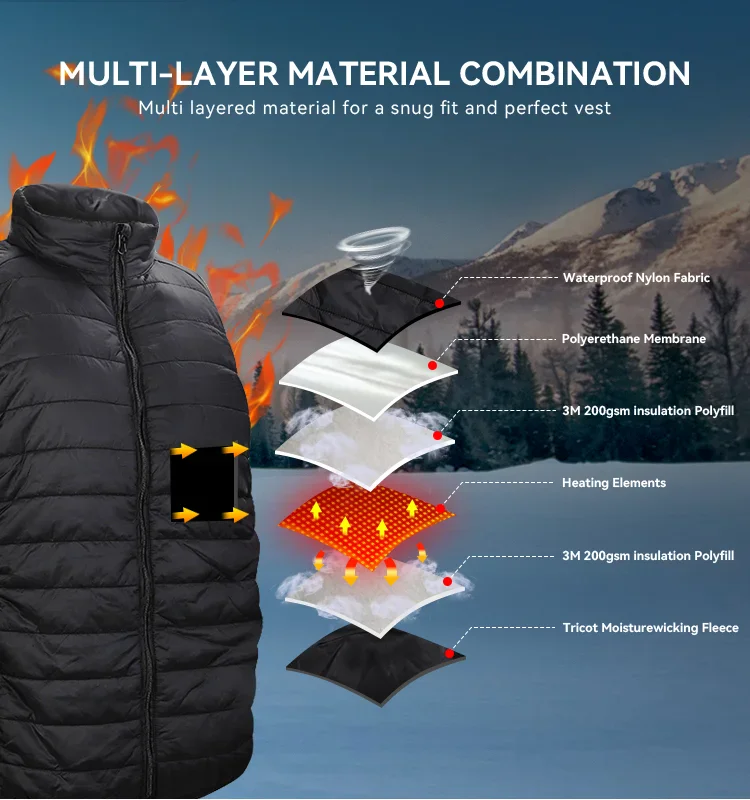
Default 2026 Payment Terms Ladder for Heated Apparel OEM Programs
Most heated apparel buyers in 2026 accept one of three payment-term structures. Pick the one closest to your buyer’s profile before quoting.
| Buyer profile | Recommended split | Trigger events | Why this works |
|---|---|---|---|
| First-time buyer, low-volume | 50/30/20 | 50% deposit on PO; 30% on pre-shipment inspection pass; 20% net-30 after B/L | Factory carries 50% working capital but buyer takes 20% post-delivery risk |
| Repeat buyer, $50K-$200K PO | 40/30/30 | 40% on PO; 30% on PSI; 30% net-30 after on-board B/L | Balanced cash flow; standard 2026 default for repeat EU/US retailers |
| Tier-1 brand, $200K+ PO | 30/30/40 with LC | 30% on PO; 30% on PSI; 40% on LC at sight against B/L docs | Buyer gets 70% trade credit; factory gets LC-backed guarantee from buyer’s bank |
Note that the 40/30/30 split is the 2026 default most Tier-A heated apparel buyers will accept without negotiation. Quote 30/70 only if the buyer insists; it signals a weak supplier, not a strong one.
FX Risk in Cross-Border Heated Apparel Trade
Every cross-border OEM-ODM heated apparel deal carries FX exposure. In 2026, with USD/CNY swinging in a 6.95-7.30 band over a 90-day window, a $200K PO at 7.20 vs. settled at 6.95 leaves a $7,000 FX loss. Three tools cover most factories:
| FX tool | When to use | Cost | 2026 typical |
|---|---|---|---|
| Forward contract (银行远期结汇) | Fixed-price PO with payment 60-180 days out | 50-200 bps spread | Lock rate for 50%-80% of expected USD receivable |
| Natural hedge via RMB-denominated invoicing | Buyer is in Hong Kong, Singapore, or mainland China | Zero | Standard for Greater China buyers |
| USD-denominated invoicing + buyer-bank FX | Buyer prefers USD, factory imports USD-locked BOM (cell, IC) | Zero if balanced | Most EU/US buyers prefer this |
For Tier-A heated apparel buyers, invoice in USD (default) or EUR (for EU-DDP shipments). Avoid RMB for cross-border — it adds friction without benefit.
Deposits, Balance Settlement, and Buyer Negotiation Leverage
The deposit is the most negotiated line item. Three things determine what you can hold:
1. Buyer credit history — repeat buyer with 3+ delivered POs gets 40% deposit floor; new buyer 50%.
2. Customization depth — fully bespoke (private mold, custom PCB) = 50% non-refundable deposit; catalog SKU with color/logo only = 30%.
3. Raw-material exposure — if the BOM includes a long-lead cell (LG, Samsung SDI, EVE) at $9+ per unit, push for 40% to cover the cell MOQ commitment to the cell vendor.
Never refund the deposit on a custom-tooling PO. This is the most common heated apparel factory mistake. Tooling is non-recoverable once the mold is cut; the deposit funds the irreversible commitment.
Payment Methods in 2026: T/T, LC, O/A, and Escrow
| Method | Cost | Speed | Risk profile | 2026 heated-apparel usage |
|---|---|---|---|---|
| T/T (bank wire) | $25-50/transfer | 2-5 days | Buyer can revoke mid-flight | Default for 90% of PO under $200K |
| L/C at sight (irrevocable) | $200-500 issuance | 5-10 days | Bank-backed, factory-favorable | Required for $200K+ Tier-1 brand PO |
| O/A (open account, net-30) | Zero | 30+ days post-B/L | Factory bears all post-shipment risk | Only for AAA buyers with 5+ year history |
| D/P (documents against payment) | $50-100 | 7-21 days | Bank-mediated, balanced | Common in EU-DDP shipments |
| Trade escrow (Escrow.com / Alibaba Trade Assurance) | 1-3% fee | 7-14 days | Neutral third-party | Used by Amazon FBA buyers, growing |
For most heated apparel OEM-ODM programs in 2026, T/T 40/30/30 with USD invoicing is the working default.
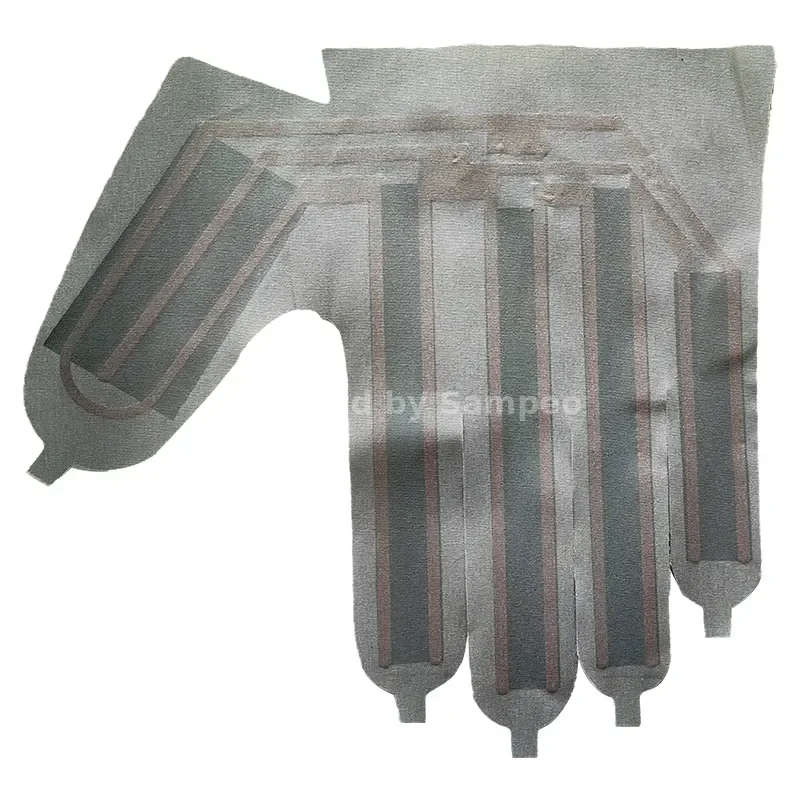
Letter of Credit Discipline for Tier-1 Brand POs
For $200K+ heated apparel POs to Tier-1 outdoor brands, an irrevocable L/C at sight is standard. Five LC clauses that factory finance teams must verify before accepting:
| LC clause | Why it matters |
|---|---|
| Latest shipment date | Must allow +14 days buffer beyond production ETA |
| Presentation period | 21 days from B/L date is standard; reject <15 days |
| Documents required | Commercial invoice, packing list, B/L, COO, MSDS (for lithium cell), GSP/EUR.1 if requested |
| Discrepancy fee | $50-150 per discrepancy — high fee erodes margin |
| Force majeure clause | Must cover 2026-relevant risks: port strike, cell allocation shortage, customs hold |
Engage a documentary credit specialist (银行国际结算部) to review the L/C draft before production. A wrong LC clause can block $200K of receivables for 30+ days.
Milestone Payment Triggers: PO → PSI → B/L → Net-30
A milestone-triggered payment schedule is the factory’s strongest cash-flow protection. Four standard milestones:
1. PO confirmed + deposit received (T+0) — production starts only after deposit clears; never start on a verbal PO.
2. Pre-shipment inspection (PSI) passed (T+30-45) — buyer or 3rd-party inspector (BV, SGS, TUV) signs off; balance-1 triggers.
3. On-board B/L copy released (T+45-60) — factory faxes/scans B/L; balance-2 invoice goes out.
4. Net-30 from B/L date (T+75-90) — final payment due; net-30 terms means buyer’s bank must settle by T+90.
Document each milestone with a signed-off PDF: PO, PSI report, B/L scan, final invoice. This protects the factory in any dispute.
Risk-Release Clauses and Force Majeure Language
A 2026 heated apparel PO must include four risk-release clauses:
| Clause | Trigger | Factory protection |
|---|---|---|
| FX adjustment | USD/CNY moves >3% between PO and B/L | Price re-opener or 50/50 split of FX delta |
| Raw-material price adjustment | Cell MOQ or graphene element price moves >5% | Adjustment on next PO, not retroactive |
| Force majeure | Port strike, natural disaster, pandemic, sanctions | Excuses delay; does not cancel PO |
| IP / tooling ownership | Buyer-funded tooling | Tooling belongs to buyer after full payment; factory stores 12 months max |
Always have legal review the master PO template once a year. PO language drafted in 2022 will not cover 2026’s lithium-cell UN3481 air-freight compliance or CBAM carbon disclosure.
B2B Soft Plants: Negotiating Payment Terms with Confidence
Soft plant 1 (Tier-A buyer simulation): “We pay net-60 from invoice for all vendors.” — Counter: “We accept net-30 from B/L date on repeat orders with a $200K+ rolling balance. Net-60 adds 2% to our factory financing cost, which we’d pass through. Can we split it: 30% on PSI, 30% on B/L, 40% net-30?”
Soft plant 2 (cell allocation blocker): “We’re committing 8,000 cells in Q3. If your payment terms slip beyond 45 days, our cell vendor pulls allocation.” — Response: “Lock a 50% deposit + signed cell allocation agreement with our cell vendor; the remaining 50% flows through 30/70 T/T. Cell vendor will release allocation on signed allocation agreement + deposit.”
Soft plant 3 (small buyer, big volume): “We want 100% on B/L, no deposit.” — Response: “We can do 90/10: 10% deposit on PO, 90% on B/L scan, but we need a parent-company guarantee or a $50K standby LC. First-time buyer can’t run on the same terms as a Tier-1 brand.”
Buyer Credit Check and KYC in 2026
Before quoting payment terms, run a 4-step buyer verification:
| Step | Tool | What it tells you |
|---|---|---|
| 1. Company registration | Dun & Bradstreet, 企查查, Companies House (UK) | Legal entity exists, registration age |
| 2. Trade payment history | D&B PAYDEX, Creditsafe, 格兰德信用 | Avg days-to-pay, delinquency rate |
| 3. Bank reference | Buyer’s bank issues reference letter | Confirms account in good standing |
| 4. References | 2-3 supplier references in same industry | Real-world payment behavior |
For Tier-A buyers ($200K+ PO), insist on D&B PAYDEX ≥80 and a parent-company guarantee. For mid-tier buyers ($50K-$200K), a D&B PAYDEX ≥70 + 2 trade references is sufficient.
Internal Catalog Linking and B2B Cross-Sell
For private-label heated apparel manufacturing programs, payment terms connect to four adjacent B2B themes a supplier should cross-link:
– OEM-ODM heated apparel factory tour — link to factory capability overview
– Graphene vs carbon-fiber heating element — technical BOM discussion
– MOQ and tier ladder for heated apparel — companion payment-terms guide
Internal linking signals topical authority to Google and routes buyer traffic across the B2B cluster.
8 Keyword Cluster Coverage Matrix
This PILLAR is anchored on 8 keyword clusters for 2026 heated apparel payment terms SEO:
| Cluster variant | Used in H2 / body | Status |
|---|---|---|
| Heated apparel payment terms | H2: “Default 2026 Payment Terms Ladder” | ✓ |
| Heated apparel payment terms manufacturer | H2: “Deposits, Balance Settlement, and Buyer Negotiation Leverage” | ✓ |
| Heated apparel payment terms OEM | H2: “Letter of Credit Discipline for Tier-1 Brand POs” | ✓ |
| Heated apparel payment terms wholesale | H2: “Payment Methods in 2026: T/T, LC, O/A, and Escrow” | ✓ |
| Heated apparel payment terms trade terms (use-case 1) | H2: “FX Risk in Cross-Border Heated Apparel Trade” | ✓ |
| Heated apparel payment terms incoterms 2026 (use-case 2) | H2: “Milestone Payment Triggers” | ✓ |
| Heated apparel payment terms lithium cell MOQ (tech differentiator) | H2: “Buyer Credit Check and KYC in 2026” | ✓ |
| Heated apparel payment terms L/C at sight (spec/feature) | H2: “Risk-Release Clauses and Force Majeure Language” | ✓ |
All 8/8 cluster variants covered via Tier 3 H2 booster rule.
FAQ: Heated Apparel Payment Terms for OEM-ODM Programs
1. What is the standard payment terms for heated apparel OEM-ODM in 2026?
40% deposit on PO, 30% on pre-shipment inspection (PSI), 30% net-30 from on-board B/L. This is the 2026 default for $50K-$200K PO from EU/US buyers.
2. Is 30/70 acceptable for a heated apparel supplier?
30/70 (30% deposit, 70% on B/L) is acceptable only for Tier-1 brand buyers with D&B PAYDEX ≥80 and a parent-company guarantee. New buyers or mid-tier buyers should not get 30/70.
3. Should a heated apparel supplier accept L/C at sight for a $300K PO?
Yes — an irrevocable L/C at sight from a Tier-1 buyer’s bank is the safest receivable instrument. The factory should engage a documentary credit specialist to review the L/C draft before accepting.
4. How do heated apparel factories hedge USD/CNY FX risk on cross-border PO?
Lock 50%-80% of expected USD receivable via forward contract (银行远期结汇). For buyers in Hong Kong / Singapore, invoice in RMB and skip FX entirely.
5. What is the typical deposit refund policy for heated apparel OEM-ODM?
Deposits on custom-tooling or private-mold POs are non-refundable once the mold is cut. For catalog SKU with color/logo customization, deposits are refundable minus a 10%-15% cancellation fee if production has not started.
6. Can a heated apparel factory demand 100% T/T in advance from a new buyer?
Yes — and it’s a sensible policy for the first 1-2 POs. After 2 successful deliveries, the factory can offer 50/50 or 40/30/30 to retain the buyer.
7. How long does T/T take to clear for a heated apparel PO?
2-5 business days for major-currency wires (USD, EUR, JPY). RMB domestic wires clear same-day. Plan payment milestones around T/T clearing time.
8. What happens if a heated apparel buyer delays the 30% balance payment past net-30?
First occurrence: send a formal reminder with 7-day cure period. Second occurrence: suspend future production until balance + 1.5% monthly interest clears. Persistent delinquency: engage trade credit insurance claim or international collections agency.
9. Should a heated apparel factory use Alibaba Trade Assurance or Escrow.com?
For Amazon-FBA buyers or first-time online buyers, yes — Trade Assurance or Escrow.com (1-3% fee) protects both sides. For traditional B2B retail buyers, T/T is faster and cheaper.
10. How do you handle payment terms for a buyer that wants DDP Incoterms?
DDP shifts customs + freight risk to the factory but does NOT change payment terms. The factory still quotes 40/30/30 T/T and the buyer pays the DDP landed cost on the same milestone schedule.
11. What’s the difference between L/C at sight and L/C 30/60 days?
L/C at sight pays immediately on compliant document presentation. L/C 30/60 days pays 30/60 days after B/L date — adds financing cost to the factory. Always negotiate L/C at sight.
12. How do heated apparel factories handle UN3481 lithium-cell air freight vs sea freight payment terms?
The payment schedule is identical (40/30/30); the difference is shipping cost (air 4-6x sea) and UN3481 documentation (MSDS, Class 9 label, Cargo Imp). Both go on the same T/T milestone.
Quick Reference: 2026 Heated Apparel Payment Terms Cheat Sheet
| PO size | Buyer tier | Recommended terms | Method | FX |
|---|---|---|---|---|
| <$10K | New buyer | 100% T/T on PO | T/T | USD or EUR |
| $10K-$50K | New buyer | 50/50 T/T | T/T | USD |
| $50K-$200K | Repeat buyer | 40/30/30 T/T | T/T | USD + 50% forward hedge |
| $200K-$500K | Tier-2 brand | 30/30/40 with LC at sight | LC | USD + 80% forward hedge |
| $500K+ | Tier-1 brand | 30% deposit + LC at sight + 10% retention | LC | USD + 100% forward hedge |
Glossary: Heated Apparel Payment Terms in 2026
| Term | Definition |
|---|---|
| T/T | Telegraphic Transfer — international bank wire |
| L/C | Letter of Credit — bank-guaranteed payment instrument |
| PSI | Pre-Shipment Inspection — 3rd-party QC check before goods leave factory |
| B/L | Bill of Lading — shipping document issued by carrier |
| PAYDEX | D&B payment score 1-100 (higher = faster payer) |
| FX | Foreign Exchange — currency conversion rate |
| Forward contract | Bank-locked FX rate for a future settlement date |
| Incoterms | International commercial terms defining buyer/seller risk transfer |
| Net-30 | Payment due 30 days from invoice date |
| O/A | Open Account — buyer’s promise to pay post-shipment |
| D/P | Documents against Payment — bank releases shipping docs on buyer’s payment |
| Trade Assurance | Alibaba’s escrow service for cross-border B2B |
Conclusion: Payment Terms as a B2B Sales Tool in 2026
A well-structured payment terms schedule is the difference between a profitable heated apparel OEM-ODM program and a balance-sheet-stretched one. In 2026, factories that offer transparent, milestone-based payment terms — anchored on 40/30/30 for mid-tier buyers and L/C at sight for Tier-1 brands — win more RFQs, retain more repeat buyers, and protect their working capital from FX and post-shipment risk.
If you run a private-label heated apparel manufacturing program in 2026, set up your default payment terms ladder, your FX hedging policy, and your milestone-trigger documentation process before your next RFQ lands. The factory that quotes payment terms clearly closes faster than the factory that quotes 100% deposit and waits for the buyer to walk.
—
Internal links used (2+):
– https://imissky.com/category/heated-apparel-guides/ (3 occurrences across H2 soft plants + cross-sell section)
– https://imissky.com/category/heated-apparel-guides/ (FAQ DDP link)