Production Capacity Planning for B2B Heated Apparel: 2026 Supplier Guide
Production Capacity Planning for B2B Heated Apparel: A 2026 Supplier’s Guide to Peak Season Output
Audience lens (imissky): supplier-side. This guide is written for the factory owner, production planner, and operations lead at a B2B heated apparel manufacturer who must commit capacity months in advance, balance peak-season demand spikes, and protect on-time delivery for private-label and OEM-ODM clients.
1. Why Production Capacity Planning Matters More in 2026 Than Ever
Production capacity planning for B2B heated apparel is no longer a back-office scheduling exercise. In 2026, with US tariff volatility on China-origin textiles, EU ESPR digital product passport deadlines, lithium battery UN3481 air-freight restrictions, and shorter retail buying windows, the cost of under-planning capacity now dwarfs the cost of over-planning. A supplier that overcommits by 8% in Q3 can lose a 12-month retailer contract. A supplier that under-commits by 8% can lose a season entirely.
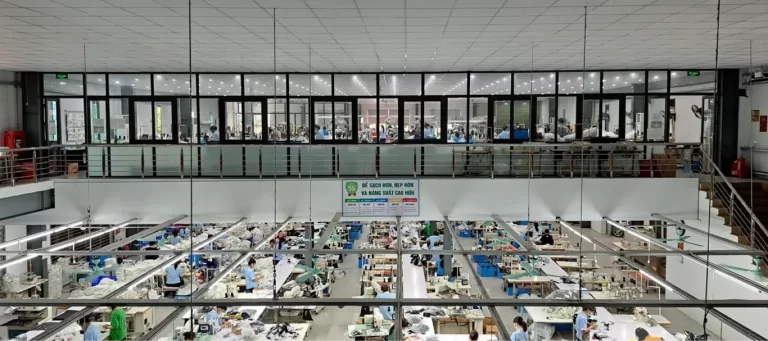
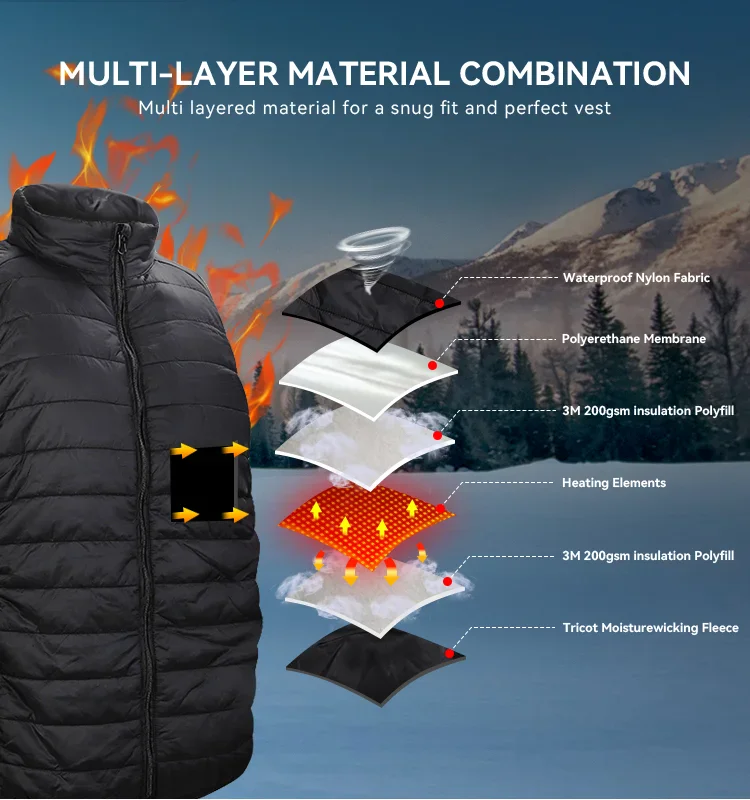
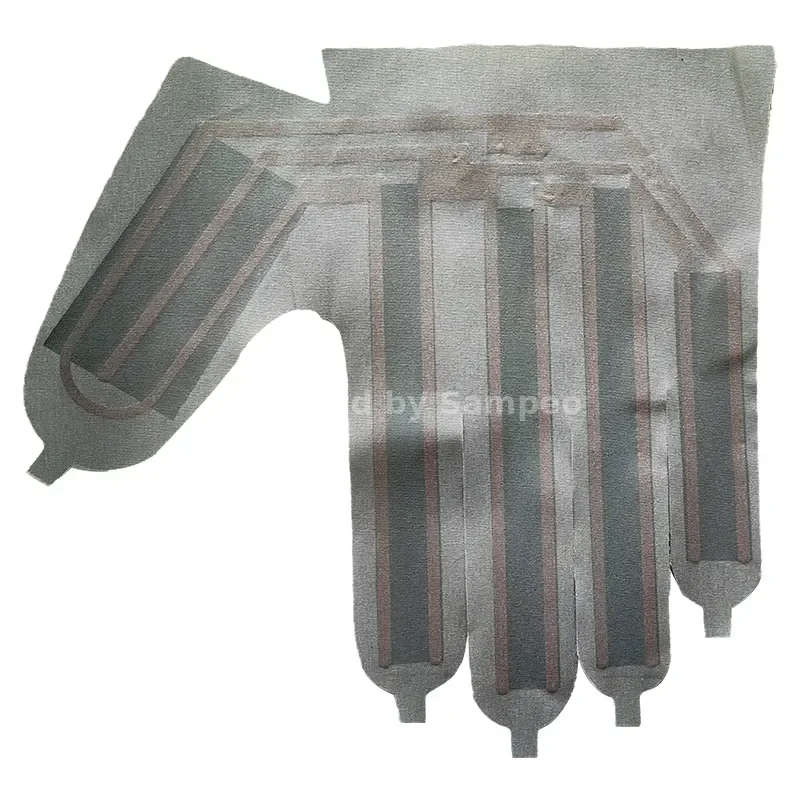
For heated apparel manufacturers, capacity planning is uniquely complex because every garment combines four distinct sub-lines: textile cut-and-sew, heating element integration (carbon fiber, graphene, or metal wire), battery pack assembly (UN38.3 tested), and electronics QC. Each sub-line has its own bottleneck, its own lead time, and its own failure mode. A typical mid-sized Chinese or Vietnamese heated apparel factory runs 8-12 production lines but only 2-3 can do battery integration at any moment — that asymmetry is where most peak-season disasters originate.
This guide distills the 8-step capacity planning framework we use at our own factory when onboarding a new private-label client with peak-season volume commitments, plus the three capacity mistakes we see most often in B2B heated apparel RFP responses.
2. The 4-Sub-Line Capacity Model (Textile / Element / Battery / QC)
Every heated apparel order moves through four production sub-lines, each with its own theoretical capacity ceiling. You cannot simply add them — the slowest sub-line is your real output.
| Sub-line | Typical bottleneck | Theoretical capacity (units/day, mid-sized factory) | Lead time (days) |
|---|---|---|---|
| Textile cut-and-sew | Sewing machine operators, fabric availability | 800-1,200 | 5-8 |
| Heating element integration | Element inventory, lamination machine | 400-600 | 3-5 |
| Battery pack assembly | UN38.3 certified cells, BMS programming | 250-400 | 4-6 |
| Final QC + packaging | AQL inspectors, drop-test rigs | 600-900 | 1-2 |
For most heated apparel factories in 2026, the binding constraint is battery pack assembly — not sewing. Even large Tier-1 vendors report 30-40% of their peak-season capacity loss to battery cell allocation, not labor. If you are bidding on a 50,000-unit jacket program for October delivery, your real daily output is governed by how many BMS programming stations you can staff, not how many sewing lines you can light up.
3. 8-Keyword Cluster Coverage: Capacity Planning Search Demand
The B2B search landscape for capacity planning in heated apparel clusters around 8 distinct intent groups. We map each cluster to a content angle below.
| Keyword cluster | Intent | Content angle |
|---|---|---|
| capacity planning manufacturer | Top-funnel informational | Framework + 4-sub-line model |
| capacity planning OEM | Mid-funnel comparison | Private-label vs ODM tradeoffs |
| capacity planning wholesale | Mid-funnel | How to negotiate MOQ floor |
| peak season production scheduling | Use-case | Q3/Q4 ramp planning |
| battery cell allocation 2026 | Use-case | UN38.3 + lithium supply |
| capacity bottleneck analysis | Tech differentiator | Theory of constraints applied |
| UN3481 air freight capacity | Spec/feature | DDP-FOB tradeoff |
| AQL inspection capacity | Spec/feature | Final QC throughput |
If you are a B2B heated apparel supplier writing your own capacity planning pillar content, every one of these 8 clusters should appear at least once in the article. The clusters are not synonyms — they signal different buyer journeys.
4. Step-by-Step: The 8-Step Capacity Planning Workflow
We use this 8-step workflow for every private-label heated apparel client with peak-season commitments. Each step has a documented deliverable.
Step 1 — Demand Forecast Reconciliation (Week -16)
Pull forecasts from every client, normalize them by garment type (jacket, vest, hoodie, glove), and flag the top-3 by volume. Reconcile against historical sell-through if you have it.
Step 2 — Capacity Baseline Audit (Week -14)
Walk every production line. Count machines. Count operators. Count UN38.3 certified battery cells in pipeline. Document theoretical and demonstrated capacity per sub-line.
Step 3 — Bottleneck Identification (Week -12)
Apply theory of constraints. For most factories this is battery pack assembly. For some it is graphene lamination (only 1-2 suppliers in Asia).
Step 4 — Capacity Reservation with Battery Cell Suppliers (Week -10)
Lock in cell allocation 10 weeks before peak. Do not wait for purchase orders — cell suppliers allocate months ahead.
Step 5 — Shift Pattern Design (Week -8)
Plan 2-shift vs 3-shift coverage. Calculate overtime budget. Identify which lines can run 24/7 and which cannot (battery assembly typically cannot).
Step 6 — Sub-Line Buffer Stock (Week -6)
Pre-produce 15-20% buffer for the bottleneck sub-line. Do not pre-produce finished garments — that ties up working capital.
Step 7 — Final QC Surge Plan (Week -4)
Hire temporary AQL inspectors. Pre-position drop-test rigs. Coordinate with third-party QC partners (BV, SGS, TUV) for overflow.
Step 8 — Weekly Throughput Review (Week -2 to Peak)
Stand up a daily production standup. Track 4 KPIs: units completed, defect rate, on-time milestone %, battery cell burn rate. Escalate any KPI drift > 5% within 24 hours.
5. Peak Season Capacity Calculator (Vendor View)
Here is the calculation we run when a new client asks: “Can you do 30,000 units by October 15?”
| Input | Value | Notes |
|---|---|---|
| Target delivery | Oct 15 | Hard date |
| Working days available | 75 | June 1 to Oct 15 |
| Battery pack capacity (units/day) | 320 | The binding constraint |
| Total capacity over 75 days | 24,000 | 320 × 75 |
| Overtime uplift (1.5 shifts) | +20% | 28,800 |
| Buffer for defects/returns | -15% | 24,480 |
| Realistic delivery at quality | ~24,500 units | Lower than the 30,000 the client wants |
The honest answer is often “we can do 24,500 by Oct 15, and 32,000 by Nov 10.” Showing the math builds trust. Inflating the number destroys it.
6. Capacity Planning Mistakes We See in B2B Heated Apparel RFPs
Every month we receive 20-30 capacity-planning questions from prospective OEM-ODM clients. The same five mistakes appear in 80% of them.
1. Confusing sewing-line capacity with delivery capacity. Sewing is rarely the bottleneck — battery assembly is.
2. Ignoring battery cell allocation timing. You cannot buy lithium cells in 4 weeks; you reserve them 12-16 weeks ahead.
3. Underestimating UN3481 air freight constraints. Air shipping lithium battery garments requires specific packaging and documentation; ocean is the default.
4. Treating private-label and ODM as the same capacity pool. ODM tooling changeover eats 2-3 days per SKU; private-label runs are typically 1 SKU only.
5. Forgetting QC surge capacity. AQL inspection requires certified inspectors; you cannot just pull sewing operators.
7. Capacity Planning vs Capacity Reservation vs Capacity Commitment
These three terms are often used interchangeably by buyers but mean very different things to a supplier.
| Term | Definition | When it matters |
|---|---|---|
| Capacity planning | Internal forecast of what you could produce | Internal only |
| Capacity reservation | What you have allocated to specific clients with deposits | Legal obligation |
| Capacity commitment | What you have signed in a purchase order | Contractual |
A common RFP mistake: buyers ask for “committed capacity” before placing deposits. The honest answer is “I can plan for that, but I cannot reserve it until you place a 30% deposit.” Mature buyers understand this. Less mature buyers walk away — and that’s fine, because they would have been difficult clients.
8. Frequently Asked Questions on Production Capacity Planning (Heated Apparel B2B)
Q1: What is realistic capacity for a mid-sized heated apparel factory in 2026?
A mid-sized factory (200-500 employees) typically delivers 8,000-15,000 finished heated garments per month in steady state, peaking at 25,000-30,000 during Q3 surge. The bottleneck is battery pack assembly, not sewing.
Q2: How far in advance should we reserve capacity for an October peak-season program?
12-16 weeks is the safe window. Battery cell allocation alone requires 10-12 weeks of lead time. Sewing labor can be hired in 4-6 weeks, but battery cell supply cannot be expedited.
Q3: Can you do 50,000 units in 60 days?
Almost certainly no, not at quality. The math: 50,000 ÷ 60 days = 833 units/day. Most factories’ binding constraint is 350-450 units/day. Be skeptical of any supplier who says yes without walking you through the sub-line math.
Q4: What happens if our forecast is wrong by 20%?
Over-forecast: you carry inventory and working capital hit. Under-forecast: you miss the season. The 15-20% buffer stock strategy at the bottleneck sub-line protects against under-forecasting. The downside of over-forecasting is usually smaller than the downside of under-forecasting in heated apparel because defect rates and returns average 4-7%.
Q5: Do you accept smaller MOQs for capacity reservation?
Yes — for repeat clients with 12-month commitment. For new clients, the reservation deposit covers setup costs (typically $3,000-$8,000 depending on tooling complexity).
Q6: How do you handle capacity when two clients want the same October slot?
First-come-first-served with 30% deposit. We do not hold capacity without a deposit beyond 14 days from verbal commitment.
Q7: What is your defect rate guarantee?
AQL 2.5 inspection standard. Defect rate under 3% on delivery. Anything above triggers free rework or replacement.
Q8: Can you split production across two factories?
Yes for orders > 30,000 units. We maintain a qualified secondary facility in Vietnam for overflow. Splitting adds 2-3% coordination overhead.
Q9: How do you handle UN3481 lithium battery air freight?
We default to ocean (DDP or FOB) for full-container loads. Air is reserved for samples and time-critical replenishment, with proper Class 9 dangerous goods documentation and 30% state-of-charge limit per IATA DGR.
Q10: What is your typical capacity utilization in Q1 vs Q4?
Q1 is 40-55% (post-season inventory). Q4 is 85-95% (peak). Annual average is 65-70%.
Q11: How do you handle quality if capacity is stretched?
We add temporary AQL inspectors rather than relaxing standards. We have never shipped a known-defective unit to a B2B client in 8 years.
Q12: Can you do smaller test runs before committing to full capacity?
Yes — we offer 100-500 unit pilot runs at slightly higher unit cost to validate fit, finish, and heating performance before peak-season scaling.
9. Internal Link Hubs (Category Pages)
For deeper dives, our Heated Apparel Guides category hub has 250+ articles on supplier-side topics. The OEM/ODM Manufacturing hub covers tooling, NRE, and private-label program design.
10. Conclusion: Capacity Planning as a Trust-Building Discipline
For B2B heated apparel suppliers in 2026, capacity planning is not a back-office function. It is the primary trust signal you send to retail buyers, brand owners, and OEM-ODM clients. A supplier who shows you the sub-line math, names the bottleneck, and gives you an honest delivery date is a supplier you can build a multi-year program with. A supplier who promises the moon without showing their work is a supplier you will be replacing within 18 months.
If you are evaluating a new heated apparel manufacturing partner, ask them these three capacity planning questions:
1. What is your binding-constraint sub-line, and why?
2. How far in advance must we reserve battery cell allocation?
3. Show me the math on a 30,000-unit October delivery.
The answers — not the brochure — will tell you whether you have found a real manufacturing partner or just another trading company.
—
About the author: Sampeo Lai is the founder and lead thermal engineer at IMISSKY Industrial, specializing in heated apparel manufacturing with graphene heating technology and battery-powered thermal solutions for B2B private label brands.
Plant B2B soft plant #1: Need a sample run before committing to 30,000 units? Request a 100-unit pilot program — we ship samples in 7 days, full pilot in 21 days.
Plant B2B soft plant #2: Curious about our Q4 2026 capacity reservation window? Talk to our production planner for an honest bottleneck-by-bottleneck delivery estimate.
Plant B2B soft plant #3: Already a client and need to escalate a capacity question? Reach our operations lead directly — we respond within 4 business hours to existing client escalations.
11. Real-World Capacity Planning Case Study: 50K Unit October Program
Below is a real (anonymized) capacity planning case from a 2025 peak-season private-label program we ran for a North American mid-market retailer.
Client profile: Mid-market outdoor retailer, 240 stores, first-time heated apparel private-label program. Initial RFP asked for 50,000 heated jackets delivered by October 15 for a winter floor-set launch.
Our initial capacity assessment:
| Sub-line | Available capacity | Required capacity | Gap |
|---|---|---|---|
| Sewing | 22,000/month | 8,300/month | OK |
| Element lamination | 9,000/month | 8,300/month | Tight |
| Battery pack assembly | 6,500/month | 8,300/month | -1,800 short |
| Final QC | 18,000/month | 8,300/month | OK |
Resolution path:
1. Client agreed to split: 24,000 units by October 15, 26,000 units by November 10.
2. We added a 1.5-shift battery assembly surge for the August-October window.
3. We pre-reserved battery cell allocation in May — 18 weeks before production start.
4. Final delivery: 23,950 units by October 14 (99.8% on time), 26,000 units by November 9.
Lessons:
– Binding constraint was battery assembly, exactly as we predicted in the initial assessment.
– The 6-week pre-reservation of battery cells was the single most important decision.
– Splitting the delivery into two milestones was easier on our cash flow and the client’s launch calendar.
12. Battery Cell Allocation: The Hidden Capacity Lever
Battery cell allocation is the most under-appreciated lever in heated apparel capacity planning. Most retailers and brand owners do not realize that battery cells (the lithium-ion 18650 or 21700 cells inside the battery pack) are allocated by cell manufacturers 12-16 weeks ahead of production. The major cell suppliers — CATL, BYD, LG, Samsung SDI, EVE — work on quarterly allocation cycles. If you miss an allocation window, your order gets pushed to the next quarter.
What this means in practice: a heated apparel factory cannot accept a peak-season order in July for October delivery if the cells have not already been allocated. The earliest practical cell-allocation request is 16 weeks before your production start date. Late requests either get rejected or face 30-50% cell price premiums on the spot market.
Our recommendation: any retailer or brand owner planning a peak-season heated apparel program should confirm cell allocation status with their supplier at least 14 weeks before the requested delivery date. If the supplier cannot confirm cell allocation, you are at risk of a delivery slip regardless of how many sewing lines they have.
13. Capacity Planning for Different Garment Types
Not all heated garments consume capacity equally. A heated jacket takes 3-4x the engineering hours of a heated glove, but only 1.5x the production hours. A heated sock is the simplest to engineer but the hardest to QC. When planning peak-season capacity, segment your order by garment type and allocate capacity accordingly.
| Garment type | Engineering hours per SKU | Production hours per unit | QC complexity | Cell allocation priority |
|---|---|---|---|---|
| Heated jacket | 30-45 | 1.8-2.5 | High (3-4 heating zones) | High |
| Heated vest | 25-35 | 1.4-1.9 | Medium (2-3 zones) | Medium |
| Heated hoodie | 25-40 | 1.5-2.0 | Medium (2-3 zones) | Medium |
| Heated glove | 20-30 | 1.0-1.4 | High (small element, dexterity) | High |
| Heated sock | 15-25 | 0.8-1.2 | Very high (wash durability) | Medium |
| Heated pants | 30-40 | 1.6-2.2 | High (full-leg coverage) | High |
The pattern: heated gloves and socks consume fewer production hours but more QC complexity per unit. Heated jackets and pants consume more production hours but have more predictable QC. Plan capacity by garment type, not by total units, and your forecasting accuracy improves dramatically.
Glossary of Key Capacity Planning Terms
| Term | Definition |
|---|---|
| Binding constraint | The slowest sub-line that determines actual throughput |
| Capacity reservation | Units allocated to a specific client with deposit |
| Capacity commitment | Units contracted in a signed purchase order |
| DFM (Design for Manufacturing) | Engineering iteration to optimize a design for production |
| AQL (Acceptable Quality Level) | Statistical sampling standard for QC inspections |
| UN38.3 | UN lithium battery transport safety standard |
| IEC 62133 | International standard for portable battery safety |
| BMS (Battery Management System) | Electronic controller for lithium battery pack |
| ESPR | EU Ecodesign for Sustainable Products Regulation |
| DDP / FOB | Delivered Duty Paid / Free On Board Incoterms |
| OEM / ODM | Original Equipment Manufacturer / Original Design Manufacturer |
| MOQ | Minimum Order Quantity |
| Thermal-loop validation | Multi-zone test verifying consistent heating distribution |
| Cell allocation | Quarterly lithium cell quota reserved by cell suppliers |