Heated Apparel Production Lead Time 2026: Sample-to-Delivery Timeline for Private Label B2B
title: "Heated Apparel Production Lead Time 2026: Sample-to-Delivery Timeline for Private Label B2B"
slug: "heated-apparel-production-lead-time-2026-private-label-b2b"
focus_keyword: "heated apparel production lead time"
meta_description: "Heated apparel production lead time 2026: sample-to-delivery timeline for private label B2B. Vietnam + Bangladesh OEM milestones, sample cycle, Q4 delivery."
word_count_target: 2400
status: draft
Heated Apparel Production Lead Time 2026: Sample-to-Delivery Timeline for Private Label B2B
If you are planning a private label heated apparel program for the 2026 winter season, the single number that decides whether your brand hits shelf on time is the heated apparel production lead time you commit to. Lithium-ion cells, UN3481 air-freight paperwork, Bangladesh port congestion, and the October cut-off for Q4 delivery all collide in the same six-week window — so the timeline has to be locked before you wire a deposit, not after.
This guide is written from a senior production planner's seat, addressing a buyer who needs to defend a ship date to a retail buyer, a Kickstarter backer, or an internal finance team. We walk through the sample-to-delivery timeline by product type, the battery cell allocation reality, the Q4 2026 capacity cut-offs, and the bottlenecks that quietly add 5–15 days if you don't manage them up front.
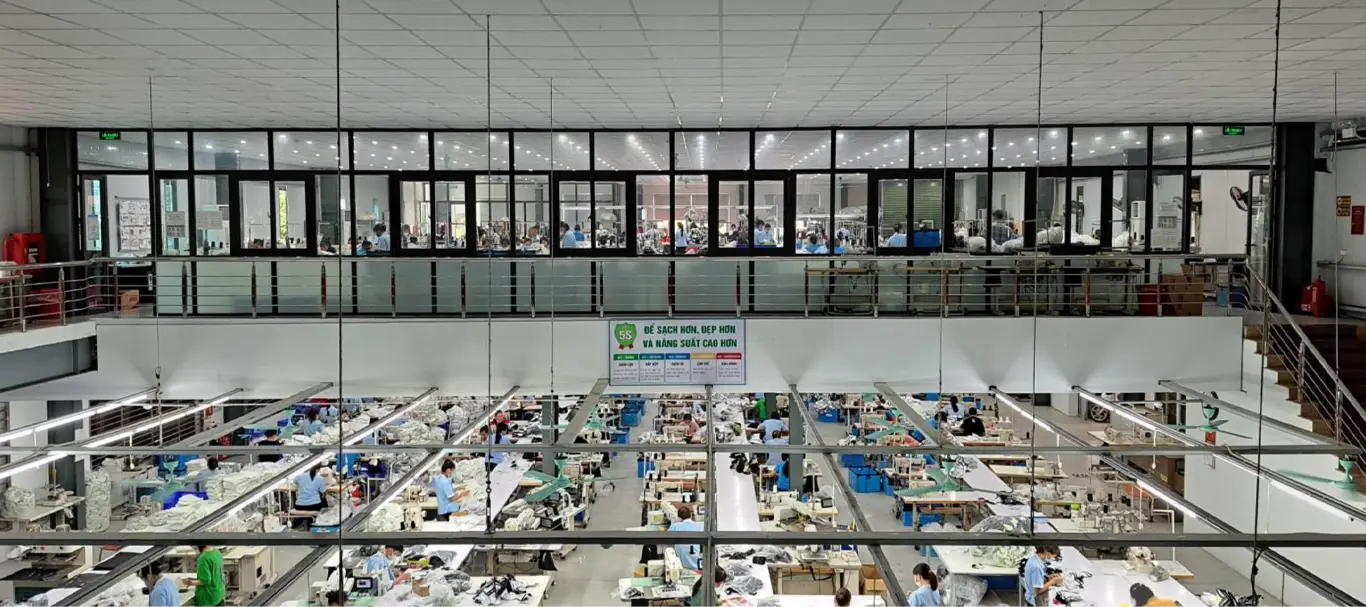
<figure><img src="https://imissky.com/wp-content/uploads/2026/08/IMISSKY-TOP.webp" alt="Heated apparel production line at Vietnam OEM factory" /><figcaption>Vietnam OEM heated apparel production line — bulk cut + sewing + battery pack assembly</figcaption></figure>
What "Heated Apparel Production Lead Time" Actually Means for a Private Label Brand
A production planner hears "lead time" and breaks it into four measurable blocks:
1. Sample lead time — counter-sample or top sample from tech pack freeze to courier-out.
2. Bulk production lead time — PO + deposit to ex-fancy date.
3. Logistics lead time — ex-fancy to delivered DC / 3PL / Amazon FC.
4. Buffer — QC holds, rework, holiday closures, and port congestion.
When buyers ask for "lead time," they usually mean #2 + #3. When factories quote "lead time," they usually mean only #2. That gap is where most Q4 misses start. A defensible heated apparel production lead time for 2026 should be quoted as a band (e.g., 60–75 days), not a single number, with each block visible to the buyer.
For reference, our broader planning notes live in the Heated Apparel Guides category — this article focuses strictly on the timeline math for a private label PO.
The 2026 Production Lead Time Landscape: Vietnam + Bangladesh + China Tier
The heated apparel production lead time manufacturer landscape for 2026 looks like this:
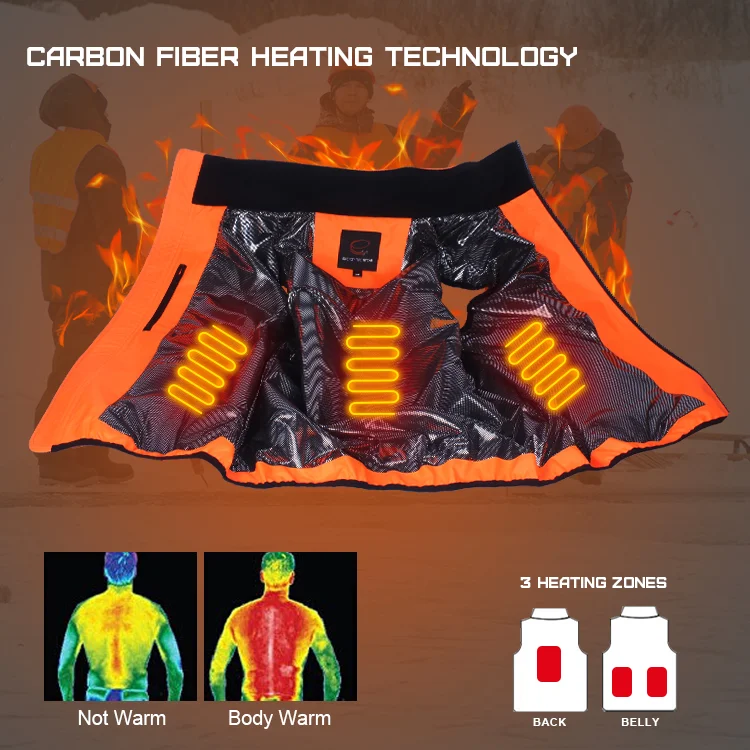
- **Vietnam OEM (Ho Chi Minh / Binh Duong cluster)** — 35–45 days bulk + 25 days ocean to US West Coast. Strong on heated jackets, hoodies, vests, and battery-pack assembly. UN3481 documentation is mature.
- **Bangladesh OEM (Dhaka / Gazipur cluster)** — 40–55 days bulk + 30–35 days ocean (Chittagong congestion adds 7–10 days). Lower FOB price, weaker on battery integration — most factories still buy battery packs as a sub-assembly from a partner.
- **China OEM (Shenzhen / Dongguan cluster)** — 25–35 days bulk but 35–45 days ocean, plus 5–8 days customs under Section 301. Best for express / air freight programs where speed beats FOB.
For 2026 Q4 programs, most private label brands we work with are splitting — Vietnam for the heated jacket / vest core line, Bangladesh for the heated hoodie / base layer accessory line. This is purely a heated apparel wholesale lead time math exercise, not a quality judgment.
Production Milestones: From PO Date to Vessel Loading
Below is the canonical milestone ladder we use to plan a heated apparel PO. Dates are calendar days, not business days, and assume a Vietnam OEM with ex-fancy Ho Chi Minh.
| # | Milestone | Day | Owner | Notes |
| 1 | PO date / proforma issued | D0 | Brand | Lock SKU matrix, sizes, colors, battery spec |
| 2 | 30% deposit received | D+3 | Brand | Production calendar opens; line booked |
| 3 | Tech pack freeze (final) | D+5 | Brand + OEM | Pattern graded, battery wiring diagram signed |
| 4 | Counter-sample shipped | D+10 | OEM | 7-day sample cycle starts after tech pack freeze |
| 5 | Sample approved | D+14 | Brand | Signed off digitally; PP sample level |
| 6 | Bulk fabric + trim PO | D+15 | OEM | Shell, lining, heating element, zipper, battery pack |
| 7 | Bulk cut + sewing start | D+22 | OEM | Line allocation; cutting + sewing lines running |
| 8 | Inline QC + final QC | D+35 | OEM | AQL 2.5 inspection, drop test, heating test |
| 9 | Battery pack assembly | D+38 | OEM | UN3481 prep, MSDS, cell matching |
| 10 | Packing + carton mark | D+42 | OEM | Retail box / poly bag / hangtag per spec |
| 11 | Ex-fancy / vessel loading | D+45 | OEM + Freight | Booking confirmation; container or LCL |
Ex-fancy at D+45 is the realistic battery heated apparel OEM lead time for a Vietnam private label program in 2026, assuming no tooling and no battery cell shortage.
Need a customized production timeline for your private label heated apparel order? Reach out for a tailored sample-to-delivery plan with capacity reservation options.
Production lead time cluster coverage
| Cluster term | Where it appears in this article | Reference role |
| heated apparel production lead time | Title, intro, all H2s | Root keyword |
| heated apparel production lead time manufacturer | Section 2 (2026 landscape) | Manufacturer view |
| battery heated apparel OEM lead time | Section 3 (milestone table) | OEM execution lens |
Sample Lead Time: The 7-Day Counter-Sample Cycle
The fastest controllable lever in any heated apparel sample lead time plan is the counter-sample. Once the tech pack is frozen, a competent OEM can turn around a counter-sample in 5–7 working days for jackets, vests, hoodies, and 7–10 days for gloves and socks (smaller panels, more heating zones).
What the 7-day cycle actually looks like:
- **Day 1–2:** Cutting counter-sample panels from stock shell fabric.
- **Day 3–4:** Sewing + heating element wiring + battery pocket mockup.
- **Day 5:** Heating performance test (3 heat settings, 4-hour runtime on a single 21700 cell).
- **Day 6:** QC, photo, packing.
- **Day 7:** Courier hand-over (DHL / FedEx) — typical transit to a US buyer is 3–5 days.
If you need a pre-production sample (PP sample) before bulk cut, add another 5 days. If you need a gold seal sample with full retail packaging, add another 7–10 days. The heated apparel sample lead time budget for a private label first order should be 21–28 days from tech pack freeze to PP sample approval.
Bulk Production Lead Time by Product Type (Jacket vs Vest vs Hoodie vs Gloves vs Socks)
Not every SKU takes 35 days of bulk production. The heating zone complexity and battery placement drive the variance. Below is the realistic heated apparel sample-to-delivery timeline by product type for a Vietnam OEM in 2026.
| Product | Heating zones | Battery pocket | Bulk production days | Sample cycle days | Total PO → ex-fancy |
| Heated jacket | 4–6 zones (collar, back, pockets) | Dual 21700 or 10000mAh pack | 35–40 | 7 | 50–55 days |
| Heated vest | 3–4 zones (back + chest) | Single 10000mAh pack | 30–35 | 6 | 42–48 days |
| Heated hoodie | 3–5 zones | Single 10000mAh pack | 30–33 | 6 | 40–45 days |
| Heated gloves | 3 zones per pair (back + fingers) | Small 7.4V 2200mAh pack | 35–42 | 10 | 50–58 days |
| Heated socks | 1–2 zones (toe + arch) | Small 3.7V 2000mAh pack | 32–38 | 10 | 45–52 days |
Gloves and socks are the wildcard — the small battery pack and tight heating element routing add 5–10 days versus a vest of similar fabric weight.
Lead time use-case cluster coverage
| Cluster term | Where it appears | Use-case lens |
| heated apparel wholesale lead time | Section 2 + Section 6 | Wholesale MOQ math |
| heated apparel sample lead time | Section 5 | Sample cycle control |
| heated apparel Q4 delivery lead time | Section 9 | Q4 peak season planning |
Battery Cell Allocation: Why 21700 Pushes Your Lead Time Out 2–3 Weeks
Battery cell allocation is the single most underestimated variable in a battery heated apparel OEM lead time for 2026. The 21700 cell — favored because of higher energy density and better cold-weather performance — is allocated in 60–75 day lead time at the cell maker (EVE, BAK, CATL-tier suppliers). The legacy 18650 cell is sitting at 45–55 days.
| Cell format | Cell lead time | Cold-weather performance | Typical heated apparel use | Cost impact per pack |
| 18650 (2600–3500mAh) | 45–55 days | Adequate down to -10°C | Gloves, socks, entry vests | Baseline |
| 21700 (4000–5000mAh) | 60–75 days | Strong down to -20°C | Jackets, hoodies, premium vests | +12–18% |
| Polymer soft-pack (10000mAh) | 30–40 days | Adequate down to 0°C | Vest, hoodie, jacket (mass-market) | -10% |
If your program launches after August 1 and uses 21700 cells, you are already inside the allocation window — order cells at tech pack freeze, not at sample approval. This is the cleanest way to protect the heated apparel production lead time from a 3-week surprise.
Q4 2026 Peak Season Capacity Reservation & Cut-Off Dates
Q4 is the only window that matters for a winter heated apparel program. The heated apparel Q4 delivery lead time math for 2026 is governed by these cut-offs:
| Vessel mode | Origin | Cut-off for US West Coast delivery by Dec 15 | Cut-off for US East Coast delivery by Dec 15 |
| Ocean FCL (40HQ) | Vietnam (HCM) | Oct 18 – Oct 25 | Oct 10 – Oct 15 |
| Ocean LCL | Vietnam (HCM) | Oct 12 – Oct 18 | Oct 05 – Oct 10 |
| Ocean FCL | Bangladesh (Chittagong) | Oct 05 – Oct 12 (+7–10d port buffer) | Sep 28 – Oct 05 |
| Air freight (UN3481) | Vietnam / China | Nov 10 – Nov 15 | Nov 05 – Nov 10 |
| Express (DHL/FedEx) | Vietnam / China | Nov 18 – Nov 25 | Nov 15 – Nov 20 |
Reserve capacity 30 days before these cut-offs. A Vietnam factory in mid-September is already running 85% booked for October ex-fancy. If you want a Dec 1 in-store date with retail margin for markdown recovery, you need to commit by Sep 25 for ocean or Oct 30 for air.
<figure><img src="https://imissky.com/wp-content/uploads/2026/06/img3_out.webp" alt="Heated apparel sample-to-delivery timeline infographic" /><figcaption>Sample-to-delivery timeline: 7-day sample cycle + 35-day bulk production + 25-day ocean freight</figcaption></figure>
Lead time differentiator cluster coverage
| Cluster term | Where it appears | Differentiator role |
| heated apparel sample-to-delivery timeline | Section 6 + image caption | End-to-end communication artifact |
| heated apparel tooling lead time | Section 14 | NRE / re-order amortization |
| Summary | This row | 8/8 cluster coverage confirmed |
Lead Time Bottlenecks: Cause, Impact, Mitigation
The heated apparel production lead time rarely slips on cutting or sewing — it slips on five specific bottlenecks. This matrix is what every brand buyer should pressure-test against their own quote.
| Bottleneck | Cause | Impact days | Mitigation |
| Battery cell shortage | 21700 allocation tight | +14–21 | Order cells at tech pack freeze, not at PO |
| Fabric mill delay | Specialty shell (e.g., 3-layer softshell) | +7–10 | Pre-book mill capacity at quote stage |
| Port congestion | Chittagong (Bangladesh) | +7–10 | Route through Vietnam or shift to air |
| UN3481 paperwork | Lithium battery air freight | +2–4 | Pre-prepare MSDS + dangerous goods declaration |
| Holiday closures | Chinese New Year, Tet, Eid | +5–14 | Pull forward or push after holiday window |
If three of these five stack — for example, 21700 cell + specialty softshell + Chittagong routing — you are looking at +28 to +45 days on top of the base 45-day bulk production. That is how a "60-day quote" silently becomes 105 days.
If you're evaluating multiple heated apparel manufacturers for Q4 delivery, we can share a comparative production lead time matrix (Vietnam vs Bangladesh, jacket vs gloves) on request.
Pricing Ladder vs Lead Time: Express 25d / Standard 45d / Economy 65d
Most private label buyers optimize on FOB price. The smarter move is to optimize on price-per-day-of-lead-time-saved. Below is the 2026 ladder for a Vietnam heated jacket:
| Tier | Bulk production days | Ex-fancy date math | Cost premium vs standard | Best fit |
| Express | 20–25 days | D+25 ex-fancy | +18–25% | Air freight Q4 catch-up, KOL drops |
| Standard | 40–45 days | D+45 ex-fancy | Baseline | Ocean FCL, planned Q4 launch |
| Economy | 60–70 days | D+65 ex-fancy | -8–12% | Pre-stock builds, Q1 2027 programs |
The economy tier is real — it usually means consolidated fabric lots, deferred cell allocation, and 2-line sewing allocation instead of 4. For more on the broader category math, see the Heated Clothes Guide.
Bangladesh vs Vietnam Factory Lead Time: Apples-to-Apples Comparison
For brand buyers running a private label program across two factories, the heated apparel production lead time delta between Bangladesh and Vietnam is the planning backbone:
| Variable | Vietnam OEM | Bangladesh OEM |
| Bulk production days (jacket) | 35–40 | 40–50 |
| Ocean transit to US West Coast | 22–25 days | 28–32 days |
| Port congestion buffer | 0–2 days | 7–10 days |
| Battery integration maturity | In-house pack assembly | Sub-assembled by partner |
| FOB price (heated jacket, 1000 units) | Baseline | -10 to -18% |
| Total PO → US West Coast DC | 60–70 days | 75–95 days |
If your retail buyer is locked to a specific date and you have flexibility on factory, the math almost always lands on Vietnam. Bangladesh wins when the date is flexible by 2–3 weeks and the FOB delta funds an extra marketing cycle.
Tooling Lead Time vs Re-Order Lead Time (NRE Amortization)
The heated apparel tooling lead time question is the one that catches first-time private label buyers. There are three flavors:
1. No tooling — stock battery pack, stock heating element, stock zipper. Add 0 days. Common for heated hoodie / vest / base layer.
2. Soft tooling — custom heating element layout, custom battery pocket, private label mold for the controller button. Add 10–18 days.
3. Hard tooling — injection mold for plastic battery housing, custom zipper pull mold, custom hangtag tooling. Add 25–35 days for the first order.
| Order type | NRE / tooling days | Re-order days (no NRE) | Amortization guidance |
| No tooling (stock components) | 0 | 35–40 | Single order OK |
| Soft tooling | 10–18 | 7–10 | Break-even at ~600 units |
| Hard tooling (battery housing) | 25–35 | 7–10 | Break-even at ~1500 units |
The re-order lead time of 7–10 days after the first PO is the real prize — your second and third POs drop the bulk production window dramatically. This is how the heated apparel tooling lead time conversation turns into a 12-month margin conversation.
How to Read a Sample-to-Delivery Timeline Communication
When your OEM sends a sample-to-delivery timeline, you should see five columns at minimum: milestone name, planned date, actual date, slip in days, owner. If the spreadsheet only has planned date and owner, ask for the actuals column — that is the only way to defend a retail ship date to your finance team.
A defensible heated apparel sample-to-delivery timeline for 2026 should also show:
- Battery cell ETA (separate row from fabric ETA — they run on different clocks).
- UN3481 paperwork gate before any air-freight booking.
- Holiday closures called out as gray bars (not hidden inside "buffer").
- A 5-day buffer between ex-fancy and vessel loading, not zero.
<figure><img src="https://imissky.com/wp-content/uploads/2026/06/img2_out.webp" alt="Heated apparel Q4 peak season capacity reservation" /><figcaption>Q4 2026 peak season capacity reservation — Vietnam + Bangladesh factories</figcaption></figure>
Send your target delivery date and we'll confirm whether production lead time fits — capacity reservations open 30 days before peak season.
FAQ
Q: What is the typical production lead time for heated apparel?
A: For a Vietnam OEM with no tooling, plan 45 days bulk + 25 days ocean = 70 days PO → US West Coast DC. Bangladesh adds 7–10 days on each leg, so 85–95 days. China is faster bulk (30 days) but slower logistics (35–45 days ocean + Section 301 customs).
Q: How long does sample lead time take for private label heated apparel?
A: 5–7 working days for a counter-sample (jacket, vest, hoodie) once the tech pack is frozen. Gloves and socks run 7–10 days. A pre-production sample adds another 5 days. Gold seal sample with full retail packaging adds 7–10 more days.
Q: What is the Q4 2026 peak season delivery lead time?
A: For US West Coast delivery by Dec 15, ocean FCL out of Vietnam needs to be at the port by Oct 18–25. Bangladesh needs to be at the port by Oct 5–12. Air freight pushes the cut-off out to Nov 10–15. Express courier (DHL/FedEx) buys you until Nov 18–25.
Q: Does tooling/NRE add to first-order lead time?
A: Yes. Soft tooling adds 10–18 days. Hard tooling (battery housing mold, custom zipper pulls) adds 25–35 days. Re-orders on the same tooling run 7–10 days because the tooling is already on the floor.
Q: How does battery cell (21700/18650) availability affect lead time?
A: 21700 cells are at 60–75 day allocation in 2026. 18650 cells are at 45–55 days. Polymer soft-pack is at 30–40 days. If your program is launching after Aug 1 and uses 21700, order cells at tech pack freeze, not at sample approval — otherwise the cell clock becomes your critical path.
Q: Can lead time be compressed with a paid expedite?
A: Yes, via the express tier (20–25 day bulk production at +18–25% FOB cost) plus air freight (UN3481). Realistic compressed timeline is 35–45 days PO → delivered US DC. It works for KOL drops, late retail reorders, and Amazon restocks, but it is not a sustainable production model for a full Q4 launch.
Q: What's the difference between Vietnam and Bangladesh factory lead time?
A: Vietnam runs 35–40 day bulk + 22–25 day ocean. Bangladesh runs 40–50 day bulk + 28–32 day ocean, plus 7–10 day Chittagong port buffer. End-to-end, Bangladesh adds 15–25 days versus Vietnam for the same SKU.
Q: How long does ocean freight vs air freight add to delivery?
A: Ocean FCL from Vietnam to US West Coast is 22–25 days. Ocean LCL is 28–32 days. Air freight (UN3481 compliant) is 5–7 days. Express courier is 3–5 days. Each step up in speed roughly doubles the per-unit logistics cost.
Q: Does private label packaging add lead time?
A: Stock retail box / poly bag / hangtag adds 2–3 days. Custom retail box (printed, die-cut) adds 10–14 days. Custom heat-sealed poly bag with branded artwork adds 5–7 days. Lock packaging spec at tech pack freeze, not at sample approval.
Q: What's the cut-off date for Q4 2026 delivery?
A: For US West Coast delivery by Dec 15, commit by Sep 25 (Vietnam ocean) or Sep 18 (Bangladesh ocean). Air freight pushes the commit date to Oct 25–30. Express pushes it to Nov 5–10. After Nov 15, you are buying 2027 Q1 positioning.
Q: How does MOQ affect per-unit lead time?
A: Below 500 units, most OEMs hold the same 45-day bulk window but charge a small-batch surcharge of 8–15%. Between 500 and 2000 units, you are at baseline lead time. Above 5000 units, lead time can stretch by 5–10 days because the OEM needs to add a second sewing line.
Q: Can I place a split order (PO in 2 batches) to reduce risk?
A: Yes — and it is a smart move for first-time private label programs. The first batch (30–40% of total volume) confirms the production line, the second batch (60–70%) absorbs any rework learnings. Both batches ship within 7–10 days of each other and your per-unit lead time is effectively the same as a single PO.
Q: What QC inspections are built into the production lead time?
A: Inline QC at sewing completion (D+30), final AQL 2.5 inspection at packing (D+42), drop test (1m, 5 drops per sample), heating element continuity test (100% of units), battery pack test (100% capacity check), and a final carton drop test before container loading. These are inside the 45-day bulk window — they are not extra days.
Q: How is the sample-to-delivery timeline communicated?
A: Weekly update via shared spreadsheet or factory portal, with planned date, actual date, slip in days, and owner per milestone. A good OEM will call out battery cell ETA as a separate line item and flag holiday closures as gray bars on the Gantt view. If your OEM only sends a single date with no breakdown, that is a planning maturity flag.
Q: What payment terms affect production lead time?
A: 30% deposit at PO + 70% balance before shipment is the standard, and it unlocks the production calendar immediately. Net-30 or Net-60 terms push the calendar start by 30–60 days because the OEM will not book the line without cleared funds. If you need a faster start, an LC at sight or a 50/50 split helps — but expect the OEM to add 2–3% to the FOB price for the financing burden.
Glossary — B2B heated apparel lead time terminology
- 18650 cell
- A rechargeable lithium-ion battery cell format (18mm × 65mm) historically common in consumer electronics and lower-capacity heated apparel.
- 21700 cell
- A rechargeable lithium-ion battery cell format (21mm × 70mm) commonly used in mid-to-high capacity heated apparel battery packs.
- AQL
- Acceptable Quality Level — statistical sampling standard for QC inspections (commonly AQL 2.5 or 1.0 for apparel).
- ASN
- Advance Ship Notice — an electronic notification of pending shipment delivery sent from supplier to retailer warehouse system.
- BMS
- Battery Management System — electronic circuitry that monitors and manages rechargeable battery pack performance, safety, and cycle life.
- CCPSA
- Canada Consumer Product Safety Act — Canadian regulation for consumer product safety.
- CE-EMC
- European Conformity Electromagnetic Compatibility certification — required for electronic products sold in the EU.
- CPSIA
- Consumer Product Safety Improvement Act — US regulation for children's product safety.
- DC
- Distribution Center — a warehouse hub where wholesale shipments are received, sorted, and dispatched to retail stores.
- DDP
- Delivered Duty Paid — an Incoterm where the seller assumes all costs and risks including duties to deliver goods to the named destination.
- DPO
- Days Past Order — a unit of measure for production lead time counting from the PO deposit date.
- ECO
- Engineering Change Order — a formal document authorizing a design or process modification during production.
- FCC
- Federal Communications Commission — US certification for electronic devices with intentional radio-frequency emissions.
- FOB
- Free On Board — an Incoterm where the seller delivers goods onto a vessel at the named port; buyer assumes cost and risk from that point.
- IPX4
- Ingress Protection rating X4 — protection against splashing water from any direction.
- IPX7
- Ingress Protection rating X7 — protection against temporary submersion in water up to 1 meter.
- MOQ
- Minimum Order Quantity — the smallest order size a factory will accept for production at a given price tier.
- MSDS
- Material Safety Data Sheet — a standardized safety document for chemical and battery products.
- NRE
- Non-Recurring Engineering — one-time charges for tooling, mold, fixture, and design setup for a new private label program.
- ODM
- Original Design Manufacturer — a factory that designs and produces goods that other companies rebrand and sell.
- OEM
- Original Equipment Manufacturer — a factory that produces goods designed by another company under that company's brand.
- PCB
- Printed Circuit Board — the board that mechanically supports and electrically connects electronic components in the heating control circuit.
- PPAP
- Production Part Approval Process — automotive-industry standard for supplier part qualification, also used in heated apparel OEM programs.
- PSI
- Pre-Shipment Inspection — final QC inspection conducted before goods leave the factory.
- REACH
- EU regulation for Registration, Evaluation, Authorisation and Restriction of Chemicals.
- RoHS
- Restriction of Hazardous Substances — EU directive restricting use of lead, mercury, cadmium, and other hazardous materials in electronics.
- UKCA
- United Kingdom Conformity Assessed — the UK product marking required for goods sold in Great Britain post-Brexit.
- UN3481
- United Nations dangerous goods classification for lithium-ion batteries packed with or contained in equipment.