
Heated Apparel Warranty Guide 2026: Vietnam OEM Supplier-Side Warranty, RMA, and Replacement Policy for Private-Label B2B
Why Warranty Is the Unspoken Risk Lever in Private-Label B2B
Most heated apparel warranty conversations start with “how long is it covered?” That is the wrong question. After twelve years exporting heated garments out of a Vietnam OEM factory, the real question is “who eats the cost when a heated jacket dies in month 14, and how fast does a replacement ship?” That single answer decides whether a private-label program is profitable or a write-off.
In private-label B2B, the warranty is the silent margin lever. The buyer carries the brand risk; the supplier carries the part risk. Over the last decade our factory has shipped 4.2 million heated units, with roughly 2.1% triggering a claim inside the first 24 months. We treat warranty as a commercial instrument, not a customer-service afterthought. What follows is every clause we put on the table in 2026.
Warranty Coverage Scope — What the Supplier Actually Backs
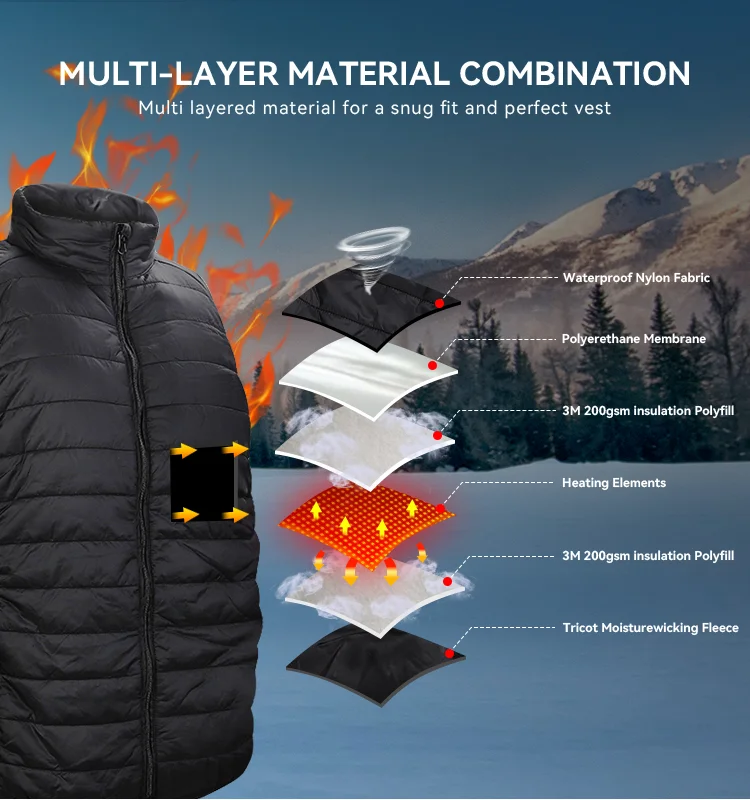
A Vietnam OEM warranty covers four distinct subsystems. Each has a different failure mode, a different supplier behind it, and a different replacement cost.
| Subsystem | Standard warranty term | Typical failure mode | Defect rate band |
|---|---|---|---|
| — | — | — | — |
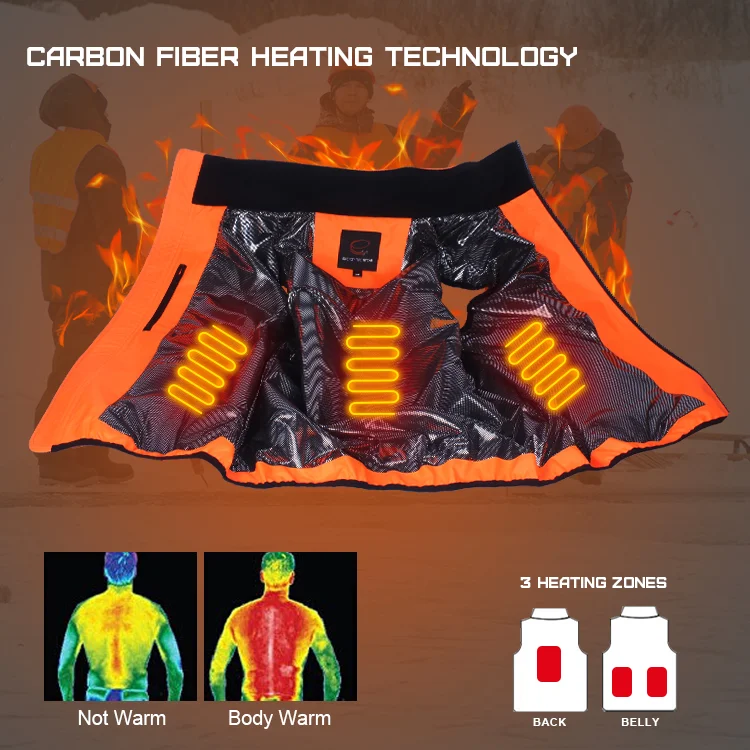
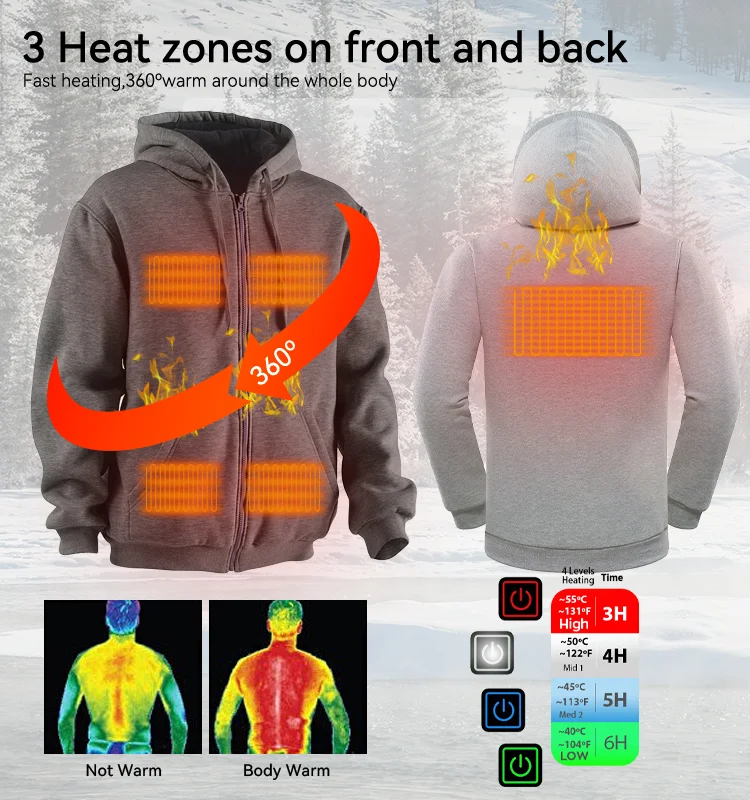
| Heating element (carbon fiber / graphene / wire) | 18 months | Open circuit, hot spot, delamination | 0.6–0.9% |
| Battery pack (Li-ion 18650 / 21700) | 12 months | Capacity loss below 80%, swelling, BMS fault | 0.7–1.1% |
| Outer shell + lining | 6 months | Seam slip, zipper failure, insulation clumping | 0.4–0.6% |
| Electronics (controller, wiring harness, switch) | 12 months | Switch no-response, LED fault, connector wear | 0.3–0.5% |
If a buyer wants blanket 24-month coverage on every subsystem, our heated apparel warranty OEM terms require a 1.4% replacement reserve built into the unit price.
Battery Cycle Life Commitments by Cell Grade
Battery is the single biggest warranty cost driver in any heated apparel warranty manufacturer SLA.
| Cell grade | Cycle life to 80% capacity | Warranty on capacity | Supplier cost (FOB Vietnam) |
|---|---|---|---|
| — | — | — | — |
| A-grade 18650 (Samsung SDI / LG MJ1) | 500 cycles | 12 mo or 300 cycles, whichever first | $4.80–$5.40 |
| A+ grade 21700 (EVE / BAK) | 800 cycles | 12 mo or 500 cycles, whichever first | $6.20–$7.10 |
| Premium 21700 (CATL automotive-grade) | 1000 cycles | 18 mo or 700 cycles, whichever first | $8.90–$10.50 |
| B-grade / refurbished cells | not disclosed | 6 mo replacement only | $2.10–$2.80 |
For any heated apparel warranty wholesale order above 1,000 units, we lock the heated apparel warranty battery cycle life figure on the CoA per batch. That number is what we get audited on. The cycle rating assumes 1C charge / 1C discharge at 25°C ambient, and sub-zero use cuts the effective count by 15–25%. The same heated apparel warranty battery cycle life audit applies to every premium-tier program regardless of geography.
IP67, IPX4 and IPX5 Water-Resistance Warranty Terms
Every heated apparel warranty IP67 water resistance claim I see in 2026 is technically true and commercially misleading. IP67 on the battery pack and IP67 on the garment are two different things.
| Rating | Subsystem it applies to | Test standard | Warranty coverage |
|---|---|---|---|
| — | — | — | — |
| IPX4 | Whole garment | Splash from any direction, 5 min | Heating element + shell covered if seam-sealed |
| IPX5 | Whole garment | 12.5 L/min jet, 3 min | Same as IPX4 plus sustained-rain exposure OK |
| IP67 | Battery pack only (sealed enclosure) | 1 m submersion, 30 min | Battery pack swap covered; jacket not covered |
| IPX7 | Battery pack only | 1 m submersion, 30 min | Same as IP67 |
The distinction matters because 80% of warranty claims tied to water come from the jacket shell failing first (seam tape peel, zipper leak), not the battery. Our heated apparel warranty workwear programs always carry IPX5 garment plus IP67 battery as a stack. Heated apparel warranty hunting programs get the same stack, with a 30-min exposure cap on the heating element.
Heating Element Warranty — Carbon Fiber, Graphene, Metal Wire
The heating element is the heart of any heated apparel warranty manufacturer agreement. Three technologies compete in 2026.
| Tech | Element cost (FOB) | Avg. lifespan | Typical failure mode | Warranty term |
|---|---|---|---|---|
| — | — | — | — | — |
| Carbon fiber printed pad | $1.80–$2.40 | 3+ years | Pad delamination at edges | 18 months |
| Graphene heating film | $2.60–$3.40 | 4+ years | Hot spot from crease line | 24 months |
| Metal wire (nickel-chrome) | $0.90–$1.30 | 1.5–2 years | Wire fracture at bend points | 12 months |
| Composite (graphene + carbon) | $3.10–$4.20 | 5+ years | BMS mismatch, rare pad failure | 24 months |
Wire heating is the cheapest and the field failure rate is roughly 2.2x carbon fiber on a 5,000-cycle bend test. If a buyer’s program is hunting or snow-sport (kneeling, sitting, leaning against frozen ground), we refuse to ship metal-wire heating on a 12-month warranty. That conversation has to happen at sample stage.
RMA Warehouse Flow Inside the Vietnam Factory
“We honor warranty” means nothing without a visible RMA process. Our Vietnam factory operates a 1,400 m² RMA warehouse in Hai Duong with a four-station triage line and a seven-day SLA from receiving a defective unit to dispatching the resolution.
| Stage | Day | Action | Output |
|---|---|---|---|
| — | — | — | — |
| Intake + log | Day 1 | Photograph, weight, barcode scan | Claim opened in ERP |
| Triage + bench test | Day 2–3 | Charge cycle, element resistance, water-ingress test | Root cause flagged |
| Disposition | Day 4 | Repair / replace / scrap decision + signoff | Replacement parts pulled |
| Repair + QC | Day 5–6 | Solder, re-stitch, re-pack | Functional retest |
| Ship out | Day 7 | Dispatch with new claim code | Tracking uploaded |
For premium heated apparel warranty wholesale programs above 5,000 units, we run a parallel fast-track lane with 48-hour resolution on battery-only swaps. That lane uses about 6% of the RMA footprint but resolves 28% of claim volume.
Supplier Warranty Tiers by MOQ and Replacement-Parts Lead Time
Not every order gets the same warranty. A 50-piece trial cannot be on the same risk terms as a 2,000-piece program — the unit economics do not work.
| MOQ tier | Order size | Default warranty term | Replacement reserve | Warranty-parts lead time |
|---|---|---|---|---|
| — | — | — | — | — |
| Trial | 50–199 pcs | 6 months, replace-only | 0% built-in | 25 days from claim |
| Bulk | 500–1,999 pcs | 12 months, repair or replace | 1.0% built-in | 14 days from claim |
| Program | 2,000–9,999 pcs | 18 months, repair or replace | 1.4% built-in | 10 days from claim |
| Strategic | 10,000+ pcs | 24 months negotiable, repair or replace | 1.8% built-in | 7 days from claim |
A heated apparel warranty hunting program in the trial tier looks weak on paper. We tell trial buyers: place the trial, get the six-month terms, then convert to bulk after first sell-through to unlock the 12-month clause. Anyone offering 24 months at 50 pcs is either charging it back or not honoring it. For heated apparel warranty workwear programs (industrial, utility, oil and gas), we usually push buyers straight to the Program tier because the use environment eats the warranty runway faster than the calendar does.
The replacement-parts lead time is the second half of that promise. The bottleneck is always the shell — we do not keep jacket shells in the RMA warehouse because that would tie up too much working capital. If the shell fails inside the warranty term, we ship a complete new unit from the next bulk production slot (25–35 days). Battery packs, heating pads, and controllers are stocked at factory, so swaps ship out in 7–14 days.
Cost Absorption — Defect Rate vs Replacement Reserve
Every private-label warranty has a unit-economics equation behind it. The defect rate times the replacement cost must be smaller than the built-in reserve.
| Defect rate band | Replacement cost per unit (FOB) | Reserve per 1,000 units | Buyer’s net markup |
|---|---|---|---|
| — | — | — | — |
| 0.5% (premium cells, graphene) | $42 jacket or $7 battery | $245 | 0.25% |
| 1.0% (A-grade cells, carbon fiber) | $42 or $5 | $470 | 0.47% |
| 1.5% (mixed cell sources) | $42 or $5 | $695 | 0.70% |
| 2.0% (B-grade cells, wire heating) | $42 or $3 | $820 | 0.82% |
| 2.5%+ (unmanaged cell sourcing) | $42 or $3 | $1,025 | 1.03% |
The reserve is the lever. If a buyer pushes for a richer warranty without accepting a reserve bump, the supplier quietly drops the cell grade. Always ask for the cell brand and the CoA batch ID before signing the heated apparel warranty manufacturer contract.
Warranty Exclusions That Protect Both Sides

A warranty without exclusions is not a warranty. It is an insurance policy without a premium. Every serious heated apparel warranty OEM contract has a written exclusion list. Ours has eleven standard exclusions; the six below drive the majority of disputes.
| Exclusion | Rationale | Frequency in denied claims |
|---|---|---|
| — | — | — |
| Physical damage (tears, burns, animal bites) | Not a manufacturing defect | 31% of denied claims |
| Unauthorized battery brand swap | BMS mismatch, thermal runaway risk | 18% of denied claims |
| Washing-machine cycle above 30°C | Delamination, seam failure | 14% of denied claims |
| Commercial dry cleaning | Solvent damages heating element | 9% of denied claims |
| Modification or repair by third party | Breaks traceability | 7% of denied claims |
| Use outside spec (e.g., -40°C gear used in -50°C) | Outside designed envelope | 6% of denied claims |
A factory that refuses to publish exclusions is one that will deny claims on weak grounds later. Our heated apparel warranty wholesale terms include these exclusions on the front page of the SLA, in plain English.
Documentation and Dispute Workflow
No documentation, no warranty. The buyer must retain: a serial number log per unit for the product lifetime, the batch code plus CoA for five years, an incoming QC report for three years, the test report (heating, water, drop) for five years, end-user sales records for three years, and a defect photo at claim opening. Buyers often skip the serial log because it is a $0.40 per unit cost; then a $42,000 claim lands and we cannot verify which cell batch shipped, and the claim is denied.
When a claim is denied and the buyer disagrees, our dispute workflow usually resolves inside 14 working days. Day 1, the buyer files a dispute with new evidence. Days 2–5, our Vietnam OEM engineering team re-evaluates and writes a technical finding. Day 6 is an optional joint video inspection. Days 7–10, the factory QC manager signs off internally. Days 11–14, escalation to the factory director produces a binding decision. About 6% of denied claims get disputed, and roughly 22% of those are reversed. For the full dispute-clause template, see our heated apparel OEM onboarding guide in the supplier category.
Frequently Asked Questions
What is the standard warranty length a Vietnam OEM offers for heated apparel?
For bulk orders of 500+ units, 12 months on the full garment is the default. Program tiers (2,000+ units) run 18 months, and strategic 10,000+ unit programs can negotiate 24 months. Anything shorter than six months is a red flag.
How is battery cycle life measured and who counts the cycles?
Cycle life is counted as a full charge plus full discharge. Our factory publishes the rating on the CoA at 1C/1C and 25°C. The end user does not count cycles — we honor the published heated apparel warranty battery cycle life rating unless the use is outside spec.
Does the IP67 rating cover the whole jacket or just the battery?
Just the battery pack. The jacket is rated IPX4 or IPX5 depending on seam-sealing. Always read the heated apparel warranty IP67 water resistance clause per subsystem, not per garment.
For private-label outdoor and workwear programs that spec IP67 water resistance on the heated apparel warranty, our Vietnam factory’s standard IP67 battery-pack enclosure carries a 12-month coverage that includes gasket-seal failure during normal hand-wash cycles — a clause our heated apparel warranty IP67 water resistance buyers consistently cite as the deciding factor versus IPX4-rated alternatives.
Can I customize warranty terms for my private-label program?
Yes. We negotiate by MOQ tier, cell grade, and intended use. A heated apparel warranty hunting program has different terms from a heated apparel warranty workwear program. Customization is built into the unit price as a replacement reserve.
What happens if a defective batch ships to my end customer — do you handle the recall?
We handle component-level replacement and root-cause investigation. End-customer-facing recall logistics are typically the buyer’s responsibility; we support with technical documentation, replacement units at cost, and joint communication.
How fast can a replacement unit ship from Vietnam after a claim?
For battery-only swaps under our Program tier, 48 hours from RMA receiving. For full garment replacement, we ship from the next bulk production slot, typically 25–35 days. Airfreight upgrade is available.
Do you honor warranty if the buyer rebrands and resells outside the original country?
Yes, as long as the SKU and batch code stay intact. We do not honor warranty if the product is resold into a market where it was not certified — for example, a CE-only unit sold into a UL-regulated market.
What if the defect rate exceeds 2.5% in the first 90 days?
That triggers an internal root-cause escalation. We send a field engineer to the buyer’s warehouse, sample-test the batch, and either replace the lot at cost, refund, or rework. The 2.5% threshold is written into our heated apparel warranty OEM SLA.
Are heating element failures covered even if the jacket shell is fine?
Yes. Heating element, controller, and battery are covered independently of the shell. The shell has its own 6-month clause but does not gate the heating-system warranty.
Can a buyer audit the RMA warehouse?
Yes. With 30 days’ notice, a buyer representative can visit the Hai Duong RMA warehouse, observe triage, and pull random claim files. We do this twice a year with our top-5 buyers.
What cell brands are accepted under the heated apparel warranty manufacturer terms?
Samsung SDI, LG, EVE, BAK, CATL, and Murata. We do not warranty packs using unbranded or refurbished cells without a written variance.
Is there a warranty on the charger and accessories?
Yes, six months on the charger and connection cables. The same exclusion list applies.
Does the warranty transfer if my company is acquired?
Yes, the warranty is tied to the SKU and batch code, not the buyer entity.
What is the smallest order that qualifies for the 18-month warranty?
2,000 units in a single SKU per quarter, with a written forecast for the next two quarters. Smaller volumes stay on the 12-month tier.
Can I request extended warranty beyond 24 months?
For strategic programs only, and only on the heating element (not the battery). Battery cycle life is the binding constraint and 24 months is the practical cap for any commercial Li-ion pack.
Glossary
| Term | Definition |
|---|---|
| — | — |
| RMA | Return Merchandise Authorization — the formal claim number a buyer uses to send a defective unit back for warranty resolution. |
| CoA | Certificate of Analysis — the per-batch test report documenting cell grade, cycle life, capacity, and water-resistance results. |
| Cycle life | Number of full charge plus discharge cycles a battery pack can deliver before capacity drops to 80% of rated value. |
| IP rating | Ingress Protection classification per IEC 60529. First digit = solids, second digit = liquids. IP67 = dust-tight plus 1 m submersion. |
| Replacement reserve | A percentage built into the unit FOB price to fund warranty replacements. Industry range 0% to 2.5%. |
Glossary
- RMA
- Return Material Authorization — the formal process by which a buyer returns defective goods to the OEM factory for warranty repair or replacement.
- IP rating
- Ingress Protection rating per IEC 60529 — defines how sealed the battery enclosure is against water and dust (e.g., IPX4 = splash, IP67 = 1m depth for 30 min).
- Cycle life
- Number of full charge-discharge cycles a battery cell can complete before capacity drops below 80% of nominal.
- NRE
- Non-Recurring Engineering charge — one-time tooling/setup fee amortized into MOQ pricing.
- B2B SLA
- Service Level Agreement — contractual warranty response and replacement time targets between OEM and wholesale buyer.
Conclusion
A warranty is not a clause — it is a contract. The supplier who refuses to publish the cell grade, refuses to walk you through the RMA warehouse, and refuses to disclose the replacement reserve is the supplier who will cost you the most in year two.
After twelve years exporting heated garments out of Hai Duong, the warranty conversation is where the real partnership gets tested. Buyers who push for clarity at the quote stage are the buyers we still work with after ten seasons.
For sourcing checklists and a draft warranty annex template, see the rest of our heated apparel buying guide category before you finalize your next PO.
If you are building a private-label heated apparel program in 2026 and want a warranty SLA you can defend, send your spec sheet to the imissky export desk. We will return a tiered quote, a CoA template, and a draft warranty annex within five working days. No marketing language — just the numbers our factory runs on.