Heated Apparel IP Protection 2026: A Vietnam OEM Manufacturer’s Guide to Trademarks, NNN Agreements and Anti-Counterfeit Controls
Heated Apparel IP Protection 2026: A Vietnam OEM Manufacturer’s Guide to Trademarks, NNN Agreements and Anti-Counterfeit Controls
Every private-label program we onboard at IMISSKY arrives with the same blind spot. The buyer has a brand name, a colourway, a battery spec and a Q4 delivery date — and no filed intellectual property anywhere in the chain. Then in month nine, a near-identical vest appears on a marketplace at 62% of their landed cost, using their own product photography, and the conversation with their factory suddenly becomes very expensive.
As a Vietnam-based heated apparel manufacturer running OEM and ODM programs for European and North American brands, we sit on the supply side of that failure. We see which IP structures survive a real dispute and which ones are decorative. This guide sets out heated apparel IP protection as a supplier actually experiences it: what gets filed, when, by whom, what it costs in 2026, and which contract clauses have teeth when a factory relationship goes sideways.
If you are still mapping the upstream basics of sourcing before you get to IP, start with our heated apparel sourcing guides and come back to this page once your factory shortlist is settled.
Why Heated Apparel IP Protection Is Harder Than Ordinary Outerwear
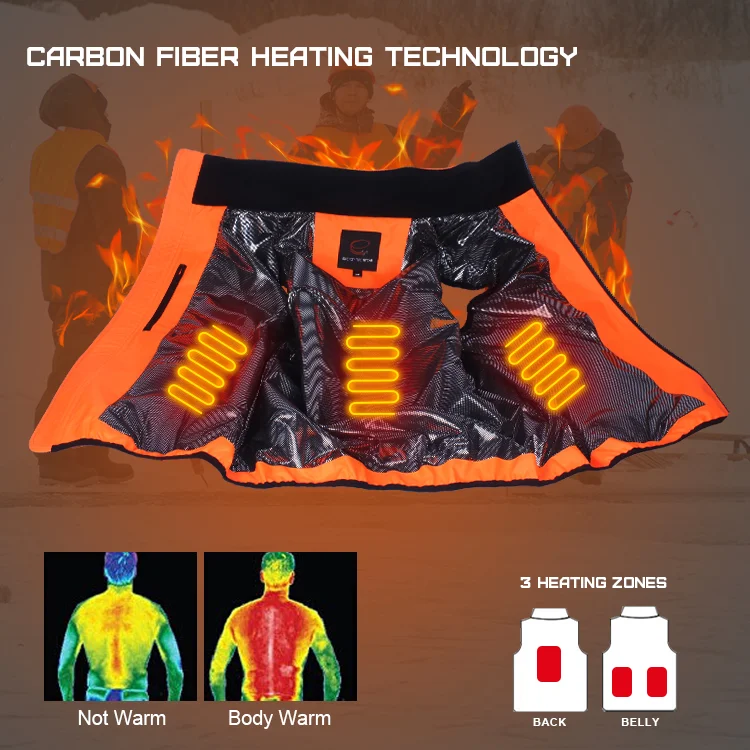
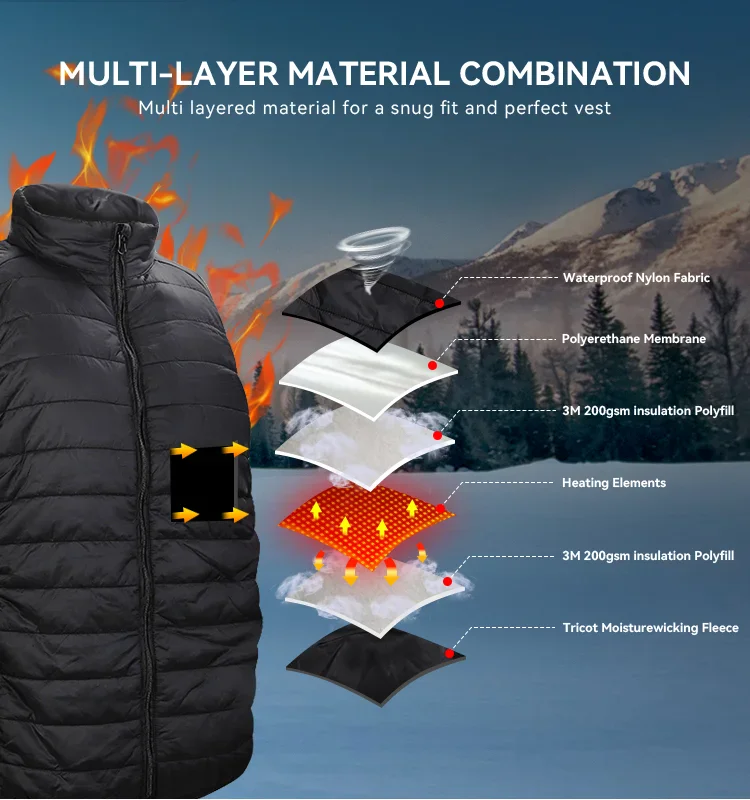
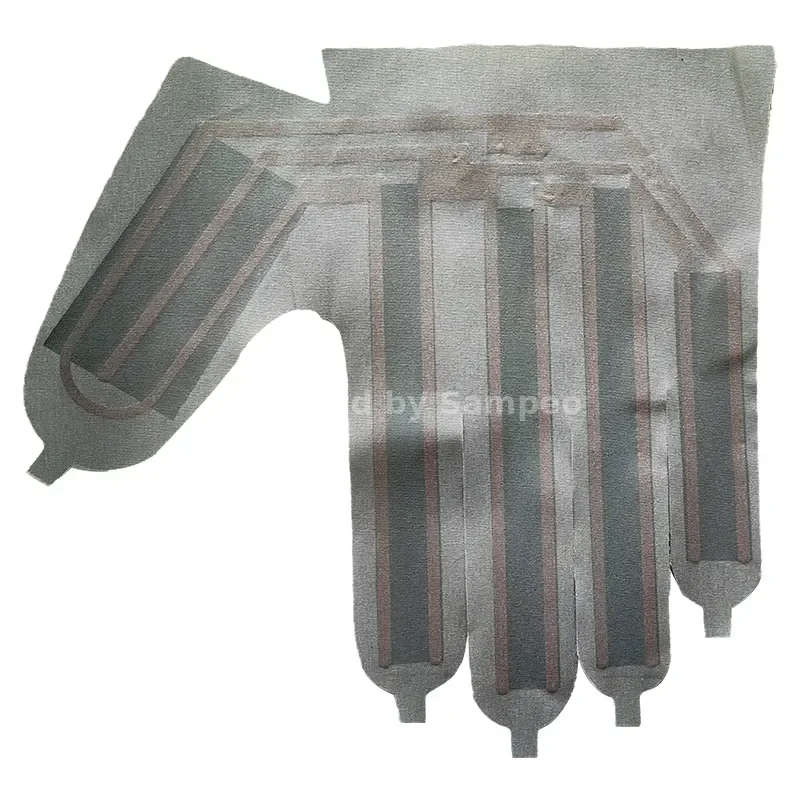
Heated apparel IP protection is structurally harder than outerwear IP because the asset count is higher. A softshell jacket is a pattern and a fabric. A heated jacket is a pattern, a fabric, a heating element layout, a controller firmware behaviour, a battery pack, a wiring harness and a certification file. That is six copyable assets instead of two, and five of them live in your factory’s engineering folder rather than in your design studio.
The category also concentrates risk in a small number of production clusters. Heating-element suppliers, controller PCB houses and cell packagers in Guangdong and northern Vietnam serve dozens of brands each. A single shared sub-tier vendor is the most common leak path we see — not the cut-and-sew factory the buyer signed with.
| Asset in a heated apparel program | Who physically holds it | Copy difficulty | Typical leak path |
|---|---|---|---|
| Brand name and logo | Buyer | Trivial | Marketplace squatting |
| Outer shell pattern | Factory | Low | Pattern-room staff turnover |
| Heating element layout | Element sub-vendor | Low | Shared sub-tier vendor |
| Controller firmware / button logic | PCB sub-vendor | Medium | Firmware image reuse |
| Battery pack mechanical design | Cell packager | Medium | Tooling reuse |
| Certification file (UN38.3, IP67 reports) | Factory | Low | Report re-labelling |
| Injection moulds for controller housing | Factory / tool shop | High (cost, not skill) | Mould reuse for third parties |
The last row is where most disputes actually land. Nobody argues about the fabric. They argue about who owns the RMB 48,000 mould for the controller housing.

The Four-Layer Heated Apparel IP Protection Stack We Ask For Before Tooling
We will quote and sample without heated apparel IP protection in place. We will not cut a mould without it, because an untitled mould is a future argument. The stack we ask for:
| Layer | Instrument | Who files | 2026 cost band | Time to enforceable |
|---|---|---|---|---|
| 1. Name | Trademark, sales markets | Buyer | USD 350–900/class/market | 6–14 months |
| 2. Name (defensive) | Trademark in manufacturing country | Buyer | CNY 1,000–2,500 / VND 3.5–6m | 8–15 months |
| 3. Contract | NNN agreement + tooling annex | Buyer + factory | USD 800–3,500 drafting | Immediate on signature |
| 4. Appearance | Design patent / registered design | Buyer | USD 300–1,800 | 2–8 months |
Layers 1 and 3 are non-negotiable. Layer 2 is the one buyers skip and regret. Layer 4 is worth it only if the silhouette is genuinely distinctive.
Trademark Registration for Heated Jackets: Class Selection Is Where Money Is Wasted
Trademark filing is the first pillar of heated apparel IP protection, and trademark registration heated jacket filings routinely get made in Class 25 alone. That is a partial filing for this category, because a heated garment is simultaneously clothing and an electrical appliance with a battery.
| Nice class | Covers | Needed for heated apparel? |
|---|---|---|
| 25 | Clothing, outerwear, gloves, socks | Always |
| 9 | Batteries, chargers, battery packs, controllers | Almost always |
| 11 | Heating apparatus and elements | Yes if you sell elements/pads separately |
| 35 | Retail and wholesale services | If you run your own storefront |
| 10 | Therapeutic heating devices | Only for medical positioning claims |
A Class 25-only registration leaves your battery and charger SKUs unprotected, which is exactly the SKU set counterfeiters prefer because it has no sizing risk.
Filing costs and timelines as of 2026:
| Office | Official fee (1 class) | Additional class | Typical registration time | Notes |
|---|---|---|---|---|
| USPTO (TEAS Plus) | USD 350 | USD 350 | 10–14 months | Use evidence required |
| EUIPO | EUR 850 | EUR 50 (2nd), EUR 150 (3rd+) | 5–7 months if unopposed | Covers all 27 member states |
| UKIPO | GBP 170 online | GBP 50 | 4–6 months | Separate from EUIPO post-Brexit |
| CNIPA (China) | CNY 270 official | CNY 270 | 9–12 months | First-to-file, no use requirement |
| Vietnam IP Office | VND 1.0–1.5m official | Per class | 12–18 months | Slow but cheap defensive filing |
China’s first-to-file system is why the defensive filing matters. If a trading company registers your mark in CNIPA Class 25 before you do, your own factory can be legally blocked from exporting goods bearing your name. We have had to halt two shipments in three years for exactly this reason, and neither buyer had done anything wrong except file late.
NNN Agreement for Heated Clothing: Why an NDA Is the Wrong Instrument
Contract structure is the second pillar of heated apparel IP protection. A Western-style NDA covers disclosure. It does not stop a factory from making your product for someone else, and it does not stop a factory from selling to your customer directly. An NNN agreement heated clothing contract covers all three failure modes: Non-disclosure, Non-use, Non-circumvention.
| Clause | What it blocks | Enforceability signal |
|---|---|---|
| Non-disclosure | Sharing specs with third parties | Weak alone |
| Non-use | Factory making your design for others | Strong if design is defined |
| Non-circumvention | Factory approaching your customers | Strong, most-used in practice |
| Liquidated damages | Requires proof of loss otherwise | Critical — set a number |
| Chinese/Vietnamese language governing version | Local court enforceability | Mandatory |
| Local jurisdiction and local law | Practical remedy | Prefer local court over foreign arbitration |
| Tooling ownership annex | Mould reuse | Must list mould IDs |
Three drafting details separate an NNN that works from one that decorates a folder:
The governing language must be the local one. A contract in English only, governed by New York law, with arbitration in Singapore, is functionally unenforceable against a mid-size Chinese or Vietnamese factory. The practical remedy you want is a local court freezing a local bank account.
Liquidated damages must be a specific figure. “Damages as determined” means a judge has to calculate your lost profit, which takes years. A stated figure — commonly USD 50,000–200,000 per breach for programs in the USD 300k–2m annual range — is what makes the clause operative.
The tooling annex must list physical mould identifiers, not descriptions. “Controller housing mould, tool shop ID DG-2026-114, cavity count 2, located at [address]” is enforceable. “All tooling related to the products” is not.
Tooling and Mould Ownership: The Most Common Real Dispute
Tooling is the part of heated apparel IP protection buyers most often assume is settled. When a buyer pays NRE for a mould, they usually assume they own it. In practice, ownership depends entirely on whether the mould was invoiced separately, physically tagged, and named in a contract annex.
| Scenario | Who legally owns the mould | Practical control |
|---|---|---|
| NRE bundled into unit price | Factory, almost always | Factory |
| NRE invoiced separately, no annex | Ambiguous | Factory |
| NRE invoiced separately + annex + tag | Buyer | Buyer, on paper |
| Buyer-supplied mould, documented | Buyer | Buyer |
| Buyer pays 50% NRE, factory amortises rest | Joint, usually factory | Factory |
As a manufacturer we prefer clarity here, not ambiguity — a buyer who owns their tooling outright is a buyer who commits to volume. Our standard OEM tooling annex assigns buyer ownership on full NRE settlement, with a stated storage obligation and a 30-day release window on program exit. Buyers should ask any prospective heated apparel manufacturer for that annex by name during quoting; a factory that will not put mould ownership in writing has told you something useful.
Design Patent for a Heated Vest: When It’s Worth Filing
A design patent heated vest filing protects appearance, not function. It is fast, cheap and narrow. It stops near-identical copies of a distinctive silhouette, panel layout or quilting pattern. It does not stop a competitor selling a different-looking vest with the same heating performance.
| Office | Instrument | Official fee | Time to grant | Term |
|---|---|---|---|---|
| USPTO | Design patent | USD 1,000–1,800 total | 12–18 months | 15 years |
| EUIPO | Registered Community Design | EUR 350 | 2–6 weeks | 5 years, renewable to 25 |
| UKIPO | Registered design | GBP 50–150 | 2–8 weeks | Renewable to 25 years |
| CNIPA | Design patent | CNY 500–2,000 | 4–8 months | 15 years |
The EUIPO route is the best value in the category: a registered design granted in weeks for EUR 350 gives you a takedown instrument for marketplace enforcement almost immediately. File before public launch — most jurisdictions require novelty, and your own trade-show photos can destroy it.
Anti-Counterfeit Heated Apparel Controls at the Factory Level
Anti-counterfeit heated apparel work is 80% production discipline and 20% legal instrument. The controls that actually reduce grey-market volume are the ones that make an unauthorised unit identifiable.
| Control | Implementation cost per unit | Effectiveness |
|---|---|---|
| Serialised QR on care label, database-backed | USD 0.04–0.09 | High |
| Woven brand label with security thread | USD 0.12–0.30 | Medium |
| Firmware handshake between controller and battery | USD 0.00 (dev cost only) | Very high |
| Unique heating-element resistance signature | USD 0.00 | Medium |
| Tamper-evident battery seal | USD 0.05–0.15 | Medium |
| Overrun destruction protocol with photo evidence | Free (contractual) | High |
The firmware handshake deserves emphasis. If the controller only enters heating mode after recognising a pack ID pattern, a counterfeit garment with a generic battery fails visibly on first use. Buyers running an ODM program with any custom controller should specify it — the development cost is a few days of firmware work amortised across the program’s life.
The overrun protocol is the cheapest control on the list and the most skipped. Cutting 3% extra for QC rejects is normal. Contractually specifying that rejects are destroyed with photographic evidence, and that surplus finished goods are either shipped or destroyed but never sold, closes the most common grey-market channel.
Certification Files Are IP Too
Certification paperwork is an overlooked part of heated apparel IP protection. The UN38.3 test report, the IP67 ingress report, the EN 61000 EMC file — buyers pay for these and often never receive a copy. Then they change factory and discover the certification is registered to the old factory’s entity, meaning a full re-test.
| Document | Typical 2026 test cost | Who it should be issued to |
|---|---|---|
| UN38.3 (transport, per cell/pack) | USD 1,800–4,500 | Buyer entity where possible |
| IP67 / IPX7 ingress | USD 600–1,500 | Buyer entity |
| EMC (FCC / EN) | USD 1,200–3,000 | Buyer entity |
| CPSIA / REACH chemical | USD 400–1,200 | Buyer entity |
Ask for the report to name your legal entity as applicant, with the factory as manufacturing site. It costs nothing at test time and saves USD 4,000–9,000 plus six weeks if you re-source.
Battery-Specific IP and Shipping Constraints
Battery choice interacts with IP timing because the transport paperwork is cell-specific. A mid-program cell change resets your UN38.3 file.
| Spec | 18650 pack | 21700 pack |
|---|---|---|
| Typical capacity | 2,000–3,500 mAh/cell | 4,000–5,000 mAh/cell |
| Runtime, mid heat setting | 4.5–6.5 h | 7–9.5 h |
| 2026 cell allocation volatility | ±4–6% | ±8–12% |
| UN3481 shipping | Section II, standard | Section II, standard |
| Pack lead time in Q4 | 30–40 days | 45–60 days |
| Re-test needed on change | Yes | Yes |
UN3481 lithium-ion-in-equipment shipping added 11–14% in freight surcharge across our Q4 2025 lanes and we are quoting similar for Q4 2026. Lock the cell spec before you file design patents that show the pack geometry.
Q4 2026 Timeline: Filing Backwards From Delivery
Heated apparel IP protection timelines are longer than production timelines, which is why IP has to start during sampling rather than after.
| Milestone | Weeks before delivery | IP action due |
|---|---|---|
| Program kickoff | 30–34 | NNN signed, trademark filed home market |
| Sample approval | 24–28 | Design patent filed (EUIPO fast) |
| Tooling release | 22–26 | Tooling annex signed, mould tagged |
| Bulk PO | 16–20 | Defensive CNIPA/Vietnam filing submitted |
| Cell allocation lock | 14–18 | Certification files issued to buyer entity |
| Production start | 10–14 | Serialisation database live |
| Q4 factory cut-off | 8–10 | Overrun destruction protocol confirmed |
| Marketplace listing | 2–4 | Brand registry enrolment with granted or pending marks |
Our Q4 2026 cut-off for new bulk heated apparel wholesale programs is 10–14 days earlier than 2025 because of cell allocation, so the whole IP chain shifts left accordingly.
What a Supplier Can and Cannot Do for You
Being direct about the limits of factory-side heated apparel IP protection, since this is written from the supply side. A good heated apparel OEM partner can sign a real NNN, tag and segregate your tooling, isolate your patterns, run serialisation, destroy overruns with evidence, and name your entity on certification files. That is meaningful and it is most of the practical protection available in the supply chain.
What a factory cannot do is file your trademarks, monitor marketplaces, issue takedowns, or defend a design you never registered. Those are buyer-side obligations, and no amount of factory goodwill substitutes for them. The programs that stay clean are the ones where both halves are done.
Cost of the Full Stack Versus Cost of One Incident
| Line item | 2026 cost |
|---|---|
| Trademark, 2 classes, 2 markets | USD 1,400–2,600 |
| Defensive filing, manufacturing country | USD 400–900 |
| NNN drafting, bilingual | USD 800–3,500 |
| Registered design, EUIPO | EUR 350 |
| Serialisation setup + per-unit at 5,000 units | USD 1,200–1,800 |
| Total | USD 4,500–9,500 |
| One counterfeit incident: lost margin + legal + takedown, 6 months | USD 40,000–180,000 |
The economics of heated apparel IP protection have not changed in the five years we have been running private-label programs. The stack costs roughly one small production run. The incident costs a season.
Frequently Asked Questions
Is an NDA enough if I trust my factory?
No. An NDA blocks disclosure only. It does not block the factory from producing your design for another buyer or approaching your customers. Use an NNN agreement with non-use and non-circumvention clauses.
Should I register my trademark in China or Vietnam if I don’t sell there?
Yes, defensively. Both are first-to-file. If someone else registers your mark locally, your own factory can be blocked from exporting goods bearing it. The defensive filing costs USD 400–900.
Who owns the mould if I paid the NRE?
Only you, and only if the NRE was invoiced separately and the mould is named in a tooling annex with its shop ID. Bundled NRE means the factory owns it in almost every case.
How long does heated apparel IP protection take to become enforceable?
NNN agreements are enforceable on signature. Registered designs take 2–8 weeks at EUIPO. Trademarks take 4–14 months depending on office. Plan 30+ weeks ahead of delivery.
Can I file a design patent after launch?
Usually no. Most jurisdictions require novelty, and your own public disclosure — including trade-show photos and pre-orders — can invalidate the filing. File before public reveal.
What is the single highest-ROI anti-counterfeit control?
A firmware handshake between controller and battery pack. Development cost is a few days, per-unit cost is zero, and counterfeit units fail visibly on first use.
Do I need Class 9 as well as Class 25?
For heated apparel, almost always. Class 25 covers the garment; Class 9 covers the battery, charger and controller — which are the SKUs counterfeiters prefer because there is no sizing risk.
How much should liquidated damages be in an NNN?
For programs in the USD 300k–2m annual range, USD 50,000–200,000 per breach is the common band. The specific number matters more than its size, because it removes the need to prove loss.
Can my certification reports be transferred to a new factory?
Not directly. If the report names the factory as applicant you will need a re-test. Have reports issued to your legal entity with the factory listed as manufacturing site instead.
Does switching from 18650 to 21700 cells affect my IP filings?
It affects your certification file — UN38.3 must be re-run — and any design registration showing pack geometry. Lock the cell spec before filing appearance rights.
What does serialisation actually cost at low volume?
USD 0.04–0.09 per unit for a database-backed QR on the care label, plus USD 800–1,500 setup. At 5,000 units the all-in cost is under USD 2,000.
How do I stop production overruns reaching the grey market?
Contract a destruction protocol: QC rejects and surplus finished goods are destroyed with photographic evidence, never sold. It is free to specify and closes the most common leak.
Is UN3481 relevant to IP at all?
Indirectly. The shipping classification is tied to your specific cell and pack, so any cell change resets both the transport file and any registered design showing the pack. It constrains how late you can change specs.
What should I ask a factory during quoting to test their IP posture?
Ask for their standard NNN, their tooling ownership annex, and whether certification reports can be issued to your entity. A factory that hesitates on all three has answered the question.
Where should I start on heated apparel IP protection if I have none of this in place?
File your home-market trademark in Classes 25 and 9, sign a bilingual NNN before tooling, and file an EUIPO registered design if your silhouette is distinctive. That covers most practical risk for under USD 3,000. Further sourcing background is in our heated apparel guides.
Glossary
| Term | Definition |
|---|---|
| NNN Agreement | Non-disclosure, Non-use, Non-circumvention contract used with Asian manufacturers. |
| UN3481 | UN transport classification for lithium-ion batteries contained in equipment. |
| UN38.3 | Mandatory lithium battery transport safety test report. |
| NRE | Non-recurring engineering cost, typically tooling and mould charges. |
| CNIPA | China National Intellectual Property Administration; first-to-file trademark system. |
| IP67 | Ingress protection rating: dust-tight and protected against water immersion. |