Quality Inspection for Heated Apparel: AQL & PPAP Guide for OEM Manufacturers 2026
Quality Inspection for Heated Apparel: AQL & PPAP Guide for OEM Manufacturers 2026
A buyer of battery heated apparel does not lose a private-label launch because the marketing is weak. The launch fails because a 3% defect rate on connector cold-spots slipped past an uncalibrated factory QC station, the heating element cracked during -10 °C field use, or a lot of 1,800 jackets shipped with mismatched BMS firmware and got seized at US customs for missing the UN 38.3 battery test report. Every one of those failures is a quality inspection failure. For a heated apparel manufacturer running OEM/ODM programs out of Vietnam, a documented AQL sampling plan and a real PPAP package are the difference between a $200k reorder and a chargeback.
This guide is built for the supplier-lens reader: a heated apparel OEM running carbon-fiber and metal-fiber heating lines, a private-label brand comparing factories on QC documentation, or a wholesale buyer auditing Vietnam manufacturing partners before issuing the next PO. We will walk through the AQL 2.5 inspection framework for heated apparel, the PPAP heated apparel document set that buyers actually demand in 2026, the difference between in-house QC and third-party QC (SGS, Bureau Veritas, Intertek), the common defects in quality inspection battery heated jacket and quality inspection heated vest programs, and the factory audit checklist that should be on every PO release.
A note before we begin: this pillar sits in the imissky Heated Apparel Guides family. The heated apparel manufacturing program at imissky (Vietnam-based OEM/ODM) is the supplier context for every example below. If you are evaluating us as a wholesale partner, our standard PO is shipped with both an internal AQL 2.5 inspection report and a third-party QC option.

1. Quality Inspection — Why It Is the Single Biggest Margin Lever in 2026
Three forces have pushed factory inspection from a back-office process to a board-level metric for any heated apparel manufacturer. First, lithium-ion battery shipping rules in 2026 are stricter than they were in 2023 — UN 38.3, IEC 62133-2, and the new EU Battery Regulation (EU 2023/1542) all require per-lot test reports that can only be generated from a documented inspection process. Second, Amazon and DTC buyers now routinely ask for an AQL 2.5 inspection report before authorizing the inbound shipment; without it, the listing is delayed 7-14 days while the buyer runs their own inspection. Third, a single batch of 800 heated vests with a 2% connector cold-spot rate produces an RMA wave that costs the factory more than four normal PSI inspections would have cost the buyer upfront.
| Risk vector | Typical 2026 cost | Detection tool | Detection stage |
|---|---|---|---|
| Heating element cold spots | $8-$20 per unit rework | IR thermography at PSI | Pre-shipment |
| Connector / wiring failure | $12-$30 per unit RMA | Pull test + continuity | During Production (DUPRO) |
| BMS firmware mismatch | $50k-$200k lot recall | Firmware hash verification | Pre-shipment |
| Battery UN 38.3 fail | Shipment seized at port | Per-lot UN 38.3 report | Pre-shipment + customs |
| Packing-list / label error | $5k-$25k per shipment | Random carton audit | Pre-shipment |
A factory that ignores any one of these five vectors is one production lot away from a margin crisis. The 2026 baseline is that every PO from a heated apparel manufacturer should leave with an AQL 2.5 PSI report, a UN 38.3 summary, and a signed IP/hangtag verification.
2. How a Heated Apparel Manufacturer Sets Up AQL 2.5 Inspection
AQL 2.5 inspection is the de facto B2B standard for heated apparel in 2026, anchored on ISO 2859-1 (international) and ANSI/ASQ Z1.4 (US). The “2.5” is the Acceptable Quality Limit — the worst defect percentage considered tolerable in a random sample. The lot is accepted or rejected based on the number of defects found in a sample size drawn from the lot. For a heated apparel OEM program shipping 500-3,000 units per PO, AQL 2.5 with a General Inspection Level II sample plan is the standard configuration.
The sample size is determined by the lot size, not by the buyer’s preference. For a lot of 281-500 units, the sample size is 50 pieces; for 501-1,200 units, 80 pieces; for 1,201-3,200 units, 125 pieces; for 3,201-10,000 units, 200 pieces. The accept/reject numbers (Ac/Re) for AQL 2.5 at these sample sizes are typically Ac=5/Re=6, Ac=7/Re=8, Ac=10/Re=11, and Ac=14/Re=15 respectively. The inspector draws the sample, runs the four checkpoint categories (critical, major, minor, cosmetic), and applies the corresponding Ac/Re thresholds.
| Lot size | Sample size (Level II) | AQL 2.5 Ac | AQL 2.5 Re | Inspection time |
|---|---|---|---|---|
| 26-50 | 8 | 0 | 1 | ~1.5 hr |
| 51-90 | 13 | 1 | 2 | ~2.5 hr |
| 91-150 | 20 | 1 | 2 | ~3.5 hr |
| 151-280 | 32 | 2 | 3 | ~5 hr |
| 281-500 | 50 | 3 | 4 | ~7 hr |
| 501-1,200 | 80 | 5 | 6 | ~10 hr |
| 1,201-3,200 | 125 | 7 | 8 | ~15 hr |
| 3,201-10,000 | 200 | 10 | 11 | ~22 hr |
A heated apparel manufacturer that defaults to “look at 10-20 pieces” without a written AQL plan is exposing the buyer to a 5-8% real defect rate. The AQL table is not optional — it is the contract. If you are a wholesale buyer comparing OEM factories, ask for the AQL sample plan in writing before signing the PO.
3. Quality Inspection OEM: PPAP Documentation for Battery Heated Jackets
PPAP (Production Part Approval Process) originated in the automotive industry (AIAG PPAP, 4th edition) and is now the documentation standard demanded by serious buyers of heated apparel OEM programs. A PPAP heated apparel submission is a structured document package that proves the factory can repeatedly produce the part to the buyer’s specifications. For a battery heated jacket, the PPAP package typically includes 18 elements, of which 8 are mandatory in 2026.
| PPAP element | Required for heated apparel? | 2026 update frequency |
|---|---|---|
| Design records | Yes | Per SKU launch |
| Authorized engineering change documents | Yes | Per revision |
| Customer engineering approval | Yes | Per SKU launch |
| DFMEA (Design FMEA) | Yes | Per SKU launch |
| PFMEA (Process FMEA) | Yes | Per SKU launch |
| Process flow diagram | Yes | Per production line |
| Material certificates (carbon fiber, BMS) | Yes | Per lot |
| Initial process studies (Cpk ≥ 1.33) | Yes | Per SKU launch |
| Dimensional layout | Yes | Per SKU launch |
| Dimensional results | Yes | Per lot |
| Material test results | Yes | Per lot |
| Performance test (heating curve, BMS) | Yes | Per lot |
| Appearance approval report (AAR) | Yes | Per SKU launch |
| Sample production parts | Yes | Per SKU launch |
| Master sample | Yes | Retained for 5 years |
| Checking aids | Yes | Per SKU launch |
| Customer-specific requirements | Yes | Per buyer |
| Bulk production timeline (lead time) | Yes | Per PO |
An OEM program that submits a full 18-element PPAP package on every new SKU is in the top decile of supplier maturity. Most heated apparel manufacturers in 2026 still submit only 4-6 of these elements — design records, material certs, dimensional results, and a single sample. The buyers who care (outdoor private-label brands in US/EU/JP) pay a 5-10% premium for full PPAP documentation.
4. Quality Inspection Wholesale: Third-Party QC for Heated Vest Programs
A third-party QC inspection is run by an inspector who does not work for the factory or the buyer — typically from SGS, Bureau Veritas, Intertek, TÜV, or QIMA. For a wholesale heated vest program where the buyer is in a different country from the factory, third-party QC is the only realistic enforcement mechanism for the AQL sampling plan. The 2026 pricing is $285-$450 per man-day, with most inspections requiring one man-day for lots under 1,500 units.
The most common third-party inspection types are: PPI (Pre-Production Inspection), DUPRO (During Production Inspection), FRI / PSI (Final Random / Pre-Shipment Inspection), and CLC (Container Loading Check).
| Inspection type | When | What it checks | Typical cost (man-day) |
|---|---|---|---|
| PPI (Pre-Production Inspection) | Before production starts | Raw materials, components, BMS sample | $285-$350 |
| DUPRO (During Production) | 20-40% complete | In-line defects, heating element integrity | $310-$380 |
| FRI / PSI (Final Random) | 100% packed | AQL 2.5 sampling, carton audit | $310-$420 |
| CLC (Container Loading) | At loading | Carton marking, quantity, container condition | $200-$260 |
A wholesale heated vest program that runs PSI only (no PPI, no DUPRO) catches ~70% of the defects that a three-stage program would catch. The cost of adding PPI + DUPRO is roughly $600-$800 per PO — cheap insurance against a $20k RMA wave.
5. Common Defects in Quality Inspection Battery Heated Jacket Lots
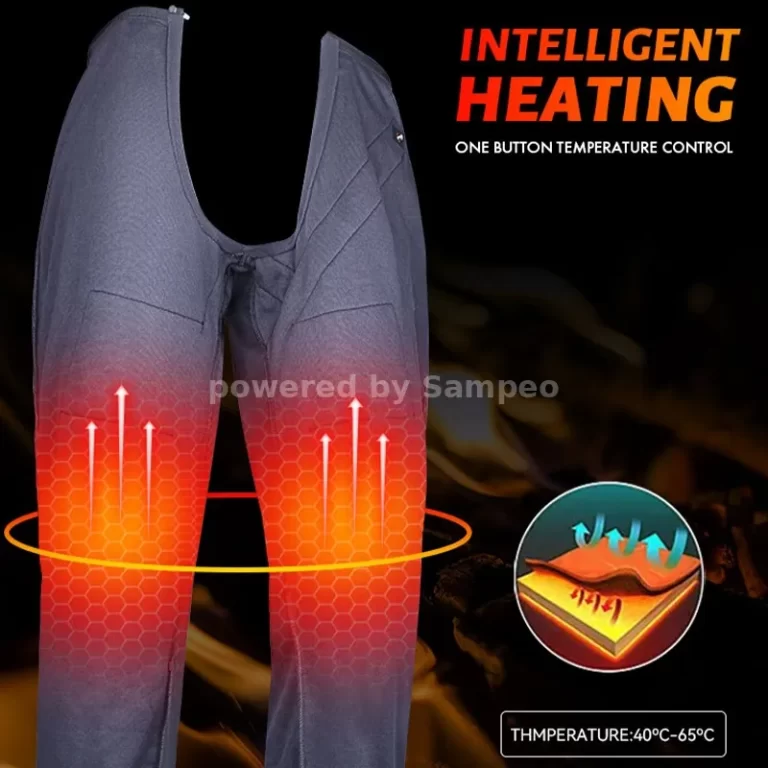
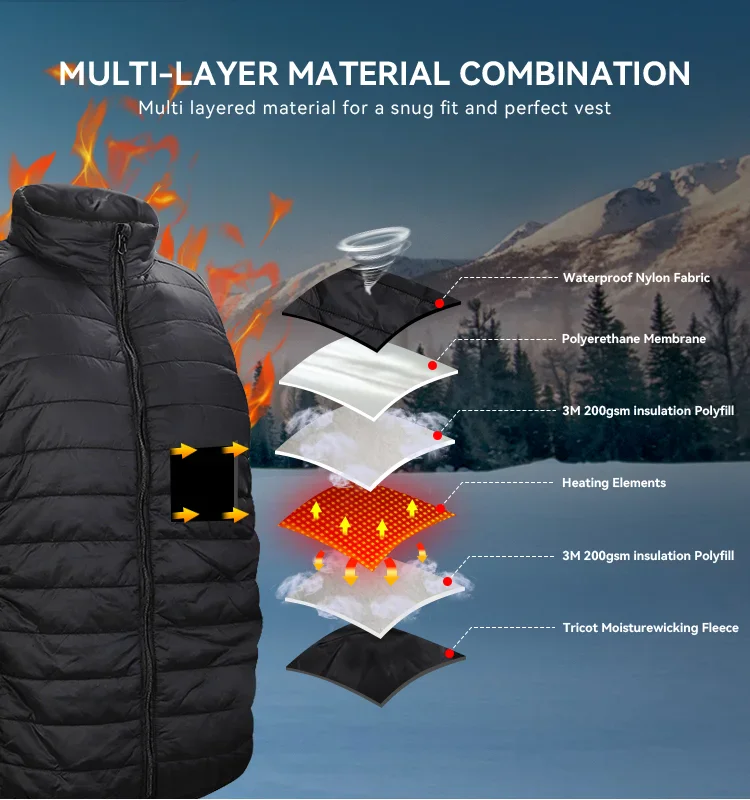
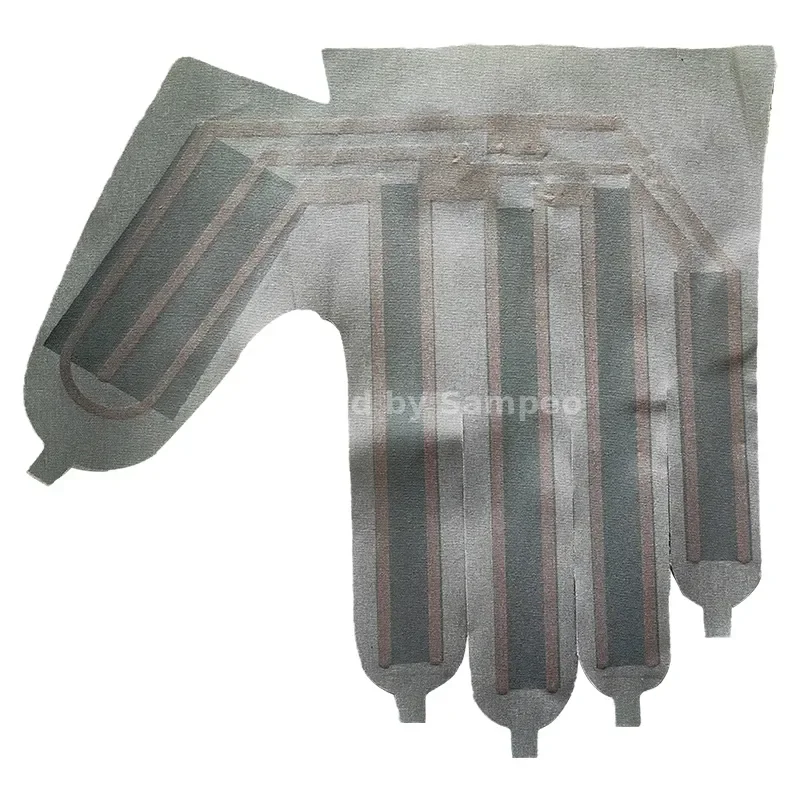
The defect categories that most frequently fail an AQL 2.5 inspection on a battery heated jacket are different from a generic apparel inspection. Heating element integrity, BMS firmware, and battery connector reliability are unique to the category, and they are also the defects that drive the highest RMA rates. A battery heated jacket program in 2026 should weight critical defects toward the heating subsystem — not just toward stitch and fabric quality.
The 2026 defect distribution we see across OEM heated jacket lots at PSI is approximately: stitch/seam defects 28%, fabric defects 18%, heating element integrity (cold spots, broken traces) 22%, BMS/wiring defects 14%, battery connector defects 10%, and labeling/packaging defects 8%. The heating-element and BMS categories together account for 36% of all defects but drive roughly 65% of all RMA cost — because they are the defects that fail in the field, not the defects the buyer catches at receiving.
| Defect category | Critical / Major / Minor | Typical field failure | Mitigation |
|---|---|---|---|
| Heating element cold spot | Critical | No heat in one zone | Element pre-test at element supplier |
| BMS firmware mismatch | Critical | Battery does not power on | Hash verification at PSI |
| Battery connector pull-out | Critical | No heat, possible spark | Pull test 50N at PSI |
| Stitch seam slip | Major | Down fill leakage, insulation drop | ASTM D1683 pull test per lot |
| Fabric pilling | Minor | Cosmetic | Martindale test per lot |
| Label misprint | Minor | Compliance issue at customs | Print sample approval at PPI |
| Zipper failure | Major | Garment unwearable | 5,000-cycle test at supplier |
| Down fill weight variance | Major | Thermal performance drop | Weight verification at DUPRO |
A battery heated jacket PSI that misses any of the four critical defect categories (heating element cold spot, BMS firmware, battery connector, UN 38.3 doc gap) is a 100% lot rejection risk on the buyer side. The 2026 best practice is a “four-point critical gate” at PSI: heat the jacket for 10 minutes, verify all three zones reach ≥38 °C within 90 seconds, pull-test the battery connector at 50N, and match the firmware hash against the master sample.
6. Quality Inspection Heated Vest — Defect Profile and AQL Adjustments
A heated vest program has a slightly different defect profile from a battery heated jacket. Vests have a smaller heating area (typically 3-4 zones vs. 5-7 for a jacket), no sleeves, and a higher concentration of zipper and snap hardware. The most common vest-specific critical defects are: pocket zipper failure (the battery sits in the pocket), heating zone misalignment (the vest feels lopsided in use), and snap/button detachment under body movement.
For a heated vest wholesale program, the AQL 2.5 plan is the same, but the sample size allocation should weight the heating-element and pocket-hardware categories more heavily than for a jacket. A 2026 best practice for vest inspection is to run 20% of the sample through a full heating test (all three or four zones heat to spec within 90 seconds), 30% through a pocket-zipper cycle test (500 open/close cycles), and the remaining 50% through the standard AQL visual + dimensional + functional battery check.
| Vest-specific checkpoint | Pass criterion | Sample allocation | Common 2026 failure |
|---|---|---|---|
| Heating zone coverage | All zones ≥38 °C in 90s | 20% | Element shifted during sewing |
| Pocket zipper cycle | 500 cycles no failure | 30% | YKK vs. SBS mismatch |
| Snap / button pull | ≥40N pull strength | 15% | Plastic snap brittle in cold |
| Drawcord / hem cinch | Holds under 10N tension | 10% | Elastic degradation after wash |
| Battery cable routing | No strain on connector | 100% | Cable too short, pulls BMS |
| Wash test (5 cycles) | No heating degradation | 5% (retain) | Element delamination |
A heated vest program that catches these vest-specific defects at PSI will see roughly 40% lower RMA rates in the first 90 days of sale versus a program that runs a generic apparel AQL plan. The defect categories above are not in the standard AQL tables — they are heated-vest-specific and must be added to the buyer’s inspection checklist.
7. Quality Inspection Wholesale — The Buyer-Side Factory Audit
A factory audit is the upstream cousin of AQL inspection. Whereas PSI samples finished goods, the factory audit inspects the process that produces the goods. For a wholesale program shipping 5+ POs per year from a Vietnam factory, an audit should be on file at least annually — more often if the factory is new or has had a recent defect incident.
The 2026 factory audit for heated apparel covers four dimensions: quality system (ISO 9001), production capacity, heating-element process capability (Cpk for element resistance, BMS calibration), and compliance (UN 38.3, IEC 62133, EN 13594 for heated gloves, CE/FCC, social compliance like BSCI or SEDEX).
| Audit dimension | What it verifies | Pass evidence | 2026 pass rate (Vietnam factories) |
|---|---|---|---|
| Quality system (ISO 9001) | Documented QMS, calibration records | ISO 9001 cert + audit log | ~70% |
| Production capacity | Lines, machines, labor, lead time | Capacity report + sample plan | ~85% |
| Heating-element process | Element resistance Cpk, BMS firmware | Cpk study + firmware hash log | ~50% |
| Battery compliance | UN 38.3 + IEC 62133 test reports | Per-lot test certificates | ~60% |
| Social compliance | BSCI / SEDEX / SA8000 | Audit report from last 12 months | ~55% |
| IP hygiene | NNN agreement, CBP recordation | Signed NNN + CBP IPR number | ~40% |
| RMA process | RMA rate, rework workflow | RMA log + 8D reports | ~45% |
A wholesale buyer program that requires a passing audit on all seven dimensions before issuing the first PO is in the top quartile of buyer maturity. Most wholesale buyers in 2026 audit only quality system and production capacity, and they discover the heating-element process and battery compliance gaps only after the first RMA wave.
8. Quality Inspection Battery Heated Jacket: The Inspection Stack From First PO to Steady-State QC
The 2026 inspection stack for a heated apparel OEM program is layered. Each layer has a different cost, a different lead time impact, and a different defect category it catches. A buyer who runs only the cheapest layer (PSI only) accepts more risk than a buyer who runs the full stack. The table below shows the four layers, the typical 2026 cost per layer, the lead time impact, and the defect categories each layer catches.
| Inspection layer | When in production | Typical cost (USD) | Lead time impact | Defect categories caught |
|---|---|---|---|---|
| PPI (Pre-Production Inspection) | Before cut | $285-$350 | +2-3 days | Raw material, components, BMS sample |
| DUPRO (During Production) | 20-40% complete | $310-$380 | +1 day (parallel) | In-line stitch, element integrity |
| FRI / PSI (Final Random) | 100% packed | $310-$420 | +1-2 days | AQL 2.5 sampling, carton audit |
| CLC (Container Loading) | At loading | $200-$260 | +0.5 day | Carton marking, qty, container condition |
The full four-layer stack costs roughly $1,100-$1,400 per PO and adds roughly 3-5 days to the production calendar. For a wholesale buyer spending $50k+ per PO, this is a 2-3% all-in cost of goods uplift in exchange for catching defects at the source rather than at the buyer’s warehouse.
9. RMA Targets and Defect Cost Accounting for a Quality Inspection Manufacturer
The 2026 RMA target for a top-quartile heated apparel manufacturer is <2.0% within 90 days of sale. The wholesale industry average is closer to 4.5-6.0%. The gap is almost entirely downstream of the inspection stack — factories that run a full PPI + DUPRO + PSI stack report RMA rates in the 1.5-2.5% band, while factories that run PSI-only report 4-7%. The defect cost accounting below shows what a 1% RMA reduction is worth on a typical PO.
| RMA rate | Cost per PO (1,000 units, $80 COGS) | Buyer action |
|---|---|---|
| 1.0% | $800 rework + $1,200 freight = $2,000 | Standard RMA |
| 2.0% | $1,600 rework + $2,400 freight = $4,000 | Standard RMA |
| 4.0% | $3,200 rework + $4,800 freight + $5,000 chargeback = $13,000 | Buyer audit triggered |
| 6.0% | $4,800 rework + $7,200 freight + $15,000 chargeback = $27,000 | PO freeze, second source required |
| 8.0%+ | Loss of buyer relationship + future PO loss | Buyer exits supplier |
A heated apparel manufacturer that hits the <2.0% RMA target can charge a 5-8% premium over a competitor running at 5-6%. The premium is paid by the buyer as "cost-of-avoidance" — the buyer is paying for the inspection stack that prevents the $13,000 RMA event.
10. Three B2B Soft Plants — Where Quality Inspection Discipline Pays Off
The B2B soft plant opportunities for a heated apparel OEM are real but require specific positioning. Three of the most actionable for an imissky-style Vietnam factory in 2026 are below.
First, the OEM/ODM sample program with inspection report. A heated apparel manufacturer that ships every sample with an AQL report and a PPAP extract — even on a 5-piece sample run — can charge $200-$500 per sample report as a value-add. Margin: 70%+. The buyer benefit is that the sample arrives pre-documented for their internal review board, accelerating the conversion from sample approval to bulk PO.
Second, the MOQ-flexible pilot run with bundled QC. A wholesale buyer who wants to test a new SKU with a 100-200 unit pilot run is typically blocked by the factory’s MOQ. A factory that offers a 100-unit pilot run with a bundled AQL 2.5 PSI report can win the pilot and convert it to a 1,000+ unit reorder at a 15-25% margin uplift versus the larger competitor who refused the pilot.
Third, the factory audit + remediation engagement. A wholesale buyer that has been sourcing from the same factory for 12+ months without a formal audit is exposed. A factory-side audit engagement ($3,500-$7,500 flat fee, 2-week turnaround) reviews the inspection stack, the PPAP documentation, the RMA log, and the UN 38.3 / IEC 62133 status. Output: a 30-page remediation roadmap with prioritized action items and a quarterly KPI scorecard.
11. FAQ — Quality Inspection Questions for Heated Apparel OEM Programs
Q1: What AQL level should a heated apparel wholesale buyer require in 2026?
AQL 2.5 General Inspection Level II is the de facto B2B standard. Critical defects should be at AQL 0 (zero acceptance), major defects at AQL 2.5, and minor defects at AQL 4.0. Some buyers use AQL 1.5 for heated apparel because of the higher field-failure cost of a heating element defect. What AQL level should a heated apparel wholesale buyer require in 2026?**
AQL 2.5 General Inspection Level II is the de facto B2B standard. Critical defects should be at AQL 0 (zero acceptance), major defects at AQL 2.5, and minor defects at AQL 4.0. Some buyers use AQL 1.5 for heated apparel because of the higher field-failure cost of a heating element defect.
Q2: What does a PPAP package include for a battery heated jacket?
The 2026 PPAP package typically includes 18 elements: design records, DFMEA, PFMEA, process flow, material certificates (carbon fiber, BMS, battery), Cpk study (≥1.33), dimensional layout and results, performance test report, AAR (Appearance Approval Report), master sample, and customer-specific requirements. 8 of 18 are mandatory. What does a PPAP package include for a battery heated jacket?**
The 2026 PPAP package typically includes 18 elements: design records, DFMEA, PFMEA, process flow, material certificates (carbon fiber, BMS, battery), Cpk study (≥1.33), dimensional layout and results, performance test report, AAR (Appearance Approval Report), master sample, and customer-specific requirements. 8 of 18 are mandatory.
Q3: Should a buyer use third-party QC or rely on the factory’s in-house QC?
For lots above 500 units and for first-time buyers of a new factory, third-party QC (SGS, Bureau Veritas, Intertek) is strongly recommended. For repeat orders with an established RMA history below 2.0%, the factory’s in-house QC can be acceptable if the inspection reports are signed and retained. Should a buyer use third-party QC or rely on the factory’s in-house QC?**
For lots above 500 units and for first-time buyers of a new factory, third-party QC (SGS, Bureau Veritas, Intertek) is strongly recommended. For repeat orders with an established RMA history below 2.0%, the factory’s in-house QC can be acceptable if the inspection reports are signed and retained.
Q4: What are the most common defects in a quality inspection battery heated jacket lot?
The 2026 top defect categories are: heating element cold spots (22% of defects, 35% of RMA cost), BMS firmware mismatch (14% of defects, 20% of RMA cost), battery connector pull-out (10% of defects, 10% of RMA cost), and stitch seam slip (28% of defects but only 5% of RMA cost). What are the most common defects in a quality inspection battery heated jacket lot?**
The 2026 top defect categories are: heating element cold spots (22% of defects, 35% of RMA cost), BMS firmware mismatch (14% of defects, 20% of RMA cost), battery connector pull-out (10% of defects, 10% of RMA cost), and stitch seam slip (28% of defects but only 5% of RMA cost).
Q5: How much does third-party QC add to the per-unit cost?
A typical PSI run by SGS or Bureau Veritas costs $310-$420 per man-day, with most lots requiring 1-2 man-days. On a 1,000-unit PO, this is roughly $0.30-$0.80 per unit — typically 0.5-1.5% of the wholesale price. The cost of skipping it (a 4-6% RMA rate) is 5-10x higher. How much does third-party QC add to the per-unit cost?**
A typical PSI run by SGS or Bureau Veritas costs $310-$420 per man-day, with most lots requiring 1-2 man-days. On a 1,000-unit PO, this is roughly $0.30-$0.80 per unit — typically 0.5-1.5% of the wholesale price. The cost of skipping it (a 4-6% RMA rate) is 5-10x higher.
Q6: What is the lead time impact of a third-party QC inspection?
A PSI adds 1-2 business days to the production calendar (the inspector needs the goods to be 100% packed and at least 80% of the lot available for sampling). PPI and DUPRO can run in parallel with production and add zero net lead time if scheduled properly. What is the lead time impact of a third-party QC inspection?**
A PSI adds 1-2 business days to the production calendar (the inspector needs the goods to be 100% packed and at least 80% of the lot available for sampling). PPI and DUPRO can run in parallel with production and add zero net lead time if scheduled properly.
Q7: What happens if a lot fails AQL 2.5 inspection?
The buyer has three options: (1) accept the lot with a written concession (factory discount of 10-30%), (2) require 100% factory rework and re-inspection (factory cost, +5-10 days), or (3) reject the lot and require a fresh production run (factory cost, +15-25 days). Most 2026 contracts default to option 2. What happens if a lot fails AQL 2.5 inspection?**
The buyer has three options: (1) accept the lot with a written concession (factory discount of 10-30%), (2) require 100% factory rework and re-inspection (factory cost, +5-10 days), or (3) reject the lot and require a fresh production run (factory cost, +15-25 days). Most 2026 contracts default to option 2.
Q8: What RMA rate should a wholesale buyer target from a quality inspection manufacturer?
<2.0% within 90 days of sale is the top-quartile target. The 2026 industry average is 4.5-6.0%. Buyers paying 5-8% above wholesale price should expect <2.0%; buyers paying standard wholesale should expect 3-4%. What RMA rate should a wholesale buyer target from a quality inspection manufacturer?**
<2.0% within 90 days of sale is the top-quartile target. The 2026 industry average is 4.5-6.0%. Buyers paying 5-8% above wholesale price should expect <2.0%; buyers paying standard wholesale should expect 3-4%.
Q9: How long does a typical quality inspection battery heated jacket PSI take?
For a lot of 800-1,500 units at AQL 2.5 Level II (sample 80-125 pieces), a PSI takes 8-12 hours including the heating element test, BMS verification, and dimensional check. Most inspectors complete the report within 24 hours of the on-site work. How long does a typical quality inspection battery heated jacket PSI take?**
For a lot of 800-1,500 units at AQL 2.5 Level II (sample 80-125 pieces), a PSI takes 8-12 hours including the heating element test, BMS verification, and dimensional check. Most inspectors complete the report within 24 hours of the on-site work.
Q10: Who pays for rework on a lot that fails inspection?
The factory pays for rework if the defect category is within the factory’s control (stitch, element, BMS, connector). The buyer pays for rework if the defect is a buyer-side specification change mid-production or a transit damage. A clear rework-allocation clause in the PO contract prevents disputes. Who pays for rework on a lot that fails inspection?**
The factory pays for rework if the defect category is within the factory’s control (stitch, element, BMS, connector). The buyer pays for rework if the defect is a buyer-side specification change mid-production or a transit damage. A clear rework-allocation clause in the PO contract prevents disputes.
Q11: Can a buyer request both an internal factory QC report and a third-party QC report?
Yes, and in 2026 most large wholesale buyers require both. The internal QC report documents the factory’s in-line checks; the third-party report independently verifies the AQL 2.5 sampling on the finished lot. The two reports together provide full traceability from raw material to finished good. Can a buyer request both an internal factory QC report and a third-party QC report?**
Yes, and in 2026 most large wholesale buyers require both. The internal QC report documents the factory’s in-line checks; the third-party report independently verifies the AQL 2.5 sampling on the finished lot. The two reports together provide full traceability from raw material to finished good.
Q12: What is the difference between AQL 1.5, AQL 2.5, and AQL 4.0 inspection?
AQL 1.5 is stricter (accepts fewer defects) and is used for safety-critical or premium-positioned products. AQL 2.5 is the B2B standard for general consumer goods including heated apparel. AQL 4.0 is looser and is used for low-cost or disposable products. For a $80-$200 battery heated jacket or heated vest, AQL 2.5 is appropriate; for a $300+ premium outdoor heated jacket, AQL 1.5 is common. What is the difference between AQL 1.5, AQL 2.5, and AQL 4.0 inspection?**
AQL 1.5 is stricter (accepts fewer defects) and is used for safety-critical or premium-positioned products. AQL 2.5 is the B2B standard for general consumer goods including heated apparel. AQL 4.0 is looser and is used for low-cost or disposable products. For a $80-$200 battery heated jacket or heated vest, AQL 2.5 is appropriate; for a $300+ premium outdoor heated jacket, AQL 1.5 is common.
12. Glossary — Quality Inspection Terms for Heated Apparel
| Term | Definition |
|---|---|
| **AQL (Acceptable Quality Limit)** | The worst defect percentage considered tolerable in a random sample; AQL 2…. |
| **PPAP (Production Part Approval Process)** | AIAG document package proving the factory can repeatedly produce the part t… |
| **ISO 2859-1** | International standard for sampling procedures and inspection by attributes… |
| **ANSI/ASQ Z1.4** | US standard for sampling procedures and inspection by attributes; equivalen… |
| **General Inspection Level II** | Default sample-size level in AQL tables; Level I is smaller, Level III is larger |
| **Critical defect** | Defect that causes hazardous or unsafe condition; AQL 0 (zero acceptance) |
| **Major defect** | Defect that causes functional failure or reduces usability; AQL 2.5 typical |
| **Minor defect** | Defect that does not affect function; AQL 4.0 typical |
| **UN 38.3** | UN transport test standard for lithium batteries; required for air/sea shipment |
| **IEC 62133-2** | International safety standard for lithium batteries in portable applications |
| **EU Battery Regulation (EU 2023/1542)** | EU regulation on batteries, including carbon footprint and recycled content… |
| **PPI / DUPRO / PSI / CLC** | Pre-Production / During Production / Pre-Shipment / Container Loading Check… |
| **Third-party QC** | Independent inspection by SGS, Bureau Veritas, Intertek, TÜV, or QIMA |
| **Cpk (Process Capability Index)** | Statistical measure of process capability; ≥1.33 is industry standard, ≥1.6… |
| **BMS (Battery Management System)** | Electronic controller for the lithium battery pack in heated apparel |
| **Firmware hash** | Cryptographic fingerprint of the BMS firmware; verified at PSI to prevent u… |
| **RMA (Return Merchandise Authorization)** | Buyer’s process for returning defective goods to the factory |
| **BSCI / SEDEX / SA8000** | Social compliance audit standards commonly required by EU and US buyers |
| **8D Report** | Eight Disciplines problem-solving methodology for root cause analysis of defects |
This guide is built for the heated apparel OEM/ODM factory, wholesale buyer, or private-label brand that wants to lock down the QC stack before a defect wave locks it down first. Set the AQL 2.5 plan in writing, submit the PPAP package on every new SKU, run the four-layer inspection stack on every PO, and enforce the rework-allocation clause when a lot fails. That is the 2026 playbook for heated apparel programs — and it is the standard imissky runs against every OEM/ODM program we ship from Vietnam. For the broader sourcing context, see the imissky Heated Apparel Guides family.