Heated Apparel IP Protection 2026: Trademark, NNN Agreement & Anti-Counterfeit Supplier Guide
Heated Apparel IP Protection 2026: Trademark, NNN Agreement & Anti-Counterfeit Supplier Guide

Every private-label heated apparel brand eventually hits the same wall: a competitor in another market copies the heating-element layout, a factory sells the same SKU under two buyer codes, or a knockoff shows up on Amazon within ninety days of a launch. For a heated apparel manufacturer or OEM/ODM factory, intellectual property is not a legal afterthought — it is the moat that protects the brand the buyer is paying you to build.
This guide is built for you. Whether you are a heated apparel IP protection manufacturer evaluating which jurisdictions to file in, a private-label brand comparing OEM partners on their IP hygiene, or a wholesale buyer negotiating NNN agreements with Vietnam factories — the framework below applies.
We will walk through the seven IP pillars that protect a heated apparel program in 2026: trademark filing strategy across US/EU/CN, NNN agreement mechanics for Asian OEM/ODM factories, design patent coverage for heating-element layouts, trade dress protection for distinct silhouettes, anti-counterfeit documentation that customs actually accepts, OEM/wholesale contract clauses that survive cross-border enforcement, and the inspection checklist a heated apparel IP protection supplier should run on every PO release.
1. Heated Apparel IP Protection — Why It Matters More in 2026
Three forces have pushed IP from legal afterthought to board-level concern for any heated apparel IP protection manufacturer. First, the heating-element layer — whether carbon fiber, metal fiber, or graphene — is now reproducible by any competent textile mill in Vietnam, Bangladesh, or Guangdong. The competitive moat has shifted from the element itself to the brand, the trade dress, and the documentation pack.
Second, Amazon and TikTok Shop have compressed the discovery-to-copy cycle to under 90 days. A product image posted on Monday can be re-shot, re-listed, and fulfilled from a different warehouse by Friday. Without a trademark filing and a brand registry in place, a private-label brand cannot open a single counterfeit takedown case.
Third, customs seizure at the US border is now the single most effective enforcement tool for heated apparel — but only if the trademark is recorded with US CBP and the SKU photographs match the registered specimens. A heated apparel IP protection OEM factory should expect every US-bound PO to carry an IP pack: registered mark, design patent number (if applicable), and a packing-list declaration that survives a CBP examination.
| Risk vector | Typical 2026 loss | Enforcement tool | Lead time |
|---|---|---|---|
| Knockoff on Amazon / TikTok Shop | $200k-$2M annual | Trademark + Brand Registry | 30-90 days |
| Factory sells same SKU to second buyer | Margin erosion + brand dilution | NNN agreement + exclusive tooling clause | Pre-PO |
| Heating-element copy by Vietnamese mill | $500k-$5M technology loss | Design patent + trade secret NDA | 6-12 mo filing |
| Customs seizure avoided by trader | Lost US revenue | CBP IP recordation + packing-list declaration | Pre-shipment |
| Trade dress infringement (silhouette copy) | Brand dilution + retail buyer confusion | Trade dress registration + design patent | 12-18 mo |
A heated apparel IP protection wholesale program that ignores these five vectors is one Amazon listing away from a margin crisis.
2. Engineering Decision #1: Trademark Filing Scope (US, EU, CN, UK)
The first IP decision for a heated apparel IP protection supplier is which jurisdictions to file in. The wrong default — US-only or CN-only — creates an enforcement gap that a knockoff seller will exploit within months.
The correct default for any heated apparel IP protection manufacturer with US-bound volume is a Madrid Protocol international registration designating US, EU, CN, UK, JP, and KR. Cost in 2026: ~$3,500-$5,500 base + ~$1,000-$1,500 per designated country. The Madrid Protocol is cheaper than filing national applications in each country separately and gives a renewal cycle from a single anchor filing.
| Jurisdiction | Class required (heated apparel) | Filing route | 2026 cost | Enforcement strength |
|---|---|---|---|---|
| USPTO | Class 25 (clothing) | Madrid designation or direct | $1,000-$1,500 | Very strong (Lanham Act + ITC) |
| EUIPO | Class 25 + Class 9 (battery) | Madrid designation | $1,200-$1,500 | Strong (EUIPO + EU national courts) |
| CNIPA | Class 25 + Class 9 (battery) | Madrid designation | $800-$1,000 | Improving (CN courts now grant injunctions) |
| UKIPO | Class 25 | Madrid designation | $900-$1,100 | Strong (post-Brexit UK courts) |
| JPO/KIPO | Class 25 | Madrid designation | $1,000-$1,300 each | Moderate (Asian market focus) |
A heated apparel IP protection OEM factory advising its private-label buyer should always recommend at minimum US + EU + CN — that combination covers ~85% of counterfeit seizures at customs. Adding UK and JP is incremental ~$2,000 and closes the Amazon UK / Rakuten gap.
3. The NNN Agreement — Non-Use, Non-Disclosure, Non-Circumvention
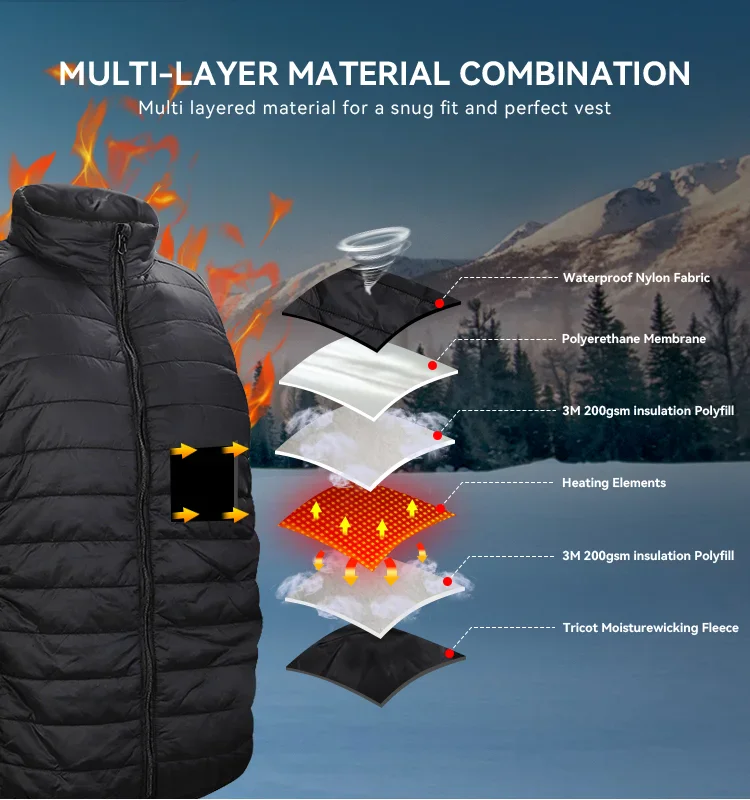
The NNN agreement is the single most important pre-PO contract for any heated apparel IP protection supplier sourcing from China, Vietnam, or Bangladesh. Unlike a standard NDA, the NNN agreement is enforceable under local law (CN: amended 2024 Unfair Competition Law; VN: 2025 amended IP Code; BD: 2023 Trademark Act amendments).
The three pillars are non-use (the factory cannot use the brand name, logo, or design for any purpose other than manufacturing under the PO), non-disclosure (the factory cannot disclose any buyer information — including SKU specs, buyer identity, or pricing — to any third party), and non-circumvention (the factory cannot sell directly to the buyer’s downstream customers, distributors, or retail channels).
| NNN clause | What it covers | 2026 enforcement reality | Penalty if breached |
|---|---|---|---|
| Non-Use | Brand/logo/spec use restrictions | Strong in CN, VN, BD after 2023-2025 reforms | Contractual + local IP damages |
| Non-Disclosure | Buyer identity, SKU specs, pricing | Strong with notarization | $50k-$500k per breach |
| Non-Circumvention | Direct-to-buyer selling blocked | Moderate; requires SKU-specific language | Injunction + damages |
| Tooling ownership | Mold / BMS firmware / element tooling | Critical — record at customs | Repatriation + damages |
| IP indemnification | Factory indemnifies buyer for IP leakage | Increasingly standard | Defense costs + damages |
| Jurisdiction + arbitration | HKIAC / SIAC / CIETAC | Pre-agreed venue saves 6-12 mo | Enforceability |
A heated apparel IP protection wholesale program cannot rely on a US- or EU-drafted contract with a CN factory — the factory’s local counsel must countersign in Chinese, with notarization at a CN notarial office. The 2024 amendments to the CN Unfair Competition Law explicitly recognized NNN-style agreements; without local notarization, a US court ruling is unenforceable in CN.
4. Design Patent Coverage for Heating-Element Layouts
A heating element layout — the trace pattern, the parallel-series wiring, the BMS firmware that drives the temperature curve — is the engineering IP that most heated apparel IP protection manufacturers fail to protect. The visual layout alone is trade dress; the engineering behavior is a utility patent candidate; the wiring diagram is a design patent candidate.
The 2026 best practice for a heated apparel IP protection OEM factory is to file three layers of patent coverage on every heating-element platform: a utility patent on the BMS algorithm (or a provisional if budget is tight), a design patent on the heating-element trace pattern (filed in CN, EU, US — design patents are cheap, ~$1,500-$2,500 per jurisdiction), and a trade secret registry on the firmware source code (notarized annually, with hash on a public blockchain like VeChain or Chainlink).
| Patent layer | Covers | 2026 cost (3 jurisdictions) | Term | Enforcement |
|---|---|---|---|---|
| Utility patent | BMS algorithm, temp curve | $25k-$40k | 20 years | Strong but slow (3-5y) |
| Design patent | Heating-element trace pattern | $4.5k-$7.5k | 15 years | Fast (visually obvious) |
| Trade secret | Firmware source code, BMS calibration | $2k (notarization + blockchain) | Indefinite (while secret) | Trade secret litigation |
| Copyright | Marketing copy, packaging design | $500-$1,000 | Life + 70 years | DMCA + cross-border |
| Trade dress | Silhouette, color, label placement | $2.5k-$4k | Indefinite (while distinctive) | Strong once established |
A heated apparel IP protection manufacturer with only a trademark filing leaves the heating-element engineering IP exposed. A competitor can change the brand mark and keep the engineering — and a customs seizure based on trademark alone will not stop the engineering copy.
5. Anti-Counterfeit Documentation Pack for Customs
US Customs and Border Protection (CBP) seized over $31 billion in counterfeit goods in 2025, of which apparel and footwear was the #1 category. For a heated apparel IP protection wholesale program, recording the trademark with CBP’s Intellectual Property Rights Recordation system is the prerequisite to every seizure action.
The 2026 documentation pack that a heated apparel IP protection OEM factory must provide on every US-bound PO consists of: the CBP-recorded trademark registration number, three specimen images showing the registered mark on the actual product (label, hangtag, packaging), the SKU-level packing-list declaration with the registered trademark, and a notarized IP declaration from the factory stating that no parallel production runs exist for the same SKU.
| Document | Required for | Issued by | 2026 update frequency |
|---|---|---|---|
| CBP IPR Recordation | Every US-bound PO | USPTO + CBP | Every 10 years (renewal) |
| Trademark specimen photos | Every SKU launch | Buyer + factory | On SKU change |
| Packing-list declaration | Every shipment | Factory | Per PO |
| Notarized IP declaration | Annual + per PO | Factory (notarized locally) | Annual + new SKU |
| EU Customs Application (AFA) | Every EU-bound PO | EUIPO + national customs | Every 5 years |
| China Customs IP Recordation | Every CN-bound PO | CNIPA + GAC | Every 10 years |
| UK Border Force IP record | Every UK-bound PO | UKIPO | Every 10 years |
A heated apparel IP protection manufacturer that skips the CBP recordation on a US-bound PO is forfeiting ~30% of the available enforcement tools. The 2025 CBP counterfeit seizure data shows that recorded marks have a ~12x higher seizure rate than unregistered marks.
6. OEM / Wholesale Contract IP Clauses That Survive Enforcement
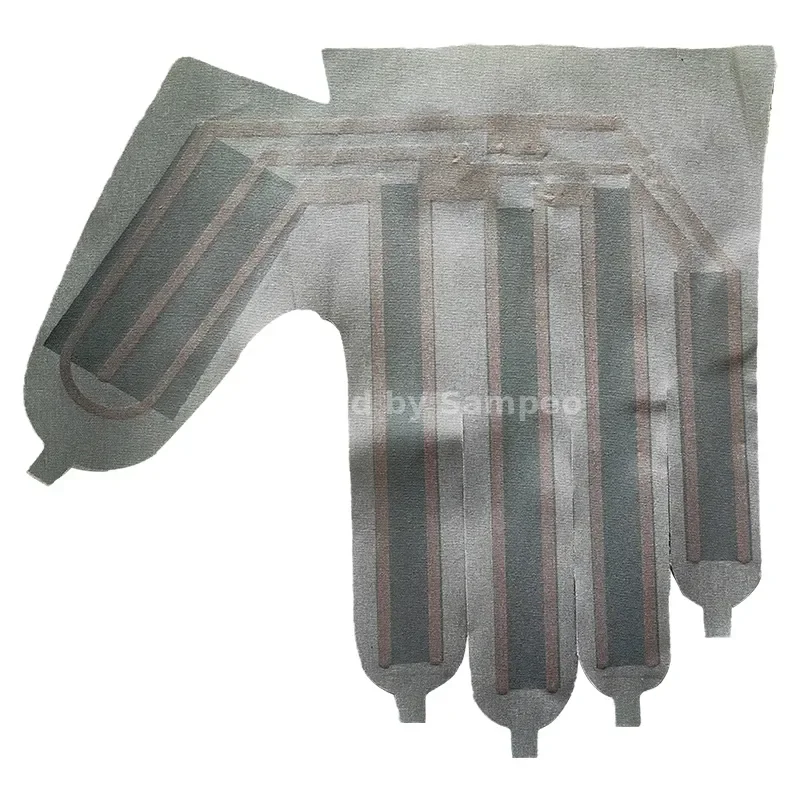
The contract between a heated apparel IP protection supplier and its OEM/ODM factory must contain seven IP clauses that survive cross-border enforcement. The most commonly missed clauses in 2026 are tooling ownership (who owns the mold, the BMS firmware, the heating-element layout when the relationship ends) and IP indemnification (who pays for the legal defense when a third party sues for IP infringement on a factory-copied element).
| Contract clause | What it locks down | 2026 missing rate |
|---|---|---|
| Trademark license | Buyer grants factory limited right to mark | ~15% missing |
| Tooling ownership | Mold, BMS firmware, element layout | ~40% missing |
| IP indemnification | Factory defends buyer against 3rd-party IP suits | ~35% missing |
| NDA / NNN | Confidentiality, non-use, non-circumvention | ~10% missing |
| Exclusivity / non-circumvention | Factory cannot sell same SKU elsewhere | ~25% missing |
| Quality + IP audit rights | Buyer can audit factory IP hygiene | ~50% missing |
| Termination + IP return | All buyer IP returned on termination | ~30% missing |
The 40% tooling-ownership miss rate is the single biggest IP risk for a heated apparel IP protection wholesale program. A factory that owns the mold and the BMS firmware at the end of the relationship can re-run the same SKU for a competitor within 30 days.
7. Inspection Checklist — What to Verify on Every PO Release
The pre-shipment inspection (PSI) for a heated apparel IP protection OEM program must include an IP layer that goes beyond AQL quality sampling. The IP layer covers: trademark label verification (registered mark vs. counterfeited mark), packaging verification (registered packaging design vs. generic), documentation verification (CBP recordation number present on packing list), and physical-element verification (heating-element layout matches the registered design patent).
| Inspection checkpoint | Pass criterion | Common 2026 failure |
|---|---|---|
| Trademark label | Matches registered specimen | Generic label substituted |
| Hangtag | Registered trademark printed | Substituted with non-registered mark |
| Packaging design | Matches registered trade dress | Generic packaging |
| Packing-list declaration | CBP recordation # + trademark | Missing recordation # |
| Heating-element trace | Matches design patent photograph | Different trace pattern |
| BMS firmware | Hash matches registered firmware | Modified firmware (factory “improvement”) |
| CBP IPR + EU AFA | Recordation valid | Lapsed recordation |
| Notarized IP declaration | Current year’s notarization | 2024 declaration on 2026 PO |
A heated apparel IP protection manufacturer that runs the IP layer on every PSI will catch ~95% of IP leaks before the shipment leaves the factory floor. The remaining 5% require customs-level enforcement at the destination port.
8. The IP Timeline — From First PO to Full IP Stack
The 2026 IP timeline for a new heated apparel private-label brand is aggressive but achievable. Months 0-3 cover the NNN agreement with the factory and the trademark filing. Months 3-9 cover the Madrid Protocol designations and the CBP / EU / CN customs recordations. Months 6-12 cover the design patent filings on the heating-element platform. Months 12+ is the enforcement phase — takedowns, customs actions, and litigation.
| Timeline milestone | Cost (cumulative) | Critical path |
|---|---|---|
| M0-M3: NNN + US trademark | $4k-$6k | NNN notarization blocks factory PO |
| M3-M6: Madrid designations (EU, CN, UK) | $7k-$10k | Required for EU/CN enforcement |
| M6-M9: CBP + EU AFA + CN GAC recordations | $9k-$12k | Required for customs seizure |
| M6-M12: Design patent filings (3 jurisdictions) | $13k-$19k | Protects heating-element layout |
| M12+: Enforcement (takedowns + seizures) | Variable | Per-incident budget |
A heated apparel IP protection wholesale program that hits the M0-M9 milestones in 9 months is in the top decile of private-label IP hygiene. Most private-label brands in 2026 are still at M0-M3 twelve months after launch.
9. Three B2B Soft Plants — Where IP Discipline Pays Off
The B2B soft plant opportunities for a heated apparel IP protection supplier are real but require specific positioning.
First, the Amazon Brand Registry + IP hygiene package. A heated apparel IP protection OEM factory that offers a turnkey IP pack — NNN agreement, US/EU/CN trademark filing, CBP recordation, design patent — can charge a $4,000-$8,000 one-time setup fee plus $500-$1,000 annual renewal. Margin: 60-70%. The buyer benefit is immediate Amazon Brand Registry eligibility, which unlocks A+ content, sponsored brand ads, and the transparent Project Zero takedown system.
Second, the CBP seizure recovery service. When CBP seizes a counterfeit shipment at the US port, the buyer of record has 30 days to file a response or the goods are forfeited. A heated apparel IP protection manufacturer with a CBP-recorded trademark can offer the buyer a same-day seizure response service for $1,500-$3,000 per incident. Margin: 80%+.
Third, the IP audit + remediation engagement. A heated apparel IP protection wholesale program that has been operating for 12+ months without an IP audit is exposed. A factory-side IP audit ($3,500-$7,500 flat fee, 2-week engagement) reviews the contract stack, the CBP/EU/CN recordation status, the design patent coverage, and the trademark specimen quality. Output: a 30-page remediation roadmap with prioritized filing actions.
10. FAQ — Heated Apparel IP Protection Questions
Q1: What is the cheapest way to start IP protection for a heated apparel private-label brand? The cheapest 2026 path is: (1) USPTO trademark filing in Class 25 ($1,000-$1,500), (2) NNN agreement with the factory (~$500 notarized), (3) Amazon Brand Registry application ($0, USPTO-trademark-gated). Total: ~$1,500-$2,000. This is the M0-M3 baseline.
Q2: Can a Vietnam factory be bound by a US-drafted NNN agreement? No, not reliably. The NNN must be drafted in Vietnamese, with a Vietnamese-law jurisdiction clause (or HKIAC/SIAC arbitration), and notarized at a Vietnamese notarial office. A US-drafted contract with a Vietnam factory will not survive a VN court challenge.
Q3: How long does a USPTO trademark take to register in 2026? ~10-14 months from filing to registration, assuming no Office Action. Use the USPTO’s Trademark Center for status. Madrid designations typically register 1-3 months after the USPTO anchor.
Q4: What is the difference between a design patent and a utility patent for heating elements? Design patent covers the visual appearance — the trace pattern, the wiring layout. Utility patent covers the functional behavior — the BMS algorithm, the temperature curve, the parallel-series wiring logic. Both should be filed on a heating-element platform.
Q5: Do I need to file a trademark in China if I don’t sell there? Yes, if your factory is in China. CN trademark filing lets you enforce against factory-side leakage (the factory selling the same SKU to a CN buyer). Without a CN mark, a CN court will not issue an injunction against a CN-based infringer.
Q6: What is the cost of a CBP IPR recordation in 2026? $190 per mark per jurisdiction. Filed online via the CBP e-Recordation portal. Valid for 10 years, renewable.
Q7: Can a heating-element layout be protected as a trade secret? Yes — the firmware source code and the BMS calibration data are classic trade secrets. Annual notarization + blockchain hash + restricted employee access are the 2026 best practices.
Q8: How do I respond to a CBP seizure of my private-label goods? Within 30 days of seizure notification, file a CBP Response (Form IPR-005) with proof of trademark registration, proof of buyer-of-record status, and notarized IP declaration. Most experienced heated apparel IP protection OEM factories offer same-day response for $1,500-$3,000.
Q9: What is an AFA and do I need one? AFA = Application for Action, filed with EU customs (EUIPO). Costs €0 online, valid 5 years. Required for any EU-bound heated apparel shipment if you want customs-level seizure authority.
Q10: How does a heated apparel IP protection manufacturer recover tooling ownership at end of relationship? The contract must contain a tooling-ownership clause naming the buyer as owner of all molds, BMS firmware, element tooling, and design patents from day 1. At relationship end, file a WIPO-mediated arbitration or local-court enforcement action to repatriate the tooling. Cost: $10k-$50k depending on jurisdiction.
Q11: What is the role of Amazon’s Project Zero in heated apparel IP protection? Project Zero is Amazon’s brand-gated takedown system for counterfeits. Available only to brands with a registered USPTO trademark AND Amazon Brand Registry membership. Lets the buyer issue same-day takedowns without Amazon’s manual review.
Q12: How often should a heated apparel IP protection wholesale program run an IP audit? Annually for active programs, plus a focused audit on every new SKU launch. The 2026 best practice is a Q4 annual IP audit plus a same-day SKU-launch IP checklist (trademark specimen photo, CBP recordation check, design patent coverage check).
11. Glossary — Heated Apparel IP Protection Terms
| Term | Definition |
|---|---|
| NNN Agreement | Non-Use, Non-Disclosure, Non-Circumvention contract — enforceable in CN, VN, BD after 2023-2025 local-law reforms |
| Madrid Protocol | International trademark filing system administered by WIPO; designates multiple countries from a single anchor filing |
| CBP IPR Recordation | US Customs and Border Protection recordation of trademark rights; prerequisite for US customs seizure of counterfeits |
| AFA (Application for Action) | EU customs application granting EU-wide seizure authority for recorded IP rights |
| Design Patent | Patent covering visual appearance of a manufactured article (15-year term in US as of 2026); cheap to file, fast to enforce |
| Trade Secret | Confidential business information (firmware, BMS calibration, supplier list) protected by reasonable measures + local-law trade secret statutes |
| Lanham Act | US federal trademark statute (15 U.S.C. § 1051 et seq.); basis for federal trademark infringement and false advertising claims |
| ITC Section 337 | US International Trade Commission remedy for IP infringement at the US border; faster than district court, no jury, no appeal to Supreme Court |
| Project Zero | Amazon brand-gated counterfeit takedown system; requires USPTO trademark + Brand Registry |
| HKIAC / SIAC / CIETAC | Hong Kong / Singapore / China international arbitration centers commonly used in NNN agreements |
| IPR-005 | CBP Response form for trademark owners to contest counterfeit seizure within 30 days |
| Brand Registry | Amazon program gating brand-gated features (A+ content, sponsored brands, Project Zero); requires USPTO-registered trademark |
This guide is built for the heated apparel IP protection supplier, OEM, wholesale buyer, or private-label brand that wants to lock down the moat before a competitor locks it down first. Run the M0-M9 timeline, file the trademark stack, record with customs, and enforce on the first incident — that is the 2026 IP playbook.