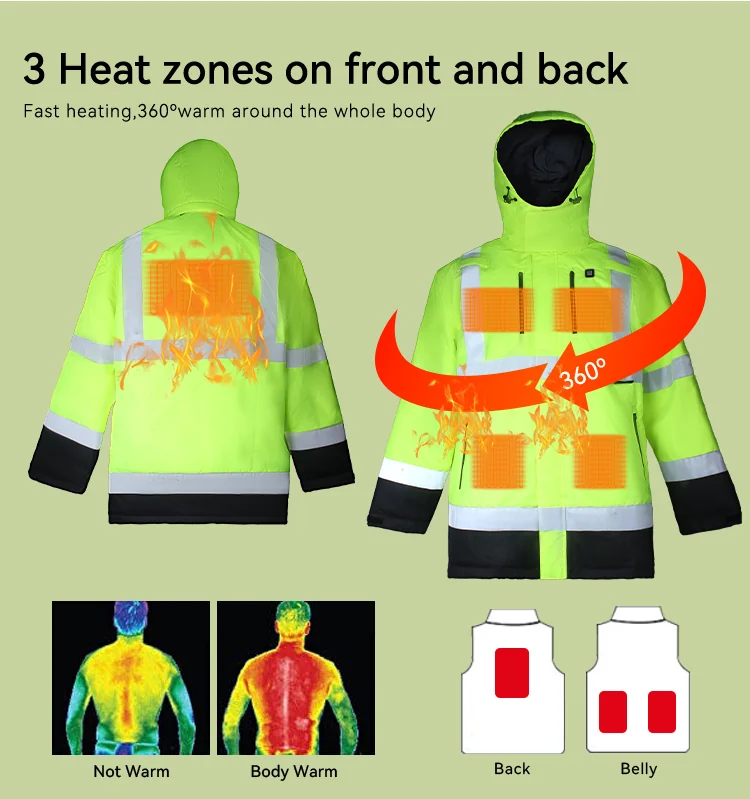
Heated Apparel Logistics 2026: Freight, UN3481 & DDP/FOB Supplier Guide
Heated Apparel Logistics 2026: Freight, UN3481 & DDP/FOB Supplier Guide
A heated jacket can leave a factory with perfect stitching and still fail commercially before it reaches a retail distribution center. The reason is usually not the heating element; it is the battery, the documentation, the carton, or the Incoterm. A supplier that treats heated apparel logistics as a regulated shipping workstream is more useful than a factory that offers the lowest ex-works price and leaves the buyer to discover the documentation gap at the airport.
This guide is written for private-label brands, procurement teams and factory program managers planning 2026 programs. It shows how a supplier should plan lithium battery packs, UN3481 classification, air and sea freight, DDP and FOB offers, packaging, traceability and cost control. The aim is practical: a buyer should leave an RFQ with one comparable landed-cost model, a supplier should have a repeatable shipping file, and a forwarder should receive a package that is ready for carrier acceptance.

## Why 2026 Changes Heated Apparel Logistics
Heated apparel is no longer just apparel with a removable accessory. The battery is part of the product, the electrical architecture is part of the compliance file, and the shipping method affects the final margin. A 7.4 V pack installed inside a jacket is a different acceptance case from a spare pack shipped alone. A small production run for samples has a different planning horizon from a 5,000-unit wholesale replenishment.
Three changes make 2026 especially important:
| Pressure | Supplier consequence | Buyer consequence |
|---|---|---|
| Carrier lithium-battery acceptance is stricter | Build DG-ready documentation before booking | Confirm the lane before releasing the PO |
| Retailers ask for traceability | Lock cell, BMS and pack revision | Ask for the exact model, not a generic equivalent |
| Freight costs move faster than unit prices | Quote FOB and DDP on the same basis | Compare landed cost, not invoice price |
| EU battery rules add data requests | Maintain passport and recycling records | Preserve data with the technical file |
| Peak season capacity is tight | Reserve air and sea space early | Separate launch air freight from replenishment sea freight |
The practical result is simple: a heated apparel logistics supplier should be able to explain who owns each step from cell sourcing to DC receipt. If that ownership is unclear, the purchase order is not ready.
B2B Soft Plant / Quotation Callout 1 When a buyer requests a 5,000-unit heated apparel program, a serious supplier first asks for the cell watt-hour rating, pack quantity per carton, destination, target shelf date and preferred Incoterm. A price without those answers is not a freight comparison; it is a placeholder for a later dispute.
The Supplier’s Heated Apparel Logistics Workflow
A supplier can make the work repeatable by connecting engineering, quality and shipping in one workflow. The following sequence is a useful minimum for any OEM program.
| Stage | Supplier action | Record to retain | Release gate |
|---|---|---|---|
| 1. RFQ intake | Confirm SKU, market, quantity and target date | RFQ and buyer specification | Specification complete |
| 2. Cell lock | Approve cell maker, model and lot | Cell datasheet and approval list | No substitution allowed |
| 3. Pack design | Validate BMS, connector and housing | Drawings and test reports | G1 engineering sign-off |
| 4. PPS | Make pre-production sample with final trim | PPS checklist | Quality and buyer approval |
| 5. Pilot | Build a small representative lot | Pilot inspection and EOL results | Pilot review passed |
| 6. Pack-out | Apply labels and protection | Packing list and carton photos | Carton audit passed |
| 7. Booking | Tender UN and commercial documents | Test summary, SDS and waybill | Forwarder acceptance |
| 8. Handover | Send tracking and document archive | Shipment file and exception log | Buyer has full record |
A supplier should not allow a purchasing team to change a cell after the battery documents have been issued. A different cell may have the same nominal voltage but a different capacity, protection board, connector, batch history or test summary. The resulting risk is not only technical; it can invalidate the paperwork attached to the shipment.
UN3481 and Lithium Battery Packs: A Supplier’s Classification File
UN3481 describes lithium-ion batteries contained in equipment or packed with equipment. Heated clothing commonly uses a battery installed in the garment, so the supplier must identify whether the battery is contained, packed with the garment or sent separately. A spare pack may be classified differently, and a pack shipped with the garment still needs the relevant handling and packaging controls.
| Item | What the supplier confirms | Why it matters |
|---|---|---|
| Cell chemistry | Lithium-ion, exact chemistry and model | Prevents a different cell entering production |
| Watt-hour rating | Marked on pack and on technical file | Determines handling and carrier review |
| Pack configuration | Installed, packed with, or standalone | Changes declaration and packing logic |
| UN38.3 summary | Current test summary for the exact cell or pack | Core transport evidence |
| SDS / MSDS | Safety data sheet from the responsible maker | Forwarder and customs review |
| Protection | Short-circuit, over-charge and impact protection | Reduces transit and handling risk |
| Packaging | Inner protection, carton and labels | Determines acceptance and damage rate |
| Traceability | Lot, batch and serial record | Supports recall and warranty work |
The supplier should keep the original files, not screenshots copied into a generic folder. A document register with version, cell model, pack revision and issue date gives the forwarder a single answer when a shipment is challenged. A freight forwarder can also help classify a specific configuration, but the factory remains responsible for the accuracy of the product data it supplies.
Heated apparel logistics manufacturer capability is therefore more than owning a sewing line. It includes the ability to freeze a battery specification, coordinate a test report, package a carton, and answer a carrier’s technical questions without improvising.
Lithium Battery Freight: Air, Sea and Road
Air freight is a planning choice, not a default upgrade. It is useful for samples, replacement stock and a short list of launch scenarios. The supplier should confirm carrier acceptance before promising a ship date because lithium battery restrictions can vary by carrier, aircraft, watt-hour range, quantity per package and season.
| Mode | Good use case | Supplier planning note |
|---|---|---|
| Air freight | Samples, launch top-up, urgent replacements | Tender DG data early; capacity is volatile |
| Sea LCL | Mid-size wholesale order | Coordinate consolidation and longer dwell time |
| Sea FCL | Full-container private-label program | Reserve equipment and inspect container plan |
| Courier | Small samples and approved spares | Check quantity and label limits per parcel |
| Road / regional | Intra-market replenishment | Apply regional dangerous-goods rules |
| Split plan | Air for launch, sea for volume | Make the two lanes part of one delivery plan |
For a typical wholesale program, sea freight carries the volume while air freight carries urgency. The supplier should not quote an air premium without showing the weight, battery count, carton dimensions and service level. Conversely, the buyer should not ask for a DDP price and then compare it with an FOB quote that excludes origin handling, insurance, duties or final delivery. Comparable assumptions are a basic form of heated apparel logistics risk control.
Heated apparel logistics OEM programs need an additional control: every carton and master-carton label must match the exact pack revision. A cell or firmware change after approval can make an old shipping instruction unsafe. The supplier’s production release should therefore include a document freeze point and a change-control form.
Air Freight Battery Clothing: Acceptance Checklist

Battery clothing air freight starts before the airport. A forwarder needs a concise shipment file, not a folder assembled at the dock. The minimum checklist is:
| Before tender | Evidence | Common rejection |
|---|---|---|
| Product identity | SKU, cell maker, model, watt-hours | Generic battery description |
| Transport status | Contained / packed with / standalone | Wrong UN number or packing group |
| Safety file | UN38.3 summary and SDS | Expired, missing or mismatched report |
| Package | Packing diagram, protection and net weight | Loose terminals or damaged carton |
| Marking | Handling marks and shipper details | Labels hidden under wrap |
| Booking | Carrier acceptance and capacity | Cargo tendered without confirmation |
| Tracking | Waybill, flight and transfer plan | No contingency for a rejected flight |
A supplier should run a document review one week before production pack-out. That review catches a changed carton size, a revised pack count or a cell substitution while there is still time to correct the shipment. A buyer can help by sharing the destination broker’s questions before the order is complete.
B2B Soft Plant / Quotation Callout 2 Ask the supplier to quote two lanes on the same quotation sheet: a launch lane using air freight and a volume lane using sea freight. The quote should show battery count, gross weight, handling fee, insurance assumption, transit range and excluded charges. The buyer can then choose speed or scale without discovering hidden assumptions after the PO.
Sea Freight DDP/FOB: Building a Fair Comparison
FOB, DDP and DAP describe different allocations of responsibility. They do not magically make a product compliant. The supplier should state which party tenders the dangerous-goods information, which party books the carrier, where risk transfers, and who handles import clearance.
| Cost item | EXW | FOB | DDP |
|---|---|---|---|
| Export packing | Buyer | Supplier | Supplier |
| Origin clearance | Buyer | Supplier | Supplier |
| Main freight | Buyer | Buyer | Supplier |
| Import duty and tax | Buyer | Buyer | Supplier |
| Final delivery | Buyer | Buyer | Supplier |
| Battery document owner | Shared | Supplier / forwarder | Supplier / destination broker |
| Best fit | Advanced buyer control | Experienced importer | Simpler buyer accounting |
For a first heated apparel program, FOB is often easier to audit because the buyer can see freight, insurance and import costs separately. DDP can be attractive for a brand that wants one landed invoice, but it requires the supplier to manage a destination broker, import records, battery data and delivery appointments. DAP is a useful middle option when the seller controls export and main carriage while the buyer clears import. The correct choice depends on the buyer’s tax setup, broker capability and tolerance for operational risk.
A fair comparison should include at least these fields:
| Quote field | Why it prevents disputes |
|---|---|
| Product unit price | Separates garment and battery value |
| Battery pack price | Makes substitution risk visible |
| Sample and tooling cost | Avoids a low unit price hiding NRE |
| Carton and master-carton cost | Explains freight density |
| Origin charges | Port, handling and documentation |
| Freight and fuel surcharge | Makes the lane comparable |
| Insurance | Shows what is and is not covered |
| Duty and tax assumption | Prevents DDP / FOB confusion |
| Final delivery | Names the DC and appointment terms |
| Exclusions | Shows broker, storage and amendment fees |
The phrase heated apparel logistics wholesale should be treated as a process label, not a price label. A wholesale supplier that provides a lane matrix, carton plan and document register is more valuable than one that simply lists a lower MOQ.
Packaging, Labeling and Battery Protection

Lithium battery damage often begins before the carton reaches the carrier. Pressure from stacked cartons, loose terminals, a connector caught in a pocket or a master-carton label placed over a handling mark can turn a routine movement into a rejected shipment. The supplier should validate the final retail carton, not an empty engineering sample.
| Package layer | Control | Inspection evidence |
|---|---|---|
| Battery housing | Terminal protection and strain relief | Sample photos and torque record |
| Garment pocket | Battery cannot move during handling | Shake and drop check |
| Inner carton | Correct count and separators | Packing specification |
| Master carton | Weight, dimensions and handling marks | Carton audit and weighed sample |
| Pallet | Stable, visible labels and no overhang | Loading photo |
| Container | Dry, clean and accepted by forwarder | Container inspection record |
Labels should remain visible after retail packaging. The supplier should not let a private-label artwork layer cover a required lithium-battery mark. A document register should also state which label version applies to which destination; EU, North American and regional rules are not interchangeable.
For air freight battery clothing, use the carrier’s current packing instructions and the latest applicable dangerous-goods rules rather than a supplier’s memory from a prior season. The exact rules and acceptance conditions must be confirmed with the forwarder and carrier for the actual pack and route. This guide is an operating framework, not legal or carrier advice.
The Supplier’s Lithium Battery Freight File
A complete shipment file should be assembled before the forwarder books space. The file can be organized by shipment and SKU, with the following contents:
| File group | Required record | Owner |
|---|---|---|
| Product | Spec, cell model, BMS and pack revision | Engineering |
| Safety | UN38.3, SDS, test and conformity records | Compliance |
| Quality | PPS, EOL, inspection and serial trace | Quality |
| Commercial | Invoice, packing list, HS and Incoterm | Sales / finance |
| Freight | Carton plan, weight, labels and booking | Logistics |
| Exception | Carrier questions and approved changes | Program manager |
The supplier should issue a document register with a version and a “ship with” status. If a cell lot changes, the register should show the new lot and the approval that permits the change. A buyer should be able to download the same file that the forwarder received, which makes warranty and recall investigations much faster.
Broader Heated Apparel Logistics Conversation
The logistics plan intersects with product design, compliance, finance and customer service. A supplier that keeps those teams separate passes hidden cost to the buyer.
Quick Reference Glossary
Use this quick reference to align the RFQ, technical file and freight plan before the next battery-heated apparel order.
| Term | Meaning in this program |
|---|---|
| Heated apparel logistics | The controlled movement of battery-heated garments, packs, documents and data. |
| Heated apparel logistics manufacturer | A supplier that owns battery pack, carton and document readiness. |
| Heated apparel logistics OEM | A factory producing to a buyer-owned technical pack and brand. |
| Heated apparel logistics wholesale | A volume process for cartons, consolidation, labels and replenishment. |
| UN3481 | Lithium-ion batteries contained in or packed with equipment. |
| Lithium battery pack | The power unit whose model and watt-hours govern the transport file. |
| DDP | Incoterm where the supplier carries more freight, import and delivery responsibility. |
| FOB | Incoterm where the buyer books main freight and handles import clearance. |
Keep the document register, cell revision and Incoterm assumptions with every shipment.
Frequently Asked Questions
1. What is heated apparel logistics? It is the coordinated movement of battery-heated garments, batteries, documents, packaging and data from the factory to the customer while meeting lithium transport and product rules.
2. What does UN3481 mean for heated clothing? UN3481 generally covers lithium-ion batteries contained in equipment or packed with equipment. The actual classification depends on the pack configuration and destination.
3. Does every heated jacket need a UN38.3 test summary? A current test summary for the applicable cell or pack is normally part of the transport file. The forwarder and carrier should confirm the current requirement for the exact configuration.
4. Can a heated apparel supplier ship batteries and jackets together? Often yes, but the packing configuration, protection, labels and carrier limits must be confirmed. A spare pack can have different rules from a battery installed in the garment.
5. Why is air freight more complicated for battery clothing? Air carriers apply quantity, energy, packing and acceptance controls. A forwarder should review the file before tender and may reject a configuration that another lane could carry.
6. Is sea freight suitable for wholesale heated apparel? Yes. Sea freight is commonly used for volume programs, provided the battery documents, container plan, protection and destination acceptance are ready.
7. What is the difference between FOB and DDP? FOB generally makes the buyer responsible for main freight and import clearance. DDP makes the supplier responsible for more of the transport and import delivery, subject to the contract and destination broker.
8. Should a first-time buyer choose DDP? DDP can simplify accounting, but only if the supplier has a capable destination broker and clear tax assumptions. FOB or DAP may be easier to audit for a first program.
9. What should a battery clothing quote include? It should separate garment, battery, tooling, carton, document, freight, insurance, duty and delivery assumptions. The buyer should receive the exact cell and pack revision too.
10. How can a supplier prevent freight rejection? Freeze the cell and pack revision, validate the carton, keep current transport documents and obtain forwarder acceptance before collection.
11. What is the safest lead-time strategy? Use sea freight for planned volume, air freight for samples and genuine launch urgency, and pre-book capacity before peak seasons.