Heated Apparel Contract Manufacturing 2026: Supplier Selection, Factory Audit & OEM/ODM Process Guide
Heated Apparel Contract Manufacturing 2026: Supplier Selection, Factory Audit & OEM/ODM Process Guide
When a private-label buyer is evaluating heated apparel contract manufacturing for the first time, the conversation often begins with two questions that feel simple but rarely have clean answers. The first is “what does a unit cost?” and the second is “when can you ship?” Both questions push the buyer past the marketing brochure and into the operational reality of the factory. Contract manufacturing is, at its core, an exercise in shared risk — the buyer carries the brand, the channel, and the demand forecast; the factory carries the equipment, the process discipline, and the labor. When either side underestimates that partnership, the product cycle suffers.
This guide maps the operational backbone of contract manufacturing for heated apparel in 2026. It covers supplier selection criteria that survive first contact, the factory audit steps that distinguish an assembly shop from a development partner, and the OEM/ODM process control checkpoints that prevent a launch from drifting into a recall. The framing is from the buyer’s perspective: what to ask, what to verify, what to contractually obligate, and what to walk away from. Where the engineering line items matter most — battery specification, heating element layout, control electronics — those sections point to deeper technical conversations handled in our Heated Apparel Guides and the Heated Jackets archive.
Quick Reference Glossary
| Term | Definition |
|—|—|
| OEM | Original Equipment Manufacturer — factory builds to buyer-supplied specification |
| ODM | Original Design Manufacturer — factory contributes design, buyer brands it |
| CMT | Cut, Make, Trim — factory produces from buyer-supplied fabric and trim |
| FOB | Free On Board — buyer takes ownership at factory loading port |
| DDP | Delivered Duty Paid — factory handles all import logistics to buyer warehouse |
| MOQ | Minimum Order Quantity — smallest production run a factory will accept |
| PPAP | Production Part Approval Process — pre-production sample approval protocol |
| AQL | Acceptable Quality Limit — statistical sampling threshold for defect acceptance |
| EVT | Engineering Validation Test — first prototype build for design verification |
| DVT | Design Validation Test — pre-production build at planned production process |
| PVT | Production Validation Test — first mass-production run |
| BMS | Battery Management System — electronic protection circuit on lithium packs |
1. Why Contract Manufacturing Is the Default for Heated Apparel in 2026
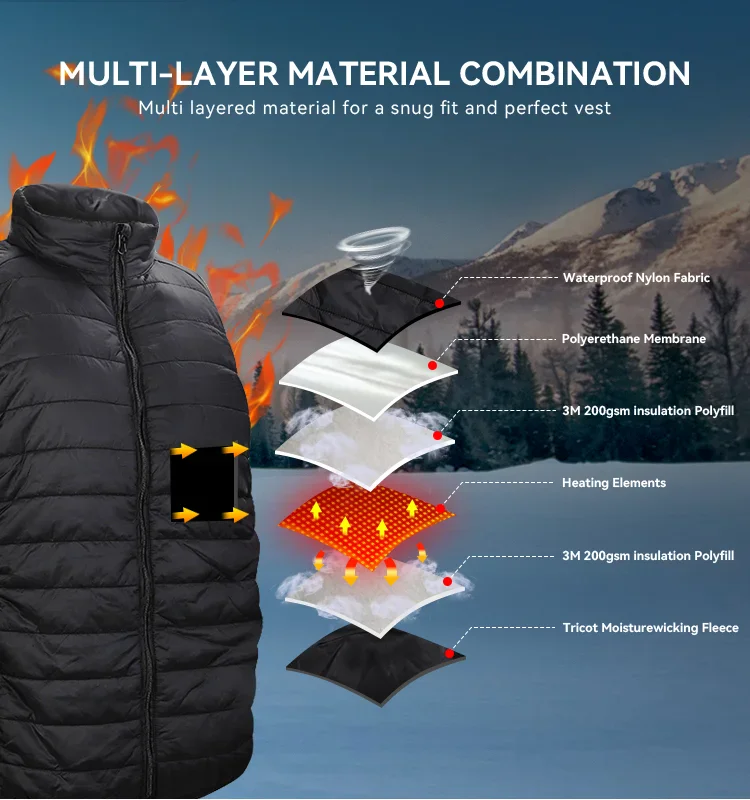
The heated apparel category has matured past the point where every brand needs its own sewing line. Battery heating technology has standardized around 7.4V and 12V lithium packs, graphene and carbon-fiber heating elements, and USB-C charging interfaces. The capital cost of building a vertically integrated factory that handles cut-and-sew, heating element integration, battery sourcing, and electronics assembly is now in the $5M-$15M range, before working capital. For any brand with annual heated apparel volume under 100,000 units, contract manufacturing is the only path that protects margin.
The supplier base has consolidated correspondingly. As of 2026, four country clusters dominate contract manufacturing capacity: coastal China (Shenzhen, Dongguan, Ningbo), Vietnam (Ho Chi Minh, Hai Phong), Bangladesh (Dhaka, Chittagong), and a smaller but growing cluster in Eastern Europe (Romania, Bulgaria, Türkiye). Each cluster carries different trade-offs in MOQ flexibility, lead time, tooling amortization, and freight cost. A buyer choosing between them is not choosing a “better” or “worse” factory — they are choosing which combination of cost, lead time, and risk fits their launch plan.
2. The Two Factory Models: OEM vs. ODM
The first decision a buyer makes when approaching contract manufacturing is whether to OEM or ODM the product line. Both models are legitimate, but they impose different obligations on the buyer and different cost structures on the factory.
OEM — Buyer Owns the Design
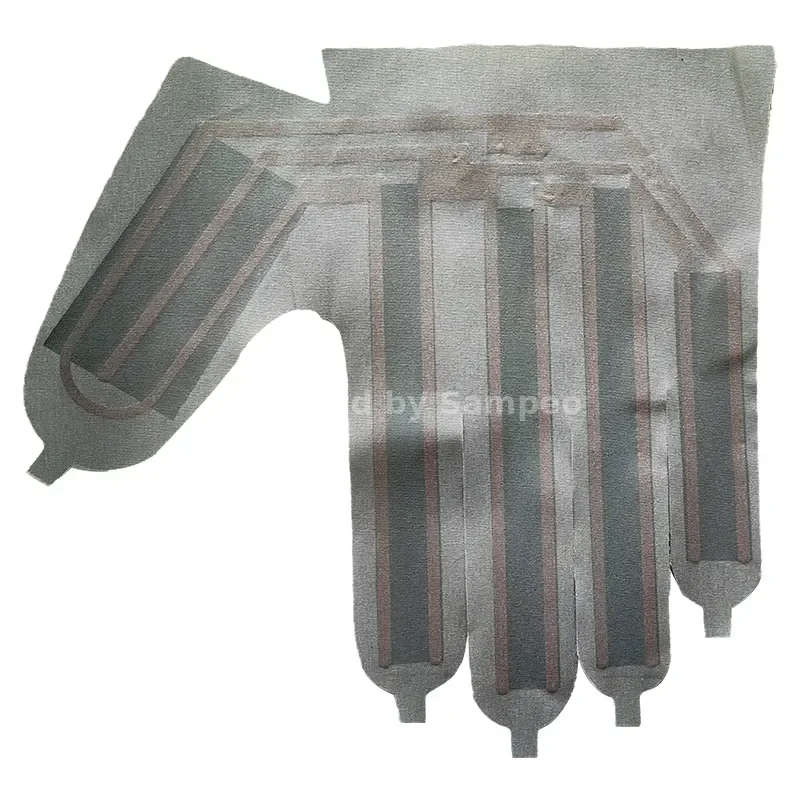
In an OEM engagement, the buyer provides a complete tech pack: pattern files (typically .dxf or .ai), fabric specifications, heating element layout, BOM (battery supplier, control board supplier, connector type), and reference samples. The factory’s job is execution — to build the product to spec at an agreed price and lead time. The buyer carries the development cost, the iteration cycles, and the risk of a design that is harder to manufacture than anticipated. The factory’s contribution is process capability, labor efficiency, and yield.
ODM — Factory Owns the Design
In an ODM engagement, the buyer selects from the factory’s catalog of styles, modifies them within the factory’s design allowances, and applies private label. The factory carries the development cost and the iteration cycles; the buyer benefits from faster time-to-market and lower NRE. The trade-off is differentiation: an ODM line often looks like every other brand in the factory’s catalog, because the underlying tooling, pattern, and BOM are shared.
| Dimension | OEM | ODM |
|—|—|—|
| Tech pack ownership | Buyer | Factory |
| Sample iteration cost | Buyer pays per round | Included in unit price |
| NRE / tooling cost | Buyer amortizes | Often absorbed by factory |
| Differentiation potential | High (buyer’s IP) | Low (factory’s shared tooling) |
| Time to first PO | 12-20 weeks | 4-8 weeks |
| Best fit for | Premium brands, patented heating elements | Entry/mid-tier private label |
For most first-time buyers, ODM is the right starting point. The factory’s catalog represents years of refinement, and the buyer’s capital is preserved for marketing and channel build-out. The buyer graduates to OEM when the brand has enough volume and product specificity to justify the design investment.
3. The Supplier Selection Funnel
The supplier selection process for contract manufacturing should be structured as a funnel with five stages. Each stage reduces the candidate set, and each stage has explicit pass/fail criteria. The mistake most buyers make is to skip stages or to run them in parallel — which means they end up comparing detailed quotes from factories that have already failed earlier gates.
Stage 1 — Desk Research (target: 20-30 candidates)
Cast a wide net. Industry directories (Alibaba, Global Sources, Made-in-China, Vietnam Yellow Pages, Bangladesh BGMEA), trade show leads (Canton Fair, A+A Düsseldorf, Outdoor Retailer), and referrals from peers. At this stage, disqualify candidates that lack heated apparel experience, lack a visible export customer list, or have no English-speaking sales contact.
Stage 2 — Outreach & Questionnaire (target: 10-15 candidates)
Send a structured questionnaire covering production capacity, monthly output, factory floor size, worker count, heating element sourcing, battery certifications (UN3481, IEC 62133, UL 2054), and reference customers. Disqualify factories that cannot answer the questionnaire within 72 hours, that cannot provide facility photos, or that have no exported heated apparel experience.
Stage 3 — Quote Round (target: 5-7 candidates)
Request FOB unit cost for three SKUs at three quantities (low MOQ, mid-volume, high-volume). Compare like-for-like: same fabric, same heating element, same battery, same packaging. Disqualify quotes that are 30%+ below the median (suggests corner-cutting on materials or labor), or that have unusual surcharges (certification fees, “special tooling” fees that other factories do not charge).
Stage 4 — Sample Evaluation (target: 3-4 candidates)
Order samples at the buyer’s cost. Evaluate heating element layout (uniformity, edge coverage), battery integration (BMS protection, connector quality), seam construction, and overall fit. Disqualify any sample whose heating uniformity varies more than 4°C across the element surface under standard test conditions.
Stage 5 — Site Visit (target: 1-2 finalists)
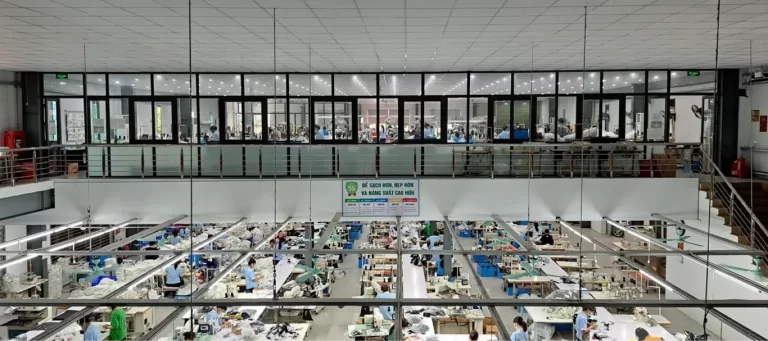
Visit the factory in person. Walk the production line. Inspect the heating element lamination area, the battery storage area, the QC station, and the finished goods warehouse. Talk to line workers and floor supervisors.
The site visit is where the buyer’s instincts calibrate against the factory’s self-reported capabilities.
4. The Factory Audit Checklist
The factory audit is the buyer’s primary due-diligence tool. It is also the step that first-time buyers most often under-invest in. A “tour” led by the factory’s sales team is not an audit. A real audit requires the buyer (or a hired inspector) to spend 6-10 hours on the production floor, reviewing records and observing processes without the factory’s sales team filtering what is shown. The BSCI, SEDEX, and SA8000 social-compliance audits cover labor conditions but do not cover production-process capability — buyers still need their own audit for the latter.
Audit Categories and What to Look For
| Category | What to Verify | Red Flag |
|—|—|—|
| Heating element integration | Lamination temperature control, element alignment jigs | Hand-laminated elements, no documented temperature calibration |
| Battery handling | UN3481 storage compliance, BMS testing records | Bulk lithium storage without fire suppression |
| QC station | AQL sampling tables, defect classification scheme | No documented AQL, no defect library |
| Sewing line | Work-in-process tracking, cycle time data | Untracked WIP, no cycle-time measurement |
| Tooling storage | Mold organization, maintenance log | Tools stored on production floor |
| Finished goods | Pre-shipment inspection protocol | No PSI step before container loading |
A common buyer mistake is to treat the audit as pass/fail. It is more useful to think of the audit as a calibration exercise: the buyer learns the factory’s actual capability, and the factory learns that the buyer is a serious operator. Both outcomes increase the chance of a successful engagement.
5. OEM/ODM Process Control Checkpoints
Process control is the discipline that keeps a contract manufacturing engagement from drifting. The factory’s standard process is built for whatever product they were making last month; the buyer’s job is to specify, document, and verify that the factory’s process for the buyer’s product is operating within tolerance.
Checkpoint 1 — Pre-Production Sample Approval
The PPAP sample is the buyer’s final sign-off before mass production. The factory submits a sample from the actual production line (not the development lab), and the buyer tests heating performance, battery life, wash durability, and seam strength. Documentation should include material certificates, heating element test data, and BMS test reports.
Checkpoint 2 — In-Line Inspection
During production, the buyer (or a third-party inspector) visits the line at the 10%, 50%, and 90% completion points. In-line inspection catches defects that pre-production samples cannot: seam slippage under production sewing tension, heating element delamination from production lamination pressure, battery connector fatigue from production crimp force.
Checkpoint 3 — Pre-Shipment Inspection
PSI is the final gate. An AQL sampling plan (commonly 2.5 for general appearance, 1.5 for critical defects, 4.0 for minor defects) is applied to a random selection from the finished goods. Defects are classified, photographed, and reported; the factory corrects or destroys the rejected units before container loading.
Checkpoint 4 — First-Article Inspection (Repeat Orders)
For repeat orders, the first 50-100 units of the new production run should be inspected against the original approved sample. Material substitutions, component supplier changes, and process drift are most common at the start of a new run — first-article inspection catches them before they propagate through the full order.
6. Contract Clauses That Protect the Buyer
A contract manufacturing agreement is the buyer’s insurance policy. Standard clauses that should be in every agreement include:
IP Protection
The agreement must assign all IP (designs, tech packs, brand marks) to the buyer. The factory must agree not to manufacture the buyer’s product for any other brand, not to register the buyer’s marks in any jurisdiction, and not to disclose the buyer’s specifications to third parties. For heated apparel specifically, the agreement should explicitly cover the heating element layout and the battery BMS firmware.
Tooling Ownership
All tooling (cutting dies, sewing fixtures, lamination jigs, battery fixtures) paid for by the buyer is the buyer’s property. The factory must store it, maintain it, and surrender it on demand. The contract should specify tooling storage location and maintenance schedule.
Quality Standards
The factory must meet the buyer’s specified AQL on every shipment. The buyer retains the right to inspect at any time, including unannounced inspections. The agreement should specify the remedy for failed inspections: rework at the factory’s cost, replacement shipment at the factory’s cost, or full refund.
Capacity Reservation
For buyers with seasonal demand, the agreement should reserve capacity in the factory’s production schedule. The factory commits to production slots in the buyer’s peak months, and the buyer commits to minimum order quantities in those slots. Capacity reservations typically carry a non-refundable deposit.
Compliance Certifications
The factory must maintain all certifications required for the buyer’s target markets: BSCI, SEDEX, SA8000 for social compliance; ISO 9001 for quality management; UN3481 for lithium battery transport; CE, FCC, UKCA for market access. The agreement should require the factory to notify the buyer of any certification lapse within 5 business days.
7. Battery Specification Negotiation
The battery is the highest-stakes component in any heated apparel product. The factory will propose a battery pack; the buyer must verify it.
Battery Specification Checklist
| Parameter | What to Verify | Source |
|—|—|—|
| Cell chemistry | Li-ion 18650 / 21700 / pouch | Factory spec sheet |
| Capacity (mAh) | Match tech pack requirement | Factory spec sheet |
| BMS protection | Over-charge, over-discharge, short-circuit, over-temperature | Test report from BMS supplier |
| UN3481 classification | Class 9 dangerous goods, packing group II | UN test summary |
| Cycle life (≥ 80% capacity) | ≥ 500 cycles for premium, ≥ 300 for entry | Factory accelerated test |
| Connector type | DC barrel 5521 / USB-C / magnetic | Factory spec sheet |
| Certification | IEC 62133, UL 2054, UN38.3, CE-EMC | Certificate copies |
The buyer should never accept a factory-proposed battery without independent verific
ation. Battery counterfeiting is the single most common quality failure in contract manufacturing — factory spec sheets frequently overstate capacity, and BMS protection circuits are frequently omitted or under-spec’d.
8. Common Failure Modes and How to Prevent Them
Contract manufacturing engagements fail for predictable reasons. The buyer’s job is to recognize the warning signs early.
Failure Mode 1 — Material Substitution
The factory substitutes a cheaper fabric, a thinner heating element, or a lower-grade battery without notifying the buyer. Prevention: spec all critical materials by supplier part number, require certificates of conformance with each shipment, and conduct incoming-material inspection on first articles.
Failure Mode 2 — Production Capacity Squeeze
The factory accepts the buyer’s order, then deprioritizes it when a larger customer’s order arrives. Prevention: capacity reservation clause in the contract, monthly production schedule review with the factory’s planning team.
Failure Mode 3 — Quality Drift Over Repeat Orders
The first order meets spec; the third order has 30% defect rate. Prevention: first-article inspection on every repeat order, monthly quality trend review with the factory’s QC manager.
Failure Mode 4 — Communication Breakdown
The buyer’s English-speaking sales contact leaves the factory, and the replacement contact is unresponsive. Prevention: require a primary and secondary sales contact in the contract, with response-time SLAs (24 hours for email, 48 hours for quote revision).
9. Cost Structure and Margin Modeling
A realistic cost model is the foundation of a profitable contract manufacturing engagement. Most first-time buyers under-model hidden costs: tooling amortization, sample fees, packaging, freight, duty, inspection fees, and rework reserve.
Cost Components in a Typical FOB Quotation
| Component | Typical Range | Notes |
|—|—|—|
| Unit FOB price | $35-$120 for jacket | Depends on materials, heating element, battery |
| Tooling / NRE | $5,000-$25,000 | Amortized over first order |
| Sample fees | $200-$500 per sample | Sometimes refundable against PO |
| Packaging | $1-$3 per unit | Polybag, carton, master carton |
| Inspection | $300-$500 per day | Third-party inspector + travel |
| Freight (sea) | $2-$5 per unit | Depends on volume, route |
| Duty (US import) | 32% on apparel + 3.3% on battery | HTSUS 6101, 8507 |
| Rework reserve | 2-3% of FOB | Buffer for quality issues |
The buyer should require the factory to disclose all cost components in writing. Hidden costs discovered after the PO is placed are the single largest source of margin erosion in contract manufacturing.
10. Heated Apparel Contract Manufacturing Across Regions
A buyer’s region selection has more impact on margin than any other single decision. The four dominant clusters — coastal China, Vietnam, Bangladesh, Eastern Europe — each carry different cost and risk profiles.
| Region | Strength | Risk | Best Fit |
|—|—|—|—|
| Coastal China | Process maturity, supplier density, full vertical integration | Trade policy, freight cost, IP risk | Premium OEM with patented heating elements |
| Vietnam | Lower labor cost, FTA access to EU/US, growing supplier base | Smaller supplier pool, longer lead times for tooling | Mid-tier OEM, ODM with EU/US market focus |
| Bangladesh | Lowest labor cost, BGMEA compliance framework | Limited heating element manufacturing, no in-country battery | ODM entry-level, cotton-rich heated apparel |
| Eastern Europe | EU customs union, short freight to EU markets, EU compliance documentation | Higher labor cost, limited capacity | Mid-premium ODM with EU-only market focus |
For 2026, the most common pairing is coastal China for premium OEM (with patented heating element IP) and Vietnam for mid-tier ODM (with EU/US market focus). Bangladesh is gaining share for entry-level cotton-rich heated apparel where the heating element is sourced from China and shipped to Bangladesh for integration.
11. Frequently Asked Questions
What is the typical MOQ for OEM heated apparel?
Most factories accept 300-500 units per SKU per color for first orders. Repeat orders can drop to 100-200 units if the tooling is already in place.
How long does OEM development take?
From tech pack delivery to first production PO: 12-20 weeks for OEM (longer if the heating element is a new design); 4-8 weeks for ODM (using the factory’s existing tooling).
What certifications does the factory need?
BSCI or SEDEX for social compliance; ISO 9001 for quality management; UN3481 for lithium battery transport; CE, FCC, UKCA, and RCM for market access (depending on target market).
How is the battery sourced?
The buyer can specify a battery supplier (and pay the supplier directly), or the factory can source the battery. Buyer-specified supply is more expensive but provides IP protection; factory-sourced is cheaper but carries higher substitution risk.
What is the typical FOB price range for a heated jacket?
Entry-tier ODM: $35-$55. Mid-tier OEM: $60-$90. Premium OEM with graphene heating: $90-$140. Battery cost alone can be $8-$25 per unit depending on capacity and BMS sophistication.
How is freight handled?
The factory ships FOB (buyer takes ownership at loading port) or DDP (factory handles all import logistics). FOB is the default for experienced buyers; DDP is preferred for first-time buyers who lack import infrastructure.
What is the typical payment terms?
30% deposit on PO, 70% balance against copy of B/L. Some factories accept LC (Letter of Credit) at additional cost. Established buyers with credit history can negotiate Net 30 or Net 60.
How do I handle warranty claims from the factory?
The contract should specify the factory’s warranty obligation (typically 12 months from delivery), the claim process (RMA within 30 days, replacement within 60 days), and the cost responsibility (factory pays for defective units; buyer pays for end-customer misuse).
What happens if the factory substitutes materials without approval?
The contract should specify a material-substitution penalty: full refund for the affected units, plus the buyer’s right to terminate the agreement. Material substitution without approval is grounds for termination in most well-drafted contracts.
How do I find a factory that can produce my patented heating element?
Look for factories with existing relationships with heating element manufacturers (Dewotton, JX, Graphene Heating Group, etc.). The factory should be able to laminate the element in-house or coordinate with an upstream partner. Verify the element sourcing chain in the audit.
12. Conclusion
Contract manufacturing for heated apparel is a high-trust partnership that runs on documented process control. The buyer who invests in supplier selection, factory audit, and process checkpoints will launch on time, on spec, and on budget. The buyer who cuts those corners will spend the savings on rework, replacements, and the opportunity cost of a delayed launch. The framework above is the operational backbone; the deeper technical conversations about heating element layout, battery BMS configuration, and control electronics are covered across our broader Heated Apparel Guides and Heated Jackets archive.
Broader Heated Apparel Contract Manufacturing Conversation
The heated apparel contract manufacturing conversation in 2026 sits at the intersection of five intersecting buyer populations. Private label brands evaluating their first heated apparel SKU need a factory that can carry ODM development and protect their brand identity. Established apparel brands extending into heated apparel need an OEM partner with the heating element expertise they lack in-house. Outdoor equipment brands adding heated gloves or socks need a factory that has laminated heating elements into small-form-factor garments. Workwear brands specifying heated jackets for cold-storage or construction workers need a factory that understands battery certification for industrial use cases. Finally, the emerging direct-to-consumer startups that sell exclusively online need a factory that can support rapid iteration and small-batch production. The recommended sequence for most first-time buyers is to begin with ODM at a factory with strong process maturity, validate the product-market fit with two to three SKUs, and then graduate to OEM as the brand’s volume justifies the design investment. Across the heated apparel contract manufacturing 2026 B2B landscape, the conversation covers heated apparel contract manufacturing OEM engineering specification, heated apparel contract manufacturing factory process control, heated apparel contract manufacturing wholesale distributor dynamics, heated apparel contract manufacturing supplier qualification audit, heated apparel contract manufacturing manufacturer capability assessment, and heated apparel contract manufacturing B2B procurement framework.