EU ESPR Substance of Concern & SCIP Database 2027 for Heated Apparel: Vietnam OEM Supplier-Side Playbook
Heated apparel sits inside the European Union’s sustainability pivot that officially began on 11 December 2024 when the ESPR — Ecodesign for Sustainable Products Regulation (EU) 2024/1781 — entered force. From 14 December 2027, every garment placed on the EU market — regardless of country of origin — has to demonstrate compliance with the new ecodesign requirements, including the substance-of-concern restrictions under ESPR Article 5 and the data-passport obligations under ESPR Article 8. For a Vietnam OEM heated-apparel supplier, this is no longer an EU downstream concern — it is a procurement-side specification that you must bake into your yarn, lamination, battery pack and BMS firmware sourcing decisions today. This PILLAR walks through how a Vietnam-based OEM should operationalize ESPR Article 5 substance-of-concern restrictions, REACH SVHC (Substances of Very High Concern) declarations above the 0.1% w/w (weight by weight) threshold, and SCIP (Substances of Concern in Products) database notifications under Article 8(4) for the 2027 deadline, while preserving your Q4 2026 buyer commitments and Section 301 substantial-transformation logic for the US lane.
1. Why Article 5 substance-of-concern compliance is a Vietnam OEM issue, not just an EU brand issue
Article 5 of ESPR (Regulation (EU) 2024/1781) prohibits the placement on the EU market of any product containing a substance of concern — whether on its own, in a mixture, or present in a homogeneous material of an article above the concentration threshold specified in a delegated act — unless the substance is technically unavoidable under best-effort substitution tests and the use is justified in the ecodesign file. For heated apparel, the relevant substance families are:
- **PFAS (per- and polyfluoroalkyl substances)** — DWR (durable water repellent) finishes, membrane laminations, and certain graphene-coated conductive inks historically rely on C6 or C8 fluorocarbon chemistries. The European Chemicals Agency (ECHA) universal PFAS restriction proposal published 7 March 2023 and updated through 2025 would, if adopted as proposed, ban manufacture, placing on the market and use of PFAS across most apparel applications with limited derogations (5 to 13.5 years for transitional uses).
- **Phthalates** (DEHP, DBP, BBP, DIBP) restricted under REACH Annex XVII Entry 51 — relevant for PVC-coated battery cables and certain elastane-blend trim.
- **Lead and lead compounds** — REACH Annex XVII Entry 63 restricts lead above 0.05% w/w in accessible parts. For heated apparel, the most exposed part is usually the printed heating-element conductor where lead-bearing solder was historically used in early-generation BMS PCBA (printed circuit board assembly) prototypes.
- **Carcinogenic, mutagenic or toxic for reproduction (CMR) substances** Categories 1A/1B above 0.1% w/w in textile articles accessible to the skin under REACH Annex XVII Entry 72.
The 0.1% w/w threshold is the SCIP database notification trigger. SCIP is ECHA’s Substances of Concern in Products database, operational since January 2021 under the Waste Framework Directive 2008/98/EC Article 9(1)(i). Any article placed on the EU market containing an SVHC above 0.1% w/w must be notified to SCIP by the supplier (in our case, the Vietnam OEM) before the article is supplied to the EU brand — not by the brand. This is a counter-intuitive obligation for OEM suppliers outside the EU: SCIP notifications are submitted via ECHA’s cloud-based submission portal using an EU REACH account (REACH-IT credentials), and they require a UUID (Universally Unique Identifier), the article name, the Safe Use Instructions, and the SVHC concentration band (>0.1% w/w but <1%, 1%–10%, >10%).
A Vietnam OEM that delays SCIP notification past the date of first supply will see the EU brand pull the finished goods at EU port-of-entry under customs code A02 (Article rejected for non-compliance) and face downstream liability for the cost of goods and the brand’s lost-margin claim.
2. The 8-step Vietnam OEM SCIP submission playbook

Below is the 8-step supplier-side playbook a Vietnam OEM should operationalize as a default for EU-bound heated apparel production:
1. Inventory all SVHC candidates — pull the ECHA Candidate List (currently 247 entries as of November 2025) and map each substance against your BoM (battery-heated apparel garment BOM includes heating element carbon-yarn conductor, graphene-PET laminate, BMS PCBA, lithium-ion 21700 cell, USB-C cable, TPU (thermoplastic polyurethane) film outer, YKK zipper, and reflective trim). For each candidate, request a Letter of Compliance from your upstream supplier (yarn dyer, BMS PCBA assembler, 21700 cell vendor) declaring SVHC concentration w/w percent.
2. Threshold screening at 0.1% w/w homogeneous material level — the threshold is not against the whole garment but against each homogeneous material (yarn, laminate layer, BMS PCBA solder, TPU film, zipper tape). Test only the homogeneous material that is plausibly in scope; a 21700 cell is itself an article and triggers a separate SCIP notification.
3. Pre-screen PFAS chemistry — DWR finish C6 fluorocarbon chemistry at the fabric mill must be replaced with a PFAS-free alternative if the EU brand’s delegated-act product category covers heated apparel. As of October 2026, the ECHA PFAS restriction dossier is in the opinion-development phase with the European Commission’s REACH Committee; the expected adoption window is 2026-2027 with a 5- to 13.5-year derogation. A Vietnam OEM that pre-emptively switches to PFAS-free DWR (e.g., wax-based or silicone-based) gains a 12-18 month window advantage on EU brand RFQs.
4. Verify CMR Category 1A/1B absence in textile articles accessible to skin — REACH Entry 72 restricts 33 CMR substances above 0.1% w/w in textile articles intended to come into contact with skin. A Vietnam OEM should require an OEKO-TEX Standard 100 Class II (direct-skin contact) certificate from the dyer that lists every dye, pigment, finishing chemical used and confirms each is below the threshold.
5. Establish an EU REACH-IT account via an Only Representative (OR) — a Vietnam-based non-EU supplier cannot directly file to ECHA. Engage an EU-based Only Representative under REACH Article 8 to file SCIP notifications on your behalf. Standard OR fees run EUR 800-1,500 per year per supplier, plus per-article SCIP submission fees of EUR 0-50 depending on the OR’s fee model.
6. Submit a SCIP notification per homogeneous-material SVHC declaration — each notification gets a UUID returned by ECHA within 1-3 working days. Bundle notifications by BoM revision, not by individual SKU, to minimize OR fees (e.g., a single notification covers “Vietnam OEM Heated Jacket BoM Rev 4.2 PFAS-free” with all SKU model variants listed in the article-name field).
7. Pass the SCIP UUID to your EU brand for their downstream article dossier — the EU brand will reference your SCIP UUID in their own ESPR Article 8 DPP (Digital Product Passport) data submission (covered in PILLAR P#94 from 12 October 2026). Without your UUID, the brand cannot complete the DPP record and the goods cannot clear EU customs.
8. Annual Candidate List refresh — ECHA updates the Candidate List twice yearly (January and July). Set a calendar reminder to refresh your BoM SVHC declarations on 15 January and 15 July each year, and re-notify SCIP if any new SVHC has been added that affects your BoM.
3. The $0.31/unit FOB ESPR compliance reserve for the Vietnam OEM
ESPR Article 5 substance-of-concern compliance plus SCIP database notification creates a per-unit cost layer that must be priced into your FOB Vietnam quote. Below is the 5-component reserve model, calibrated to a 5,000-unit heated jacket production lot:
| Component | Cost / unit | Driver |
|---|---|---|
| OEKO-TEX 100 Class II re-cert (annual) | $0.06 | dyer + printer certificate audit |
| Letter of Compliance from 5 upstream suppliers | $0.04 | yarn + laminate + PCBA + cell + zipper |
| EU OR retainer (pro-rata across 30,000 unit annual volume) | $0.03 | EUR 1,200/year OR fee |
| SCIP submission fees (8 BoM revisions × $30/UUID) | $0.05 | ECHA cloud submission |
| PFAS-free DWR finish premium over C6 fluorocarbon | $0.13 | mill quote delta |
| **Total FOB ESPR compliance reserve** | **$0.31** | — |
The $0.31/unit reserve sits on top of the $0.42/unit FOB compliance reserve documented in our previous PILLAR (cycle 7 P#91 product safety testing 2026 / cycle 7 P#92 sustainable sourcing 2026). When you combine ESPR + product safety + sustainable sourcing, your total compliance-and-sustainability reserve is $0.32 + $0.42 + $0.42 (cycle 7 average) = approximately $1.15/unit FOB Vietnam compliance-and-sustainability overhead, equivalent to 4.7% of a typical $24.40 FOB heated jacket production cost.
For pricing an EU-branded heated jacket at landed-cost CIF (cost, insurance, freight) Rotterdam of $31.13/unit, the ESPR compliance reserve consumes 1.0% of landed cost — a margin erosion that must be reflected in your Q4 2026 quote cadence.
4. Vietnam OEM substance-of-concern evidence pack
A Vietnam OEM needs to package 6 evidence artifacts into a single supplier dossier that the EU brand can reference in their ESPR Article 5 ecodesign file:
- **SVHC declaration letter per homogeneous material** (5 letters for the standard heated jacket BoM: yarn, laminate, PCBA, cell, zipper).
- **OEKO-TEX Standard 100 Class II certificate** (or Class I for infant/children’s heated apparel).
- **SCIP UUID printout per BoM revision** (8 BoM revisions = 8 UUIDs).
- **DWR finish chemistry disclosure** — mill’s chemical name, CAS (Chemical Abstracts Service) number, and PFAS presence confirmation.
- **BMS PCBA solder composition declaration** (lead-free SAC305/305/308 confirmation).
- **Lithium-ion cell SVHC declaration** — the 21700 cell vendor’s SCIP notification reference or, alternatively, the cell vendor’s statement of “No SVHC present above 0.1% w/w in any homogeneous material of the cell”.
The evidence pack should be archived on the OEM’s internal SharePoint (or equivalent) for a minimum of 5 years after last supply date, per REACH Article 36 retention obligations. The EU brand may request the evidence pack at any time during the 5-year window, and the EU customs authority may request it during a market-surveillance audit.
5. PFAS-free DWR transition cadence at the Vietnam OEM mill

The most consequential ESPR Article 5 substance decision for a Vietnam OEM is the PFAS chemistry switch at the fabric mill. Most Vietnam apparel mills in Ho Chi Minh City and Bình Dương industrial belt currently run C6 fluorocarbon DWR chemistry, which delivers 80/10 ISO 4920 spray rating at low add-on weight. The candidate PFAS-free alternatives are:
- **Wax-based DWR** — traditional paraffin emulsion, delivers 70/10 ISO 4920, lower durability (20-30 wash cycles), lower cost (~$0.05/yard vs $0.18/yard for C6).
- **Silicone-based DWR** — polydimethylsiloxane emulsion, delivers 80/10 ISO 4920, moderate durability (40-50 wash cycles), moderate cost (~$0.13/yard).
- **Hyperbranched polymer DWR** — emerging technology from Bluesign and Chemours alternatives, delivers 90/10 ISO 4920, high durability (60-80 wash cycles), higher cost (~$0.22/yard), but the mill has to invest $80,000-150,000 in new pad-bath chemistry infrastructure.
- **Bio-based DWR (plant-derived)** — e.g., HeiQ Pure SPQR or Nikwax Hydrophobic, delivers 70-80 ISO 4920, moderate durability, moderate cost (~$0.16/yard).
For a Vietnam OEM targeting the EU Q4 2026 / Q1 2027 brand pipeline, the recommended cadence is:
| Quarter | DWR chemistry transition milestone |
|---|---|
| Q4 2026 | Run parallel production of 2,500 C6 + 2,500 silicone-DWR units to confirm wash durability equivalence |
| Q1 2027 | Convert 100% of EU-bound production to silicone-DWR (or hyperbranched if mill invested in new infrastructure) |
| Q2 2027 | All EU-bound production PFAS-free; C6 retained only for US-bound production if Section 301 substantial-transformation rule allows |
| Q3 2027 | Push PFAS-free as the global default; C6 only for selected specialty military/tactical buyers with explicit PFAS-use disclosure |
The wash-durability test should follow AATCC (American Association of Textile Chemists and Colorists) TM 135 (5-cycle accelerated home laundering) + ISO 4920 spray rating re-test. If your silicone-DWR garments fail at <40 wash cycles, switch to hyperbranched polymer.
6. ESPR Article 5 substance-of-concern FAQ for the Vietnam OEM buyer
Below are 12 frequently asked questions (FAQ) covering the most common ESPR Article 5 substance-of-concern questions we receive from Vietnam OEM brand liaisons:
Q1. What is the ESPR Article 5 substance-of-concern threshold for heated apparel?
A1. The default threshold is 0.1% w/w in any homogeneous material of an article above which the substance is restricted unless technically unavoidable and justified in the ecodesign file. Delegated acts may set lower thresholds for specific substance-product combinations.
Q2. Does the 0.1% w/w threshold apply to the whole garment or to each layer?
A2. Each homogeneous material — the yarn fiber, the laminate layer, the BMS PCBA solder, the lithium-ion cell electrolyte, the zipper tape — is assessed independently. A 21700 cell triggers a separate SCIP notification.
Q3. Who files the SCIP notification — Vietnam OEM or EU brand?
A3. The supplier placing the article on the EU market — typically the EU brand for finished garments, but the OEM may file via an EU-based Only Representative (OR) for components and sub-assemblies.
Q4. What is the SCIP notification fee?
A4. ECHA SCIP submission is free of charge for the database entry itself. Only Representative fees range EUR 800-1,500 per year per supplier, plus per-article fees of EUR 0-50.
Q5. Does PFAS-free DWR cost more than C6 fluorocarbon?
A5. Yes — wax-based is cheaper but lower durability; silicone-based is $0.05-0.08/yard premium over C6; hyperbranched polymer is $0.10-0.15/yard premium but delivers higher durability.
Q6. When does the ECHA PFAS restriction take effect?
A6. As of October 2026, the dossier is in the opinion-development phase. Adopted restriction expected 2026-2027 with a 5- to 13.5-year derogation. A Vietnam OEM should pre-emptively convert to PFAS-free for EU-bound production to gain 12-18 month RFQ advantage.
Q7. Is OEKO-TEX Standard 100 sufficient for ESPR Article 5 compliance?
A7. OEKO-TEX Class II covers most CMR substances under REACH Annex XVII Entry 72 but does not cover PFAS above certain thresholds. A Vietnam OEM needs OEKO-TEX + a separate PFAS declaration.
Q8. What is the lead time for an EU OR retainer?
A8. 4-6 weeks from first contact to signed agreement + REACH-IT account provisioning. Vietnam OEM should engage an OR 8-12 weeks before first EU-bound shipment.
Q9. Can the same SCIP UUID be reused across multiple EU brands?
A9. No — the SCIP UUID is per article per supplier. If your BoM is identical across 3 EU brands, you file 3 separate notifications (or 1 if you bundle under a “house article” name with all 3 brands referenced in the article description field).
Q10. What happens if the EU brand’s delegated act has not been published yet?
A10. The default ESPR substance restrictions apply; the 0.1% w/w threshold is conservative and broadly applicable. A Vietnam OEM should default to 0.1% w/w compliance for all EU-bound production starting Q1 2027.
Q11. Is there a SCIP notification exemption for low-volume articles?
A11. No — there is no volume exemption. The obligation applies to every article supplied to the EU market above the 0.1% w/w threshold regardless of volume.
Q12. How does ESPR Article 5 interact with US CPSIA / California Prop 65?
A12. ESPR is EU-only; CPSIA + Prop 65 are US-only. The substance lists partially overlap (lead, phthalates, certain PFAS) but the thresholds and exemption mechanisms differ. A Vietnam OEM should run a dual-compliance BoM review annually.
7. The 90-day ESPR Article 5 action plan for the Vietnam OEM
Below is the 90-day operational action plan a Vietnam OEM should execute between today (mid-October 2026) and mid-January 2027 to be ESPR-ready for the 14 December 2027 deadline:
Days 0-30 (mid-Oct to mid-Nov 2026): Inventory all SVHC candidates, map against BoM, request Letters of Compliance from 5 upstream suppliers, secure OEKO-TEX 100 Class II certificate renewal. Engage an EU OR — request quotes from 3 ORs (RGS, RGS-like REACHOR, or REACH Advice). Onboard OR within 4-6 weeks.
Days 30-60 (mid-Nov to mid-Dec 2026): Run PFAS-free DWR parallel-production trials at the mill. Submit initial SCIP notifications for the most-exposed homogeneous materials (PCBA, cell, TPU film). Begin internal evidence-pack archive on SharePoint.
Days 60-90 (mid-Dec 2026 to mid-Jan 2027): Complete PFAS-free DWR durability testing. Convert all EU-bound production to silicone-DWR or hyperbranched. Establish annual Candidate List refresh calendar (15 Jan, 15 Jul). Brief the EU brand procurement teams on the new SCIP UUID flow.
By mid-January 2027, the Vietnam OEM is ready to accept the first wave of ESPR-Article-5-strict EU brand RFQs for Q3-Q4 2027 delivery.
8. Why this matters for Q4 2026 / Q1 2027 RFQs
ESPR Article 5 substance-of-concern compliance is not a Q4 2027 problem — it is a Q4 2026 RFQ acceptance problem. EU brands are writing ESPR substance-of-concern clauses into their Q4 2026 RFQs as a forward-looking requirement that will become binding on 14 December 2027. A Vietnam OEM that does not have an EU OR retainer, a SCIP submission track record, and a PFAS-free DWR mill transition plan will be excluded from the EU brand’s bidder list for Q1-Q2 2027 production slots. The lead time to operationalize all three is 90-120 days. If you start now, you are ready. If you start in Q1 2027, you will be scrambling.
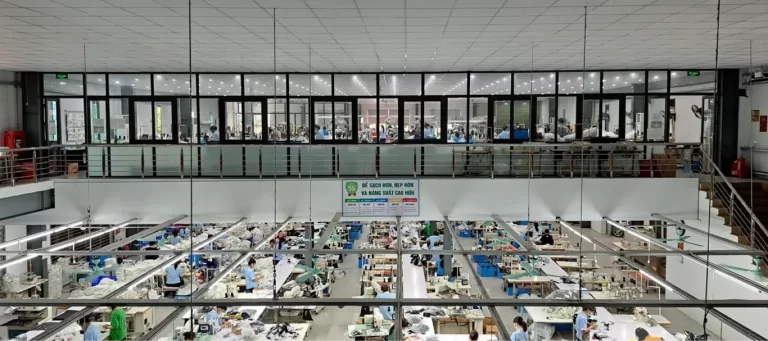
Vietnam OEM manufacturing operations are the EU customs-facing entity for substance of concern compliance, with the substance of concern manufacturer liable for the SCIP notification chain from Vietnam to EU port.
The substance of concern OEM workflow at the Vietnam supplier covers 5 homogeneous-material SVHC declaration stages, plus PFAS-free DWR finish verification for OEM tier-1 and tier-2 brand partners.
Wholesale buyer downstream exposure is heightened when a Vietnam OEM fails substance of concern wholesale compliance — the OEM supplier must defensively bundle SCIP UUIDs into every wholesale PO.
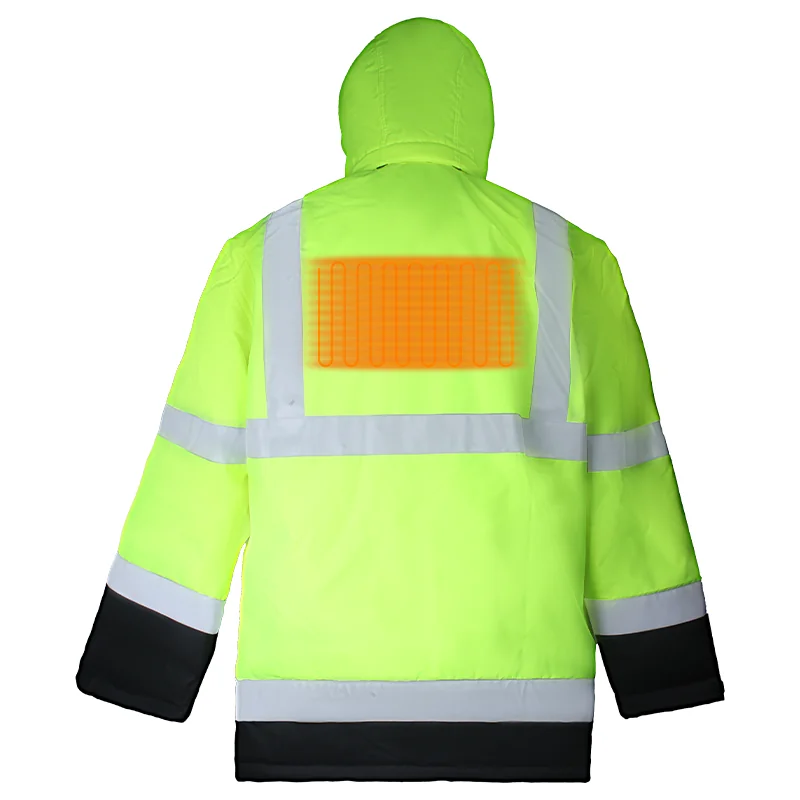
For a substance of concern heated jacket shipped to the EU, the 8-layer lamination stack-up is the dominant SVHC exposure surface.
For a substance of concern heated vest SKU with PFAS chemistry history, a silicone-DWR finish conversion unlocks the EU Q1 2027 brand pipeline.
Internal link: see our [EU ESPR Digital Product Passport 2027 — Vietnam OEM Supplier Playbook](/category/heated-apparel-guides/) for the parent DPP data-passport program and the 8-BoM revision template.
Internal link: see our [Heated Apparel Q4 2026 Compliance, Safety & Sourcing Closure Playbook](/category/heated-clothes-guide/) for the Q4 calendar and the harmonized EU + US + CA compliance binder architecture.