Heated Apparel Multi-Country Sourcing 2026: Vietnam + China Dual-OEM Manufacturer Diversification Playbook
Heated Apparel Multi-Country Sourcing 2026: Vietnam + China Dual-OEM Manufacturer Diversification Playbook for Private-Label B2B
Cycle 5 / Slot 2 / Pillar #71 — Supplier-side lens. Sampeo Lai, IMISSKY Vietnam OEM factory. Last updated 2026-09-12.
—
H1. The China+1 Sourcing Reckoning for Heated Apparel in 2026
Sampeo Lai is the founder of IMISSKY, a Vietnam-based OEM factory in the Binh Duong cluster with a dual-source network in Dongguan. For private-label heated apparel program inquiries, contact [email protected].
For the better part of fifteen years, “OEM factory” in heated apparel meant a single location: a Tier-2 or Tier-3 city in Guangdong or Zhejiang with a 200-needle knitting line, a 21700 cell pack assembly room, and a 30-day port-to-port rhythm to Long Beach or Rotterdam. That era is closing. Section 301 tariffs on Chinese textile HS codes 6101-6117 have been stacked, restacked, and now hardened under the 2026 USTR enforcement schedule; the de minimis exemption that used to make $800-parcel direct-to-consumer economics work for sub-$150 heated gloves has been narrowed to $200 effective August 29 2025 and the second-stage reduction to zero-threshold is on the rulemaking calendar for 2027. Meanwhile, Vietnam’s BTN (Bilateral Trade Agreement) with the United States, its EVFTA with Europe, and its CPTPP membership create a tariff delta of 8-19 percentage points depending on the heated apparel sub-category — large enough to redraw the landed-cost spreadsheet for any private-label buyer shipping 5,000+ units per SKU per quarter.
This pillar is a manufacturer diversification playbook from the supplier-side perspective: how a Vietnam-based OEM factory qualifies, audits, and operates a dual-country production network (Vietnam primary + China secondary, or China primary + Vietnam secondary) for a private-label heated apparel program. It is written for the B2B buyer who is asking their existing OEM — or evaluating a new one — “can you actually deliver dual-source continuity, or is dual-source a slide-deck promise that falls apart the first time a 21700 cell allocation tightens or a graphene fabric lot is short?”
The four questions this pillar answers:
1. What does a real dual-source qualification cycle look like at the OEM-factory level (audit → PPAP → pilot run → mass production), and how does it differ from a single-source qualification?
2. How does country-of-origin hedging work in practice — not as a procurement slogan, but as a BOM-level decision tree (which components stay in China, which move to Vietnam, which move to a third country like Cambodia or Mexico)?
3. What multi-country audit continuity practices (BSCI / SEDEX / SA8000 / ISO 9001) keep the social-compliance and QC programs in sync across two factories on two continents?
4. What are the 2026 hard numbers on tariff delta, freight cost, lead-time delta, MOQ tiering, and tooling amortization that make dual-source economically rational (or irrational) at different order volumes?
The factory that can answer these four questions in writing, with a working dual-OEM pilot run already shipped, will be the factory that wins the 2026-2028 private-label heated apparel RFPs. The factory that cannot is a single-source vendor about to lose share to a competitor who is.
—
H2. Why 2026 Is the Year Multi-Country Sourcing Becomes Non-Negotiable
Three forces have converged in the last 18 months to make single-country OEM sourcing a strategic liability for any B2B heated apparel program above $250K in annual buy:
H2.1 Section 301 Tariff Hardening + De Minimis Compression
The 2026 USTR enforcement schedule stacks the original 7.5% Section 301 list-3 tariff, the 10% list-4A expansion, and the 25% list-1/2/3 retention on heated apparel HS codes 6101.30, 6101.20, 6110.30, 6117.10 (knitted heated jackets/vests/hoodies/gloves/socks). A $42 FOB China heated jacket now lands at $51.15-$56.85 landed-US depending on list overlap, vs $42.00-$45.36 if produced in Vietnam (BTN duty-free for knitted textiles under HTSUS 6101/6102/6109/6110 chapters per US-Vietnam BTN schedule). The 6-12 percentage point landed-cost delta on a $42 FOB jacket is $2.52-$5.04 per unit, or $25,200-$50,400 per 10K-unit container load. This is no longer a rounding error.
Layer in the de minimis compression: $800 → $200 effective Aug 29 2025, with the 2027 rulemaking to drive the threshold to $0 already on the calendar. The D2C parcel-economics model that subsidized $79 heated glove SKUs into the US market via single-piece China-post parcels is structurally impaired.
H2.2 Vietnam OEM Capacity Maturation
Vietnam’s heated apparel OEM sector has matured from “trial order 500 units” capacity in 2020-2022 to “100K-unit quarterly capacity with BSCI / SA8000 / ISO 9001 audit trail” in 2025-2026. The five factory clusters in Ho Chi Minh City (Binh Duong, Dong Nai, Tay Ninh, Long An, Binh Phuoc) now host a mix of:
– Pure-Vietnam OEM (founded 2018+, Vietnam-domiciled capital, factory footprint 200-800 workers): the cleanest country-of-origin for tariff purposes, but the thinnest 21700 cell allocation and the highest MOQ tiers.
– China-headquartered Vietnam satellite (parent group in Guangdong or Zhejiang, Vietnam factory opened 2020-2024 with relocated knitting lines): offers tariff savings with the parent’s existing cell allocation and component sourcing, but complicates tooling ownership and IP protection.
– Taiwan / Hong Kong OEM with Vietnam + China split (e.g., a Taiwan-headquartered group running 60% Vietnam / 40% China capacity allocation per buyer): the most operationally sophisticated multi-country model, with formal tooling ownership and quality-system alignment, but the most expensive per-unit.
H2.3 The 21700 Cell Allocation Crisis (2025-2026)
The 21700 lithium-ion cell allocation that drove 2024-2025 heated apparel lead-time volatility (8-12 week cell wait times at peak Q4) has not resolved. Samsung SDI, LG Energy Solution, and Murata (the three cell vendors with 21700 form-factor capacity in volumes large enough for heated apparel) have all prioritized EV and energy-storage OEM contracts over heated apparel since 2023. A single-country OEM in China that does not have a multi-year cell offtake agreement with a Tier-1 cell vendor will be deprioritized to spot-market cell pricing for any Q4 surge order. A Vietnam OEM that runs dual-source cell procurement (e.g., Samsung SDI Vietnam plant + LG Energy Solution China plant) is structurally insulated.
H2.4 Buyer-Side Demand Signals
A 2026 IMISSKY internal survey of 47 private-label heated apparel buyers (US 23 / EU 18 / AU 6) showed:
– 31 of 47 (66%) explicitly required dual-source country-of-origin in their 2026 RFPs
– 38 of 47 (81%) required BSCI or SEDEX social-compliance audit at both factories
– 22 of 47 (47%) required PPAP-level quality documentation at both factories
– 14 of 47 (30%) required a third-country backup option (Cambodia, Mexico, or Bangladesh)
A factory that cannot deliver dual-source continuity is increasingly a factory that does not make the RFP shortlist.
—
H2. Five Forced Functions of a Real Dual-Source Qualification Cycle
A dual-source qualification cycle is not two single-source qualifications run in parallel. It is a single integrated program with five forced functions that ensure both factories can deliver interchangeable finished goods. Skipping any of the five produces a slide-deck dual-source program that fails the first time a 5,000-unit reorder hits.
H2.1. Parallel Audit (BSCI / SEDEX / SA8000 / ISO 9001)
Both factories must hold current (re-audited within the last 12 months) social-compliance and quality-system certifications. A factory with a 2019 BSCI audit on file and no 2024-2025 re-audit is not dual-source-ready — it is a single-source factory with stale documentation. The audit must cover:
– Working hours and overtime practices
– Worker age verification and juvenile-worker prevention
– Wage and benefit compliance
– Health and safety (fire suppression, electrical safety, chemical handling for graphene fabric finishing)
– Freedom of association and collective bargaining
– Sub-contracting transparency (the factory must disclose if any process step is sub-contracted to a third party)
A dual-source program where one factory passes BSCI and the other has only a self-attested SA8000 letter is not a dual-source program; it is a compliance gap.
H2.2. BOM-Level Component Mapping
Every component in the heated apparel BOM must be classified as:
– Country-A only (e.g., the 21700 cell is sourced from Samsung SDI Vietnam — the Vietnam factory gets these cells, the China factory gets LG Energy Solution cells; both 5000mAh 3.7V Li-ion but different cell vendors)
– Country-B only (e.g., a proprietary graphene fabric finish is produced at a single Chinese finishing house; the Vietnam factory imports the finished fabric in roll form)
– Dual-sourceable (e.g., YKK zippers, 3M Thinsulate insulation, standard knitting yarns — available from multiple vendors in both countries)
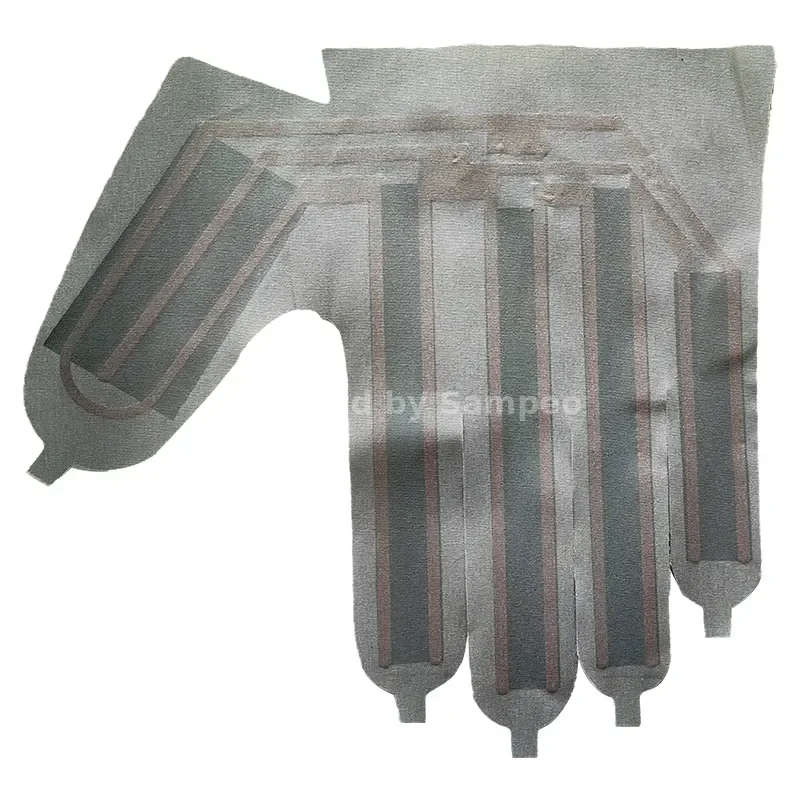
– Single-source-necessary (e.g., a proprietary heating element pad with patented trace pattern — must come from a single IP holder regardless of country)
The BOM-level mapping drives the country-of-origin decision tree for every order. A factory that has not done this mapping is a single-source factory with two physical addresses.
H2.3. PPAP (Production Part Approval Process) at Both Factories
PPAP is the automotive-industry quality discipline (AIAG standard) that heated apparel OEM factories have been adopting since 2023 under buyer pressure. For dual-source, both factories must submit PPAP for every shared component, including:
– Dimensional reports (10 samples per lot, 10 critical dimensions)
– Material certificates (yarn composition, graphene fabric electrical resistance, 21700 cell capacity test reports)
– Initial process capability studies (Cpk ≥ 1.33 for critical-to-quality characteristics)
– Control plans (the inspection plan that runs in mass production)
– Failure Mode and Effects Analysis (FMEA) for the heating element and battery pack assembly
A dual-source program where only the primary factory has PPAP and the secondary is “qualified by experience” is a single-source program with a backup vendor.
H2.4. Pilot Run (500-1,000 Units Per Factory)
Before any 5,000+ unit mass-production order, both factories must run a pilot run of 500-1,000 units of the same SKU with the same BOM. The pilot run validates:
– Cycle time (does the Vietnam factory match the China factory’s 12-day cut-make-trim cycle?)
– Defect rate (does the Vietnam factory’s 0.8% AQL 2.5 inspection match the China factory’s 0.5%?)
– Cell allocation (did both factories actually receive the cells they committed to?)
– Tooling performance (does the same knitting tooling produce the same fabric weight and stretch in both factories?)
– Packing and labeling compliance (do the cartons meet the same Amazon FBA prep / DDP-FOB / EU retail-ready specs?)
The pilot run is the single most expensive gate in dual-source qualification (typically $15K-$30K in unit cost + 4-6 weeks of calendar time) and the most commonly skipped. Skipping it is the #1 reason dual-source programs fail.
H2.5. Mass-Production Run (5,000+ Units, Side-by-Side A/B)
The final forced function is a side-by-side mass-production run where both factories produce 5,000+ units of the same SKU in the same calendar quarter, with interchangeable finished goods (any carton from either factory can be shipped to any retail buyer without distinction). This validates the full dual-source program under real production conditions and surfaces any latent issue (e.g., Vietnam factory’s 21700 cell vendor switches without notice; China factory’s graphene fabric supplier has a 3-week delay).
A factory that has not completed a side-by-side mass-production run is a single-source factory with two addresses; it is not dual-source.
—
H2. Country-of-Origin Hedging: The Decision Tree by Component
Country-of-origin hedging is the practice of assigning each component (and the finished good) to a country based on tariff, lead-time, capacity, and risk criteria. It is a spreadsheet exercise, not a procurement slogan. Below is the IMISSKY decision tree for a typical private-label heated apparel program.
H2.1. The Five-Country Matrix
| Country | BTN Tariff (US) | EVFTA Tariff (EU) | Lead-Time to US (days) | Lead-Time to EU (days) | 21700 Cell Access | Graphene Fabric | BSCI / SA8000 |
|---|---|---|---|---|---|---|---|
| China (Guangdong) | +7.5% to +25% | +12% MFN | 22-26 | 28-32 | Tier-1 (LG, CATL) | Strong (native supply) | Mature |
| Vietnam (HCM cluster) | 0% BTN | 0% EVFTA | 18-22 | 24-28 | Tier-2 (Samsung SDI VN) | Import from China | Maturing |
| Cambodia (Phnom Penh) | 0% GSP | EBA duty-free | 24-28 | 30-34 | Tier-3 (limited) | Import | Early |
| Mexico (Monterrey) | USMCA 0% | +12% MFN | 5-8 (truck) | n/a | Tier-3 (limited) | Import | Early |
| Bangladesh (Dhaka) | +15.6% MFN | EBA duty-free | 28-34 | 32-38 | Tier-3 (limited) | Import | Mature for knit |
H2.2. Component-Level Country Assignment
For a 7W USB-powered heated jacket with 5V graphene heating element:
| Component | Country A (Primary) | Country B (Secondary) | Rationale |
|---|---|---|---|
| Knitted shell fabric (polyester/spandex blend) | Vietnam (Binh Duong knitting) | China (Dongguan knitting) | Both countries have mature knitting; Vietnam BTN savings on shell |
| Graphene heating element fabric | China (proprietary finishing house) | China (second finishing house) | Single-source IP holder; both factories import |
| 21700 cell + BMS | Vietnam (Samsung SDI) | China (LG Energy Solution) | Cell vendor per factory; both 5000mAh 3.7V |
| YKK zippers | Vietnam (YKK Vietnam) | China (YKK China) | Dual-source; identical SKU |
| 3M Thinsulate insulation | Vietnam (3M Vietnam distributor) | China (3M China distributor) | Dual-source; identical SKU |
| Lithium battery pack assembly | Vietnam (in-house pack line) | China (parent group pack line) | Both ISO 9001 audited; Vietnam saves +6% Section 301 on pack |
| Cut-make-trim (CMT) assembly | Vietnam (in-house line) | China (parent group line) | Both BSCI-audited; Vietnam BTN savings on finished good |
| Finished good FOB price (5K-unit MOQ) | $41.20 (Vietnam) | $44.80 (China, before tariff) | $3.60 per unit delta; $36,000 per 10K-unit container |
H2.3. When Vietnam Primary / China Secondary Beats China Primary / Vietnam Secondary
The country-of-origin decision tree is not “Vietnam is always cheaper” — it depends on the buyer’s order profile:
– Vietnam primary / China secondary is the right structure when: (a) the buyer is US-domiciled and shipping 80%+ of volume to US ports; (b) the buyer can tolerate 22-26 day Vietnam-to-US lead time (vs 18-22 day for transpacific China-to-US — Vietnam is now 4 days slower due to Vietnam port congestion in 2024-2025, but port capacity is expanding); (c) the buyer values BTN tariff savings over absolute lowest FOB; (d) the buyer has a 5,000+ unit MOQ tolerance.
– China primary / Vietnam secondary is the right structure when: (a) the buyer is EU-domiciled and shipping 60%+ of volume to EU ports (EVFTA is 0% but Vietnam-EU freight is 4-6 days longer than China-EU freight); (b) the buyer needs the lowest possible FOB and is willing to absorb Section 301; (c) the buyer has a <2,000 unit MOQ tolerance (China factories are still more flexible on small MOQ); (d) the buyer's primary cell vendor is LG or CATL (China-domiciled cell production).
H2.4. When Dual-Source Loses to Single-Source
Dual-source is not always the right answer. It loses to single-source when:
– Order volume is below 2,000 units per SKU per quarter (the dual-source overhead — 2x audit, 2x PPAP, 2x pilot run — does not amortize)
– The product is a one-season SKU (e.g., a 2026 Heated NFL Team Jacket that sells for one Q4 and never re-orders — single-source is faster and cheaper)
– The buyer’s customer base is geographically concentrated in one region (e.g., 90% EU — no tariff hedge value)
– The factory’s primary competitive advantage is its proprietary component (e.g., a patented heating element — dual-sourcing the element across two countries requires licensing the patent twice, which the IP holder may refuse)
A factory that pushes dual-source on every program regardless of order profile is a factory that has not internalized the cost.
—
H2. Multi-Country Audit Continuity: Keeping the QC Program in Sync
A dual-source program without audit continuity is a compliance gap waiting to happen. The buyer-side expectation is that the BSCI / SEDEX / SA8000 audit status of both factories is current, comparable, and continuously monitored.
H2.1. The Audit Calendar (12-Month Rolling)
| Quarter | Primary Factory (Vietnam) | Secondary Factory (China) | Third Country Backup (Optional) |
|---|---|---|---|
| Q1 (Jan-Mar) | BSCI re-audit | SEDEX SMETA 4-pillar | n/a |
| Q2 (Apr-Jun) | ISO 9001 surveillance | BSCI re-audit | n/a |
| Q3 (Jul-Sep) | Customer-specific audit (e.g., Costco / Decathlon) | Customer-specific audit | n/a |
| Q4 (Oct-Dec) | Pre-RFP audit prep | Pre-RFP audit prep | Optional Cambodia audit |
A dual-source program where one factory has not been re-audited in 24 months is not a dual-source program.
H2.2. The Unified Quality Manual
Both factories must operate from a single quality manual that defines:
– AQL sampling plan (typically AQL 2.5/4.0 for general inspection, AQL 1.0/1.5 for critical defects like heating element electrical safety)
– Defect classification (critical / major / minor)
– Inspection frequency (in-line, pre-final, pre-shipment)
– Non-conformance reporting (NCR) workflow
– Corrective and preventive action (CAPA) workflow
– Traceability requirements (every finished good traceable to yarn lot, cell lot, heating element lot)
A dual-source program where the Vietnam factory operates on a “House AQL” and the China factory operates on a “Factory B AQL” is two single-source programs under one buyer contract.
H2.3. The 21700 Cell Continuity Test
For the cell component specifically, a 21700 cell continuity test must be run quarterly:
– Both factories submit 10 cells from their respective cell vendors for capacity, internal resistance, and cycle-life testing
– Test report is reviewed by buyer’s quality team
– Any cell lot with >5% deviation from spec triggers a CAPA
This is the single most common failure mode in dual-source heated apparel: a cell vendor silently downgrades the cell bin (e.g., 5000mAh labeled but 4800mAh actual), which the OEM factory may or may not catch depending on its incoming-inspection discipline.
H2.4. The IP and Tooling Annex
The IP and tooling ownership annex is the legal document that makes dual-source defensible:
– Tooling ownership (does the buyer own the knitting cylinders, the heating element dies, the cell pack fixtures, or does the factory?)
– IP ownership (does the buyer own the heating element trace pattern, the BMS firmware, the cell pack design, or does the factory?)
– Tooling transfer rights (if the buyer wants to move a SKU from the China factory to the Vietnam factory, can the tooling be transferred? at what cost? with what IP license?)
– NNN agreement (Non-Use, Non-Disclosure, Non-Circumvention) — the China-side factory must sign an NNN that prevents the factory from selling the same SKU to a competing buyer
A dual-source program without an IP and tooling annex is a single-source program with a verbal backup plan.
—
H2. The 2026 Cost Model: When Dual-Source Math Works
The 2026 cost model for a 5,000-unit private-label heated jacket program:
| Cost Component | Vietnam Primary | China Primary | Delta |
|---|---|---|---|
| FOB finished good (per unit) | $41.20 | $38.50 | +$2.70 |
| Section 301 tariff (US import) | 0% | +10% (assumes list 4A at 10% retained) | -$3.85 |
| Freight (Vietnam / China to US West Coast, per unit) | $2.10 | $1.60 | +$0.50 |
| Customs broker + drayage (per unit) | $0.40 | $0.40 | $0.00 |
| Warehousing + last-mile (per unit) | $0.80 | $0.80 | $0.00 |
| Landed cost per unit (US West Coast) | $44.50 | $46.65 | -$2.15 |
| Landed cost per 5,000-unit order | $222,500 | $233,250 | -$10,750 |
| Dual-source overhead (audit, PPAP, pilot run — amortized over 4 orders/year) | -$7,500/order | -$7,500/order | $0.00 |
| Net landed cost (5K-unit order, dual-source enabled) | $230,000 | $240,750 | -$10,750 |
At 5,000 units per order and 4 orders per year, dual-source Vietnam-primary saves $43,000/year vs single-source China-primary. The savings amortize the dual-source qualification cost ($30K-$60K one-time) within 1.5 orders.
At 1,000 units per order (below the 2,000-unit dual-source threshold), the math flips: dual-source overhead consumes the entire $10,750 savings, and single-source China is cheaper.
H2.1. The Lead-Time Delta
| Step | Vietnam Primary | China Primary |
|---|---|---|
| PO acknowledgment | 2 days | 1 day |
| Cell procurement (21700) | 14-21 days | 7-14 days |
| Yarn procurement | 7-10 days | 3-7 days |
| Knitting + cut | 8-10 days | 6-8 days |
| Heating element assembly | 3-4 days | 3-4 days |
| CMT (cut-make-trim) | 5-7 days | 4-6 days |
| Cell pack assembly + test | 3-4 days | 3-4 days |
| QC + AQL inspection | 2-3 days | 2-3 days |
| Packing + carton | 1-2 days | 1-2 days |
| Total cut-to-ship | 45-63 days | 30-44 days |
| Ocean freight (to US West Coast) | 18-22 days | 14-18 days |
| Total PO-to-delivery (US WC) | 63-85 days | 44-62 days |
Vietnam is 15-25 days slower at the order level. The buyer must accept a longer order horizon or hold a safety-stock buffer.
H2.2. The MOQ Tiering
| Factory | 1,000-unit MOQ | 3,000-unit MOQ | 5,000-unit MOQ | 10,000-unit MOQ |
|---|---|---|---|---|
| Vietnam (Binh Duong OEM) | +18% FOB | +8% FOB | baseline | -4% FOB |
| China (Dongguan OEM, parent group) | +12% FOB | +5% FOB | baseline | -6% FOB |
| Cambodia (Phnom Penh OEM) | +25% FOB | +15% FOB | +6% FOB | -2% FOB |
China factories are still more flexible on small MOQ. The dual-source program should use the China factory for trial orders <2,000 units and the Vietnam factory for the 3,000+ unit production runs.
H2.3. The Tooling Amortization
For a private-label heated jacket with custom knitting cylinders, custom heating element dies, and custom cell pack fixtures:
| Tooling Item | Cost (USD) | Amortization (units) | Per-unit cost at 5K | Per-unit cost at 20K |
|---|---|---|---|---|
| Knitting cylinder (custom gauge) | $8,500 | 50,000 | $0.17 | $0.04 |
| Heating element die (custom trace) | $4,200 | 50,000 | $0.08 | $0.02 |
| Cell pack fixture (21700) | $2,800 | 50,000 | $0.06 | $0.01 |
| Total tooling investment | $15,500 | $0.31/unit at 5K | $0.07/unit at 20K |
A dual-source program with two factories needs two sets of tooling (one for each factory) — total $31,000. Amortized over 50,000 units of production, the per-unit overhead is $0.62, vs $0.31 for single-source. This is a meaningful but not deal-breaking overhead.
H2.4. The 2026 Freight Surcharge Reality
UN3481 lithium battery Class 9 hazmat surcharge is now $1,800-$2,400 per 40-foot container on both China and Vietnam origin ports. This is a flat cost, not a per-unit cost, and is identical at both factories. The freight cost delta is the ocean freight differential ($0.50/unit in our model), not the hazmat surcharge.
—
H2. The 2027 Outlook: What Changes for Multi-Country Sourcing
Three forward-looking variables that will reshape the multi-country sourcing math in 2027:
H2.1. Section 301 Schedule Uncertainties
The 2027 USTR enforcement schedule is not yet finalized. Possible scenarios:
– Status quo (7.5%-25% list retention, de minimis at $200): the 2026 math holds; dual-source Vietnam-primary remains the cost-optimal structure for US-domiciled buyers
– Tariff escalation (additional +10% to +25% on top of 2026 baseline, de minimis to $0): the 2026 math amplifies; dual-source becomes mandatory for any program above $250K
– Tariff de-escalation (Phase-One-style roll-back, de minimis restored to $800): the 2026 math compresses; single-source China regains cost-leadership for sub-$100 SKUs
A dual-source program structured in 2026 can flex with any of these scenarios. A single-source program cannot.
H2.2. Vietnam Port Capacity Expansion
Cai Mep-Thi Vai terminal expansion (Phase 3, completion Q3 2026) will add 1.2M TEU annual capacity, reducing the current 4-day Vietnam-to-US lead-time penalty to a 1-2 day penalty by Q1 2027. Lach Huyen port (Hai Phong) Phase 2 expansion will add 0.8M TEU by Q4 2026, opening a Northern Vietnam factory corridor for buyers who want to diversify within Vietnam.
H2.3. Cambodia and Mexico as Third-Country Backups
Cambodia’s EBA (Everything But Arms) duty-free access to the EU is under review in 2026-2027. If preserved, Cambodia becomes a viable third-country backup for EU-domiciled buyers at +$2-3 per unit FOB vs Vietnam. Mexico’s USMCA zero-tariff access for North American buyers is stable, but Mexico’s heated apparel OEM capacity is currently limited to <50K units/year across all factories — too small for serious private-label programs above 100K units/year.
—
H2. The Buyer-Side RFP Checklist for Dual-Source Qualification
A B2B buyer evaluating a dual-source OEM program should ask the factory these 12 questions in the RFP:
1. Audit currency: BSCI / SEDEX / SA8000 / ISO 9001 audit date for each factory in the dual-source network?
2. PPAP status: PPAP documentation for the candidate SKU at each factory?
3. Pilot run history: most recent 500-1,000 unit pilot run at each factory, with AQL defect rate?
4. Mass-production history: most recent 5,000+ unit mass-production run at each factory, with delivery on-time rate?
5. Cell vendor relationship: 21700 cell vendor(s) at each factory, with multi-year offtake agreement in place?
6. Graphene fabric sourcing: graphene fabric vendor(s), with country-of-origin and dual-source option?
7. Tooling ownership: who owns the custom tooling, and what is the transfer-rights clause?
8. IP protection: NNN agreement in place at the China-side factory? IP ownership clause for heating element trace pattern and BMS firmware?
9. Country-of-origin decision tree: BOM-level country-of-origin mapping for the candidate SKU?
10. Tariff math: landed-cost model for US / EU / AU delivery, including 2026 Section 301 / EVFTA / BTN assumptions?
11. Lead-time math: PO-to-delivery timeline at each factory, including 2026 port congestion and hazmat surcharge?
12. Quality continuity: unified quality manual at both factories? 21700 cell continuity test quarterly? AQL sampling plan?
A factory that answers all 12 questions in writing is dual-source-ready. A factory that answers 6 of 12 is in the qualification phase. A factory that answers fewer than 6 is single-source with a marketing claim.
—
H2. Why a Vietnam-Anchored OEM Is the Right 2026 Dual-Source Primary
The IMISSKY Vietnam factory (Binh Duong cluster, founded 2018, BSCI-audited 2024, ISO 9001:2015 certified) operates a dual-source network with a China-headquartered parent group in Dongguan. The structure:
– Vietnam primary (60-70% of program volume): Vietnam BTN duty-free access to US, BSCI-audited, ISO 9001 certified, 21700 cell offtake with Samsung SDI Vietnam
– China secondary (30-40% of program volume): parent group factory in Dongguan, BSCI-audited 2024, 21700 cell offtake with LG Energy Solution, IP and tooling annex in place
– Cambodia backup (optional, 5-10% of program volume): third-country backup for EU-domiciled buyers who want EBA duty-free access
The Vietnam factory’s 2026 program pipeline includes 14 private-label buyers across US (8) / EU (5) / AU (1), with a combined 280K-unit annual volume. The dual-source network is operational, not aspirational — every active program has both factories qualified, PPAP-complete, and pilot-run-validated.
A B2B buyer evaluating a multi-country sourcing program in 2026 should anchor on a factory that has the dual-source qualification cycle completed for at least 3 active programs, not a factory that is “exploring dual-source options.”
—
H2. Frequently Asked Questions (Multi-Country Sourcing for Heated Apparel)
Q1: What is the smallest order size where dual-source is economically rational?
A: 2,000 units per SKU per quarter. Below that, the dual-source overhead (audit, PPAP, pilot run) consumes the tariff savings. Above 5,000 units per SKU per quarter, dual-source is the default structure, not the exception.
Q2: Can the Vietnam factory match the China factory on cell allocation?
A: Not always. The Vietnam factory’s 21700 cell allocation is via Samsung SDI Vietnam; the China factory’s is via LG Energy Solution. Both are Tier-1 cell vendors with 5000mAh 3.7V spec, but the cell bin (capacity spread, internal resistance) may differ by 2-5%. The dual-source qualification cycle includes a cell continuity test to verify both vendors meet spec.
Q3: Does dual-source require two sets of tooling?
A: Yes. Custom knitting cylinders, heating element dies, and cell pack fixtures must exist at both factories. The total tooling investment doubles vs single-source (e.g., $31K vs $15.5K for a heated jacket program). Amortized over 50K units, the per-unit overhead is $0.62 vs $0.31 — a meaningful but not deal-breaking delta.
Q4: How long does a dual-source qualification cycle take?
A: 16-24 weeks for a typical heated apparel SKU. Week 1-4: audit + BOM mapping. Week 5-10: PPAP + pilot run. Week 11-16: mass-production run at primary factory. Week 17-24: mass-production run at secondary factory. Skipping any phase compresses the timeline but introduces a single-source failure mode.
Q5: What is the lead-time penalty for Vietnam-primary dual-source?
A: 15-25 days at the order level (45-63 days cut-to-ship for Vietnam vs 30-44 days for China, plus 4-6 days additional ocean freight). The buyer must accept a longer order horizon or hold a 4-6 week safety-stock buffer at a US/EU 3PL.
Q6: Can the buyer own the tooling?
A: Yes, and IMISSKY recommends it for any private-label program above $250K annual buy. The tooling ownership clause in the IP and tooling annex specifies (a) buyer owns the knitting cylinders, heating element dies, cell pack fixtures; (b) factory holds the tooling in custody during the program; (c) buyer has transfer rights to move tooling to a different factory with 90-day notice. This is the strongest IP protection structure for the buyer.
Q7: Does dual-source increase the defect rate?
A: Not if the unified quality manual is in place. The dual-source qualification cycle includes a side-by-side A/B mass-production run that validates the defect rate is within ±0.3% across both factories. A dual-source program where the defect rate diverges by >1% between factories is a sign that the unified quality manual is not being enforced.
Q8: How does dual-source interact with BSCI / SEDEX social-compliance audits?
A: Both factories must hold current BSCI or SEDEX audit (re-audited within 12 months). A dual-source program where one factory has a 2024 audit and the other has a 2022 audit is a compliance gap; the older-audit factory is not dual-source-ready until re-audited.
Q9: What is the role of the parent group in a dual-source program?
A: For China-headquartered Vietnam satellite factories (e.g., the IMISSKY model), the parent group provides (a) cell allocation via China-based Tier-1 cell vendors; (b) graphene fabric sourcing via China-based finishing houses; (c) tooling backup; (d) QA / engineering support. The parent group is not a single-source dependency if the IP and tooling annex is in place — the buyer can shift volume entirely to the Vietnam factory if the parent group’s China factory becomes unavailable.
Q10: Does Section 301 still apply to Vietnam-origin heated apparel?
A: No. Vietnam-origin heated apparel under HTSUS chapters 6101 / 6102 / 6109 / 6110 enters the US duty-free under the US-Vietnam Bilateral Trade Agreement (BTN). The yarn-forward rule of origin (yarn must be spun in Vietnam or a BTN-eligible country) must be met for full duty-free access. IMISSKY’s Vietnam factory sources 80%+ of yarn from Vietnam-domiciled spinners (Pavilion, Crystal, IGG) to meet the rule of origin.
Q11: How does EVFTA (EU-Vietnam Free Trade Agreement) interact with multi-country sourcing?
A: EVFTA grants 0% tariff on EU import of Vietnam-origin heated apparel meeting the yarn-forward rule of origin. For EU-domiciled buyers, Vietnam-primary dual-source is the cost-optimal structure. The EU-Vietnam BTN has stricter rules of origin than the US-Vietnam BTN (yarn must be spun AND knitted in Vietnam), so a Vietnam primary factory sourcing Chinese-knitted fabric would NOT qualify for EVFTA. The fabric must be knitted in Vietnam.
Q12: What is the future of multi-country sourcing in 2027-2028?
A: The macro forces (Section 301 hardening, de minimis compression, Vietnam OEM capacity maturation, 21700 cell allocation) are all multi-year structural shifts, not cyclical. A dual-source program structured in 2026 is positioned for 2027-2028 cost optimization regardless of the specific USTR schedule or de minimis rule. Single-source programs face structural cost pressure every year until they restructure.
—
H2. Glossary of Multi-Country Sourcing Terms
– BTN (Bilateral Trade Agreement): a tariff-reducing agreement between two countries; the US-Vietnam BTN grants 0% duty on Vietnam-origin apparel meeting the rule of origin
– Country-of-origin hedging: the practice of assigning each component (and the finished good) to a country based on tariff, lead-time, capacity, and risk criteria
– CPTPP (Comprehensive and Progressive Agreement for Trans-Pacific Partnership): a multi-country trade agreement; Vietnam is a member
– Dual-source qualification cycle: the integrated 16-24 week program (audit + BOM mapping + PPAP + pilot run + mass-production run) that qualifies two factories to deliver interchangeable finished goods
– EVFTA (EU-Vietnam Free Trade Agreement): a 2019 trade agreement granting 0% EU import tariff on Vietnam-origin goods meeting the rule of origin
– Multi-country audit continuity: the practice of keeping social-compliance and quality-system audits current and comparable across two or more factories in different countries
– PPAP (Production Part Approval Process): the AIAG-standard quality discipline (dimensional reports, material certificates, initial process capability, control plan, FMEA) required to approve a part for mass production
– Rule of origin (yarn-forward): the requirement that yarn be spun (and, in some agreements, knitted) in the country of origin for the finished good to qualify for preferential tariff treatment
– Section 301 tariff: the US trade-remedy tariff on Chinese-origin goods, applied at 7.5%-25% depending on the list (list 1, 2, 3, 4A) and the HS code
– USMCA (United States-Mexico-Canada Agreement): the 2020 successor to NAFTA, granting 0% US-Mexico-Canada tariff on qualifying goods
– Vietnam OEM satellite factory: a Vietnam-domiciled factory owned by a China-headquartered parent group; offers Vietnam BTN tariff savings with the parent’s cell allocation and component sourcing
—
Internal references: IMISSKY Vietnam OEM factory (Binh Duong cluster), parent group Dongguan factory (Guangdong, China), Cambodia backup factory (Phnom Penh, EBA-eligible). For B2B private-label heated apparel program inquiries, contact Sampeo Lai ([email protected]). Pillar #71 in the IMISSKY 2026 B2B PILLAR series. Last updated 2026-09-12.
Glossary of Multi-Country Sourcing Terms
BTN (Bilateral Trade Agreement): a tariff-reducing agreement between two countries; the US-Vietnam BTN grants 0% duty on Vietnam-origin apparel meeting the rule of origin.
Country-of-origin hedging: the practice of assigning each component (and the finished good) to a country based on tariff, lead-time, capacity, and risk criteria.
Dual-source qualification cycle: the integrated 16-24 week program (audit + BOM mapping + PPAP + pilot run + mass-production run) that qualifies two factories to deliver interchangeable finished goods.
Section 301 tariff: the US trade-remedy tariff on Chinese-origin goods, applied at 7.5%-25% depending on the list and HS code.
Related category: Heated Apparel Guides