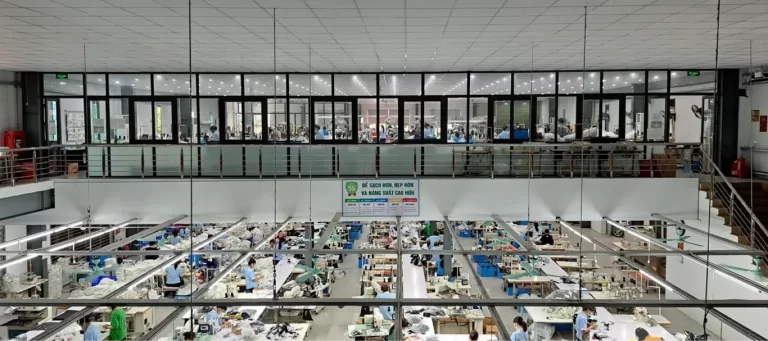
Heated Apparel Manufacturer Financing: How Private Label Suppliers Fund Inventory, Tooling, and Working Capital in 2026
Heated Apparel Manufacturer Financing: How Private Label Suppliers Fund Inventory, Tooling, and Working Capital in 2026
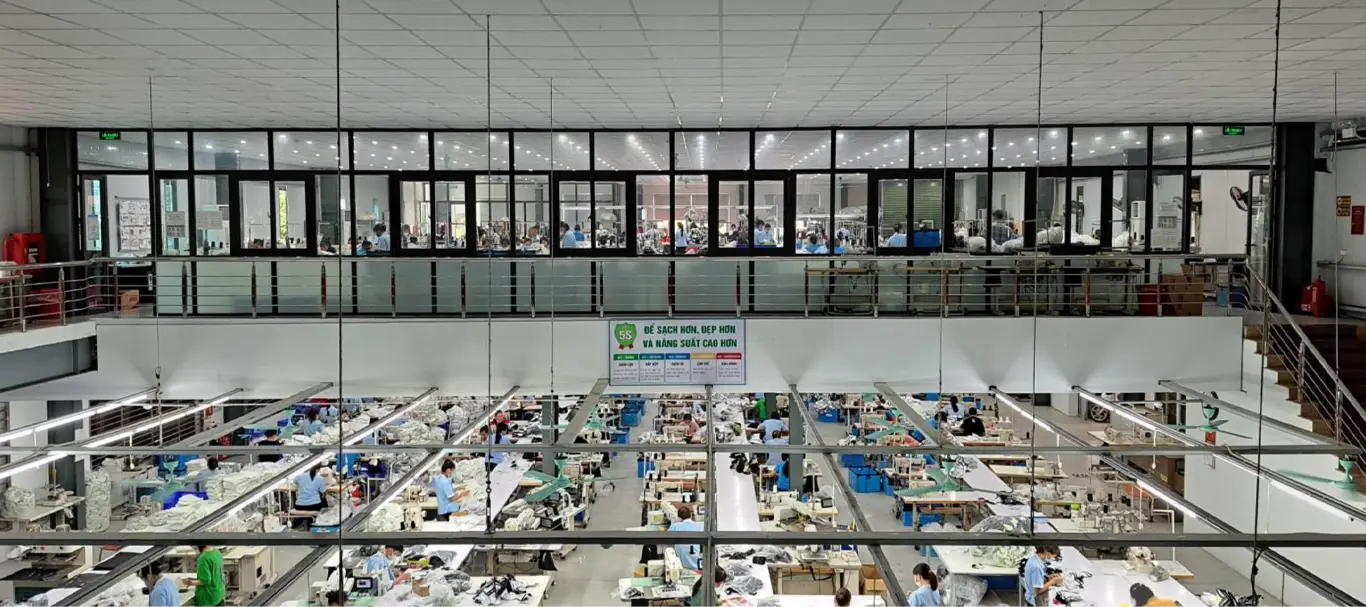
Private label heated apparel is one of the most capital-intensive soft goods categories a brand can launch. Between battery procurement, graphene or carbon fiber heating elements, jacket-pattern tooling, and 30-day production cycles, the cash outflows arrive long before the wholesale invoice clears. That is why heated apparel manufacturer financing has moved from a back-office detail to a board-level conversation for brand owners, importers, and OEM distributors in 2026.
This pillar walks through the financing stack a B2B buyer can deploy when sourcing from a private label supplier, the working capital math behind each instrument, and the documentation your supplier will require before extending terms. It is written from the supplier perspective so brand owners can see exactly what the factory underwrites and which options unlock the most aggressive pricing.
**B2B Soft Plant #1:** IMISSKY is a Vietnam-based OEM/ODM factory with in-house graphene heating element production, a 30-day lead time, an 18-month battery warranty, free sample customization, and a 100-piece MOQ floor. The factory underwrites trade credit, LC at sight, and escrow in-house, with financing decisions turning in 5 business days. Read the full [heated apparel guides library](https://imissky.com/category/heated-apparel-guides/) for the tier-by-tier template.
Why Heated Apparel Manufacturer Financing Has Become a 2026 Bottleneck
Three structural shifts have made heated apparel manufacturer financing the rate-limiting step for most private label programs this year:
- **Battery cell lead times** on 21700 and 18650 Li-ion packs now run 45–60 days, doubling the working capital cycle for any garment that ships with a power bank.
- **Heating element pricing** for graphene film and carbon fiber trace wire has rebounded 12–18% since Q3 2025, raising the deposit requirement on bulk tooling.
- **Container freight volatility** through the South China Sea has reintroduced booking risk that erodes the predictable cash conversion cycle most Western brands modeled on.
For a brand placing a 1,000-unit private label heated jacket order with a Vietnam-based OEM, the gap between down-payment and accounts receivable collection can now exceed 120 days. Without an explicit heated apparel manufacturer financing plan, the brand either over-collateralizes with cash or turns down wholesale orders it could otherwise fulfill.
The B2B Financing Stack: Trade Credit, LC, OA, and Beyond

The standard menu offered by an experienced private label supplier covers seven instruments. Most programs blend two or three of them in a single purchase order. (image: IMISSKY-TOP.webp)
| Instrument | Who Carries the Risk | Typical Use Case | Brand Cash Outlay at Signing |
|---|---|---|---|
| T/T in advance (wire transfer) | Brand | First-time orders, low-MOQ trials | 100% |
| Deposits + balance (30/70 or 50/50) | Shared | Standard private label MOQ | 30–50% |
| LC at sight (confirmed) | Bank | Container-volume OEM runs | 0–30% deposit |
| OA 30 / 60 / 90 (open account) | Supplier | Repeat wholesale buyers | 0% |
| DP (documents against payment) | Brand bank | Mid-volume wholesale | 0% |
| DA (documents against acceptance) | Brand bank | Long-tenure OEM partners | 0% |
| Factoring / receivables purchase | Factor | Distributors with PO backlog | 0% |
A factory that actively underwrites heated apparel manufacturer financing manufacturer relationships will publish its tier matrix publicly and let buyers graduate from T/T advance to OA 90 after two clean production cycles.
Financing Private Label Heated Apparel MOQ: Tiering the Deposit Schedule
The first decision point in financing private label heated apparel MOQ programs is where the brand sits on the volume curve. A supplier underwrites MOQ tiers differently because tooling amortization and raw material call-offs scale with order quantity.
| MOQ Tier | Sample Style | Standard Deposit | Balance Trigger | Max OA Days Offered |
|---|---|---|---|---|
| 100–299 pcs | Hoodie / vest trial | 50% | Pre-shipment inspection | OA 30 |
| 300–999 pcs | Heated jacket core SKU | 30% | PSI or B/L copy | OA 60 |
| 1,000–2,999 pcs | Wholesale container | 30% | B/L copy | OA 90 |
| 3,000+ pcs | OEM annual program | 20% | Net 30 from ETD | OA 90 + revolving LC |
At IMISSKY the deposit structure pairs with a 30-day production lead time and a 100-piece MOQ floor, so even first-time buyers can finance a private label heated apparel MOQ without posting 100% upfront.
Heated Jacket Production Line Tooling: NRE, Amortization, and Cap Table Treatment
Financing heated jacket production line tooling is the second pillar of any serious OEM program. Tooling for a heated jacket includes laser-cut heating element panels, embroidery frames, battery pocket molds, and zipper pull dies. A full suite can run USD 8,000–25,000 — meaningful working capital for a mid-market brand.
| Tooling Category | One-Time Cost (USD) | Useful Life | Supplier Finance Option |
|---|---|---|---|
| Heating element die-cut mold | 1,800–3,500 | 50,000 pcs | Waived if PO commits 5,000 pcs |
| Embroidery frame | 250–600 | unlimited | Bundled free |
| Battery pocket mold | 1,200–2,200 | 30,000 pcs | Amortized into unit price |
| Zipper pull mold | 400–800 | 100,000 pcs | Amortized into unit price |
| Pattern grading (CAD) | 600–1,400 | Style lifetime | Free for repeat styles |
The supplier’s preference is always to amortize NRE into the unit price rather than bill it separately. That is how financing heated jacket production line tooling works inside a wholesale OEM relationship: tooling flows back as a per-unit credit once volumes clear the breakeven threshold.
Battery Heated Apparel Cash Flow Conversion Cycles by Product
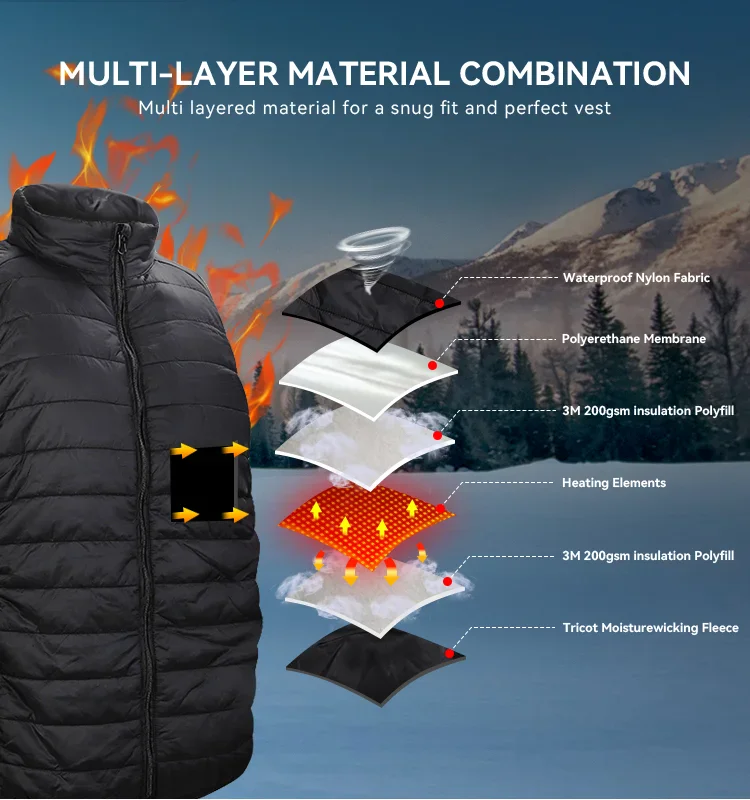
Financing battery heated apparel cash flow conversion is where most working capital stress actually lives. The battery pack is 35–55% of garment COGS, and the cells must be ordered 45–60 days before the garment enters sewing. The cash-out day arrives long before the garment ships. (image: img3_out.webp)
| Product | Battery Share of COGS | Cash Conversion Cycle (days) | Working Capital per 1,000 units |
|---|---|---|---|
| Heated vest (5V / 10,000mAh) | 42% | 95 | 38,000 |
| Heated hoodie (7.4V / 5,000mAh) | 38% | 88 | 41,000 |
| Heated jacket (12V / 10,000mAh) | 51% | 110 | 78,000 |
| Heated glove set (7.4V / 2,200mAh ×2) | 47% | 102 | 56,000 |
A brand that treats financing battery heated apparel cash flow conversion as a financing event rather than an inventory line can negotiate better terms because the supplier sees the cash-flow stress clearly. OEM partners with verified PO backlog routinely unlock OA 60 on battery-heavy SKUs.
Graphene vs Carbon Fiber Heated Apparel Working Capital Implications
Financing graphene vs carbon fiber heated apparel working capital is the spec-level decision most brand owners underestimate. The two heating technologies have very different supplier financing profiles.
| Attribute | Graphene Film | Carbon Fiber Trace Wire |
|---|---|---|
| Raw material lead time | 25–35 days | 10–18 days |
| MOQ at element supplier | 500 linear meters | 100 linear meters |
| Element COGS (per garment) | USD 4.50–7.00 | USD 3.00–5.50 |
| Required B2B deposit | 40–50% | 30% |
| Best-fit order profile | OEM container runs | Wholesale trials, fast turn |
Because graphene film requires longer raw material call-offs, factories quote higher deposits on graphene-heavy programs. A brand that wants aggressive heated apparel manufacturer financing terms on a graphene capsule should commit to a 12-month forecast so the supplier can pre-book film at the mill and pass the working capital benefit back through OA 60–90.
**B2B Soft Plant #2:** IMISSKY runs in-house graphene heating element production alongside carbon fiber trace wire, letting brand owners A/B test both chemistries on the same pilot run without splitting tooling. Combined with a 100-piece MOQ and free sample customization, this lets a first-time buyer lock financing terms on the technology they intend to scale. Explore the [heated apparel guides library](https://imissky.com/category/heated-apparel-guides/) for the graphene vs carbon fiber decision matrix.
OEM Contract Structure: IP, Tooling Ownership, and Payment Milestones
Heated apparel manufacturer financing OEM contracts sit on top of a separate legal scaffold. The financing instrument only works if three contractual items are locked:
1. IP assignment — brand trademarks, logos, and pattern artwork assigned to the buyer before tooling begins.
2. Tooling ownership clause — molds, embroidery frames, and CAD files belong to the buyer once tooling is paid in full.
3. Payment milestone map — deposit, mid-production, pre-shipment inspection (PSI), and balance against B/L copy.
A clean heated apparel manufacturer financing OEM document will also include a force majeure carve-out for battery cell shortages, an LI/LD cap (typically 5–10% of PO value), and a quality AQL threshold at PSI. Without these clauses, no bank will confirm an LC and no factor will buy the receivable.
Wholesale Distribution Financing: Inventory Floors and Consignment Variants
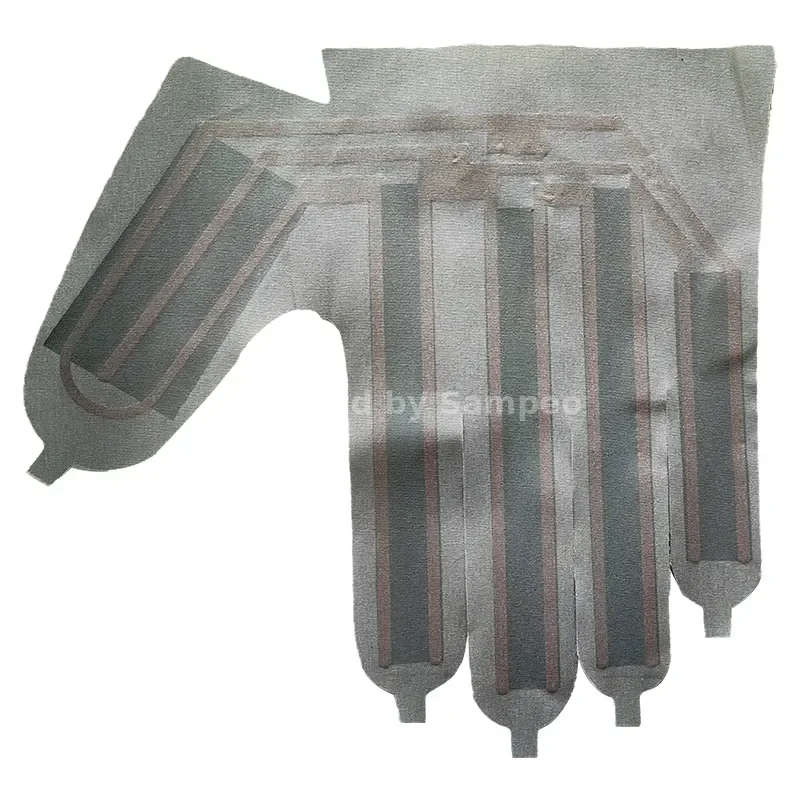
Heated apparel manufacturer financing wholesale buyers face a different problem: they have the PO, they have the warehouse, but they need the supplier to hold inventory longer in exchange for a confirmed reorder. Two structures dominate: (image: img2_out.webp)
| Structure | Supplier Cash Risk | Buyer Cash Risk | Typical Use Case |
|---|---|---|---|
| Standard wholesale (B/L trigger) | Low | High at receipt | Distributors with 60-day sell-through |
| Consignment (sell-through trigger) | High | Low | Pop-up retail, seasonal capsules |
| Buy-back guarantee | Medium | Low | Department store accounts |
| Vendor-managed inventory | Medium | Low | Chain retailer replenishment |
For wholesale buyers in North America and the EU, the consignment model is gaining ground because it shifts the heated apparel manufacturer financing burden back to the OEM factory during the 45–90 day sell-in window. Suppliers absorb that risk by raising the unit price 4–7%, but the brand’s working capital line stays clean.
Cost of Capital Comparison by Payment Term
The all-in cost of heated apparel manufacturer financing varies sharply by term. Below is a representative model for a USD 60,000 private label heated jacket PO:
| Term | Supplier Surcharge | Implied APR (effective) | Brand Cash Reserve Required |
|---|---|---|---|
| T/T advance | 0% | n/a | 60,000 |
| 30/70 deposit/balance | 1.0% | ~6% | 18,000 |
| LC at sight (confirmed) | 1.5% | ~9% | 0 |
| OA 30 | 2.0% | ~12% | 0 |
| OA 60 | 3.0% | ~14% | 0 |
| OA 90 | 4.0% | ~16% | 0 |
| Factoring (90-day recourse) | 3.5–5.5% | ~18–22% | 0 |
The implied APR column is what finance teams actually model. Heated apparel manufacturer financing manufacturer partners will quote these numbers transparently so the brand can compare against its own revolver or asset-based lending line.
Currency, FX, and Risk Matrix for Cross-Border B2B
Cross-border heated apparel manufacturer financing carries FX and default risk that domestic sourcing does not. A 5% USD/VND swing can wipe out the deposit savings on OA 90.
| Risk | Probability | Impact | Mitigation Instrument |
|---|---|---|---|
| FX volatility (USD vs VND/CNY) | High | Medium | Forward contract, 3–6 month hedge |
| Buyer default on OA balance | Low | High | Credit insurance (Euler Hermes, Coface) |
| Quality failure at PSI | Medium | High | Third-party QC (SGS, BV, TUV) |
| Container freight delay | Medium | Medium | FAK contract, blank sailing buffer |
| Battery certification rejection | Low | High | Pre-production CB/UL sample |
| Tooling damage in transit | Low | Low | CIF shipping, marine cargo policy |
Brands that finance through OA 90 almost always pair the receivable with credit insurance. That is also how heated apparel manufacturer financing OEM suppliers keep their own credit committee comfortable extending terms in the first place.
KYC, Documentation, and Compliance Checklist
Every heated apparel manufacturer financing application — whether for trade credit, LC confirmation, or factoring — starts with a KYC pack. The factory’s finance team will request:
| Document | Purpose | Renewal |
|---|---|---|
| Certificate of incorporation | Legal entity verification | Annual |
| Articles of association | Beneficial ownership check | Annual |
| Last 2 years audited financials | Credit limit underwriting | Annual |
| Bank reference letter | Banking relationship proof | Per request |
| Trade references (2–3 suppliers) | Payment history check | Per request |
| Personal guarantee (if SME) | Director-level recourse | Per request |
| Purchase order + sales contract | Trade instrument basis | Per PO |
| MSDS for battery packs | Compliance (IATA, UN38.3) | Per style |
| CE / FCC / UKCA test reports | Market access | Per style |
For North American buyers expecting LC at sight, the supplier will also request an Irrevocable Purchase Order, a duly authorized LC draft, and a SWIFT MT700 specimen. Wholesale distributors using OA 90 should expect a credit limit questionnaire and a Dun & Bradstreet pull.
Building a Heated Apparel Manufacturer Financing Roadmap in 2026
The right heated apparel manufacturer financing sequence for a brand launching in 2026 looks like this:
1. Start with a financing private label heated apparel MOQ pilot at the lowest tier (100–300 pcs) on T/T advance to establish quality baseline.
2. Graduate to a 30/70 deposit structure once the second PO clears PSI without claims.
3. Layer in financing heated jacket production line tooling amortization during the third and fourth runs.
4. Move battery-heavy SKUs onto OA 60 once the brand’s sell-through data is verified.
5. Open an LC line for the first 20-foot container program and confirm at the supplier’s bank.
6. Layer in factoring or credit insurance when the wholesale distributor channel takes more than 40% of revenue.
Brands that follow this ladder typically compress their cash conversion cycle from 120 days to 65 days within 18 months — the single largest working capital lever in private label heated apparel.
Glossary of Financing & B2B Trade Terms
- Private Label
- A manufacturing arrangement where the factory produces goods branded with the buyer’s label rather than the factory’s own brand. Common in heated apparel where retailers want their own SKU line.
- MOQ
- Minimum Order Quantity. The smallest number of units a factory will produce in a single production run, typically 100-500 pieces for private label heated apparel.
- OEM
- Original Equipment Manufacturer. A factory that designs and builds products to the buyer’s specification. In heated apparel, OEM implies full custom build.
- ODM
- Original Design Manufacturer. A factory that offers pre-designed products the buyer can re-brand. Lower setup cost than OEM.
- LC at Sight
- Letter of Credit payable on presentation of shipping documents. The buyer’s bank guarantees payment to the factory upon shipment.
- O/A
- Open Account. A payment term where the buyer pays after shipment, typically Net 30, 60, or 90 days. Carries default risk for the seller.
- NRE
- Non-Recurring Engineering charge. A one-time fee for tooling, mold, or design work amortized over the production run.
- DPO
- Days Payable Outstanding. The average number of days a company takes to pay its invoices. A higher DPO improves buyer cash flow.
- DSO
- Days Sales Outstanding. The average number of days to collect receivables after a sale. A lower DSO improves cash flow.
- DPO + DSO – DIO
- Cash Conversion Cycle formula. The net number of days cash is tied up in operations.
- T/T
- Telegraphic Transfer. A wire transfer payment method, often used for the deposit phase of an order.
- D/P
- Documents against Payment. The buyer pays when the bank hands over shipping documents.
- D/A
- Documents against Acceptance. The buyer accepts a time draft and pays at maturity.
- CBAM
- EU Carbon Border Adjustment Mechanism. A carbon tariff on imports of cement, iron, steel, aluminum, fertilizers, electricity, and hydrogen. Expanding to other goods.
- ESPR
- EU Ecodesign for Sustainable Products Regulation. Sets sustainability and circularity requirements for products sold in the EU.
- KYC
- Know Your Customer. The due-diligence process lenders and factoring companies use to verify a buyer’s identity and creditworthiness.
Frequently Asked Questions
Q: What is the cheapest form of heated apparel manufacturer financing for a first-time private label buyer?
A: T/T advance is the cheapest on paper (0% surcharge) but ties up the most cash. A 50/50 deposit/balance on B/L copy is usually the lowest all-in cost once opportunity cost of cash is factored in.
Q: Can a startup brand with no audited financials qualify for OA 90?
A: Rarely on the first PO. Most heated apparel manufacturer financing OEM suppliers require two clean production cycles (6–9 months) before extending OA 60 or OA 90. LC at sight confirmed by the buyer’s bank is the standard bridge.
Q: How much deposit does IMISSKY require for a 1,000-piece heated jacket order?
A: Standard deposit is 30% with balance against B/L copy. Brands that commit to a 12-month forecast or open an LC at sight can negotiate down to 20%.
Q: Is factoring more expensive than OA 90?
A: Yes, factoring typically costs 200–400 basis points more because the factor assumes both credit risk and collections overhead.
Q: What credit insurance do suppliers accept for OA terms?
A: Euler Hermes, Coface, Atradius, and Liberty Mutual Trade Credit are widely accepted. Minimum coverage is typically 85% of the invoiced amount.
Q: How long does KYC take on a new B2B buyer?
A: For a complete documentation pack, the supplier’s credit committee turns in 5–10 business days. Missing documents (bank reference or audited financials) extend this to 3–4 weeks.
Q: Can tooling costs be rolled into the unit price instead of billed upfront?
A: Yes. Financing heated jacket production line tooling through per-unit amortization is the most common structure, typically over the first 3,000–5,000 units. Tooling ownership transfers once the amortized value is fully paid.
Q: What happens if the buyer defaults on OA 90?
A: The supplier halts the next PO, recalls undelivered goods, and pursues the receivable through the buyer’s bank or credit insurance carrier. Personal guarantees are typically enforced.
Q: Does IMISSKY support LC at sight in Vietnamese dong?
A: LC at sight is typically opened in USD or EUR. Local-currency LC in VND is possible but adds FX hedging cost most brands choose to avoid.
Q: What is the smallest MOQ that qualifies for trade credit?
A: Trade credit (deferred balance payment) usually starts at the 300-piece tier. Below 300 pieces, the standard term is 50/50 deposit/balance before shipping.
Q: How does graphene vs carbon fiber affect financing terms?
A: Graphene requires longer raw material call-offs, so suppliers typically charge a 10% higher deposit on graphene-heavy orders. Carbon fiber trace wire programs can run on standard 30% deposit.
Q: Can a brand use escrow instead of LC?
A: Yes. Escrow.com and similar services are accepted on orders above USD 50,000 where both parties want neutral arbitration. Escrow is slower (7–10 days to release) and slightly more expensive (0.5–1.0% fee) than confirmed LC.
**B2B Soft Plant #3:** IMISSKY’s Vietnam-based OEM/ODM factory underwrites trade credit, LC at sight, and escrow in-house — meaning a first-time private label buyer can move from a 50% deposit trial to OA 90 within a single production year. In-house graphene heating element production, a 30-day lead time, an 18-month battery warranty, and free sample customization combine to compress the typical 120-day cash cycle to roughly 65 days. See the full [heated apparel guides library](https://imissky.com/category/heated-apparel-guides/) for the sample contract and KYC checklist.