Heated Apparel Trade Show & Sourcing Events 2026: B2B Factory Exhibitor Guide
Heated Apparel Trade Show & Sourcing Events 2026: B2B Factory Exhibitor Guide
A trade show is not merely a place to display warm jackets. For a factory supplier, it is a temporary showroom, engineering desk, compliance library, and qualification system. A successful heated apparel trade show program makes technical capability easy to inspect and turns buyer interest into structured RFQs.
In 2026, buyers expect proof: stable heating performance, battery documentation, realistic MOQ policies, traceable quality controls, and credible delivery calendars. This guide gives a heated apparel manufacturer a practical framework for selecting events, building the booth, preparing samples, capturing requirements, and following every qualified opportunity.
1. Choose Events by Buyer Fit, Not Foot Traffic
Canton Fair can expose a heated apparel factory to importers and sourcing offices, while MAGIC emphasizes fashion and private label. Outdoor Retailer attracts performance brands and specialty retail; A+A centers occupational safety and workwear. Regional sourcing fairs can produce fewer leads but more relevant conversations.
Score each event against target accounts, category adjacency, geography, timing, and total cost. Ask organizers for historical attendee job functions—not just attendance. Search the exhibitor list for battery, textile, PPE, outdoor, and workwear neighbors. A focused heated apparel trade show with 40 relevant buyers can outperform a general fair with thousands of visitors.
| Event type | Best-fit buyer | Strong booth story | Main caution |
|---|---|---|---|
| Canton Fair | Importer, distributor, sourcing office | Capacity, assortment, export readiness | Broad traffic needs strict filtering |
| MAGIC | Fashion brand, private-label retailer | Styling, colorways, merchandising | Avoid overloading technical detail |
| Outdoor Retailer | Outdoor brand, specialty chain | Performance testing, durability | Buyers expect substantiated claims |
| A+A | PPE distributor, workwear brand | Safety, washability, controls | Compliance questions are detailed |
| Regional sourcing fair | Local wholesaler, emerging brand | Low-friction sampling, service | Smaller addressable pipeline |
2. Set Commercial Objectives and Show Economics
Define outcomes before approving booth graphics. Separate booked meetings, qualified opportunities, sample requests, and quote-ready RFQs. Revenue is a lagging metric; early indicators reveal whether messaging and staffing worked. Give every heated apparel trade show one primary market objective and one learning objective, such as validating a new vest platform.
Build a fully loaded budget covering floor space, construction, freight, drayage, travel, samples, translators, lead software, and follow-up labor. Divide it by expected sales-qualified opportunities, not badge scans.
| Metric | Practical target | Owner | Review point |
|---|---|---|---|
| Pre-booked buyer meetings | 15-30 per event | Sales lead | Two weeks before |
| Qualified opportunities | 20-35% of captured leads | Booth manager | Each evening |
| Complete RFQ briefs | 8-15 | OEM specialist | Show close |
| Sample-kit orders | 10-20 | Merchandiser | Day 7 |
| Quote-to-pilot conversion | 15-25% | Account owner | Day 60 |
3. Build a Buyer-Ready Sample Kit
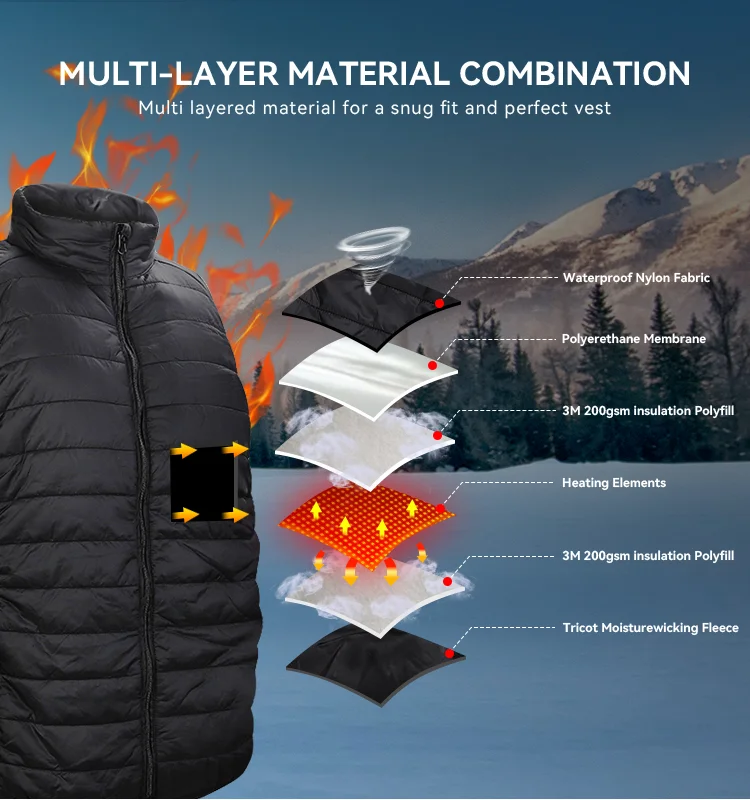
A sample rack shows variety; a sample kit proves repeatability. Select hero products around buyer use cases: commuting, outdoor recreation, workwear, and promotional programs. Include finished garments, a cutaway heating panel, controller options, battery choices, fabric swatches, packaging, test summaries, and a concise capability card.
Every item needs an ID matching the digital catalog and CRM. Label size, shell composition, heating zones, wattage, runtime assumptions, wash method, target MOQ, sample lead time, and indicative price tier. Never promise runtime without stating battery capacity, ambient conditions, and heat setting. The Heated Apparel Guides library can support buyer education before and after meetings.
| Kit component | Quantity | Buyer question answered | Handling rule |
|---|---|---|---|
| Hero jacket or vest | 3-5 | Can this platform fit our market? | Show distinct use cases |
| Heating-panel cutaway | 1-2 | How is heat distributed? | Protect connectors from strain |
| Battery and controller set | 2 | What powers the system? | Carry documentation separately |
| Fabric and trim board | 1 | What can we customize? | Code every swatch |
| Test-summary folder | 1 | What has been verified? | Use dated, scoped evidence |
| Buyer takeaway card | 50+ | What happens next? | Add QR-linked specification form |
4. Design the Booth Around a 90-Second Story
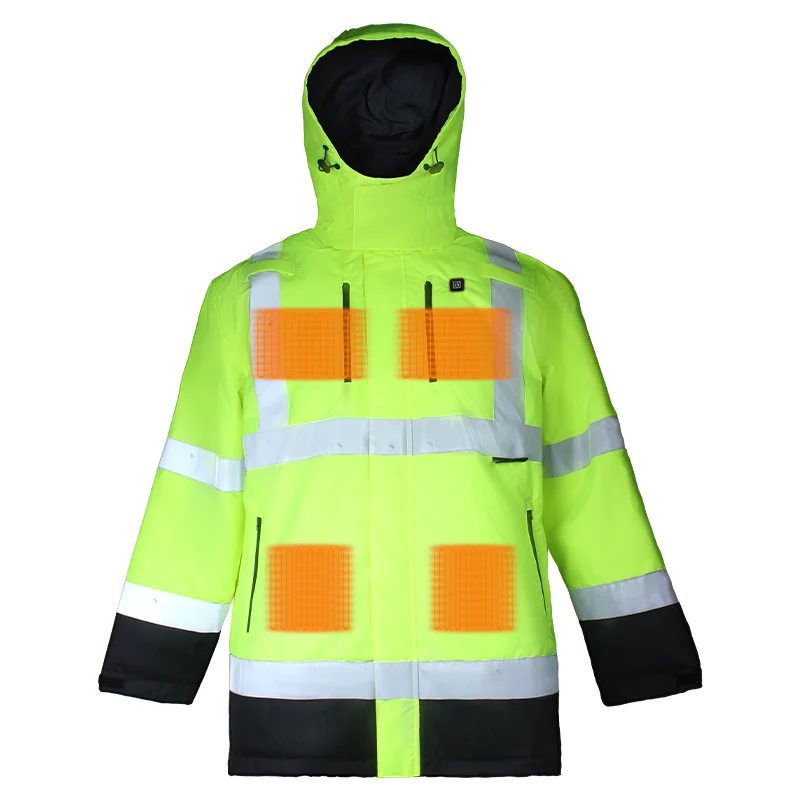
The booth should communicate category, differentiation, and next action from the aisle. Use one headline, three proof points, and clear zones: attraction, demonstration, consultation, and storage. A visitor should understand that you are a heated apparel supplier—not a consumer retailer—and see private-label capability immediately.
Place hero garments at eye level, keep fabric choices near the consultation table, and hide cartons and personal belongings. Use lighting that reveals construction without washing out controller indicators. A screen may show production and testing, but it should not replace a live technical explanation.
| Booth element | Purpose | Recommended execution | Avoid |
|---|---|---|---|
| Aisle headline | Identify offer quickly | Large B2B capability statement | Long brand biography |
| Hero display | Stop relevant buyers | Three use-case outfits | Crowded product wall |
| Demonstration bench | Prove function | Cutaway, meter, thermal view | Unsupervised loose batteries |
| Consultation table | Capture requirements | Seats, spec form, swatches | Blocking the entrance |
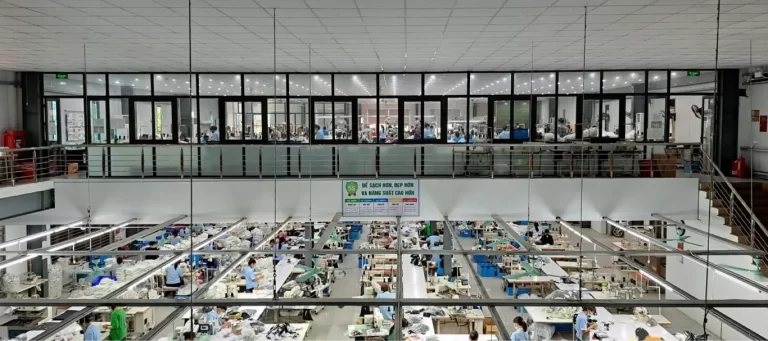
| Proof wall | Reduce perceived risk | Tests, process, factory images | Unsupported certification logos |
5. Demonstrate Heating Technology Safely
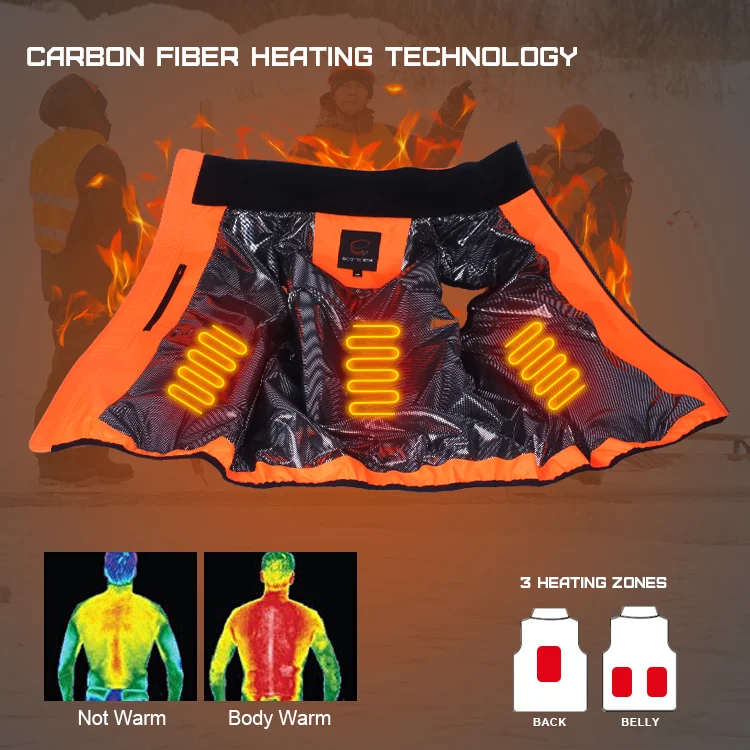
A live demonstration converts abstract specifications into evidence. Train staff to explain heating-element architecture, zone placement, connector protection, thermal control, and garment integration in plain language. For each demo, state the test conditions and distinguish design targets from validated results.
Create a repeatable five-minute sequence: inspect construction, connect approved power, activate settings, observe temperature development, and explain protection logic. Rotate powered samples and log battery condition. Follow venue rules for transport, charging, storage, and disposal. The heated apparel OEM engineer should be available for deeper design reviews, while sales keeps introductory conversations concise.
| Demo step | Evidence shown | Staff message | Risk control |
|---|---|---|---|
| Construction inspection | Stitching and routing | Integration protects comfort | Check cable strain |
| Power connection | Compatible interface | System choices follow use case | Use approved units only |
| Setting activation | Controller behavior | Controls can support branding | Supervise continuously |
| Thermal observation | Heat-zone development | Results depend on conditions | State method and limits |
| Wash-care review | Protection details | Validation follows final design | Never generalize one test |
6. Capture and Qualify Leads at the Booth
Badge scanning alone creates a contact list, not pipeline. Use a short digital form with required fields for market, channel, product, annual volume, target MOQ, launch date, customization, compliance destination, and next action. Add free-text notes for buyer language and objections. Obtain appropriate consent for follow-up.
Classify leads A, B, or C before each shift ends. An A lead has a defined project, decision role, plausible volume, and near-term next step. A B lead has fit but incomplete timing. A C lead receives nurture content. This discipline lets heated apparel wholesale teams respond quickly without sending generic catalogs to everyone.
| Capture method | Best use | Advantage | Limitation |
|---|---|---|---|
| Badge scanner | Fast identity capture | Low friction | Weak project context |
| Tablet qualification form | Structured discovery | CRM-ready fields | Requires trained interviewer |
| QR landing page | Self-service visitors | Scales during peaks | Completion may be low |
| Paper backup | Connectivity failure | Reliable contingency | Manual entry risk |
| Meeting calendar link | Confirmed next step | Reduces scheduling delay | Needs time-zone controls |
Use a privacy notice and assign one record owner. Photograph notes or sample selections only with permission. For more qualification templates, direct prospects to Heated Apparel Guides and a product-specific landing page rather than a generic homepage.
7. Discuss MOQ, Pricing, Compliance, and Logistics Clearly
A buyer needs commercial boundaries early. Present MOQ by style, colorway, size ratio, and packaging configuration. Explain which variables create surcharges: custom fabric, new tooling, special labels, low-volume batteries, testing, and expedited production. A heated apparel B2B quote should separate garment, heating system, battery, packaging, tests, freight assumptions, and tooling.
Keep a compliance matrix at the booth covering intended markets and product configurations. Discuss HS classification as a fact-specific customs matter, not a universal code. Batteries may trigger transport documentation and carrier rules; textile labeling, chemical restrictions, electrical requirements, and product claims differ by destination. Direct buyers to verify classification and tariff treatment with their customs adviser.
| Commercial topic | Booth-ready answer | Follow-up document | Red flag |
|---|---|---|---|
| MOQ | Tier by style and colorway | Assumption-based quotation | Unqualified “any quantity” promise |
| OEM versus ODM | Define ownership and design scope | Development responsibility matrix | Ambiguous IP rights |
| Lead time | Sample and bulk stages | Milestone calendar | Date without approval assumptions |
| HS code and tariffs | Destination-dependent guidance | Product description and BOM | Guaranteed duty rate |
| Battery logistics | Configuration-specific requirements | Current test and transport file | Shipping before document review |
| Quality | Inspection stages and AQL basis | Control plan | “Zero defects” claim |
8. Run a Disciplined Post-Show RFQ Cadence
Conversion begins when the hall closes. Sync records within 24 hours, remove duplicates, attach notes, and assign owners. The first message should reference the actual conversation and confirm one action. Avoid sending oversized attachments; use controlled links and track which specification the buyer reviewed.
For each heated apparel trade show lead, maintain a six-month horizon. Product development, internal buying reviews, compliance checks, and seasonal calendars make B2B decisions slower than consumer transactions. Escalate qualified projects to engineering early and record every changed assumption.
| Timing | Action | Deliverable | Exit criterion |
|---|---|---|---|
| Day 1 | Personalized thank-you | Meeting recap and next step | Buyer confirms interest |
| Day 3 | Validate requirements | Completed discovery brief | Missing fields resolved |
| Day 7 | Advance sampling | Sample-kit link or invoice | Selection confirmed |
| Day 14 | Submit scoped proposal | Quote with assumptions | Commercial review booked |
| Day 30 | Final-check call | Revised timeline or nurture | Status explicitly recorded |
| Day 60-180 | Relevant nurture | Tests, trends, case evidence | Project reactivates or closes |
Frequently Asked Questions
1. How should a factory calculate booth ROI?
Use attributed gross profit, not headline order revenue, and compare it with fully loaded event cost. Also track cost per qualified opportunity, sample-to-RFQ conversion, and six-month pipeline because complex OEM orders rarely close on the show floor.
2. What is the best lead-capture setup?
Combine badge scanning with a required tablet qualification form and a paper contingency. The scanner preserves contact accuracy; the form captures project details, consent, urgency, and next action. Assign ownership before the visitor leaves whenever possible.
3. How should sample kits travel internationally?
Create a packing list, value declaration, serial or sample IDs, battery documentation, and return plan. Confirm airline, carrier, customs, and venue restrictions in advance, especially for lithium batteries. Hand-carry only where lawful and properly documented.
4. What trade show MOQ should staff quote?
Quote the real MOQ by style, colorway, and configuration, then show higher-volume price tiers. If a pilot quantity is possible, distinguish it from standard production and disclose development, testing, packaging, or small-order surcharges clearly.
5. What is an effective post-show RFQ follow-up cadence?
Send a personalized recap on day 1, close information gaps by day 3, advance samples by day 7, and present a scoped quote around day 14. Use a day-30 call to confirm, defer, nurture, or close the opportunity.
6. Should the booth display tariff and HS-code information?
Display a compliance discussion checklist, not a guaranteed universal classification. HS treatment depends on product construction, components, destination, and current rulings. Provide accurate descriptions and BOM details, then ask buyers to confirm duties with qualified customs advisers.
7. How do OEM and ODM booth strategies differ?
An OEM booth should emphasize execution against buyer specifications, engineering controls, and repeatability. An ODM booth should foreground market-ready platforms, design options, ownership terms, and customization boundaries. Both need a clear development process and IP policy.
8. How many samples should be displayed?
Show enough to represent priority use cases without creating visual clutter—often three to five hero garments. Keep additional sizes, swatches, and construction samples in organized storage. Every sample should have a strategic reason and matching data sheet.
9. Who should staff a heated apparel trade show booth?
Use a commercial lead, a technical or R&D specialist, and an operations-capable coordinator, scaled for expected traffic. Everyone needs the same claims guidance, qualification script, escalation rules, breaks, and daily pipeline review routine.
10. How can exhibitors prevent weak or duplicated leads?
Make project fields mandatory, scan one primary contact per opportunity, and search the CRM before creating records. At daily reviews, merge duplicates, document stakeholder relationships, score readiness, and assign a single accountable follow-up owner.
11. What should a technical proof wall include?
Show scoped and current evidence: quality-control stages, manufacturing process images, applicable test summaries, and traceability examples. Avoid certification-logo wallpaper or claims that apply only to a different configuration, material, battery, or destination market.
Broader Heated Apparel Trade Show Conversation
Five intersecting buyer conversations the heated apparel manufacturer faces at every 2026 sourcing event. Each maps to a different funnel stage — pre-show awareness, mid-show qualification, post-show conversion, retention, and advocacy.
1. Pre-show awareness (months 1-3 before event): Brand owners and private-label buyers research heated apparel wholesale channels 60-90 days before major sourcing events. They land on factory trade show pages, OEM capability briefs, and B2B lead magnets. Your booth narrative has to thread the same root phrases they search: “heated apparel manufacturer”, “heated apparel factory”, “heated apparel OEM”. Build landing pages and paid social that mirror the on-booth story.
2. Mid-show qualification (event week): Buyers walking the floor are filtering on 3 axes — heating technology pedigree (graphene vs carbon-fiber vs wire), minimum order flexibility, and sample-to-bulk lead time. The heated apparel supplier narrative has to answer all 3 in 90 seconds: a one-pager with the heating element spec, a sample-kit catalog with MOQ columns, and a printed lead-time calendar.
3. Post-show conversion (week 1-4 after event): 60-70% of trade show leads go cold inside 30 days. The heated apparel B2B rep cadence is the single biggest leverage point — day-1 thank-you email with sample-kit order link, day-7 spec sheet follow-up, day-14 quote proposal, day-30 final-check call. Miss the cadence and the lead cost-per-meeting doubles.
4. Retention (months 2-9 post-event): Convert first-time heated apparel wholesale buyers into repeat OEM programs. Quarterly trend reports, exclusive color-block drops, and a private B2B portal for repeat buyers. The 2026 retention playbook builds a recurring revenue line, not a one-shot sample order.
5. Advocacy (months 9+): Top-decile heated apparel factory clients become case-study references. Capture testimonials on-booth with signed photo release, then distribute via LinkedIn long-form posts and B2B email nurture. One great testimonial is worth 10 generic booth brochures.
Recommended sequence: lead with the pre-show awareness push, layer mid-show qualification collateral, lock in the post-show conversion cadence, then graduate top buyers into retention + advocacy. The heated apparel 2026 B2B buying journey is longer than most factory teams expect — plan a 6-month window, not a 6-week window.
Turn Event Interest into a Factory Visit
Invite high-fit prospects to review production flow, incoming inspection, heating-system integration, testing, and final quality control. Set an agenda, protect confidential customer information, and document the buyer’s product questions before arrival. A tour should validate the claims made at the heated apparel trade show, not introduce a different story.
Ready to schedule a factory tour or request a sample kit? Contact our B2B team for heated apparel OEM and wholesale programs with MOQ starting at 300 units per style per colorway.
Convert Requirements into an R&D Brief
Transform booth notes into a controlled brief covering end user, climate, garment silhouette, heating zones, runtime target, power interface, materials, trims, branding, size range, packaging, target market, tests, cost target, and launch date. Record open decisions and approval owners so sampling starts from shared assumptions.
Need a custom heated apparel R&D brief? Send your spec sheet to our OEM engineering team — typical sampling lead time is 7-10 working days from approved tech-pack.
Request a Comparable Private-Label Quote
Ask for quotations that show matching scope, Incoterm, currency, validity, MOQ tier, test assumptions, battery inclusion, packaging, tooling, and production milestones. Comparable inputs prevent false price differences and make supplier evaluation more defensible after a heated apparel trade show.
Want a private-label heated apparel quote? Request our 2026 B2B catalog with landed-cost breakdowns by region, MOQ tier, and 3PL fulfillment options.
Quick Reference Glossary
| Term | Definition |
|---|---|
| AQL | Sampling standard used to define acceptable inspection defect limits. |
| BOM | Bill listing materials, components, quantities, and construction requirements. |
| Carbon-fiber heater | Flexible resistive element commonly integrated into garment heating zones. |
| Colorway MOQ | Minimum production quantity required for one approved color combination. |
| CRM | System recording contacts, qualification data, actions, and opportunity ownership. |
| Drayage | On-site movement of exhibition freight between docks and booths. |
| Graphene heating | Heating approach using graphene-based conductive structures or composite materials. |
| HS code | Customs classification used to support tariff and import treatment. |
| Incoterm | Standard rule allocating delivery tasks, costs, and shipment risks. |
| ODM | Supplier-developed platform customized for a buyer’s market and brand. |
| OEM | Production or engineering performed to an approved buyer specification. |
| RFQ | Formal request defining scope for a comparable commercial quotation. |
| Sample lead time | Working period from approved brief to completed development sample. |
| Sales-qualified lead | Opportunity meeting agreed fit, authority, timing, and volume criteria. |
| Thermal mapping | Measurement showing temperature distribution across defined garment heating zones. |
| Tech pack | Controlled file defining measurements, materials, workmanship, and product details. |
| 3PL | External provider handling warehousing, order processing, and distribution services. |